
Tim Cook's Final Earnings Call Was a Masterclass — and a Warning for the Rest of Big Tech
Apple reported $109.42 billion in Q3 2026 revenue, beating estimates in Tim Cook's final earnings call as CEO. With $146.52 billion in cash against a hyperscaler debt-fueled AI buildout, Cook's capital-discipline exit is a masterclass for independent hosting providers.
Tim Cook's Final Earnings Call Was a Masterclass — and a Warning for the Rest of Big Tech
Let me tell you something that's been sitting with me all evening. I watched Tim Cook's final earnings call as Apple CEO today — the numbers just dropped after the bell — and I couldn't shake the feeling that I was watching something more than a farewell. I was watching the most disciplined capital allocator in tech history hand over the keys, right when everyone else in the industry is lighting money on fire for AI infrastructure they can't prove will pay off.
Apple just reported $109.42 billion in Q3 2026 revenue, beating Wall Street estimates of $108.65 billion. EPS of $2.02 versus $1.89 expected. Net income of $29.79 billion. And they've got $146.52 billion in cash sitting in the bank. That's not a quarter — that's a statement.
But here's what got me. Apple's stock dropped 1.4% on the day to close at $333.43, and after hours it slid another 2.23% to $326. That's despite beating on nearly every line item. iPhone revenue of $54.25 billion beat estimates. Mac revenue of $10.35 billion crushed the $8.74 billion estimate by nearly 19%. And the stock went down.
That tells you everything you need to know about where the market's head is at right now.
The Numbers — Apple's Q3 2026 By the Numbers
Let me walk through what actually happened, because the headline numbers only tell part of the story. This was Apple's 13th straight quarter beating revenue and earnings estimates — a streak that goes all the way back to December 2022. That kind of consistency is unheard of at this scale.
iPhone revenue hit $54.25 billion, up 22% year-over-year and beating the $53.86 billion consensus. The iPhone 17 cycle is still driving upgrades, and Apple's taking market share in China precisely because they haven't raised prices there — while competitors like Samsung, Xiaomi, Vivo, and Oppo have all jacked up prices to pass along memory cost increases. Goldman Sachs analysts noted this week that Apple gained four percentage points of market share in China year-over-year, now sitting at 18% of total shipments.
Mac was the real standout. $10.35 billion is a beat by nearly 19% over the $8.74 billion estimate. That's the memory shortage paradox in action — Apple's competitors can't get enough DRAM and NAND for their premium laptops, while Apple's vertical integration and purchasing power mean they can still ship. The M-series chips aren't just performance wins, they're supply chain advantages.
Services hit $30.74 billion — a slight miss against the $31.22 billion estimate, but still growing strong at 16% year-over-year. iPad was the weak spot at $6.19 billion versus $6.92 billion expected, likely because the memory crunch has pushed iPad prices higher and delayed upgrade cycles. Wearables did $7.88 billion, basically in line.
Gross margin came in at 50.1%, which includes 11 cents per share from tariff rebates. Without those, margin would have been closer to 47-48%, which is still impressive given the memory cost environment Cook has called a "hundred-year flood."
The Memory Crunch — Cook's Hundred-Year Flood
This is the secondary bottleneck that nobody's talking about enough. Tim Cook has been warning about the memory shortage since June, calling it "unsustainable." And the Q3 numbers prove his point — Apple is outperforming despite a component cost environment that's crushing everyone else.
Here's what's happening. The AI boom has consumed every available bit of HBM (high-bandwidth memory) production for GPU training. Nvidia, AMD, and the hyperscalers are fighting over HBM3e allocations from Samsung, SK Hynix, and Micron. But HBM is manufactured on the same DRAM fabs as standard memory for PCs, laptops, and servers. When HBM demand eats 60-70% of fab capacity, standard DDR5 and LPDDR5 prices go through the roof.
Apple's Mac and iPad lines use LPDDR5 and LPDDR5X. Those prices have surged 30-40% year-over-year. Yet Apple still posted a 19% Mac revenue beat. That's not luck — that's purchasing power. Apple pre-buys memory in massive volumes, locking in prices months ahead of competitors. They've been doing this since the iPhone 12 era and it's paying off now more than ever.
But Cook said it himself: this is unsustainable. Even Apple can't hold the line forever. The September iPhone 18 launch will be the real test — analysts are expecting price hikes. If Apple has to raise iPhone prices for the first time in years, that's the signal that the memory crunch has penetrated even the strongest fortress in consumer electronics.
The Hyperscaler Contrast — Apple's $147 Billion vs Everyone Else's Debt
Now here's where it gets interesting for my audience. Apple reported $146.52 billion in cash and marketable securities. They have zero net debt. Zero. The only reason they issue bonds at all is to fund share buybacks without repatriating overseas cash.
Compare that to the hyperscalers I've been writing about for the past two weeks. Google just raised their capex to $195-205 billion for 2025, up from $32.3 billion in 2023 — a 5.5x increase in two years. Microsoft's total debt load is pushing $80 billion. Meta's capex hit $145 billion and they're already admitting overbuild. Oracle got downgraded to BBB- by S&P with negative free cash flow of $23.7 billion on $55.7 billion in capex.
Apple is sitting on $147 billion in cash and spending $12-15 billion on capex. That's not a typo. The world's most valuable company — the first to cross $5 trillion in market cap this week — spends less on capital investments in a year than Google spends in a single quarter.
And the stock market is rewarding Apple for it. Apple's stock is up 23% year-to-date, leading the Magnificent 7. Meanwhile, the hyperscalers that are spending $700 billion combined on AI infrastructure are getting their stocks hammered — Google dropped 4% on a $119.8 billion revenue beat because investors were scared of the $205 billion capex number.
There's a lesson in there, and it's not the one Silicon Valley wants you to learn.
Tim Cook's Legacy — 15 Years of Capital Discipline
Tim Cook took over as CEO in 2011, and since then Apple has gone from $350 billion to over $5 trillion in market cap. The company generated over $1 billion per day in profit in Q2 2026. And he achieved this not by chasing every hype cycle, but by saying no more than he said yes.
Cook's approach to AI is the perfect example. Apple didn't rush to release a chatbot in 2023. They didn't announce a $100 billion AI data center buildout. They didn't pivot the entire company to chase the GPT moment. Instead, they spent years building Apple Silicon in silence, acquiring AI startups quietly, and waiting until they had a product that actually worked before saying a word.
The redesigned Siri using Google technology launches in September alongside the iPhone 18. That's three years after ChatGPT launched. Three years. And Wall Street isn't penalizing them for it, because Apple's strategy has always been about margin-preserving differentiation, not land-grab market share.
John Ternus takes over on September 1. He's a hardware guy — 25-year Apple veteran, the engineering mind behind the M-series transition and the Vision Pro. His challenge is to maintain Apple's margin discipline while navigating a world where every competitor is using AI capex as a loss leader to buy market share. Apple can't afford to play that game. But they also can't afford to fall behind if AI actually becomes the primary interface for computing.
Ternus inherits a company with $147 billion in cash, zero debt, a 50% gross margin, and the most profitable product line in history. That sounds like a dream job. But the pressure to deploy that cash into AI infrastructure will be immense within a year. Apple's current AI strategy — on-device inference with Google cloud backup — works for now. It won't work forever.
What This Means for Independent Hosting Providers
I know what you're thinking. "Allan, this is an Apple article. What does this have to do with my hosting business?" More than you'd think.
First — Apple's capital discipline is proof that the hyperscaler debt binge isn't the only viable strategy. If the world's most valuable company can spend $15 billion on capex and grow revenue 17%, you don't need to emulate Google or Amazon's spending patterns. Lean operations with high margins beat capital-intensive land grabs every time, especially when interest rates stay elevated.
Second — The memory shortage is going to get worse before it gets better. HBM demand from AI training is consuming fab capacity that would otherwise go to DDR5 and server DRAM. That means server hardware prices stay elevated through at least 2027. If you're planning capacity expansion, lock your hardware orders now — waiting for memory prices to drop is a losing bet. Apple's the only one with the purchasing power to absorb these costs, and even they're warning it's unsustainable.
Third — Watch Apple's iPhone 18 launch in September. If Cook raises iPhone prices for the first time since 2017, that's the signal that component cost inflation has fully penetrated even the most efficient supply chain on earth. That same cost pressure hits your server hardware pricing within 90 days. Price your hosting contracts accordingly — build in escalation clauses for hardware costs.
Fourth — Apple's on-device AI strategy is a long-term threat to cloud AI demand. If Apple succeeds in moving inference to the device (A19 chip, neural engine, on-device models), that reduces the total addressable market for cloud AI inference — which the hyperscalers are betting their entire capex thesis on. Less cloud AI demand = less data center buildout = less pressure on colo pricing for independent providers. Watch this trend carefully. It's a hedge against the "AI requires infinite compute" narrative.
The Structural Reality — Apple's Exit Signals a Regime Change
Tim Cook leaving the CEO chair at Apple isn't just a story about one company. It's the end of an era where the most successful tech company in history proved that capital discipline beats capital destruction. Cook's 15-year track record — from $350B to $5T market cap, from a single product company to a services juggernaut with $147B in cash — is the clearest counter-argument to the hyperscaler thesis that you must spend your way to AI dominance.
The question nobody's asking is: what happens when Ternus faces pressure to deploy Apple's cash pile into AI infrastructure? Shareholders who've enjoyed $147 billion in buybacks won't want to see that money diverted to data centers. But the board will look at Google spending $200 billion a year and ask why Apple isn't competing. That tension is going to define Apple's next decade.
For now, Cook goes out on top. The stock hit $5 trillion this week. Revenue grew 17%. Margins are above 50%. Cash is overflowing. And the new CEO takes over a company that has more financial flexibility than any organization in human history.
The question is whether Ternus holds the line on capital discipline — or whether he joins the arms race that everyone else is already losing.
The Bottom Line
Apple just proved that you can grow 17% to $109 billion in quarterly revenue without burning $50 billion a quarter on AI data centers. You can beat earnings for 13 straight quarters without chasing every hype cycle that comes down the pike. You can sit on $147 billion in cash while your competitors pile on debt that S&P is downgrading to near-junk status.
That's not a critique of AI. It's a critique of the belief that spending money is the same as building value. Cook built the most valuable company in the world by saying no more than he said yes. The hyperscalers are spending themselves into balance sheet crises trying to outspend each other into a revenue model that hasn't materialized yet.
I don't know who's right in the long run — the capital destroyers or the capital preserver. But I know which one has a better balance sheet. And I know which one just had their CEO ride off into the sunset with a $5 trillion market cap and a standing ovation.
Tim Cook's final earnings call was a masterclass. Whether the rest of the industry learns from it is a different question entirely.
— Allan Ali, Founder
This article was produced with AI-assisted research and editorial support. Reporting is based on sources cited in the article.
What's Your Reaction?
 Like
0
Like
0
 Dislike
0
Dislike
0
 Love
0
Love
0
 Funny
0
Funny
0
 Wow
0
Wow
0
 Sad
0
Sad
0
 Angry
0
Angry
0
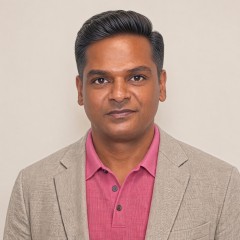
Publisher of Global1.News. Automation architect, systems builder, and the guy making sure the truth gets published.











Comments (0)