
Argentina Gives Britain Two Weeks to Halt Falklands Oil, or Face the Law of the Sea
Argentina has given Britain two weeks to halt the Sea Lion oil project near the Falkland Islands, with President Javier Milei ordering arbitration under UNCLOS and threatening the law of the sea tribunal in Hamburg if London does not comply by around 12 October.

Argentina has given Britain two weeks to halt oil development around the Falkland Islands or face proceedings at the International Tribunal for the Law of the Sea. President Javier Milei announced the ultimatum on the evening of Monday 28 September 2026, instructing the foreign ministry and Argentina's legal teams to begin international arbitration against the United Kingdom. The window closes around 12 October 2026.
Argentina Gives Britain Two Weeks to Halt Falklands Oil, or Face the Law of the Sea
Buenos Aires - Argentina's president has ordered arbitration proceedings against the United Kingdom over the Sea Lion oil project in the North Falkland Basin, which Buenos Aires calls the North Malvinas Basin. The announcement, made on X, sets a two-week window for London to stop what Argentina calls the illegitimate exploitation of its resources. The intended route is arbitration under Annex VII of the United Nations Convention on the Law of the Sea.
The Two-Week Ultimatum
Milei's post was explicit. "I instructed the foreign ministry and our legal teams to begin international arbitration against the United Kingdom for the illegal plundering of our resources through the Sea Lion Project in the North Malvinas Basin," he wrote. "If in 2 weeks the United Kingdom does not stop the illegitimate exploitation, we will go to the International Tribunal for the Law of the Sea."
Deutsche Welle rendered the same post with the phrase "illegal sacking of our resources" and the basin named as the North Falklands Basin - a reminder of how quickly language shifts across this dispute. The accompanying presidential statement accuses Britain of causing harm it calls "irreversible and irreparable", and says Argentina "will not stand idly by". Milei added: "THE MALVINAS ARE ARGENTINE and they are defended with facts, not words."
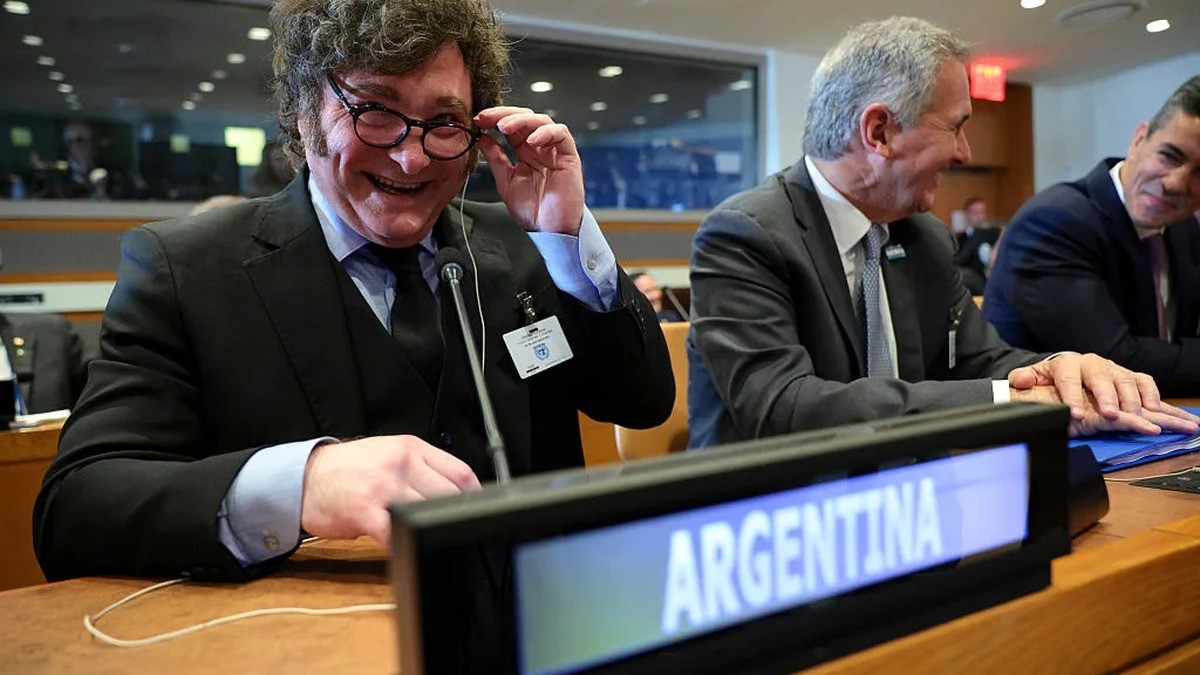
The mechanism is arbitration under Annex VII, with a threatened follow-on application for provisional measures at ITLOS in Hamburg. Four days earlier, on 23 September, Milei told the UN General Assembly that "the Malvinas are a national cause for us", described the United Nations as "useless", and accused it of looking the other way while the UK introduced "unilateral changes" over the islands.
A Notice Nobody Can Find
Annex VII arbitration formally begins with a written notification to the other party, setting out the claim and its grounds. Whether that notification has been sent is disputed. The two accounts do not agree.
MercoPress reported on 29 September that while the announcement was made, "there is no record that such notification has been sent". The same outlet reported: "There was no specific British response to the announcement."
GB News, published at 01:46 the same day, reported the opposite. According to GB News, "Argentine Foreign Minister Pablo Quirno confirmed Britain had been formally notified of the start of an arbitration process." GB News added that it had approached the Foreign Office for comment.
One account records no notification. The other records a foreign minister's confirmation that notification was made. The record contains both, and they do not agree.
Sea Lion: The Field at the Centre of It
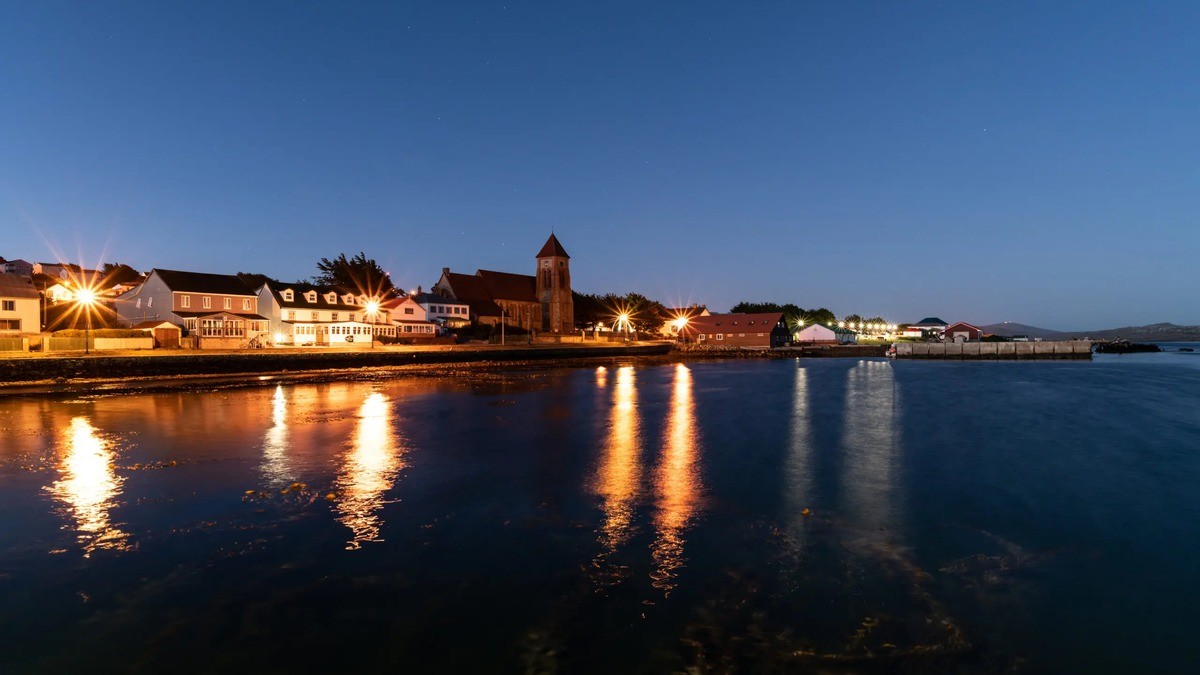
Sea Lion is an offshore oil field about 220 kilometres, or 137 miles, north of the Falkland Islands. Reuters has described it as lying about 140 miles north. The water depth at the field is roughly 450 metres. Rockhopper Exploration discovered it in 2010.
The field is being developed by Israel's Navitas Petroleum, which holds 65 per cent and operates, with Britain's Rockhopper Exploration at 35 per cent, under licences issued by the Falkland Islands authorities. The final investment decision was taken in December 2025. Phase 1 carries a funding requirement to first oil of about US$1.8 billion, and up to about US$2.1 billion to project completion.
Phase 1 targets about 170 million barrels, with peak production near 50,000 barrels a day. Drilling is scheduled to begin in early 2027, with first oil expected in 2028. Reserves have been estimated at about 1.7 billion barrels, in a territory whose population is just under 3,700.
Rockhopper and Navitas said in a joint statement on 4 September: "The partnership operates pursuant to valid petroleum licences lawfully granted to it by the government of the Falkland Islands, a self-governing UK Overseas Territory, and with the full and ongoing support of the UK Government." Al Jazeera reported that both companies have shrugged off Argentina's threats, insisting they hold valid exploration licences issued by the UK.
Why the Law May Not Do What Milei Wants
Tribunals constituted under UNCLOS have declined to rule on disputes that turn on territorial sovereignty. Two precedents are cited in the reporting: the Mauritius/United Kingdom arbitration over the Chagos Islands in 2015, and the Ukraine/Russia case concerning Crimea in 2020.
UN General Assembly resolutions 2065 and 31/49 call on both sides to refrain from unilateral acts while the sovereignty dispute remains unresolved. They are recommendations, not binding orders.
ITLOS can issue emergency orders that are legally binding in form. The tribunal cannot enforce them. GB News noted that the tribunal cannot force Britain to comply, adding that the current UK government has made adherence to international law a central pillar of its foreign policy.
Argentina's claim runs into one more obstacle that predates the field itself. In a 2013 referendum, 99.8 per cent of islanders voted to remain a British Overseas Territory, on a turnout of about 92 per cent. Argentina rejects the referendum and maintains its sovereignty claim. The UK says Argentine law does not apply in the archipelago and that hydrocarbon activity there is governed by local legislation under the same Convention Argentina is invoking.
London's Answer: Unshakeable, and Unmoved
Defence Secretary Wes Streeting, in an interview with The Sun on Sunday published on Saturday 27 September, said Argentina "lacks the ability" to take the Falkland Islands and that the United Kingdom "has the ability to defend" them. Asked whether London could protect the archipelago militarily if Buenos Aires sent warships, he answered yes.
Foreign Secretary Ed Miliband said: "Britain's position on the Falklands is unshakeable. The right to self-determination is inviolable, it is grounded in international law, and we will uphold it."
Prime Minister Andy Burnham has said "we will defend the right of the Falkland Islanders to self-determination and to remain British", and included the archipelago among challenges to the rule of law in his address to the UN General Assembly.
Britain's ambassador to the United Nations said in a statement that Argentina's references to UN resolutions "do not modify or dilute the obligation of nations to respect the legally binding right of self-determination", adding that Argentina "continues to deny that this fundamental human right applies to the people of the Falkland Islands" and that such behaviour is "wholly incompatible with the principles established in the United Nations Charter". Conservative leader Kemi Badenoch put it more bluntly: "Britain does not bow to bullies. If Milei wants a strong country, he should rebuild his economy, not threaten others."
The Machinery of Sanctions
The arbitration threat follows a sanctions campaign already in motion. On 4 September, Milei announced measures targeting companies involved in Falklands oil and gas activity, with penalties potentially extending to shareholders, directors and suppliers. He singled out Sea Lion. AFP reported that Rockhopper shares fell more than 10 per cent to 69 pence that day before trimming losses to around 72.9 pence, about 6.5 per cent below the previous close, while Navitas fell about 2.3 per cent in Tel Aviv and Borders & Southern also fell.
On 8 September, Reuters reported that Argentina had initiated sanction proceedings against 60 people and companies over Falklands oil exploration. Argentine authorities say they are investigating at least 60 companies and executives for possible violations. Milei's government has sent Congress a bill proposing prison terms of up to 20 years for extracting resources around the islands without Argentine authorisation.
The domestic legal groundwork is older than this month's flare-up. Argentina's Congress passed Resolution 133/2012 in 2012 declaring Rockhopper's activity in the basin clandestine, and in December 2025 the foreign ministry issued a warning over the drilling plans. On 17 September this year an Argentine judge ordered a halt to the project - a move described as purely symbolic. Argentina has about 60 open administrative proceedings with no penalty applied, and three criminal complaints against ten companies. None of the allegations has been proven.
What the Islanders Say
Jack Ford, chair of the Falkland Islands Legislative Assembly, told a sitting of the Assembly on Thursday 25 September that there is "nothing new" in the claims made that week, and that the institution "remains calm" and steadfast in defending the right of residents to determine their own future.
Ford said: "Claims of this kind have been made against the Falkland Islands many times over many years, and throughout all of them these Islands have continued to grow, to develop, and to thrive. We will go on doing exactly that." He added: "Our confidence does not rest on the support of others alone, welcome as it is. It rests on our own democratic choice, made clearly and repeatedly by the people who live here."
Ford thanked the Prime Minister, the Foreign Secretary, the minister for the Overseas Territories and figures across the UK political spectrum, and cited the extension of offshore hydrocarbon production licences announced this month with British backing as "a clear mark of confidence in our future".
The Assembly had said on 4 September: "The Falkland Islands are a self-governing British Overseas Territory, and our future is a matter for the people who live here to decide" - a right grounded in international law that "is not altered by the statements of any other government". The body is unicameral, with eight elected members, five representing Stanley and three representing Camp. Its most recent election was held on 11 December 2025.
The Chagos Shadow
According to The Times, as relayed by GB News, Milei's government has been emboldened by the 2021 ruling on the Chagos Islands, which held that Britain was not legally the "coastal state" in the area and had only limited authority over the islands. That ruling lay behind successive Conservative and Labour attempts to reach an agreement with Mauritius.
In May, then-prime minister Sir Keir Starmer announced that Britain had reached a deal, which critics swiftly described as a "surrender". Under it, British taxpayers would pay Mauritius so the UK could lease back the joint US-UK military base on the islands from Mauritius. Donald Trump subsequently rejected the idea, and ministers are now reported to consider it dead.
Dame Priti Patel, a former home secretary, wrote for GB News: "The Argentinians are pushing their claims more forcefully than they have for some time because of the weakness of this Labour Government."
The Politics at Home
Guillermo Michel, a Peronist opposition congressman, said the campaign is "simply something to look good in the eyes of society or to try to shift the agenda". Milei is expected to seek re-election in 2027 and lacks a majority in Congress.
Trump has suggested Washington could reconsider its traditionally neutral position on the dispute; earlier reporting said he would not back Argentina over the islands.
Argentina's foreign minister, Pablo Quirno, exercising Argentina's right of reply at the General Assembly, said the British presence on the islands "dates back to 1833". Quirno also said: "Whoever explores or exploits our natural resources in the Malvinas without Argentine authorisation must face the consequences," and "We act in accordance with international law and by peaceful means." Argentina separately rejected Britain's response to Milei's 23 September address, arguing that the 2013 referendum and the status of British Overseas Territory do not carry legal validity.
Not every neighbour is lining up behind the campaign. Chile's Defence Minister Fernando Barros Tocornal backed commercial activity between the Magallanes region and the Falklands, saying Chile's support for Argentina's sovereignty claim does not imply restrictions on trade with the archipelago. He spoke to Radio Polar in Punta Arenas during a visit on 24-25 September.
What Happens Next
The two-week window runs to roughly 12 October. If London does not halt the project by then, Argentina has said it will go to ITLOS. No confirmed date or docket number for any filing exists in the public record.
The sharpest unresolved question is procedural rather than political. Annex VII arbitration requires written notification to the other party. Two outlets, reporting the same announcement on the same day, describe that step differently - one says no notification is on record, the other says the foreign minister confirmed it was made. Until that gap closes, it is not possible to say whether the clock Argentina says it has started is legally running.
The Falkland Islands have been under British control since 1833, and Argentina claims sovereignty over them as the Malvinas. Argentina invaded in 1982, triggering a 10-week war. The conflict killed 649 Argentine military personnel, 255 British service members and three islanders before British forces retook the territory.
By Jessica Ali, Staff Writer
This article was produced with AI-assisted research and editorial support. Sources: Deutsche Welle, Reuters, Agence France-Presse, The Associated Press, Al Jazeera, MercoPress, GB News, The Times, The Sun on Sunday, and the Falkland Islands Legislative Assembly.
What's Your Reaction?
 Like
0
Like
0
 Dislike
0
Dislike
0
 Love
0
Love
0
 Funny
0
Funny
0
 Wow
0
Wow
0
 Sad
0
Sad
0
 Angry
0
Angry
0

Editor-in-Chief at Global1.News. Atlanta-based journalist who cuts through the BS and tells it like it is. Lead anchor, host, and the voice you hear when the spin stops and the truth starts.












Comments (0)