
UK Diesel Hits Record 199.2p As Emergency Fuel Plan Revealed
UK diesel has set an all-time record at 199.2p a litre, past the June 2022 high, while the government's published National Emergency Plan for Fuel sets out who would get fuel first if supplies ever ran short.
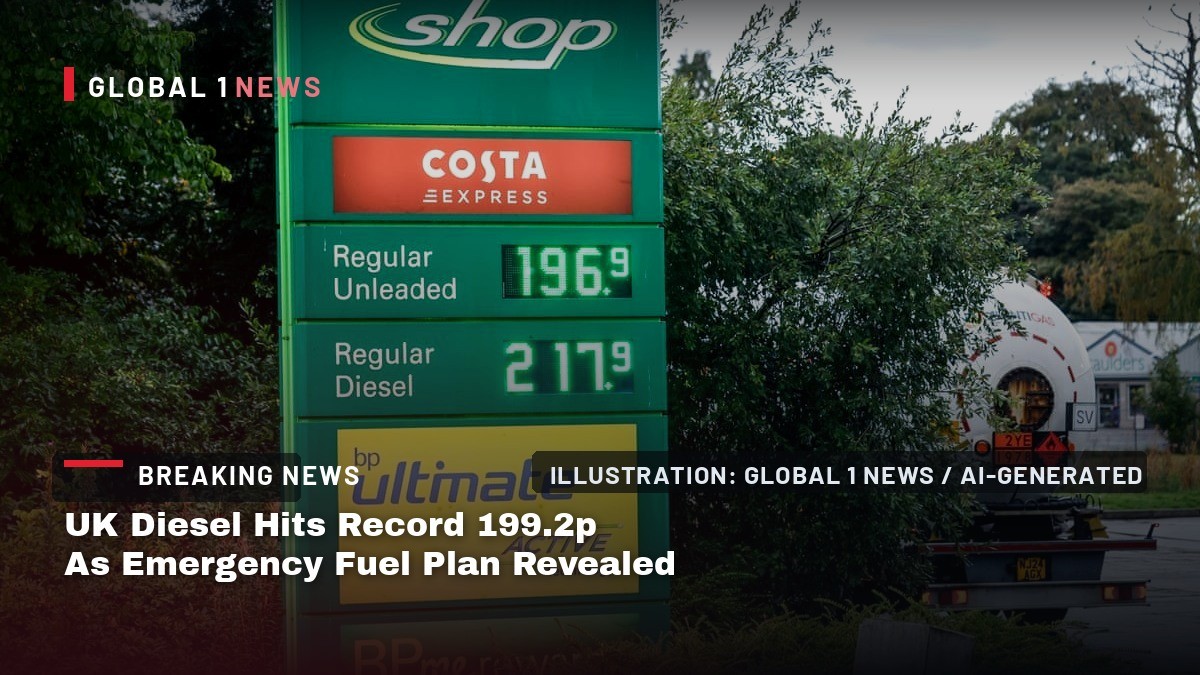
Britain's diesel price has set an all-time record, and the government's own published emergency plan spells out exactly who would get fuel first if supplies ever ran short. The National Emergency Plan for Fuel has sat on the shelf for more than a decade. Not one of its measures has been activated. Here is what matters.
UK Diesel Hits Record 199.2p As Emergency Fuel Plan Revealed
London, United Kingdom — The record has fallen. Fuel Finder UK, a price tracker cited by the government, put the average UK diesel price at 199.2p per litre, past the previous record of 199.09p set on 25 June 2022. The Energy and Climate Intelligence Unit flagged the reading on Saturday, quoting analyst Jess Ralston. The RAC told a slightly different story. Simon Williams, the motoring group's head of policy, had Friday's average at 198.32p and forecast the record would fall over the weekend. Both numbers are on the record, both trackers named. What is not in dispute is the direction, or what sits underneath it: a published contingency plan, four working refineries, and 42 days of emergency diesel stocks.
The Record Fell
Fuel Finder UK's tracker showed 199.2p per litre, past the 199.09p set on 25 June 2022, according to the Energy and Climate Intelligence Unit's Saturday statement quoting analyst Jess Ralston. The RAC's Simon Williams had Friday's average at 198.32p and said the record "will almost certainly be surpassed over the weekend as retailers continue to pass on the increases they're seeing when they buy new supply." Williams said a 55-litre family-car fill-up now costs £109, and that the UK has "the most expensive diesel in Europe by 12p a litre ahead of Finland and the Netherlands." The RAC put petrol at 173.6p, the highest in more than four years. Petrol is up nearly 12p this month and more than 40p since 28 February. Diesel is up 14.5p this month alone and 55p since 28 February.
What The Government Has Actually Said
The National Emergency Plan for Fuel is the government's published contingency document, held by the Department for Energy Security and Net Zero and first published in 2011. Its powers come from the Energy Act 1976, which lets government control supply and demand of petroleum products. The plan's own wording is careful: "The majority of potential fuel supply disruptions can be addressed by measures to help industry maintain fuel supply," it says, and "use of these emergency powers is reserved for the most severe of disruptions." Activation happens "only when an incident has the potential to cause significant and widespread disruption to oil supply," and the decision "can only be taken at a national level." A Lords answer in April said the physical supply of fuel to the UK is stable. Asked on Times Radio whether the government was making contingency plans to ration petrol, Treasury minister Dan Tomlinson said: "We will monitor the situation, and we'll monitor it carefully." Express has also reported a temporary 50mph speed limit as a demand-reduction measure under discussion.
Who Gets Fuel First
The plan names five schemes. The Designated Filling Station scheme gives emergency and critical service vehicles priority access to road fuel from filling stations chosen by the relevant Local Resilience Forum. The Bulk Distribution Scheme lets oil companies and distributors be directed to prioritise bulk deliveries to emergency services, utilities and public transport. The Commercial Distribution Scheme directs priority supply of road diesel to the commercial vehicles sector to support key supply chains such as food and health. The Maximum Purchase Scheme caps retail sales to the public per visit, so all motorists get access to some fuel, and can limit the hours fuel is sold. The Crude Oil and Imported Product Allocation Scheme lets government formally allocate imported oil products within the UK. Express set out the priority ladder the plan describes: emergency services and critical service vehicles first, then utilities, then public transport such as buses and diesel trains, then commercial vehicles including food lorries, and lastly general public drivers.
Why Britain Is Down To Four Refineries
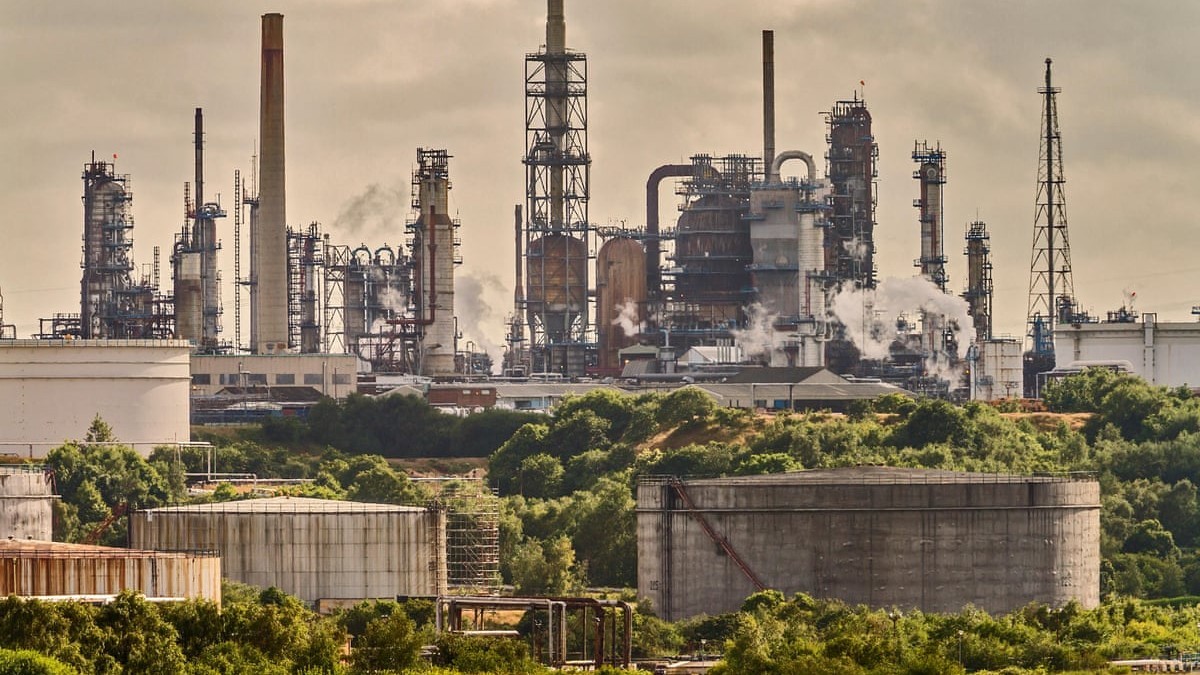
The i Paper reported on 25 September that Britain now relies on the US for around 30 per cent of its diesel imports, up from less than 5 per cent before Russia's 2022 invasion of Ukraine. Five UK refineries have closed since 2000, including two last year, leaving four operational, down from 18 in the 1970s. The i Paper also reported the UK now imports 55 per cent of all its diesel, against 14 per cent in 2003. The Guardian reported the four survivors remain only after the closures of Grangemouth and Lindsey last year, both of which produced diesel for the UK market. Elizabeth de Jong, chief executive of Fuels Industry UK, said the sector's annual statistics show UK petroleum demand rose 1 per cent in 2025 to almost 61m tonnes, while the Grangemouth and Lindsey closures "reduced UK refining capacity by almost a quarter."
Forty-Two Days
Sky News analysis of multiple data sources, reported between 24 and 27 September, put the UK's emergency diesel import stocks at about 42 days as of July 2026. The same comparison put the US at 677 days, Japan at 1,025 and Canada at 1,382. France, Spain and Germany sat between 219 and 398 days. Australia, at 31 days, was the only major developed country in a worse position. Government data from last year shows the US accounts for about a third of all UK diesel imports. Thomas Pugh, chief economist at RSM UK, said a US ban on diesel exports "would pose a significant challenge for the UK, given the country's growing reliance on American refined fuel." Losing almost 90,000 barrels a day of US distillate, or 18 per cent of the country's consumption, would leave Britain more exposed to global diesel prices. Pugh said shortages were unlikely immediately, but a longer-term ban would make them a "real possibility."
The Trump Variable
Donald Trump has not imposed an export ban. He has said he backs the idea. Speaking to reporters on Tuesday 22 September ahead of a meeting with Ukraine's Volodymyr Zelenskyy, Trump said: "I've said let's not send out the diesel. We make a lot of diesel … I've called for it. I've called for it within my people." Treasury Secretary Scott Bessent, at the same appearance, said: "We're examining whether it's feasible in terms of the overall refining capacity and whether a full or partial ban would work." Politico reported Trump said a decision would come "fast." The Guardian reported he is considering a 90-day export ban before the midterms. The White House has publicly denied planning a formal 90-day ban, and Energy Secretary Chris Wright has rejected an outright one, calling it a "blunt tool" that "definitely doesn't work." Argus Media's Josh Michalowski said: "A US export ban would be devastating for diesel supply in Europe, which would struggle to replace supply."
The Case Against Panic
Europe produces about 70 per cent of the diesel it consumes from domestic refineries and stores fuels in reserve, so European forecourts are unlikely to run dry, according to the Guardian. The risk is price competition for cargoes. Benedict George, head of European products at Argus Media, said: "There's enough European diesel production to ensure that we wouldn't run out, but losing US cargoes would mean buyers would have to compete with buyers in Asia for the few available cargoes from the Middle East and India, in what is already a very competitive global market." The official markets regulator said it had "not seen evidence of retailers actively changing their pricing strategies to take advantage of the crisis," per the BBC. Ellen Fraser, of the consultancy Baringa, told BBC Radio 4's Moneybox that Hormuz is taking out crude and refinery capacity, Russia's situation has taken out diesel refining, and winter stocking plus the harvest are adding pressure.
Thirty Days To The Budget
Chancellor John Healey's first Budget is due on 28 October 2026. That is 30 days away. Andy Burnham, asked on Friday whether he will cut taxes on diesel, said: "People will have to wait for the Budget on this one." He said he did not "want to appear like a politician" by not answering. Asked whether more than £2 per litre for diesel was acceptable, Burnham said the cost rise was "barely in" the UK government's control, adding: "Obviously, it's driven by world events and the supply of fuel or the restriction on the supply of fuel in the Middle East." He told BBC East Yorkshire and Lincolnshire that people were being asked to pay "too much for the basics in this country – for housing, for water." Burnham said VAT comes off electricity bills in England, Scotland and Wales from 1 October, and single bus fares in England outside London will be capped at £2 through 2027.
The War Behind The Price
The Iran war began on 28 February 2026. The Strait of Hormuz has been effectively closed, cutting off a route that normally carries about 20 per cent of the world's oil and liquefied natural gas. The Guardian reported on 21 September that the combined impact of Russia's war-damaged refineries and the Middle East crisis has erased about a fifth of the world's diesel supplies. Ukrainian drone strikes have hit Russian refineries repeatedly, and Trump pressed Zelenskyy to halt them over concerns they were pushing up global fuel prices. European diesel's premium to Brent crude jumped to more than $95 a barrel on Wednesday 23 September, a record in Bloomberg data going back to 2011. European pump prices have already surpassed all-time highs in Germany and the Netherlands. Around 38 per cent of vehicles on UK roads still run on diesel, and it is what moves the lorries, vans and farm machinery that food and goods depend on.
What To Watch Now
Watch whether the RAC's own series confirms the record Fuel Finder UK has already logged. Watch whether the government updates or stress-tests the plan, which was last revised in April 2024. Watch the Budget on 28 October. Watch Washington: Trump has said he backs limiting diesel exports, Bessent said a full or partial ban is being examined, the White House has denied planning a 90-day one, and Wright opposes an outright ban. No ban has been imposed. Watch the North Sea and the refineries that are left, because Fuels Industry UK's chief executive has said that once refining capacity goes, it does not come back. And watch the pumps. Ashley Kelty, an analyst at Panmure Liberum, told The i Paper that if Trump curbed diesel exports there could be shortages at UK pumps within a couple of weeks, and that prices surging to £3 a litre "would not be a surprise."
By Jessica Ali, Staff Writer
This article was produced with AI-assisted research and editorial support. Sources: RAC, Fuel Finder UK, Energy and Climate Intelligence Unit, The Guardian, BBC News, Sky News, Express.co.uk, The i Paper, Politico, PA Media via Nation.Cymru, UK Parliament Hansard, Gov.UK National Emergency Plan for Fuel, Argus Media, RSM UK, Fuels Industry UK, Panmure Liberum.
What's Your Reaction?
 Like
0
Like
0
 Dislike
0
Dislike
0
 Love
0
Love
0
 Funny
0
Funny
0
 Wow
0
Wow
0
 Sad
0
Sad
0
 Angry
0
Angry
0

Editor-in-Chief at Global1.News. Atlanta-based journalist who cuts through the BS and tells it like it is. Lead anchor, host, and the voice you hear when the spin stops and the truth starts.















Comments (0)