
Wall Street Just Raised Its Hand: The AI Buildout Is Now the Top Credit Event Risk on Earth
Wall Street fund managers now rank hyperscaler AI capital spending the most likely trigger of a systemic credit event, as Morgan Stanley forecasts nearly $600 billion of AI-related bond issuance in 2026. A hosting founder on the crowding-out wave and what it means for every other borrower.
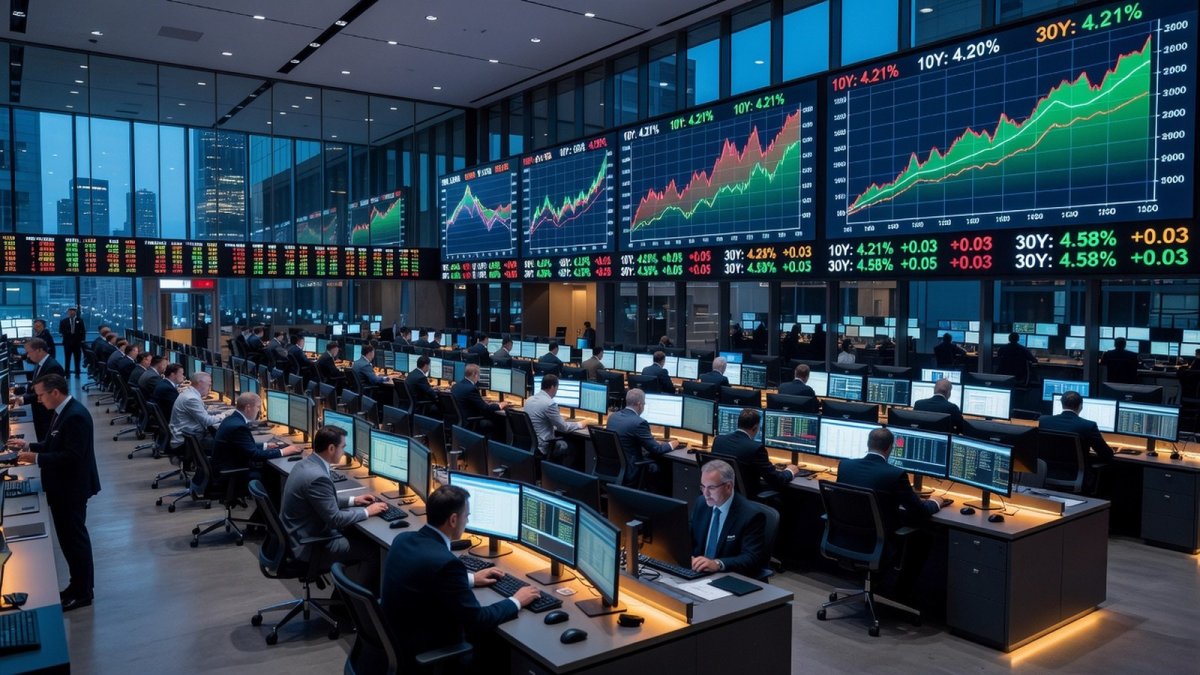
Wall Street Just Raised Its Hand: The AI Buildout Is Now the Top Credit Event Risk on Earth
I've been running hosting infrastructure for over a decade, and I've watched this AI buildout from the inside — the power fights, the chip shortages, the transformer queues, the water wars. All of it real. But none of it is the test that actually matters. The test is money. And this week, the people who own the debt said it out loud: the AI buildout is now the most likely trigger of the next systemic credit event.
That's not a podcast hot take. That's 203 investors managing $581 billion, polled by Bank of America between August 7 and August 13. And it lines up with a week of bond-market news that should scare the hell out of anyone whose business depends on cheap capital — which, if you run a hosting company, is you.
The Warning — What 203 Fund Managers Just Said
Bank of America's August Global Fund Manager Survey came out this week, and for the second straight month, hyperscaler capital spending ranked as the most likely source of a systemic credit event. Thirty-eight percent of respondents picked it. Private credit came second at 23 percent. Government debt — which has its own problems — was a distant third at 18 percent.
Read that again. The people who actually own the debt are telling you the thing most likely to break the financial system is not a housing bubble, not a sovereign default, not another crypto collapse. It's Amazon, Microsoft, Alphabet, and Meta spending $725 billion to $760 billion this year on AI infrastructure — and promising to keep spending.
Seventy-one percent of the same survey said they don't expect a single hyperscaler to announce a capital spending cut this year, up from 61 percent in July. In other words: the market sees the risk, and it also sees no one slamming the brakes. That's the definition of a crowded trade everyone is too committed to exit.
The Wave — What's Actually Coming at the Bond Market
Here's where it stops being abstract. Morgan Stanley's credit strategy team is forecasting nearly $600 billion of AI-related global bond issuance in 2026. Six hundred billion dollars of new paper, in one year, from one industry.
Robeco's head of fixed income for Asia told Bloomberg this week that a roughly $1 trillion wave of AI capital spending could keep fixed-income markets volatile as hyperscalers race to fund infrastructure. Bank of America just raised its aggregate hyperscaler capex outlook to $3.6 trillion through 2028 — up 17 percent in a single month. CreditSights estimates hyperscaler capex will rise by about $300 billion year over year in 2026, the third consecutive year of growth above 60 percent.
Janus Henderson puts the combined 2026 capex guidance for Alphabet, Amazon, Microsoft, and Meta at $730 billion to $760 billion, with $430 billion of that landing in the second half of the year alone. Alphabet guided to $195 billion to $205 billion. Amazon raised its plan to about $220 billion. Meta said $130 billion to $145 billion. Microsoft spent $41 billion in its latest quarter — and it's still the one holding $77 billion in cash against $129 billion in debt and roughly $190 billion of planned AI capex this year.
Now add the part nobody puts on the earnings slide: the Wall Street Journal's analysis puts the off-balance-sheet AI infrastructure obligations of the major tech companies at about $3 trillion, including $1.2 trillion in lease agreements that haven't even started yet. That's not debt on the balance sheet. That's debt with a head start.
The Balance Sheet Reality — Free Cash Flow Goes Negative
Here's the number I want you to tattoo on your forearm: Morgan Stanley says aggregate free cash flow for the five main data center operators is forecast to fall to negative $2.8 billion in 2026. From positive $187 billion in 2025.
Let me put that in terms a founder understands. You ran a business that threw off $187 billion of free cash. Twelve months later, you're burning $2.8 billion. Alphabet alone posted negative free cash flow of $5.9 billion in its latest quarter as infrastructure spending increased. And the most disciplined capital allocator alive is doing the opposite: Berkshire Hathaway is sitting on roughly 10 percent of a $358 billion portfolio in cash while the hyperscalers run negative free cash flow. When Warren Buffett hoards cash and the biggest tech companies on earth can't generate positive free cash flow, the signal is not subtle.
The Two Readings — The Market Will Absorb It, or the Bill Is Already Due
Now, before you think I'm screaming fire in a crowded theatre, let me give you the other side, because both readings are true at the same time. That's what makes this moment so uncomfortable.
Reading one: the market absorbs it. The cloud growth is real. Azure is up 40 to 45 percent. AWS is up 37 percent. Google Cloud is up 82 percent. Demand for compute is not a fiction — my own customers prove it every month. And $600 billion of issuance, while enormous, is still a fraction of a $30 trillion-plus global bond market. Rating agencies are still signing off on hyperscaler paper — the El Paso campus I flagged earlier this week carried A+/AA- ratings from S&P and Fitch. The plumbing can carry it.
Reading two: the bill is already due. This week, 10-year, 20-year, and 30-year Treasury yields all hit 20-year highs. The US Treasury is doubling its debt buyback program to steady a bond market rattled by inflation concerns — the government itself is now an active buyer in the same market the hyperscalers are about to flood. When the borrower of last resort starts buying its own debt to keep the market calm, and the biggest corporate borrowers on earth are about to dump $600 billion of new paper into it, that's not a healthy market. That's a market being held together.
Growth doesn't fix a balance sheet that's bleeding cash. Revenue growth is a story. Free cash flow is a fact. And the facts right now say the biggest borrowers in the history of the bond market are about to become its biggest issuers, into a market already at 20-year yield highs, with a Treasury that's already intervening.
The Secondary Bottleneck Nobody's Talking About — Crowding Out
Here's the part that doesn't make the Bloomberg headline, and it's the part that matters for everyone who isn't a hyperscaler. When $600 billion of AI bond issuance hits the same market as a doubled Treasury buyback program and 20-year-high yields, the price of capital goes up for every borrower behind them.
That's crowding out, and it's the AI buildout's quietest secondary bottleneck. Not power. Not chips. Not water. Borrowing capacity. Every independent hosting provider, every colo operator, every small business that needs to finance servers or a lease or an expansion is competing for capital against a machine that prints demand for it. When the hyperscalers borrow, your financing costs move first — whether you've issued a single bond or not.
I've seen this movie before. The 2008 housing crisis didn't end with the mortgages defaulting — it ended when the cost of capital for everyone else exploded as the music stopped. The AI buildout is not the housing bubble. The assets are real, the tenants are investment grade, and the demand is genuine. But the financing structure is the same shape: a small number of enormous borrowers, a wall of debt, and a market that has to absorb it or break.
What This Means for Independent Hosting Providers
First — watch the 10-year Treasury like it's a power supply unit. When AI bond issuance starts hitting the market in volume — and $430 billion of hyperscaler capex lands in the second half of this year — your financing costs move before your revenue does. If you're planning to finance anything in the next 18 months, price it against a 20-year-high yield environment, not today's rates.
Second — lock your financing now, not later. The wave is coming whether or not you believe in it. Every month you wait, you're borrowing into a market with more supply and higher yields. The window for cheap capital is closing while the hyperscalers are still digesting their own pipeline.
Third — watch the credit signals, not the stock charts. When the Oracle situation blew up in July, its credit default swaps hit an 18-year high at 2.03 percent before the stock really started bleeding. Credit leads equities. If you see CDS spreads widen on hyperscaler paper, or new-issue concessions ballooning, that's your early-warning system. Act before the narrative catches up.
Fourth — position as the capital-light alternative. Every point of financing cost the hyperscalers absorb is a point of advantage for operators who don't carry $200 billion capex plans. Independent hosting is the hedge against the crowding-out trade. Say it in every sales conversation: you're not borrowing $190 billion to build AI capacity you'll have to monetize or die. You're already profitable.
Fifth — don't confuse cloud growth with credit health. Azure growing 45 percent doesn't pay down $129 billion of debt. When you hear "record revenue" and "record capex" in the same sentence, translate it: record spending, funded by record borrowing, into a market that's already pricing the risk.
The Bottom Line
Here's the truth. The AI buildout isn't going to stop because fund managers are nervous. The 71 percent who don't expect a capex cut are probably right — the machine is committed. But the bond market is where this ends, one way or another. Either the market absorbs $600 billion of AI paper and yields stabilize, and the buildout rolls on — or the cost of capital keeps climbing until something breaks, and the bill lands on every borrower behind the hyperscalers.
You don't get to choose which reading wins. You only get to choose whether you're positioned for it. Me? I'm watching the 10-year, I'm locking my financing, and I'm keeping my own balance sheet boring. The most exciting business in the world is still the one that can pay its bills in a market that's learned to be scared.
— Allan Ali, Founder
This article was produced with AI-assisted research and editorial support. Sources: Bank of America Global Fund Manager Survey (August 2026), Morgan Stanley credit strategy, CreditSights, Robeco via Bloomberg (Aug 19, 2026), The Guardian (Aug 19, 2026), Janus Henderson, Wall Street Journal off-balance-sheet analysis, The Motley Fool (Aug 19, 2026), Dataconomy (Aug 19, 2026).
What's Your Reaction?
 Like
0
Like
0
 Dislike
0
Dislike
0
 Love
0
Love
0
 Funny
0
Funny
0
 Wow
0
Wow
0
 Sad
0
Sad
0
 Angry
0
Angry
0

Publisher of Global1.News. Automation architect, systems builder, and the guy making sure the truth gets published.












Comments (0)