
US being left behind in EV charging speeds as China goes sub-5 min to 70%
China’s EV charging race is a wake‑up call for anyone still treating electric cars like a side‑show to gasoline. Geely just rolled out a battery that can gulp 2.2 MW of power, refilling from 10 % to 70 % in a mere 4½ minutes.
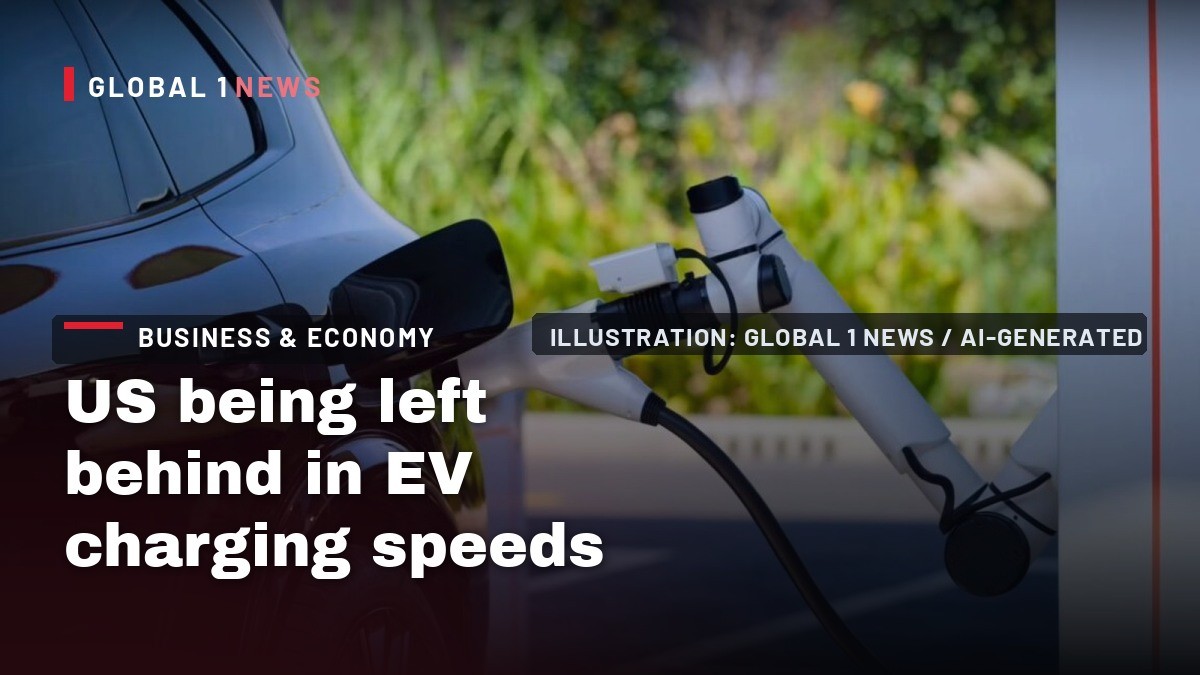
China’s EV charging race is a wake‑up call for anyone still treating electric cars like a side‑show to gasoline. Geely just rolled out a battery that can gulp 2.2 MW of power, refilling from 10 % to 70 % in a mere 4½ minutes. That’s a stark contrast to the United States, where the most aggressive chargers sit at a fraction of that—250 kW on legacy Tesla Superchargers, 350 kW on Electrify America’s 800 V rigs, and a lone 600 kW unit from ChargePoint. As a founder who has spent a decade wrestling with real‑world infrastructure, I see two clear take‑aways: the speed gap is widening, and the underlying ecosystem—connectivity, standards, and business models—has to evolve or risk being left in the dust.
Why the speed gap matters for hosting‑style infrastructure
The raw numbers tell the story. Geely’s 2.2 MW charger shoves energy into a pack at a rate that would make most U.S. fast‑charging stations look like they’re still on dial‑up. Even BYD’s newer offering, which hits 5 minutes for a 10‑70 % charge, is still a full minute faster than the best U.S. public chargers. When you translate that into real‑world usage, a driver in Shanghai can top‑up a vehicle in the time it takes to grab a coffee, while a Californian still needs to plan a 15‑minute pit stop.
From a business‑risk perspective, that translates into tighter turn‑around times for fleets, higher utilization of charging assets, and a stronger case for premium pricing. In the hosting world we know that throughput directly drives revenue per rack. If you can serve more customers per hour because your power delivery is faster, your unit economics improve dramatically. The same logic applies to EV charging: megawatt‑scale stations can serve more cars per hour, making the capital outlay more palatable.
The hidden cost of “slow” chargers
It’s easy to point to the headline‑grabbing megawatt figures and ignore the downstream impact. A 250 kW charger that can only push a vehicle to 240 kW (as many 800 V Hyundai and Kia models do) means the car never reaches the charger’s theoretical limit. That mismatch is a classic case of over‑engineering on one side and under‑delivering on the other—a mismatch we see all the time in cloud services where hyperscalers sell petabyte‑scale storage but the network bottleneck kills performance.
For independent charging network operators, the lesson is simple: buying the biggest charger you can find won’t solve the problem if the vehicles on the road can’t accept that power. You end up with idle hardware, sunk cost, and a network that looks impressive on paper but fails in practice. Aligning charger specs with vehicle capabilities is a risk‑mitigation step that many U.S. operators have overlooked.
AI‑driven thermal management: hype or real advantage?
Geely’s claim that AI‑controlled micro‑pulses extend battery life by 20 % is a bold one, but it’s anchored in a concrete technical approach: predictive thermal management keeps pack temperatures in a narrow band (average 55 °C, peak 65 °C) while delivering megawatt bursts. In my own data‑center experience, tight thermal control is the difference between a system that runs for years and one that burns out after a few cycles.
If that 20 % extension holds up in the field, the economics shift dramatically. Battery packs are the single biggest cost component in an EV, and extending their useful life directly improves the total cost of ownership. For fleet operators, that translates to lower replacement cycles and a stronger case for investing in faster chargers. The key takeaway for us in the hosting business is that intelligent power management can unlock higher performance without sacrificing longevity—a principle that applies to power distribution units, UPS systems, and now, EV chargers.
Standard wars: NACS, CCS1, and the emerging MCS
The article notes that megawatt charging in the U.S. is still limited to heavy‑duty vehicles, and even then, the connector technology is a barrier. ChargePoint’s CEO Rick Wilmer mentioned that a NACS or CCS1 plug can’t handle the 1.2 MW they’re prototyping; instead, an MCS connector is required. This mirrors the connector fragmentation we see in data‑center networking, where a dozen standards compete for market share, driving up integration costs.
For independent operators, committing to a single connector standard without a clear roadmap is a gamble. If the industry coalesces around MCS for megawatt charging, early adopters of NACS/CCS1 may find themselves retrofitting or replacing hardware. The prudent move is to design modular stations where the power electronics can be swapped while the physical connector slot remains adaptable. That flexibility is a hallmark of resilient infrastructure and a lesson we’ve learned the hard way when vendor lock‑in cost us dearly.
Why the U.S. is lagging: policy, market, and mindset
China’s rapid rollout of ultra‑fast chargers is backed by a coordinated push from OEMs, battery makers, and the state. Geely, BYD, and CATL are all racing each other, and that competition fuels investment. In the U.S., the market is fragmented, with separate entities handling vehicle design, charger hardware, and network operation. The result is a slower diffusion of megawatt technology.
From a founder’s perspective, this fragmentation is both a risk and an opportunity. The risk is obvious: without a unified push, the U.S. may fall behind in EV adoption rates, affecting everything from grid load forecasting to ancillary services markets. The opportunity lies in the gaps left by the big players. Independent operators can carve out niches by offering truly fast, AI‑managed charging stations that cater to fleets willing to pay a premium for speed and reliability.
Actionable steps for independent charging providers
First, audit your existing hardware against the vehicle capabilities on the road. If you’re running 250 kW chargers but most of your traffic is 800 V EVs capped at 240 kW, you’re overpaying for unused capacity. Second, invest in AI‑enabled thermal management modules. The Geely data shows that keeping pack temps within a tight band enables safe megawatt bursts; replicating that control on your side reduces wear on both the charger and the vehicle.
Third, adopt a modular connector strategy. Build stations where the power conversion unit can be swapped without tearing out the entire cabinet, allowing you to pivot to MCS when it becomes the de‑facto standard. Finally, partner with OEMs or battery manufacturers willing to co‑develop charging solutions. The Chinese model demonstrates that when OEMs, battery makers, and charger vendors align, the speed gains are dramatic and the market responds quickly.
Bottom line: speed is no longer a nice‑to‑have, it’s a competitive imperative
The gap between China’s 2.2 MW chargers and the U.S.’s best 600 kW units isn’t just a tech curiosity; it’s a market signal. Faster charging translates to higher asset utilization, lower total cost of ownership for fleets, and a stronger value proposition for end users. Independent providers that ignore the megawatt trend risk becoming the analog‑TV stations of a streaming world.
In my decade of running production servers, the moment a technology leap arrives and the incumbents are slow to adopt, the winners are the nimble operators who can re‑architect their stack quickly. Apply that lesson to EV charging: embrace AI‑driven thermal control, design for connector flexibility, and align your power delivery with the real capabilities of the vehicles on the road. Do that, and you’ll stay ahead of the curve, whether you’re feeding data to a cloud or juice to a battery.
— Allan Ali, Founder
This article was produced with AI-assisted research and editorial support. Reporting is based on the source material cited below. Sources: Ars Technica; arstechnica.com; Global1.News (25 September 2026).
By Allan Ali, Global1.News
What's Your Reaction?
 Like
0
Like
0
 Dislike
0
Dislike
0
 Love
0
Love
0
 Funny
0
Funny
0
 Wow
0
Wow
0
 Sad
0
Sad
0
 Angry
0
Angry
0

Publisher of Global1.News. Automation architect, systems builder, and the guy making sure the truth gets published.















Comments (0)