
Iran airlines cancel flights as US sanctions hit
Iran’s aviation network faced a sudden shock on Wednesday as the United States tightened sanctions on the country’s airline industry, prompting the cancellation of several international routes.
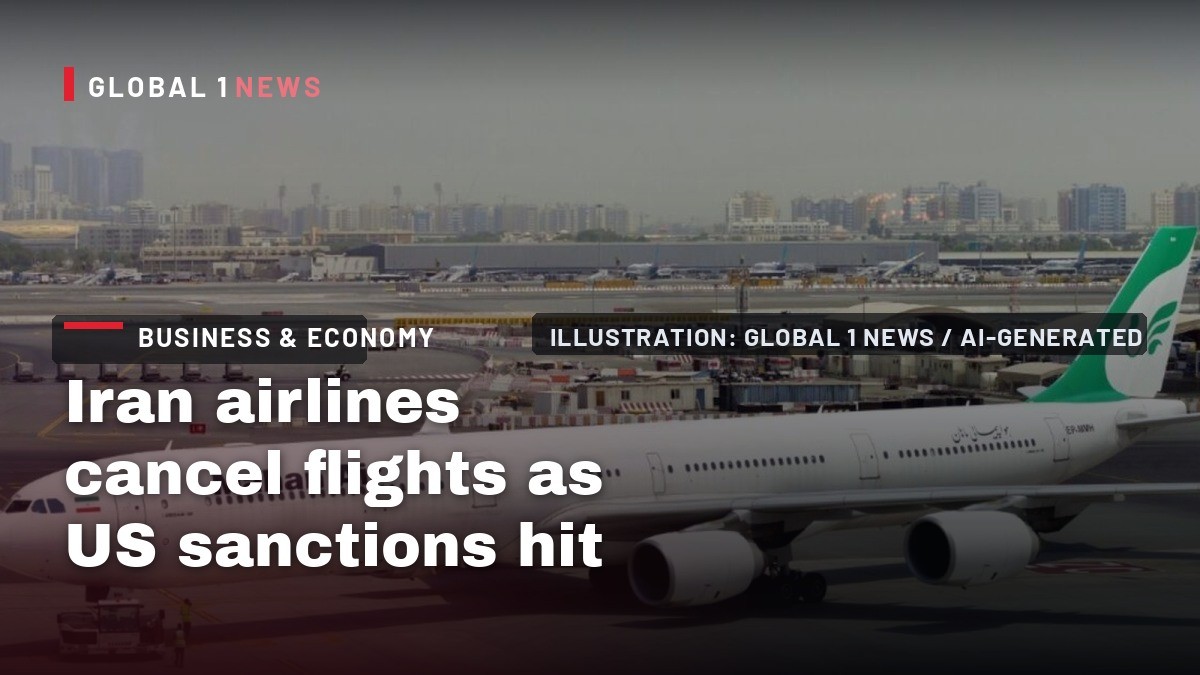
Iran’s aviation network faced a sudden shock on Wednesday as the United States tightened sanctions on the country’s airline industry, prompting the cancellation of several international routes. The move, announced by U.S. Treasury Secretary Scott Bessent, is part of a broader “economic D‑Day” strategy aimed at pressuring Tehran after more than half a year of armed conflict. While some carriers managed to keep a few flights alive, the ripple effects are already being felt across the region, from Georgia’s capital to Iraqi pilgrimage hubs.
Sanctions tighten and flights disappear
The new U.S. measures, unveiled on Monday, target the financial and logistical lifelines that keep Iranian airlines operational abroad. Bessent told Fox News that the sanctions would “squeeze the Iranians like they’ve never seen,” estimating that “probably more than 80 or 90 percent” of Iran’s external flights have been shut down. The immediate impact was visible on Wednesday when Georgia and Azerbaijan officially announced the suspension of all flights to and from Iran.
In Tehran, a travel agent who asked to remain anonymous confirmed that flights to Baghdad, Muscat and Qatar were also halted. The agent warned that ticket sales had been frozen “for fear of cancellations,” underscoring the uncertainty that now clouds the market for Iranian travelers and travel operators alike.
Regional responses: compliance and resistance
Georgia and Azerbaijan’s swift compliance reflects a growing willingness among neighboring states to align with U.S. pressure on Tehran. By contrast, Iran’s top national security official, Mohsen Rezaei, warned that any country cooperating with the United States would face retaliation, stating that “its airports will no longer be able to operate flights” to Iran. The warning signals a potential escalation in diplomatic tensions, especially for countries that rely on Iranian air traffic for trade or tourism.
Iranian media reported that Iraq’s Baghdad airport would “no longer accept” Iranian flights, echoing the U.S. push. Yet, on the ground in Najaf, a source at the airport told Tasnim news agency that Iranian flights were still operating normally, and no directive to halt them had been received from Iraqi authorities. This discrepancy highlights the fragmented nature of enforcement across the region.
Airlines that stay aloft: Mahan Air and smaller carriers
Despite the crackdown, Iran’s largest carrier, Mahan Air, managed to keep at least one long‑haul route alive. Flight‑tracking data from FlightRadar24 showed a Mahan flight landing in Guangzhou, China, on the day the sanctions took effect. China publicly opposed the U.S. measures, calling them illegal, and a scheduled flight to Shanghai was also set to depart from Tehran.
Smaller Iranian airlines, such as Varesh, continue to operate limited connections to Turkey and Armenia. According to Tehran’s international airport website, flights to Istanbul were still on the schedule, although some were cancelled. A Mahan flight from Kabul was also expected to arrive in Tehran, indicating that not all regional links have been severed.
Impact on pilgrimage traffic and the Iraqi travel market
One of the most sensitive corridors affected by the sanctions is the flow of Iranian pilgrims to Najaf, a major religious destination in Iraq. Tasnim reported that Iran’s aviation authorities were negotiating to reroute Baghdad flights to Najaf, hoping to preserve the pilgrimage traffic that fuels both economies. In Najaf, travel agent Haidar Shamaa warned that “most travel companies in the city depend on booking flights” to Iranian airports, and that the sudden cancellation risk could push travelers toward longer, land‑based routes.
The uncertainty has already triggered a surge of calls to travel agencies, with clients seeking updates and alternatives. Some agencies are considering shifting passengers to overland journeys, a move that would lengthen travel times dramatically and strain already congested road networks.
Economic ramifications for Iran’s aviation sector
Iran’s aviation industry has been under sanction pressure for years, but the latest wave represents a significant escalation. The U.S. Treasury’s action targets the ability of Iranian airlines to secure financing, insurance and spare parts from international markets, effectively choking the sector’s operational capacity. While carriers like Mahan Air can still reach China, the loss of routes to the Gulf, the Caucasus and parts of the Middle East reduces revenue streams and could force further cutbacks.
Domestic airlines may turn to smaller, regional aircraft that are less dependent on foreign parts, but this shift would limit capacity and increase ticket prices for passengers. The broader economic impact could ripple through related sectors—tourism, hospitality and trade—especially in border cities that depend on cross‑border air traffic.
Diplomatic fallout and the prospect of retaliation
Iran’s supreme national security council head, Mohsen Rezaei, signaled a willingness to retaliate against states that cooperate with Washington. His warning that “airports will no longer be able to operate flights” to Iran if they align with the U.S. raises the specter of a broader aviation standoff in the region. Such a scenario could see neighboring airports restricting Iranian carriers, further isolating Tehran’s airlines.
Meanwhile, the United Nations General Assembly, where Iranian President Massoud Pezeshkian is currently present, has become a stage for Tehran’s defiant narrative. Pezeshkian described the sanctions as “mounting pressure and growing intimidation” and vowed that “the resistance of the Iranian people will only intensify.” The diplomatic clash underscores how aviation sanctions are being wielded as a tool of geopolitical leverage.
Looking ahead: possible pathways for Iran’s airlines
In the short term, Iranian carriers are likely to lean on routes that remain open, particularly to China, which has publicly opposed the U.S. measures. Continued flights to Guangzhou and Shanghai suggest that Tehran will prioritize maintaining ties with Asian markets that are less susceptible to U.S. pressure.
Longer‑term strategies may involve deepening regional partnerships with countries that are less inclined to follow U.S. sanctions, such as Russia or certain Central Asian states. Iran could also explore alternative financing mechanisms, including domestic funding or partnerships with non‑Western firms, to keep its fleet operational. However, the success of such approaches will depend on the willingness of regional airports to host Iranian flights without risking secondary sanctions from Washington.
This article was produced with AI-assisted research and editorial support. Reporting is based on the source material cited below. Sources: Al-Monitor; al-monitor.com; Global1.News (24 September 2026).
By Hannah Berg, Staff Writer
What's Your Reaction?
 Like
0
Like
0
 Dislike
0
Dislike
0
 Love
0
Love
0
 Funny
0
Funny
0
 Wow
0
Wow
0
 Sad
0
Sad
0
 Angry
0
Angry
0

Israel Correspondent at Global1.News. Based in Tel Aviv, covering Israeli politics, security, technology, and society. Provides balanced, deeply-sourced reporting on one of the most closely-watched regions in the world.














Comments (0)