
Trump Plans Kim Meeting, Reveals N. Korea Nuclear Estimate
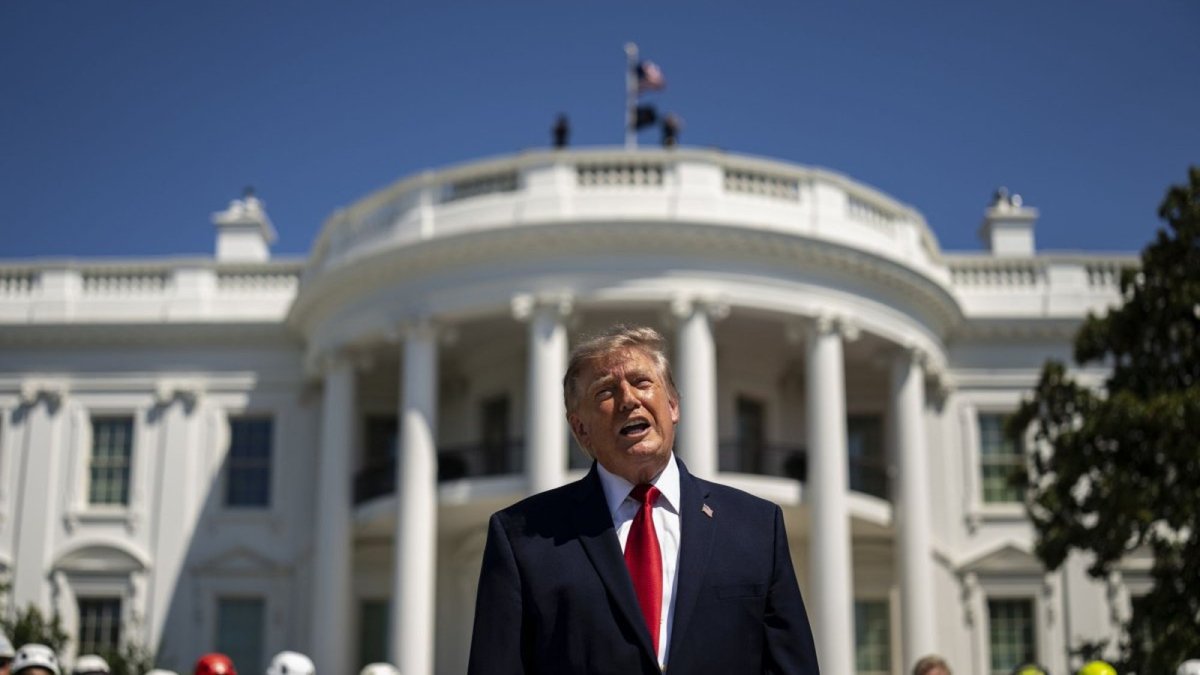
In a significant escalation of diplomatic rhetoric, US President Donald Trump announced on Wednesday, August 19, 2026, that he intends to meet North Korean leader Kim Jong Un before the end of the year. The announcement, made during a press availability at a new White House helipad, was accompanied by an unusually specific public estimate that North Korea possesses 57 "very powerful" nuclear weapons—a figure that diverges sharply from South Korean intelligence assessments.
In a significant escalation of diplomatic rhetoric, US President Donald Trump announced on Wednesday, August 19, 2026, that he intends to meet North Korean leader Kim Jong Un before the end of the year. The announcement, made during a press availability at a new White House helipad, was accompanied by an unusually specific public estimate that North Korea possesses 57 "very powerful" nuclear weapons—a figure that diverges sharply from South Korean intelligence assessments. This development comes amid a dramatic restructuring of the US-ROK military alliance, with Washington ordering a substantial reduction in joint exercises, a move that has elicited cautious approval from Seoul and outright dismissal from Pyongyang.
Trump Announces Year-End Summit with Kim, Reveals Nuclear Estimate
[Seoul, South Korea – August 20, 2026] — President Trump's remarks on Wednesday signal a renewed personal diplomacy push with the North Korean leader, echoing the historic summits of his first term. When asked directly whether he expected to meet Kim this year, Trump replied affirmatively: "Yeah, I will be" and "Yes, I do." He framed his relationship with Kim as a strategic asset, stating, "I get along with him. And you know what? The fact that I get along with him, that's a good thing, not a bad thing." The President also offered a stark assessment of the current security situation, asserting, "This should never have happened. If I were president, I would not have allowed it," and adding, "I know Kim Jong Un very well, and he's going to be fine. As long as we have a smart president, he's going to be fine."
Divergent Estimates of the North Korean Arsenal
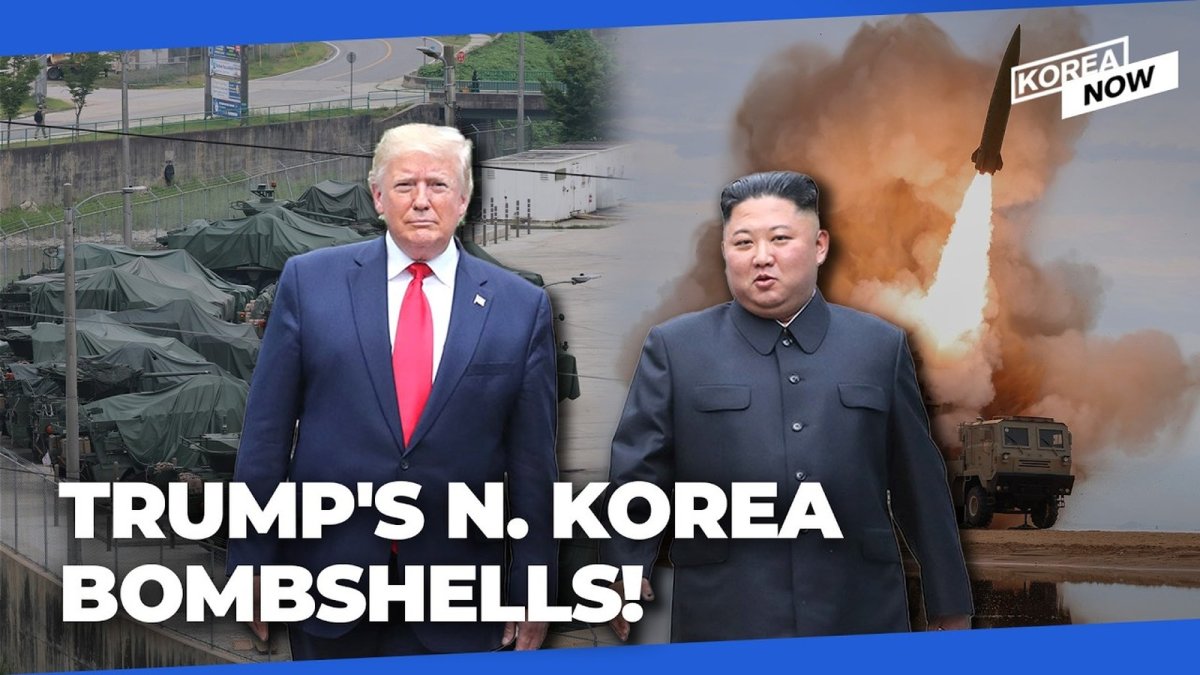
The President's public mention of "57" nuclear weapons is a notable departure from standard US government practice, which typically refrains from releasing official public estimates of the North's arsenal. This figure stands in stark contrast to the assessment provided by South Korean Defense Minister Ahn Gyu-back. During a parliamentary session on Thursday, Minister Ahn stated that Seoul estimates North Korea possesses between 80 and 120 nuclear warheads—a significantly higher range than Trump's number. This discrepancy highlights a potential divergence in intelligence assessments between the two allies, a matter of considerable strategic importance.
Independent analyses offer a middle ground. A 2025 report by the US Congressional Research Service cited expert estimates suggesting Pyongyang has produced enough fissile material for up to 90 warheads but may have assembled approximately 50. The Stockholm International Peace Research Institute (SIPRI) estimated in June 2026 that North Korea may have assembled around 60 warheads, with material to produce at least 30 more. The variance in these figures underscores the profound uncertainty surrounding the North's nuclear program and complicates any potential negotiation framework.
Restructuring the US-ROK Military Alliance
The summit announcement is inextricably linked to a major shift in US military posture on the Korean Peninsula. On Sunday, August 16, President Trump posted on Truth Social, calling for the annual joint military exercises with South Korea to be "substantially reduced," arguing they are expensive and "send a signal that is totally inappropriate and hostile" to North Korea. This directive was swiftly operationalized. On Wednesday, the South Korean Joint Chiefs of Staff announced that the allies would cut short the ongoing joint exercise by almost a week and reduce the scale of field training drills. The Wall Street Journal has reported that Trump has asked aides to organize the meeting with Kim as early as this fall, with some reports suggesting November.
Seoul's Cautious Endorsement and Pyongyang's Dismissal
The South Korean government has responded with a carefully calibrated statement of support. Late Wednesday, President Lee Jae Myung expressed "respect" for Trump's decision, framing it as a reflection of "deep deliberation to build peace on the Korean Peninsula, moving beyond hostility and confrontation." In a post on X, President Lee wrote, "We hope that this decision by President Trump will lead to the establishment of a stable peace regime on the Korean Peninsula, through the building of trust and the resumption of dialogue between North Korea and the United States." This measured response suggests Seoul is seeking to align itself with Washington's diplomatic overtures while managing domestic political sensitivities regarding national security.
Pyongyang's reaction, however, was one of contemptuous dismissal. In state media commentary, Kim Yo Jong, sister of Kim Jong Un, rejected the notion that the reduction in exercises represented a goodwill gesture, stating, "If the U.S. calculates that it can propagate its recent measure as the one of so-called good faith, they will not get desired answer." She claimed to be unaware of any recent communication between the two leaders, described their personal relationship as "really excellent," but accused Washington of threatening North Korea's security by continuing military exercises with Seoul at all. The North's position was further underscored on Thursday, August 20, when South Korea's military reported that Pyongyang fired multiple short-range ballistic missiles toward the East Sea, marking the North's third missile launch in less than two weeks.
Geopolitical Context: Northeast Asia's Strategic Calculus
The Trump administration's decision to reduce joint US-ROK military exercises—characterized by the President as expensive and "totally inappropriate and hostile" toward Pyongyang—fundamentally alters the security architecture underpinning the US-ROK alliance. While South Korean President Lee Jae Myung expressed "respect" for the decision, framing it as a pathway toward "a stable peace regime on the Korean Peninsula," the move creates strategic ambiguity. It raises questions in Seoul and Tokyo about the reliability of extended deterrence, particularly as Washington's public estimate of 57 North Korean warheads diverges sharply from Seoul's assessment of 80-120, suggesting a potential gap in allied threat perception.
Pyongyang's response underscores the limits of unilateral concession. Kim Yo Jong dismissed the exercise reduction as not a goodwill gesture, asserting the North had "no interest at all"—a stance reinforced by the August 20 launch of multiple short-range ballistic missiles toward the East Sea, the third such test in under two weeks. This pattern, following the collapsed denuclearization talks in Singapore, Hanoi, and at the DMZ, signals that North Korea seeks direct superpower recognition rather than inter-Korean rapprochement. For Japan, the heightened missile activity and diminished allied exercises complicate its regional posture, while China observes a recalibrated US commitment that could reshape Northeast Asia's balance of power.
Expert Perspectives on the Diplomatic Gambit
The current situation presents a complex puzzle for analysts. Defense Minister Ahn Gyu-back stated Thursday that he believes Pyongyang is interested in Trump's attempts to resume dialogue, though he declined to answer whether Seoul was aware of backstage talks about a possible meeting. This suggests a level of uncertainty even within the allied intelligence community about the viability of the proposed summit. The historical precedent is instructive: Trump met Kim three times during his first term—in Singapore (June 2018), Hanoi (February 2019), and at the Korean Demilitarized Zone (June 2019). Those talks ultimately collapsed over US demands for complete denuclearization, a fundamental impasse that remains unresolved.
Looking Ahead: The Path to a Potential Summit
As the administration moves toward a potential fall meeting, several critical questions remain. The first concerns the definition of success. Trump's stated goal of denuclearization appears to have been replaced by a more transactional approach focused on personal rapport and arms control, as evidenced by his specific—and lower—nuclear estimate. The second question involves the alliance management challenge. The reduction in military exercises, while welcomed by Seoul, has created a precedent that could be difficult to reverse and may have long-term implications for the readiness of the US-ROK combined forces. Finally, the North's continued missile tests, conducted even as dialogue is being proposed, serve as a stark reminder that Pyongyang's strategic calculus is unlikely to change without significant concessions.
The coming weeks will be critical in determining whether this diplomatic overture translates into a tangible summit or remains another chapter in the long and often frustrating history of US-North Korea negotiations. For South Korea, the stakes are existential. President Lee's government must navigate a path that maintains the alliance with Washington, manages the threat from the North, and addresses domestic concerns about security. The proposed meeting, if it occurs, will be a defining moment for the region, testing whether personal diplomacy can achieve what institutional negotiations have not. The discrepancy between Trump's estimate of 57 warheads and Seoul's assessment of up to 120 underscores the fundamental challenge: any negotiation will require a shared understanding of the problem, a precondition that currently appears elusive.
By Prof. David Park, Staff Writer
This article was produced with AI-assisted research and editorial support. Reporting is based on sources cited in the article.
What's Your Reaction?
 Like
0
Like
0
 Dislike
0
Dislike
0
 Love
0
Love
0
 Funny
0
Funny
0
 Wow
0
Wow
0
 Sad
0
Sad
0
 Angry
0
Angry
0

East Asia/Technology Correspondent at Global1.News. Seoul-based voice covering Korean politics, technology, business, and culture. Analyzes how technology and geopolitics intersect across East Asia.













Comments (0)