
US Weighs Dropping the 'Mother of All Bombs' on Iran's Nuclear Sites
The US military has prepared strike plans that include the possible first use of the GBU-43/B MOAB, the largest non-nuclear bomb in the American arsenal, against Iranian energy infrastructure and nuclear sites. No strike has been approved or scheduled.
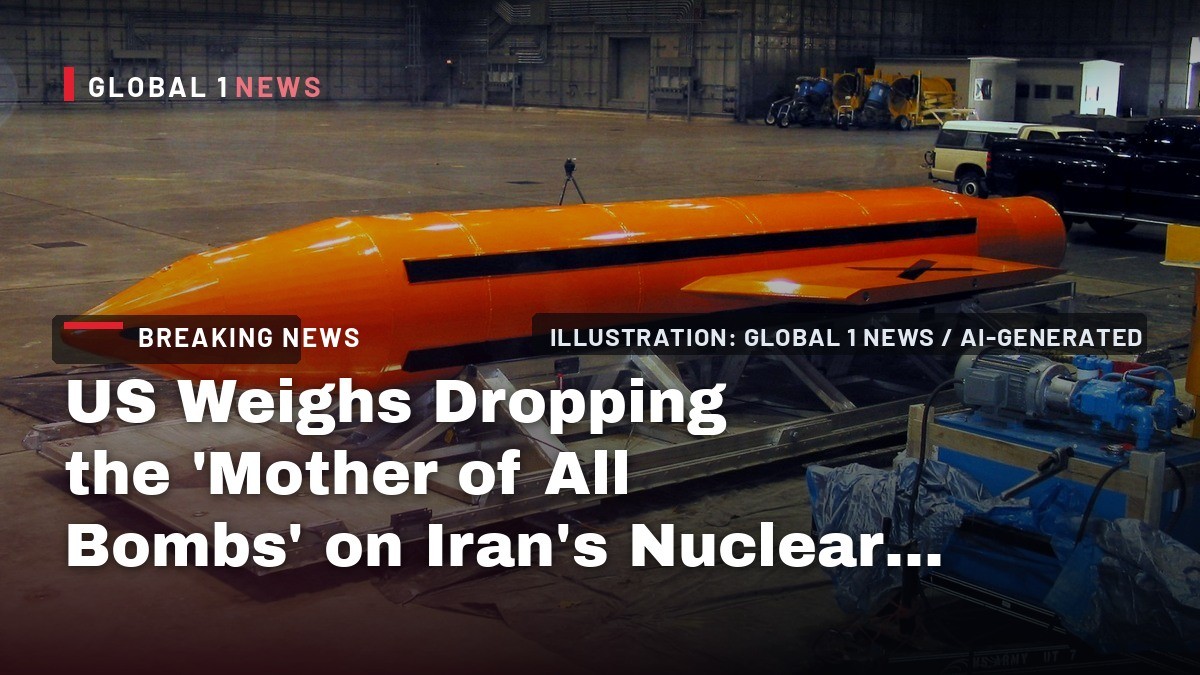
American military planners have put the largest non-nuclear bomb in the US arsenal on the menu of options for Iran. No strike has been approved, ordered or scheduled, and the weapon has never been used in this war. But its arrival in the planning for a war now in its eighth month marks a notable escalation in a conflict Washington has spent months trying to find a way out of.
US Weighs Dropping the 'Mother of All Bombs' on Iran's Nuclear Sites
Washington, United States — The weapon, the GBU-43/B Massive Ordnance Air Blast bomb, has been in the American inventory since 2003 and used once in combat. Officials familiar with the planning say it would be aimed at energy infrastructure and at nuclear sites buried deeper than the bombs the US has already dropped.
A Plan Landed on the President's Desk
CNN reported Thursday that the planning is complete and the options are waiting on a presidential order, which could come either before or after the midterm elections, according to multiple US officials familiar with the matter. Trump has ordered the military to develop additional strike packages against Iranian targets that include "a lot of energy infrastructure" and the potential use of a MOAB, one of the sources told CNN. The same source said the phrasing used was that this attack would come "prior to US retrograde in CENTCOM AOR (area of responsibility)" — indicating the administration could launch the additional strikes, attempt to declare victory and quickly pull everyone out. A second source told CNN that military plans for striking Iranian nuclear sites, including Pickaxe Mountain, also explicitly call for using the MOAB.
What the MOAB Actually Is
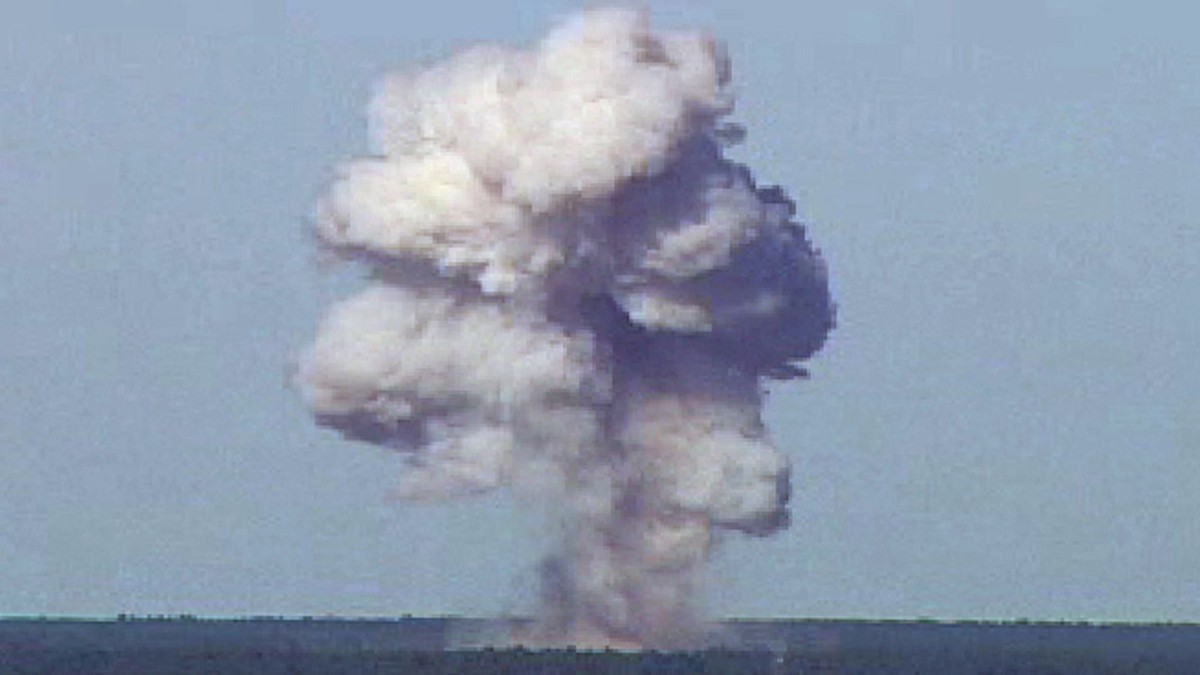
The weapon at the centre of the planning is the GBU-43/B Massive Ordnance Air Blast bomb, known as the MOAB and nicknamed the "mother of all bombs." It is America's most powerful non-nuclear bomb, weighing 21,600 lbs, or about 9.8 tonnes. Developed during the Iraq War, it carries an air blast-type warhead that explodes before hitting the ground, projecting a massive explosion from all sides. During the final stages of testing in 2003, military officials told CNN the MOAB was mainly conceived as a weapon employed for "psychological operations," hoping such a huge blast would rattle Iraqi troops and pressure them into surrendering or not even fighting. As originally conceived, it was to be used against large formations of troops and equipment or hardened above-ground bunkers, with the target set later expanded to include targets buried under softer surfaces, such as caves or tunnels. Its first operational use came on 13 April 2017, when a MOAB was dropped on an Islamic State tunnel complex in Afghanistan during Trump's first presidency.
Nine City Blocks and a Granite Problem
While the GPS-guided bomb is capable of destroying an area equivalent to nine city blocks, it likely lacks the capability to penetrate deep enough under the surface to destroy the suspected nuclear facilities at Pickaxe, believed to be fortified by layers of granite, and other remaining Iranian nuclear sites, sources said. A third source familiar with military planning discussions around Iran told CNN, "The MOAB is a massive information operation type weapon that is great for huge area clearance but not much else. It is definitely not designed as a deep penetration warhead." If used, the MOAB would have devastating effects on the area it impacts but likely only at the surface level, the sources noted. The bomb's massive blast radius would almost certainly raise concerns about the prospect of civilian casualties, particularly if it is used to target Iranian infrastructure targets located near populated areas and in close proximity to non-military sites.
Pickaxe Mountain Holds the Question
In recent months, Trump has repeatedly threatened to strike Pickaxe, where the US and Israel believe Tehran has stored components of its nuclear program, even after pausing full combat operations earlier this year. Another US official noted that when the military plans, it develops a menu of options for policymakers that range from the high-end to low-end, and that higher-end targets, including those located deep underground, require bigger bombs — and the MOAB is the biggest. The International Atomic Energy Agency has conducted no verification activity in Iran under its NPT safeguards agreement since 28 February other than a single Bushehr inspection in June, and remains unable to verify the location or status of more than 200 kilograms of uranium enriched to up to 60 percent. The third source told CNN, "POTUS has unfortunately put himself in a situation where he is almost compelled to do something and, without the ammunition designed to penetrate that level … you have to look at psychological effects for which the MOAB is well-equipped."
The "Fireworks Show" Exit
Top Trump administration officials and military planners have been focused, for weeks, on finding an off-ramp that gives Trump a "symbolic" win — at minimum — he can try to sell to the American people without preventing a potential diplomatic breakthrough, starting with an agreement to reopen the Strait of Hormuz. A fourth source familiar with the Pentagon's recent planning discussions told CNN that military officials had developed some options that would amount to a "fireworks show," with the goal of providing Trump an off-ramp from the conflict even if those strikes fail to accomplish his stated goals for starting the war in the first place. Many within the administration as well as outside analysts agree that the only way to decisively defeat Iran would be through a major operation involving ground troops, a commitment that could potentially cost thousands of American lives. The Pentagon considers all scenarios, so those plans exist, but as of now no one in the administration is arguing for such drastic action, and Trump has indicated he has little interest in putting US boots on the ground in Iran.
Nineteen Days on the Clock
Trump announced on 8 October that he will not order a resumption of military strikes on Iran before the 3 November midterm elections, a statement reported by the Washington Post. But several advisers said privately they didn't know whether that statement was definitive or could change before Election Day. Trump is facing pressure to bring an end to the deeply unpopular war as Republicans brace for potential political backlash from voters, and there is little indication the two countries are close to a negotiated resolution after more than six months of US bombing. While some administration figures have characterized the war as essentially won, Trump has been more guarded in recent remarks, stopping short of declaring victory and saying the US still has unfinished business in the country. He has cast doubt on outside allies who encouraged him to simply bring US troops home and move on, arguing that doing so would look like defeat.
The Strait Nobody Has Reopened
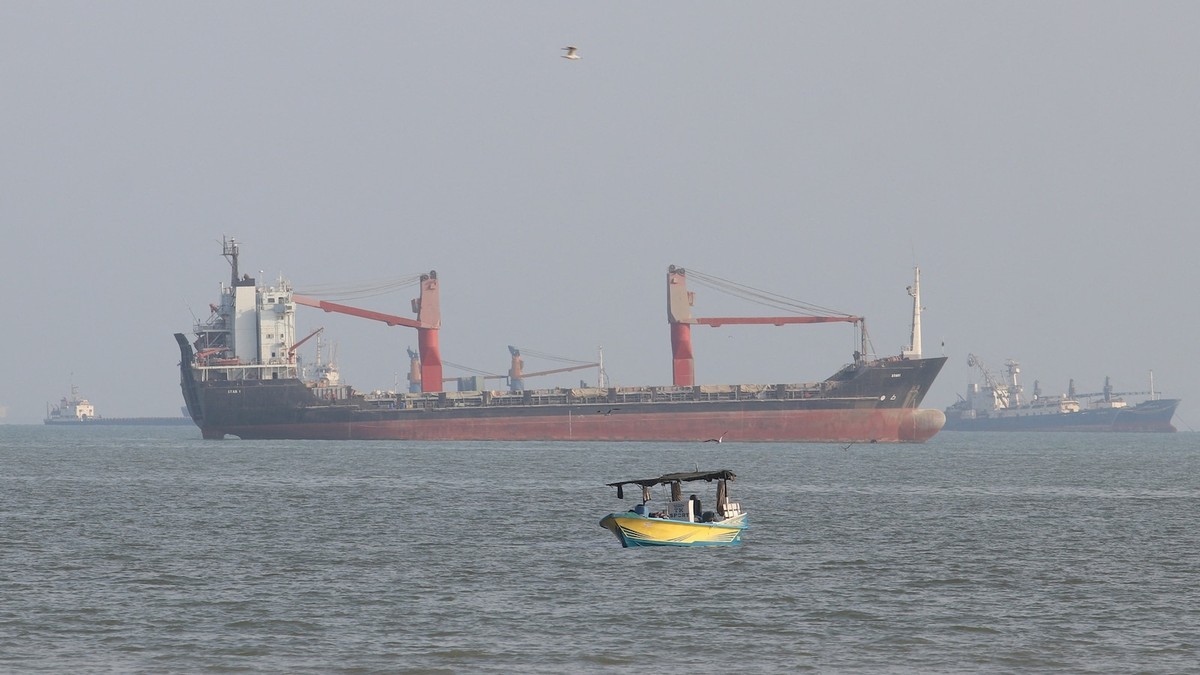
Despite Trump's recent pledge to hold off on launching additional strikes before the midterms, the US military already appears to be preparing for potential Iranian retaliation should the president give the go-order. The next turnover of US troops deployed to CENTCOM is also expected to take place within the next few weeks, according to a fifth source, a US official who acknowledged it is possible some personnel who rotate out of the region may not be replaced by fresh service members. Iran International reported on 9 October that shipping traffic through the Strait of Hormuz stayed about 75 percent below pre-conflict levels, and the UKMTO reported on 13 October that a tanker was struck by an unknown projectile in the strait. The IRGC Navy claimed a cargo ship sank after striking a naval mine while attempting to navigate the strait via what it called an unauthorized and hazardous route, according to ABC News. Iranian lawmaker Esmail Kowsari said, "The United States cannot make up for its energy shortage through this agreement or diminish the importance of the Strait of Hormuz."
What the White House Would Not Say
A White House official, responding to CNN, said the administration does not comment on sensitive military plans that may or may not exist, adding, "President Trump keeps all options on the table to ensure that Iran can never have a nuclear weapon." A Pentagon official, in response to CNN's request for comment, said, "The Department of War plans for a wide range of operational scenarios to execute Presidential and Secretary-level direction and to ensure mission success in any operational environment." The existence of these plans does not mean a strike has been authorised, as Times of India noted in its same-day explainer. Trump said Wednesday at a campaign rally in Kalispell, Montana, that Iran was asking in negotiations with Washington to be "allowed to live," adding, "Now their main thing that they ask in negotiation is, 'Will you please allow us to live?'" He also said, "We're going to knock this Iran thing off fast. It's going to be over very quickly."
The Bill Already Being Paid
The International Monetary Fund said Thursday that prolonged war and renewed disruptions to energy production, shipping routes or critical infrastructure pose the biggest risk to economies across the Middle East and Central Asia. The IMF expects the Middle East, North Africa and Pakistan region to contract 1.3 percent in 2026 after 3.3 percent growth last year, before rebounding 6.6 percent in 2027. Jihad Azour, the IMF's Middle East and Central Asia director, said pre-war surpluses, alternative trade routes and inventory drawdowns had limited the initial impact of the war and the closure of the Strait of Hormuz, but warned those buffers were finite. A senior UN official told Reuters that failure by the United States and Iran to agree within weeks on a UN-backed plan to move fertilizer through the Strait of Hormuz could trigger a food security crisis in parts of Asia and Africa. UN Under-Secretary-General Jorge Moreira da Silva said the mechanism could be activated within seven to 10 days of an agreement, warning that further delays risk missing the planting season. Oil prices fell more than $1 in early Asian trading Thursday, with Brent crude futures down 1.31 percent to $104.67 a barrel by 0116 GMT.
What Happens Next
No ceasefire is in force, and the blockade remains in full force and effect. IRGC spokesman Hossein Mohebi stated that the Trump administration needs an achievement before the midterm elections and that Iran would respond more forcefully to any attack. Foreign Ministry spokesman Esmaeil Baghaei stated on 12 October that Tehran was reviewing the American response to its seven-point ceasefire proposal, which Trump has publicly rejected. Foreign Minister Abbas Araghchi spoke with Omani counterpart Badr Albusaidi on Yemen and regional stability. Whether the MOAB leaves its rack, and whether the war ends before or after Americans vote, remains a decision only the president can make.
By Jessica Ali, Staff Writer
This article was produced with AI-assisted research and editorial support. Sources: CNN, Anadolu Agency, Xinhua, The Times of India, Israel Hayom, Iran International, the Washington Post, ABC News, Reuters, the International Monetary Fund, the United Nations and GlobalSecurity.org.
What's Your Reaction?
 Like
0
Like
0
 Dislike
0
Dislike
0
 Love
0
Love
0
 Funny
0
Funny
0
 Wow
0
Wow
0
 Sad
0
Sad
0
 Angry
0
Angry
0

Editor-in-Chief at Global1.News. Atlanta-based journalist who cuts through the BS and tells it like it is. Lead anchor, host, and the voice you hear when the spin stops and the truth starts.














Comments (0)