
PSNI Investigates Unnotified Shankill Road Parade as Loyalist Band Vows to Stop Recognising Parades Commission
The Police Service of Northern Ireland is investigating an unnotified loyalist parade in Belfast's Shankill Road area after a flute band said it would no longer recognise the Parades Commission, deepening the wider Drumcree parading dispute.
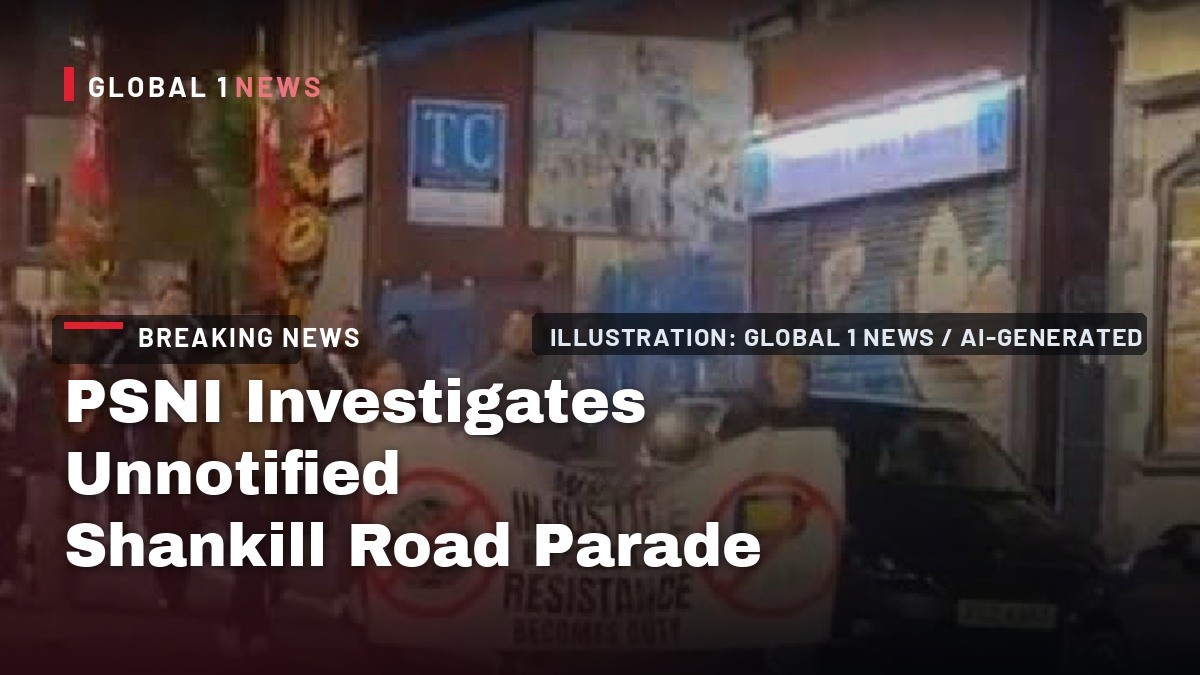
Police in Northern Ireland have opened an investigation into an unnotified loyalist parade in the Shankill Road area of north Belfast, two days after bandsmen marched behind a banner carrying the PSNI crest and the Parades Commission logo with red lines drawn through them. The Police Service of Northern Ireland has appealed for anyone with information to come forward, and the Parades Commission says it has no record of any notification for a procession in the area on Monday night.
PSNI Investigates Unnotified Shankill Road Parade as Loyalist Band Vows to Stop Recognising Parades Commission
Belfast, Northern Ireland — The Police Service of Northern Ireland has launched an investigation into an unnotified parade in the Shankill Road area of north Belfast, believed to have taken place on Monday night, and has appealed for anyone with information to come forward.
The Parade Police Say Was Never Notified
Under the Public Processions (Northern Ireland) Act, a public procession requires notification to the Parades Commission, the public authority that began operating in 1998 to regulate parades and defuse tension around marches. The Commission's statement is unambiguous on that point: "The Parades Commission has no record of having received a notification of intention to hold a public procession in the Shankill area on 12 October 2026. Any investigation of any person suspected of organising or participating in an unnotified public procession is a matter for the PSNI." BBC News NI reported that a police investigation had been launched following reports of an unnotified parade and that enquiries were ongoing; its report also recorded a PSNI line that no reports of a parade having taken place had been received. U105 reported the force as investigating. No one has been arrested, charged or prosecuted over the parade.
What the Band Told the Commission
The band named in reporting is the Young Citizen Volunteers Flute Band. Bandsmen marched behind a banner reading "When injustice becomes law, resistance becomes duty". The banner also carried the PSNI crest and the Parades Commission logo with red lines drawn through them, and video and pictures of the march were posted online. The band had announced on social media that it would stop engaging with the police and the Parades Commission, and would submit no further parade notifications. Its statement read: "From this point forward we shall no longer recognise the Parades Commission as a legitimate body. We will submit no further parade notifications of any kind." It added: "Continue to back loyalism into a corner and you will face the consequences of that choice. Do not expect restraint when none is shown to us." No one has publicly claimed responsibility for organising the parade, and police have not said how many people took part.
The Ruling That Started This
On 25 August, 50 days ago, the High Court quashed the Parades Commission's determination restricting this year's Drumcree parade from entering the Garvaghy Road. The Commission conceded the case and asked the court to quash its determination before a full hearing, conceding a procedural error: not all six members of the public authority had signed off on the final determination before it was issued. Mr Justice McAlinden said: "I have no hesitation in making the quashing order," adding: "This is simply a case that does not stand up to any scrutiny at all." The challenge was brought by a member of the Orange Order, with loyalist activist Jamie Bryson involved in the case. Lawyers argued the decision unlawfully breached the applicant's rights to freedom of belief, expression and peaceful assembly under Article 11 of the European Convention on Human Rights. The Commission said the ruling "does not affect any future considerations and decisions by the commission of future parades or protests".
From the Garvaghy Road to the Shankill
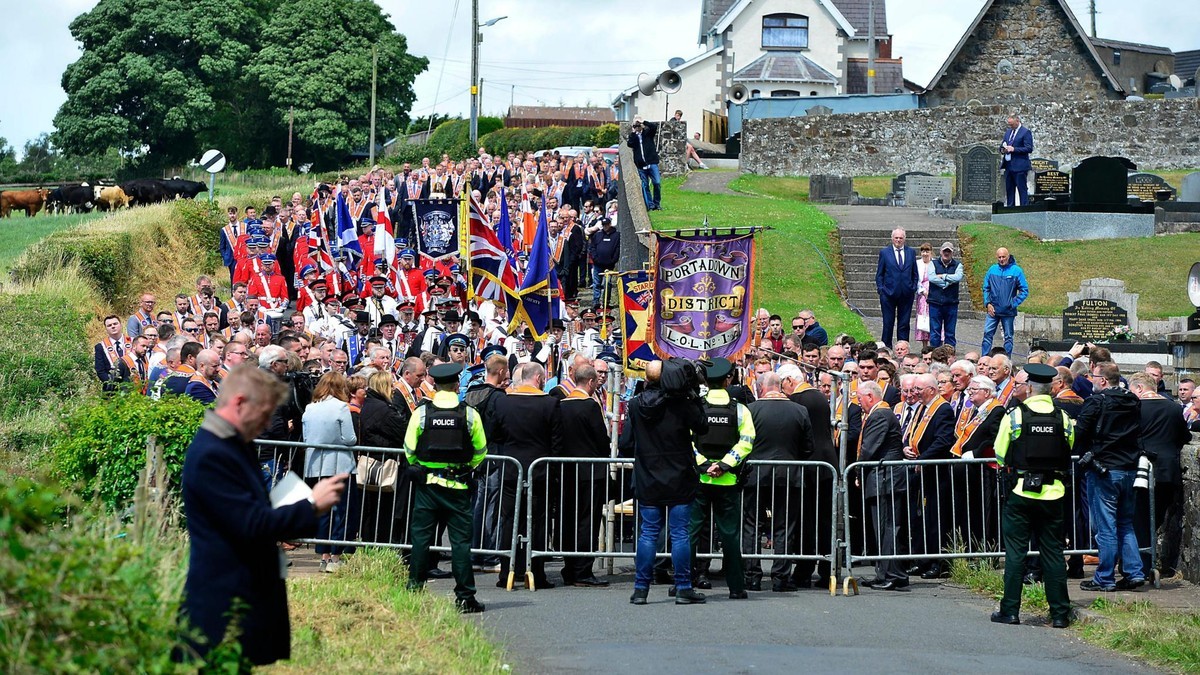
The Shankill Road is in north Belfast; the dispute at the centre of the wider row is Drumcree and the Garvaghy Road in Portadown, Co Armagh. That dispute began in the mid-1990s over the Orange Order's annual parade from Drumcree Church into Portadown and the leg that passed down the Garvaghy Road, a mainly nationalist area. When the Order was prevented by police from walking the route in July 1995 there was a tense stand-off, and the same for the next three years; violence related to the dispute resulted in riots, roadblocks and murders. After the quashing, the Commission issued a fresh determination permitting the notified return procession by Portadown District Loyal Orange Lodge No 1 to travel the Garvaghy Road with conditions, including an earlier start time and fewer than the 60 participants the lodge had requested. The parade did not happen. A large unnotified protest blocked the route on Sunday 27 September, 17 days ago, and the Assistant Chief Constable, Ryan Henderson, said police could not allow the parade because of an "unlawful and unnotified protest", adding that removing protesters would have significantly jeopardised public safety. First Minister Michelle O'Neill took part in the protest.
The Chief Constable's Letter
On Friday 9 October, five days ago, the Chief Constable of the PSNI, Jon Boutcher, wrote to the Secretary of State for Northern Ireland requesting a review, under Section 9 of the Public Processions (Northern Ireland) Act 1998, of the determination the Parades Commission had made under Section 8 on the Portadown District Loyal Orange Lodge No 1 procession. Boutcher said: "I outlined in my letter to the Secretary of State that my current assessment was that all available, lawful and proportionate options to facilitate completion of the procession had been exhausted." He said any remaining option would have required a substantial public order intervention that was not proportionate and carried an unacceptable risk of serious injury and disorder across Northern Ireland.
He said such an operation would have had "not only catastrophic long term consequences for trust and confidence in policing, but for the Northern Ireland Executive and the peace process", and that the cost to the PSNI could not be sustained indefinitely given existing funding pressures. He welcomed the ban: "This past two weeks has had a marked impact on relationships within and between communities and the police."
The Secretary of State Steps In
The Secretary of State, Sir Chris Bryant MP, considered the Section 9 request, reviewed the determination and made an order under Section 11. The government press release records: "As a result, the procession cannot go ahead as it was determined." Bryant said: "I have spent the last fortnight trying to get a mutually acceptable agreement between the two sides, hosting several rounds of negotiations at Hillsborough Castle last week and maintaining frequent contact with both sides since then. Unfortunately it has not been possible to achieve a local resolution." He said the Chief Constable had advised him the procession could not happen without a major intervention carrying an unacceptable risk of serious injury, disorder and a wider contagion effect, and that the original determination allowing the march had been "legitimate". The DUP leader, Gavin Robinson, said the rule of law in Northern Ireland had been "fatally undermined".
The Court of Appeal Says No
On Monday 12 October, two days ago, the Court of Appeal dismissed a challenge by the Garvaghy Road Residents' Coalition to the Commission's determination. Appeal judges backed the Commission's case that the change in stance was reflected in the conditions imposed on the march, such as numbers of participants, musical accompaniment, flags and emblems. The residents had argued the determination disproportionately interfered with their rights to privacy and family life under Article 8 of the European Convention on Human Rights, that the Commission got the threat of unrest wrong and that it misdirected itself on the police assessment. Those arguments, and allegations of irrationality, were rejected. The ruling did not overturn the separate prohibition the Secretary of State had imposed. The same day, the Chief Constable stood over his policing of the stand-off and the advice he gave Sir Chris Bryant, saying there had been no disorder and that "The place for resolving this dispute must not be on the streets of Northern Ireland".
The DUP Meets the Chief Constable
On Tuesday 13 October a DUP delegation led by party leader Gavin Robinson, including Upper Bann MP Carla Lockhart, met the Chief Constable at PSNI headquarters to "reinforce concerns" about the Drumcree lawbreaking investigation and the advice he gave Sir Chris Bryant before his intervention. Robinson said: "We have been clear about the need for full transparency from the chief constable about both the investigations into those who broke the law on the Garvaghy Road and the threats which influenced his referral to the Secretary of State which ultimately saw the parade banned." He said the action on the Garvaghy Road "may be viewed by some as a guidebook to frustrate any other lawful determination from the Parades Commission", and that the perception could not be allowed to succeed.
Lockhart said: "The chief constable was left in no doubt about the real anger that exists amongst people that lawbreaking has been seen to win. It is impossible to fix a problem unless you first admit that it exists." Earlier, the Ulster Unionist Party leader, Jon Burrows, said Michelle O'Neill had "defied the rule of law" and appealed for the dispute not to spread to other parades.
Dangerous Language at Stormont
At Stormont, First Minister Michelle O'Neill criticised the "very ugly" language used by some politicians as the row continued. She said: "Whether it's (TUV leader) Jim Allister speaking about sanitising the people on the Garvaghy Road, whether it's the DUP speaking about a mob on the Garvaghy Road. That language is really dehumanising in the first instance. But it's also dangerous and actually can lead on to sectarianism and violence in our streets." She also said councillor Paul Duffy, who represents the Garvaghy Road, had been targeted: "This is the man who went to his work this morning and is very much being targeted. Graffiti spread all around his workplace, and a target sign painted across things in his workplace as well." A vote of no confidence in O'Neill and three other Sinn Féin ministers was before the Assembly, focused on her attendance at the Garvaghy Road protest.
What Comes Next
Portadown Orange District is pursuing a further legal challenge to the Secretary of State's intervention. The PSNI and the Chief Constable have been added to those proceedings, listed for Monday 19 October, five days from today. The force's criminal investigation into the blocking of the Garvaghy Road, and its new investigation into the unnotified Shankill parade, both remain open. On Monday the PSNI confirmed investigators had begun contacting individuals identified during the operation, and a number of elected representatives received invitations to attend police interviews; receipt of an invitation does not establish that an offence has been committed. Sir Chris Bryant has said he will meet the Parades Commission chair as a priority and has called for all protests, rallies and demonstrations to be stood down.
By Jessica Ali, Staff Writer
This article was produced with AI-assisted research and editorial support. Sources: BBC News NI, U105, Belfast Telegraph, The Irish News, GOV.UK (Northern Ireland Office), the Police Service of Northern Ireland, Press Association, The Independent, The National, Belfast Live and atroubledland.com.
What's Your Reaction?
 Like
0
Like
0
 Dislike
0
Dislike
0
 Love
0
Love
0
 Funny
0
Funny
0
 Wow
0
Wow
0
 Sad
0
Sad
0
 Angry
0
Angry
0

Editor-in-Chief at Global1.News. Atlanta-based journalist who cuts through the BS and tells it like it is. Lead anchor, host, and the voice you hear when the spin stops and the truth starts.













Comments (0)