
Russia Plans Rehab Centers for Ukraine War Amputees
Russia is moving to institutionalise care for the growing cohort of soldiers who have returned from the war in Ukraine with severe limb injuries. According to the Vedomosti report, it has treated 650 veterans to date.
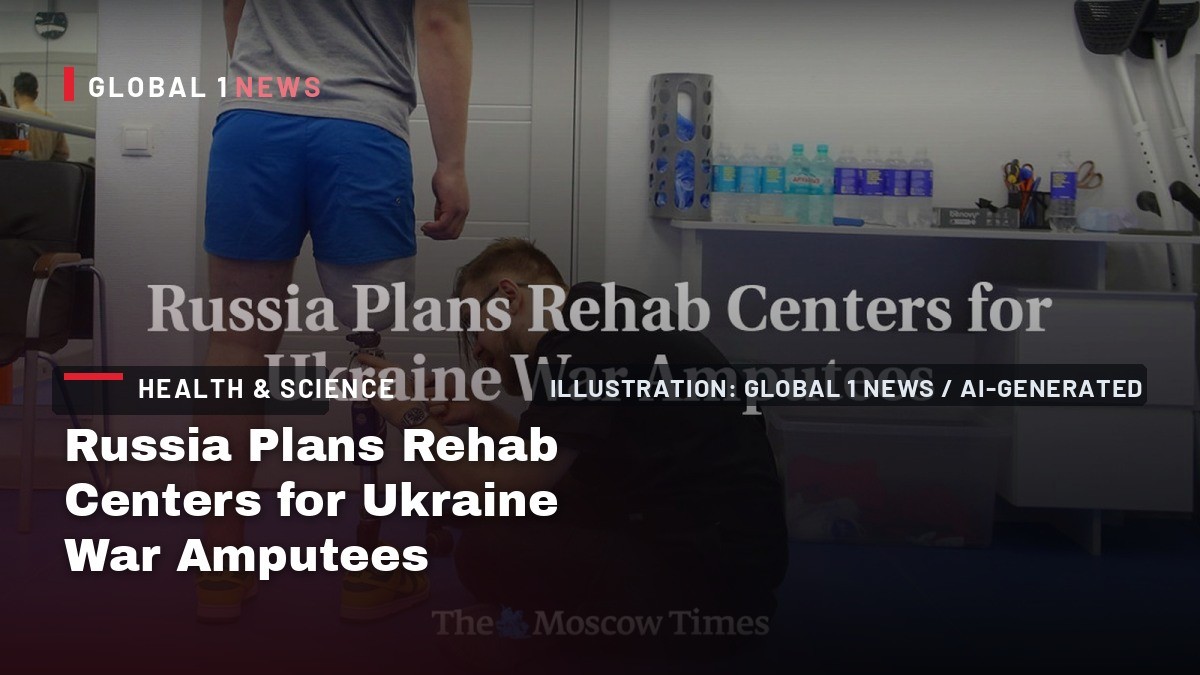
Russia is moving to institutionalise care for the growing cohort of soldiers who have returned from the war in Ukraine with severe limb injuries. The plan, reported by the Vedomosti business daily and attributed to the state‑run Defenders of the Fatherland foundation, envisions a network of rehabilitation centres in each of the country’s eight federal districts. The initiative reflects both a humanitarian response to a surge in disability among veterans and a strategic effort to sustain morale within the armed forces as the conflict drags on.
Scope of the rehabilitation programme
The first facility is already operational on the campus of the Russian State Social University in the Moscow region. According to the Vedomosti report, it has treated 650 veterans to date. The centre teaches former soldiers how to use prosthetic limbs in everyday life, a task overseen by Deputy Defense Minister Anna Tsivilyova, who is reported to be President Vladimir Putin’s cousin. The plan calls for similar centres to be established across all eight federal districts, though no specific timetable has been disclosed by the foundation.
Deputy Prime Minister Tatyana Golikova has previously announced a government target of ten prosthetic and orthopaedic rehabilitation centres under the Federal Medical and Biological Agency by 2028, with budget allocations already set aside. This broader state‑level commitment dovetails with the Defenders of the Fatherland foundation’s district‑wide rollout, suggesting parallel tracks of funding and administration.
Demand driven by rising casualty figures
Officials cite a sharp increase in demand for prosthetic limbs and rehabilitation services among soldiers returning from Ukraine. In March 2025, Denis Kovlen, the Defense Ministry’s chief medical rehabilitation specialist, warned that Russia needed an additional 25 to 30 centres to meet the needs of combat‑related amputees. He noted that the number of veterans requiring prosthetic limbs had tripled since 2022, although he did not provide an absolute count.
Independent estimates from the International Institute for Strategic Studies (IISS) put the scale of severe combat injuries into stark relief. By early January 2025, the institute calculated that at least 376,000 Russian troops had suffered wounds severe enough to cause disability, and the total number of wounded stood at 611,000. These figures underscore the magnitude of the rehabilitation challenge facing the Russian state.
The human face of the programme
First‑hand testimony from a participant in the Moscow‑region centre illustrates the practical realities confronting amputee veterans. The man, mobilised in 2022 and having lost his entire right leg at the front, described using ropes to secure a broken prosthesis while practising walking. He reported that all 28 men currently at the centre had lost a leg, and that many arrive without a finished prosthesis or with devices that no longer function.
He also disclosed a personal coping strategy: he tells acquaintances outside his military circle that his injury resulted from a motorcycle accident rather than combat. This concealment reflects the stigma attached to war‑related disability within certain social circles and hints at the broader psychological burden borne by wounded soldiers.
Funding and bureaucratic channels
The financing of the rehabilitation network appears to be anchored in existing budgetary provisions. Deputy Prime Minister Golikova’s statement that funding has already been allocated signals that the state is earmarking resources for the ten‑centre target under the Federal Medical and Biological Agency. The parallel initiative by the Defenders of the Fatherland foundation, while not specifying its own budget, is likely to draw on similar state channels, given its close ties to the defence establishment.
Russia’s Social Fund reported that the number of people registered as having disabilities exceeded 11.1 million by early 2025, reversing a pre‑invasion decline. This surge in registered disability cases expands the pool of potential beneficiaries for the rehabilitation programme and may influence future allocations of social and medical spending.
Strategic implications for the armed forces
By institutionalising prosthetic and rehabilitation services, the Kremlin signals a commitment to caring for its wounded soldiers, a move that could bolster morale among active‑duty personnel. The presence of a dedicated network of centres across all federal districts reduces the geographic barrier for veterans seeking care, potentially mitigating the risk of disenchantment and desertion among those who have suffered severe injuries.
Moreover, the involvement of high‑level officials such as Deputy Defense Minister Tsivilyova and Deputy Prime Minister Golikova ties the programme directly to the upper echelons of power. This linkage may serve to reinforce the narrative that the state is responsibly managing the human costs of the Ukraine war, a narrative that can be leveraged domestically to sustain public support for the conflict.
Potential challenges and gaps
Despite the ambitious rollout, several practical challenges loom. The testimony from the Moscow‑region centre highlights a shortage of functional prosthetic devices, with some veterans arriving without a finished limb or with equipment that has already failed. Scaling up production and distribution of high‑quality prostheses will be essential to avoid bottlenecks as the network expands.
Another concern is the psychological dimension of disability. The veteran’s decision to conceal the combat origin of his injury suggests that social stigma may impede reintegration. Without complementary mental‑health services, the rehabilitation centres risk addressing only the physical aspect of disability while leaving deeper psychosocial wounds untreated.
Broader context and future outlook
The rehabilitation programme must be viewed against the backdrop of a war that has generated unprecedented numbers of wounded soldiers. The IISS estimate of 376,000 severe injuries and the Social Fund’s registration of over 11 million disabled citizens illustrate a societal shift in which disability becomes a more visible and politically salient issue.
As the Russian government continues to allocate resources to prosthetic and rehabilitation infrastructure, the effectiveness of these investments will likely be measured not only by the number of centres opened but by the quality of care delivered and the extent to which veterans are able to resume productive civilian lives. The coming years will reveal whether the network can keep pace with demand, and whether it will serve as a genuine support system or a symbolic gesture aimed at preserving the image of a state that cares for its war‑wounded.
This article was produced with AI-assisted research and editorial support. Reporting is based on the source material cited below. Sources: The Moscow Times; themoscowtimes.com; Global1.News (15 October 2026).
By Irina Volkov, Staff Writer
What's Your Reaction?
 Like
0
Like
0
 Dislike
0
Dislike
0
 Love
0
Love
0
 Funny
0
Funny
0
 Wow
0
Wow
0
 Sad
0
Sad
0
 Angry
0
Angry
0

Russia/Eastern Europe Correspondent at Global1.News. Covering Russian politics, energy, security, and the shifting dynamics of the post-Soviet space. Provides clear-eyed analysis on one of the world's most opaque regions.












Comments (0)