
From real-world Catrinas to AI cinema: An artist’s next Día de Muertos chapter
When a group of friends first gathered in 2019 to paint Catrina faces, dress up in bright costumes and wander the Mexican countryside, they never imagined that their simple love of Día de Muertos would become a multi‑year cultural venture.
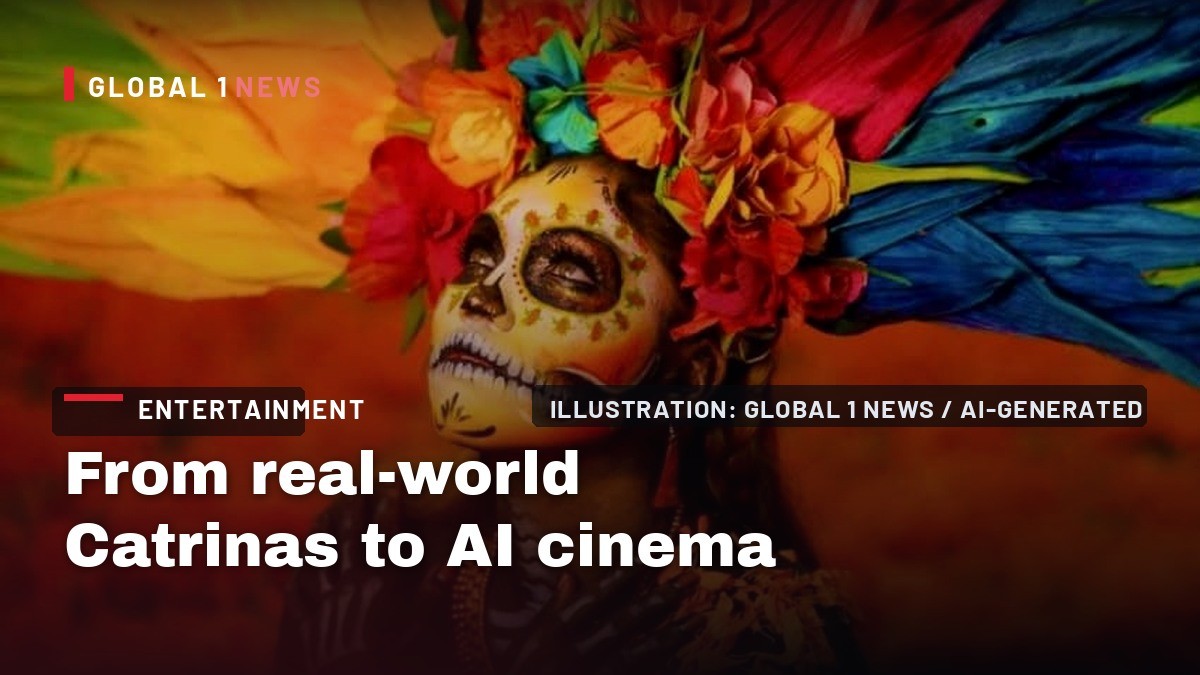
When a group of friends first gathered in 2019 to paint Catrina faces, dress up in bright costumes and wander the Mexican countryside, they never imagined that their simple love of Día de Muertos would become a multi‑year cultural venture. The early days were informal: makeup, wardrobe and a camera, capturing the colors of the season against the landscapes they loved. There was no business plan, just a desire to share a piece of Mexico with anyone who wanted to see it.
From Photo Sessions to Full‑Scale Experiences
As word spread, visitors began asking not only to pose but also to understand the roots of the tradition. They wanted to taste the tamales, walk the streets where the photos were taken, and meet the locals whose lives gave the holiday its heartbeat. The team responded by expanding the offering: transportation, lodging, traditional food and guided tours with certified guides were added to the makeup service. The Catrina look stayed central, but it became one element of a broader cultural immersion.
By 2024 the market for Día de Muertos makeup had multiplied, with many artists entering the field. The founder, Alejandro Su, considered stepping back, yet chose instead to evolve. He shifted his focus from creating another portrait to building entire worlds around the people he photographed, seeking a richer narrative canvas.
El Viaje de las Ánimas: Turning a Dream into Reality
The turning point arrived with “El Viaje de las Ánimas,” a project that had lived in Su’s imagination for years. After four years of saving and planning, the team finally set the vision into motion in Xochimilco. Real models became the Catrinas, natural cempasúchil flowers filled the scene, and a crew of more than a dozen people coordinated costumes, makeup, transportation and lodging. Three trajineras were rented for over eleven hours to ferry the flowers and equipment to the location.
Seeing the dream materialize was both exhilarating and costly. The experience taught Su that a fleeting image can demand years of savings, weeks of preparation and a sizable team to capture. It also sparked a new question: what could be imagined if physical limits were less binding?
Learning the Limits of Artificial Intelligence
At the start of 2026 Su turned his attention to artificial intelligence, experimenting with generative models to create images. Early attempts produced interesting but inconsistent results: characters changed between shots, locations shifted, and camera behavior was unpredictable. The mismatches highlighted a fundamental difference between generating a picture and telling a story, prompting Su to pause regular Catrina productions and study the technology more deliberately.
He discovered that AI does not automatically solve basic filmmaking logic. Questions about door placement, geographic continuity, character consistency and animal behavior required human oversight. These basic concerns, while sounding simple, revealed that generative tools still need a storyteller’s guidance to maintain narrative coherence.
“Sacred Nature”: Re‑Imagining the Landscape
During his AI studies Su conceived “Sacred Nature,” a concept that elevates everyday flora and scenery to the level of mythic spectacle. Instead of using flowers as background, he imagined them dominating the frame—giant marigolds, exaggerated horizons, and landscapes that turn familiar settings into extraordinary visions. AI allowed him to experiment with this scale without the expense of building massive physical sets.
The idea of “Sacred Nature” became a bridge between the tactile world of makeup, flowers and travel, and the limitless possibilities of digital creation. It showed how technology could expand artistic ambition while preserving the cultural core of Día de Muertos.
Integrating AI into the Creative Workflow
Today AI is woven into several stages of Su’s production pipeline. Practically, it can rescue slightly blurred images, refine details, assist with video editing and reconstruct shots that did not work as intended. During peak season, AI helps deliver photographs more quickly while keeping the visual identity honed over years of work with photographers.
Beyond efficiency, AI opens doors to new creative territories. A real portrait can inspire an environment that would have been impossible to build physically, and a massive set can be tested in the digital realm before committing resources. Su stresses that AI does not replace makeup, flowers, travel or real people; it simply adds another tool to the artist’s kit.
“Cada Noviembre”: A Film Born from Real Stories
The most tangible outcome of this evolution is the AI‑enhanced short film “Cada Noviembre.” Its narrative springs from three real‑world encounters. In Oaxaca, Su met a lone man who tended his family graves and even bought his own plot, wishing to visualize it before his final rest. This conversation seeded the character Juan, a man with a progressive pulmonary illness—a condition Su knows from personal experience in hospitals.
The third thread is a stray xoloitzcuintle that follows Juan. The film explores how a dog, unaware of death, simply remembers routines, eventually becoming part of Juan’s daily life. The story was produced in roughly three weeks by a five‑person team: three sound specialists, one editor, and Su handling the generative visual production, screenplay, direction and AI‑generated sequences.
Continuity proved the biggest challenge. Juan’s appearance, the cemetery’s geography, the xolo’s look and behavior, and even Juan’s walking pace had to stay consistent across AI‑generated shots. When a generated frame failed—whether due to a wrong camera angle or mismatched audio—the team reconstructed it rather than discarding the effort, treating each generation like a film take.
The Broader Impact: Technology, Culture and Community
“Cada Noviembre” is now traveling the international AI film festival circuit, receiving responses from audiences in Mexico, the United States and beyond. Viewers connect with Juan’s illness, the loss of grandparents, or the loyalty of a dog waiting for its companion. The feedback underscores Su’s belief that technology is merely the vessel; the story and its cultural roots are what endure.
AI has lowered the financial barrier for independent creators, allowing small teams to attempt visual ideas that once required large budgets. Yet Su cautions that AI cannot grasp why a character matters, why Día de Muertos holds deep meaning, or when a cultural detail feels authentic versus stereotypical. Those judgments remain the responsibility of human artists.
Looking ahead, Su’s journey illustrates a larger trend in Mexico: artists blending tradition with cutting‑edge tools while keeping community at the heart of their work. From painting Catrinas on a tianguis to directing AI‑enhanced cinema, the mission stays the same—to tell Mexican stories, honor the rituals of the pueblo, and share them with the world.
This article was produced with AI-assisted research and editorial support. Reporting is based on the source material cited below. Sources: Mexico News Daily; mexiconewsdaily.com; Global1.News (12 October 2026).
By Rosa Martinez, Staff Writer
What's Your Reaction?
 Like
0
Like
0
 Dislike
0
Dislike
0
 Love
0
Love
0
 Funny
0
Funny
0
 Wow
0
Wow
0
 Sad
0
Sad
0
 Angry
0
Angry
0
Latin America/Andes Correspondent at Global1.News. Based in Bogota, covering politics, environment, energy, and social movements across the Andean region. Passionate about environmental journalism and communities protecting their land.










Comments (0)