
not_any_deni sports card exhibition explores the Star of David in mainstream American culture
On Monday, November 2, a new pop‑up exhibition titled not_any_deni will open at the Gaelen Gallery of JCC MetroWest in West Orange, New Jersey. This juxtaposition underscores how a simple sports card can become a conduit for broader cultural narratives.
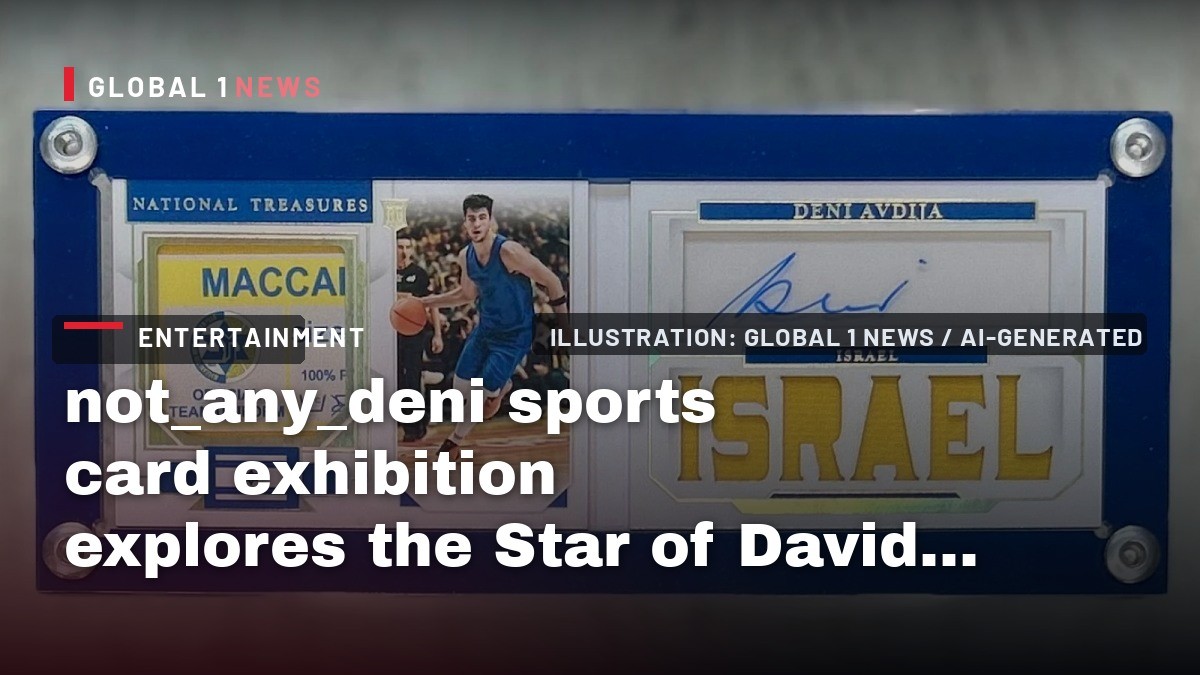
On Monday, November 2, a new pop‑up exhibition titled not_any_deni will open at the Gaelen Gallery of JCC MetroWest in West Orange, New Jersey. Curated by Zev Ziegler, the show blends modern art with the world of sports collectibles to examine how Jewish and Israeli symbols are weaving themselves into the visual language of American pop culture. The exhibition arrives at a moment when sports cards have surged into mainstream consciousness, with high‑profile owners such as Tom Brady and Derek Jeter joining the hobby and record‑setting sales making headlines. By placing the Star of David alongside iconic basketball memorabilia, the curators aim to document a cultural shift that reaches beyond the confines of the Jewish community.
From Rookie Cards to Cultural Icons
The exhibition’s core collection brings together objects that usually reside in private vaults: one‑of‑one printing plates, cards cut from authentic Maccabi Tel Aviv jerseys, and memorabilia patches studded with the Star of David. A centerpiece pairs a rookie patch autograph with the four cyan, magenta, yellow and black (CMYK) printing plates that produced it, allowing visitors to see both the finished collectible and the technical process behind its creation. This juxtaposition underscores how a simple sports card can become a conduit for broader cultural narratives.
According to curator Zev Ziegler, the timing is significant. “At a time when some Jews stateside may think twice about wearing a Star of David publicly, we’re watching that same symbol enter mainstream American culture through sports,” he said. The exhibition therefore frames the Star of David not merely as a religious emblem but as a visual motif gaining traction in hobby boxes, retail packs and even high‑fashion accessories, such as the one‑of‑one basketball card worn by Kevin O’Leary at the 2026 Academy Awards.
The Rise of Sports Cards in American Culture
Sports cards have moved from niche collector’s items to cultural touchstones. In recent years, former athletes and celebrities have taken ownership stakes in platforms that trade these cards. Tom Brady has become a co‑owner of CardVault, while Derek Jeter is a founding partner of Arena Club. High‑profile sales have amplified the market’s visibility; a Michael Jordan and Kobe Bryant card fetched $12.9 million in 2025, setting a record for a sports card sale. Such developments signal that cards are now seen as both investment assets and symbols of fandom, creating a fertile environment for projects like not_any_deni that explore deeper layers of meaning.
The exhibition leverages this heightened interest to ask a larger question: how do symbols of identity travel alongside the rise of a hobby? By embedding the Star of David into cards, patches and even an Israeli‑flag card set with diamonds, the show demonstrates that collectors are increasingly receptive to narratives that combine sport, heritage and contemporary design.
From Maccabi Tel Aviv to the NBA: Deni Avdija’s Visual Language
Deni Avdija’s transition from Maccabi Tel Aviv to the NBA served as the spark for the exhibition. Unlike many rookie cards that showcase college logos or generic team colors, Avdija arrived with a distinct visual vocabulary: the Star of David, Hebrew lettering and the blue‑white palette of his Israeli club. This departure from the familiar prompted curators to shift focus from the athlete himself to the symbols his cards carried.
“The exhibit isn’t really about sports cards,” Ziegler explained. “The cards are the medium. Sports has always permitted people to wear their identity out loud, through teams, colors, symbols and rivalries. What interested me was seeing Jewish and Israeli identity enter that same visual language.” By foregrounding the symbols rather than the athlete, the show highlights how cultural markers can travel across borders through the global language of sport.
Five Themes Guiding the Exhibition
The curatorial framework is organized around five pillars: Collecting, Design, Identity, Relationships and Voice. Each theme invites visitors to consider a different facet of how Jewish and Israeli motifs intersect with the world of sports memorabilia. The “Collecting” segment showcases rare items that illustrate the evolution of card production, while “Design” delves into the aesthetics of printing plates and jersey‑derived materials.
The “Identity” section foregrounds the Star of David and Hebrew inscriptions, positioning them as visual anchors that connect diaspora audiences to Israel. “Relationships” explores how community groups, such as Club Z and Livingston Advocates, are leveraging the hobby to foster connections among young Jews across the United States. Finally, “Voice” extends the conversation beyond objects, encouraging participants to contemplate what they would say through their own moment of visibility.
Community Engagement and the “Voice” Component
Opening night will feature a free Sports Card Trade Night, organized by Livingston Advocates, Club Z and LITTLELIGHT, from 6 p.m. to 8 p.m. Inna Yelisevich, who leads Club Z’s Livingston chapter, emphasized the importance of such events for building Jewish identity among teens. “During these times, building Jewish identity and a strong connection to Israel among teens across the United States is incredibly important,” she said. “Finding fresh and creative ways to engage young people is critical.”
During Trade Night, families can trade cards, create their own sports cards, and contribute to a “Wall of Mensch” that celebrates personal stories of visibility. The first 100 families will receive complimentary packs of 2026 Topps basketball cards, reinforcing the exhibition’s aim to make collecting accessible while also prompting participants to reflect on the symbols they carry.
Artistic Interpretations and the Role of Jewish Sports Artists
Beyond the collectibles, the exhibition features original works by Jewish sports artists, including Matthew Lee Rosen. His piece “Too Small,” inspired by a recent on‑court moment involving Avdija, illustrates how contemporary art can reinterpret the micro‑stories embedded in cards. “Sports cards are already these tiny pieces of pop culture,” Rosen noted. “What I love is taking something people think they know and finding another story inside it.” By presenting such artworks alongside the cards, the show underscores the layered narratives that can emerge from a single piece of memorabilia.
These artistic interventions reinforce the exhibition’s central thesis: that everyday objects—cards, patches, jerseys—can serve as vessels for collective memory, identity and expression. As the Star of David appears on increasingly mainstream products, from hobby boxes to Hollywood jewelry, its presence in the sports‑card arena signals a broader cultural integration that the exhibition seeks to document and celebrate.
Looking Ahead: The Symbolic Impact of Sports Collectibles
As not_any_deni opens its doors, it offers a tangible snapshot of a moment when Jewish and Israeli symbols are gaining visibility through a hobby that has become a cultural mainstay. By situating the Star of David alongside iconic basketball legends and high‑profile collectors, the exhibition illustrates how identity can travel through the channels of sport, design and community engagement.
For Israeli innovators and cultural ambassadors, the exhibition underscores a growing export of Israeli visual language into global pop culture. It also provides a template for how other diaspora communities might leverage sports memorabilia to amplify their narratives. As the hobby continues to expand, the objects on display at the Gaelen Gallery may well become reference points for future scholars tracing the diffusion of Israeli symbols across American cultural landscapes.
This article was produced with AI-assisted research and editorial support. Reporting is based on the source material cited below. Sources: JNS (Jewish News Syndicate); jns.org; Global1.News (13 October 2026).
By Hannah Berg, Staff Writer
What's Your Reaction?
 Like
0
Like
0
 Dislike
0
Dislike
0
 Love
0
Love
0
 Funny
0
Funny
0
 Wow
0
Wow
0
 Sad
0
Sad
0
 Angry
0
Angry
0

Israel Correspondent at Global1.News. Based in Tel Aviv, covering Israeli politics, security, technology, and society. Provides balanced, deeply-sourced reporting on one of the most closely-watched regions in the world.














Comments (0)