
What the US and China Should Discuss at APEC
The United States and China are set to meet again on the sidelines of the APEC Economic Leaders’ Meeting in Shenzhen on 18‑19 November 2026, just weeks after their September summit in Washington.
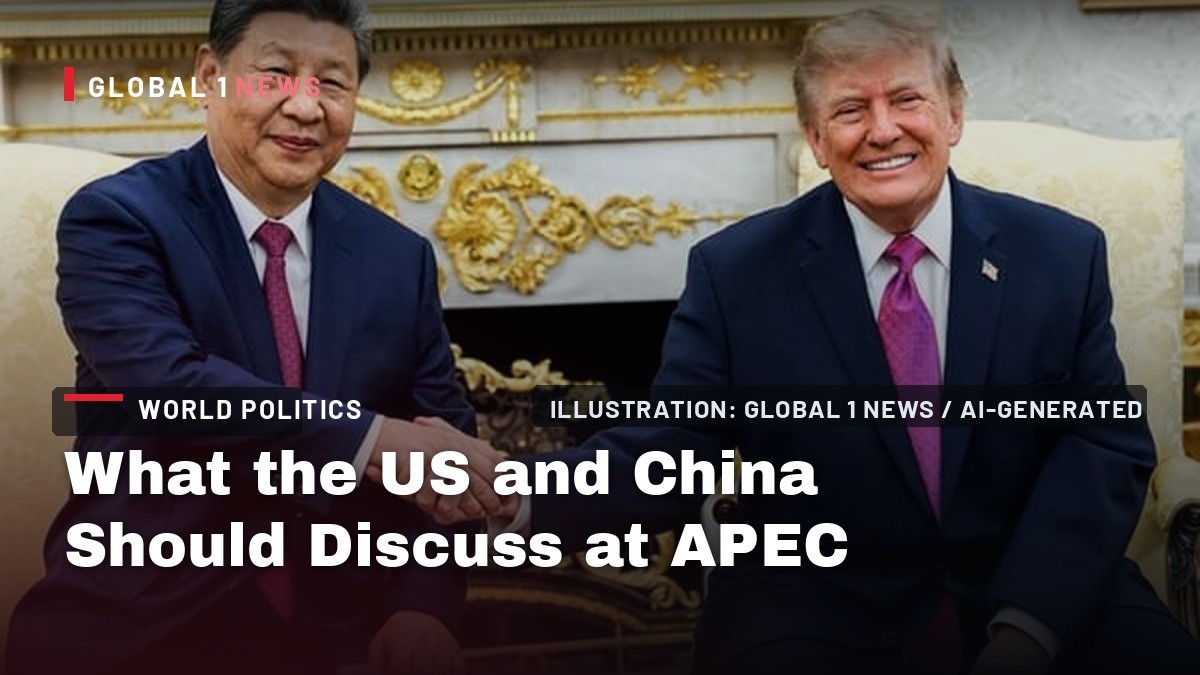
The United States and China are set to meet again on the sidelines of the APEC Economic Leaders’ Meeting in Shenzhen on 18‑19 November 2026, just weeks after their September summit in Washington. While the two presidents framed their dialogue as a step toward a “constructive relationship of strategic stability,” the substance of their discussions points to a deeper, less visible challenge: the financial sustainability of the artificial‑intelligence race that now dominates both economies.
From a “Strategic Stability” Pact to an AI‑Centric Agenda
When President Donald Trump and President Xi Jinping shook hands on 24 September, the headline of their joint statement was a pledge to build a constructive relationship of strategic stability. Yet the accompanying press releases and the agenda of the September summit made clear that artificial intelligence had become the focal point of bilateral talks. The leaders highlighted a new “AI dialogue” channel for discussing risks, benefits and the prevention of misuse. This political cover was reinforced by the presence of senior officials from the U.S. Treasury, the U.S. Trade Representative’s office, and China’s Vice Premier He Lifeng, who convened the first AI discussion within the broader economic consultation framework.
Both presidents emphasized cooperation rather than competition: Xi described the United States and China as two AI powers that should “draw on each other’s strengths, not guard against each other,” while Trump spoke of AI as “superintelligence” that could “promote peace and prosperity for decades to come.” The language signalled a willingness to keep communication lines open, but the substance of the talks has so far been limited to risk‑management and incident‑response mechanisms, leaving the economic dimension of the AI race largely untouched.
The Emerging Economic Dilemma in the United States
U.S. frontier AI firms have built their business models on three assumptions: a relentless exponential rise in compute demand, a direct translation of model capability into revenue, and a patient capital market that will continue to fund long‑term development. Recent market signals suggest that each of these pillars is weakening. Capital expenditures required to stay at the frontier have become “heavier, relative to the industry’s age, than anything technology has carried before,” according to the source material, prompting utilities to sign power contracts for gigawatts of capacity that do not yet exist.
Wall Street, which previously turned a blind eye to the lack of clear returns, began questioning the profitability of AI ventures in July 2026. Efficient Chinese open‑weight models demonstrated that frontier‑level performance could be achieved with a fraction of the compute traditionally assumed necessary. The resulting sell‑off in AI‑linked U.S. equities and a retreat by analysts from aggressive price targets underscore the growing scepticism about the sector’s long‑term financial viability.
China’s Mirror‑Image Challenge
Chinese AI firms face a parallel set of pressures. While they are attempting to close the frontier gap under increasingly tight foreign‑technology constraints, they must also generate returns sufficient to justify massive domestic spending. A September study by the Rhodium Group highlighted a dramatic swing in the combined free‑cash‑flow of Alibaba, Tencent and Baidu—from a positive 170 billion yuan in 2025 to a negative 16 billion yuan in the first half of 2026. This reversal signals that even China’s tech giants are feeling the strain of an investment‑heavy AI push.
At the same time, the five American hyperscalers that dominate the global AI infrastructure saw their own cash‑flow plunge from $191 billion to $14 billion, while raising $163 billion in long‑term debt over six months to sustain their build‑out. The parallel erosion of cash‑flow on both sides illustrates a broader systemic issue: frontier AI development can no longer be financed solely from operating revenues, and capital markets are losing patience with narratives that lack concrete returns.
The Competitive Feedback Loop That Deepens the Crisis
The United States and China are locked in a competitive feedback loop that amplifies each other’s financial stress. New rounds of U.S. export controls force Chinese firms to accelerate substitution efforts, shrinking the market share available to American AI providers. Conversely, China’s intensified substitution drives up its own investment needs, worsening its return‑on‑capital problem. The source material describes this dynamic as a “real financial dilemma,” not a moral argument, because further escalation could drain the capital both economies depend on to sustain AI development.
In practical terms, the competition is turning into a race to burn cash faster than either side can replenish it. Without a coordinated mechanism to address the underlying economics, the AI race risks becoming a self‑defeating spiral of ever‑higher spending and diminishing returns, threatening broader economic stability in both Washington and Beijing.
Why Shenzhen Offers a Unique Forum
Shenzhen, often dubbed the “Silicon Valley of the East,” hosts China’s densest cluster of AI and robotics firms, making it a natural venue for substantive discussions on AI economics. The city will host the APEC CEO Summit, bringing roughly 1,000 business leaders together, and an AI‑focused agenda will be on the formal program. Moreover, a “Shenzhen Initiative” is slated for release, underscoring the city’s central role in shaping regional AI policy.
Beyond the official summit, unofficial channels already exist. The Tsinghua Center for International Security and Strategy and the Brookings Institution have facilitated 14 rounds of China‑U.S. AI dialogue since 2019, with former Microsoft chief research officer Craig Mundie co‑chairing. These “track‑two” engagements provide a template for a more finance‑oriented conversation that could be convened on the margins of the APEC meeting, involving think tanks, industry associations and, crucially, the financial officials who control capital flows.
Proposed “Track‑Two” Economics Dialogue
The source material outlines three concrete deliverables for the November APEC gathering, the first of which is the creation of a standing China‑U.S. AI economics dialogue. This mechanism would be distinct from the existing risk‑management channels and would bring together finance officials, stock‑market regulators and senior executives from both sides. By convening under the auspices of the Guangdong Artificial Intelligence Industry Association and its overseas service centre, the dialogue could be anchored in the very ecosystem that is most directly affected by the AI investment surge.
Such a “track‑two” format is favoured because it sidesteps the political sensitivities that would confront official ministries. No U.S. administration can openly admit that its AI boom may be overextended, and no Chinese ministry can candidly compare burn rates with a foreign counterpart. A privately‑led, think‑tank‑driven forum would allow participants to discuss cash‑flow realities, debt levels and return‑on‑capital metrics without the constraints of official diplomatic protocol.
Implications for Future Bilateral Relations
If the proposed economics dialogue gains traction, it could reshape the broader trajectory of China‑U.S. relations. By confronting the financial underpinnings of the AI race, both sides would move beyond the current focus on risk mitigation toward a more holistic management of the technology’s economic impact. This shift could reduce the incentive for further escalation of export controls and investment subsidies, thereby easing the competitive feedback loop that currently threatens capital availability.
Moreover, a successful “track‑two” platform could serve as a model for other emerging technology domains where financial sustainability is a shared concern—such as quantum computing or advanced semiconductor manufacturing. By institutionalising a space where finance officials and industry leaders can speak candidly, the United States and China would lay the groundwork for a more stable, mutually beneficial technology ecosystem, aligning with the broader strategic stability that both presidents pledged to pursue.
This article was produced with AI-assisted research and editorial support. Reporting is based on the source material cited below. Sources: The Diplomat; thediplomat.com; Global1.News (13 October 2026).
By Kenji Tanaka, Staff Writer
What's Your Reaction?
 Like
0
Like
0
 Dislike
0
Dislike
0
 Love
0
Love
0
 Funny
0
Funny
0
 Wow
0
Wow
0
 Sad
0
Sad
0
 Angry
0
Angry
0

Japan Correspondent at Global1.News. Tokyo-based voice covering Japanese politics, technology, economy, and culture. Tracks the intersection of tradition and innovation in one of the world's most dynamic societies.















Comments (0)