
First Nation in N.S. launches joint venture using sea water to produce jet fuel
The Eskasoni First Nation of Cape Breton has taken a decisive step toward marrying economic development with environmental stewardship by entering a joint venture with Nova Scotia clean‑technology firm Aeon Blue.
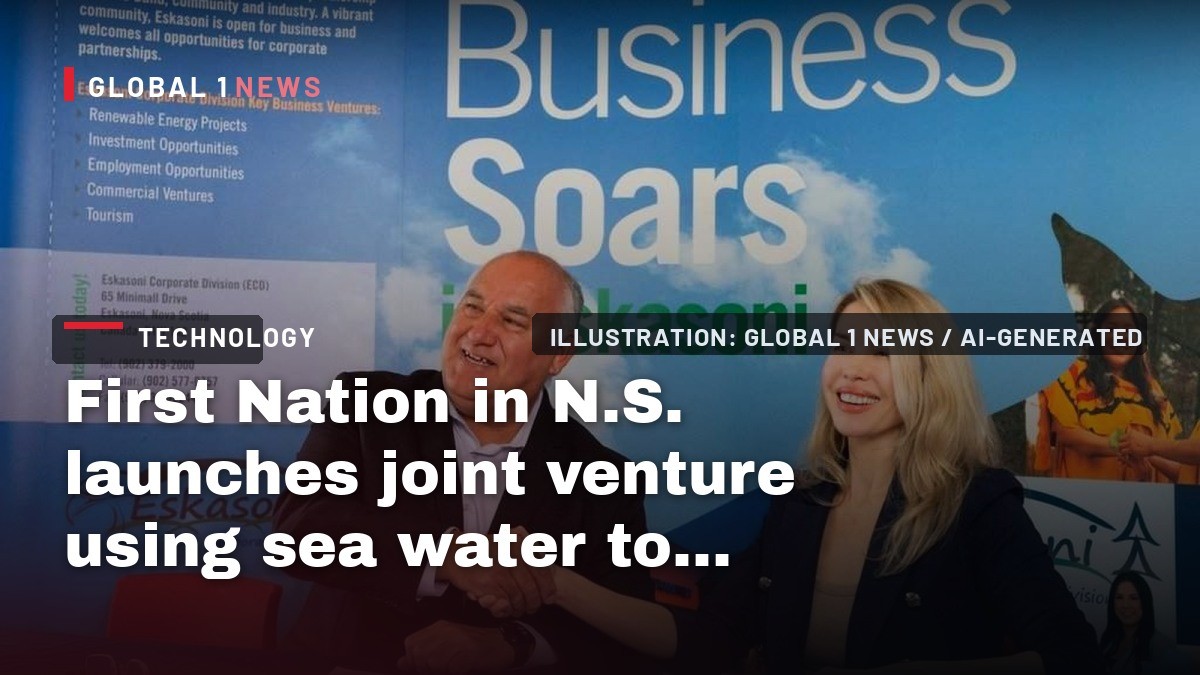
The Eskasoni First Nation of Cape Breton has taken a decisive step toward marrying economic development with environmental stewardship by entering a joint venture with Nova Scotia clean‑technology firm Aeon Blue. The partnership, announced on 14 October 2026, will create a new company—eFuels Mi’kmaq Limited—tasked with turning seawater and captured carbon dioxide into low‑cost jet and rocket fuel. While the project is still at the pilot stage, its design and the commitments already made signal a potentially transformative model for Indigenous communities seeking sustainable growth in the energy sector.
Origins of the partnership
The collaboration brings together two distinct yet complementary strengths. Eskasoni, a Mi’kmaq community with a long history of navigating the challenges of economic development on reserve lands, is contributing a sizeable capital investment of $1.5 million. This represents a majority ownership stake in the $4‑million venture, underscoring the community’s confidence in the technology and its desire to retain control over the enterprise.
Aeon Blue, a Sydney‑based clean‑technology startup, supplies the technical expertise. The firm’s core offering is a process known as salt‑water electrochemistry, which can extract hydrogen directly from seawater while simultaneously capturing carbon dioxide from ambient air. By combining these two streams, Aeon Blue aims to produce e‑fuels—synthetic fuels that can replace conventional petroleum‑derived jet fuel and rocket propellant without requiring changes to existing engines.
How the technology works
Salt‑water electrochemistry is a relatively new approach that leverages the abundant ions in seawater to split hydrogen molecules. In parallel, a carbon‑capture system draws CO₂ from the atmosphere, a step that aligns with Canada’s broader commitments to net‑zero emissions. The extracted hydrogen and captured carbon are then chemically combined to create hydrocarbon molecules suitable for aviation and space launch applications.
The process is described by Aeon Blue as “low‑cost,” a claim that rests on the premise that seawater is essentially free and that the energy required for electrolysis can be supplied by renewable sources. While the venture is still in the pilot phase, the technology promises to reduce reliance on fossil‑derived fuels and to provide a domestic source of high‑purity jet fuel, a strategic advantage for Canada’s aviation and aerospace sectors.
Economic implications for Eskasoni
Chief Leroy Denny highlighted the dual goals of the project: creating jobs and building capacity within the community. The venture is projected to generate about 80 positions, ranging from engineering and technical roles to management and administrative functions. For a community that has historically faced limited employment opportunities, such a workforce expansion could have a ripple effect on local income levels and social wellbeing.
Beyond direct employment, the partnership is expected to open pathways for community members to acquire skills in emerging clean‑technology fields. Training in electrochemical processes, carbon capture, and fuel synthesis could position Eskasoni residents for future roles in Canada’s growing green‑energy economy, both within the venture and in related industries.
Environmental stewardship and Indigenous values
The venture aligns with a broader Indigenous perspective that emphasises the interdependence of economic activity and environmental health. Chief Denny’s remarks—“We believe that economic development and environmental responsibility can go hand‑in‑hand”—reflect a longstanding Mi’kmaq principle of stewardship over the land and sea. By focusing on a technology that utilises seawater—a resource that is abundant along Nova Scotia’s coast—the project avoids the ecological disturbances associated with traditional fossil‑fuel extraction.
Moreover, the carbon‑capture component directly addresses climate‑change concerns. While the venture does not claim to be carbon‑negative, the integration of CO₂ removal into the fuel‑production cycle helps offset emissions that would otherwise be released when the fuel is burned. This approach resonates with Canada’s national climate targets and demonstrates how Indigenous partnerships can contribute to meeting those goals.
Strategic relevance for Canada’s energy landscape
Canada’s aviation sector accounts for a significant share of national greenhouse‑gas emissions, and the country has been exploring alternatives to conventional jet fuel. The eFuels Mi’kmaq initiative offers a domestically produced, low‑carbon option that could reduce dependence on imported fossil fuels and enhance energy security. Additionally, the rocket‑fuel angle dovetails with Canada’s growing involvement in the commercial space industry, where reliable, locally sourced propellant could be a competitive advantage.
From a policy perspective, the project exemplifies how federal and provincial programmes that support clean‑technology innovation and Indigenous economic participation can intersect. Funding mechanisms that target Indigenous entrepreneurship, combined with research grants for low‑carbon fuel technologies, may find a natural fit in ventures like eFuels Mi’kmaq Limited.
Challenges and next steps
Despite the promise, the venture faces several practical hurdles. Scaling a pilot process to commercial volumes will require substantial capital investment beyond the initial $4‑million pool. The reliability of the technology under varied marine conditions, the integration of renewable electricity sources, and the establishment of supply chains for captured CO₂ are all factors that will need to be addressed.
Chief Denny and Aeon Blue have indicated that the pilot stage is already underway, suggesting that initial data on efficiency and cost‑effectiveness will soon be available. Continued community involvement, transparent reporting, and partnerships with research institutions could help mitigate technical risks and ensure that the project remains aligned with both economic and environmental objectives.
Broader implications for Indigenous entrepreneurship
The Eskasoni‑Aeon Blue partnership may serve as a template for other First Nations seeking to engage with cutting‑edge clean‑technology sectors. By securing majority ownership and a significant financial stake, Eskasoni is positioning itself not merely as a passive investor but as a driver of innovation. This approach could inspire similar collaborations across Canada, where Indigenous communities possess unique access to natural resources and cultural imperatives that value sustainable development.
In the context of Canada’s ongoing reconciliation journey, such ventures demonstrate how economic empowerment can be pursued without compromising environmental integrity. As the pilot progresses and the first batches of e‑fuel are produced, the outcomes will be closely watched by policymakers, industry leaders, and Indigenous groups alike, all keen to see whether this blend of tradition, technology, and entrepreneurship can chart a new course for Canada’s clean‑energy future.
This article was produced with AI-assisted research and editorial support. Reporting is based on the source material cited below. Sources: Global News Canada; globalnews.ca; Global1.News (14 October 2026).
By Alex Thompson, Staff Writer
What's Your Reaction?
 Like
0
Like
0
 Dislike
0
Dislike
0
 Love
0
Love
0
 Funny
0
Funny
0
 Wow
0
Wow
0
 Sad
0
Sad
0
 Angry
0
Angry
0

Canada Correspondent at Global1.News. Based in Toronto, covering Canadian politics, energy, trade, and US-Canada relations. Provides the Canadian perspective on North American and global affairs.














Comments (0)