
US military weighs using 'mother of all bombs' if Trump resumes war
Israel’s security and diplomatic establishments are closely monitoring the latest U.S. The plan, reported by CNN and based on statements from U.S. officials, would represent a dramatic escalation should President Donald Trump decide to resume combat operations against Tehran.
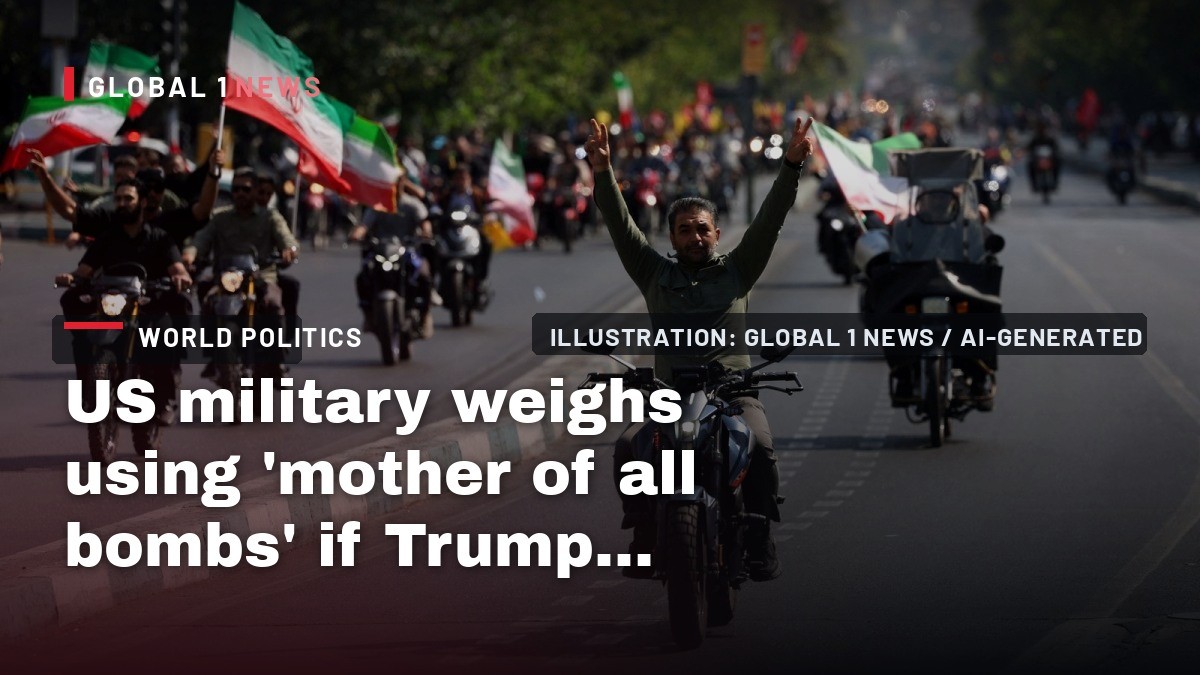
Israel’s security and diplomatic establishments are closely monitoring the latest U.S. military planning that envisions the possible use of the GBU‑43/B Massive Ordnance Air Blast bomb – colloquially known as the “mother of all bombs” – against Iran’s energy infrastructure and nuclear sites. The plan, reported by CNN and based on statements from U.S. officials, would represent a dramatic escalation should President Donald Trump decide to resume combat operations against Tehran. While the United States has long maintained a policy of deterrence toward Iran’s nuclear program, the prospect of deploying the largest conventional bomb in its arsenal raises a host of strategic, regional and humanitarian questions that Israeli policymakers cannot ignore.
Background to the U.S. Contingency Plan
The United States has been developing strike plans that could incorporate the GBU‑43/B, a 21‑ton bomb designed to create an immense blast radius. According to the source material, these plans specifically target Iranian energy facilities and nuclear sites, indicating a focus on crippling the country’s ability to generate revenue and advance its nuclear ambitions. The plan is contingent on a decision by President Donald Trump to restart combat operations, a scenario that has been discussed in Washington but has not yet materialised.
Officials familiar with the planning process have told CNN that the bomb’s deployment would be a “significant escalation” in the conflict. Their comments also highlight lingering doubts about whether such a weapon would effectively achieve Washington’s broader strategic objectives. These doubts reflect a broader debate within the U.S. defense establishment about the utility of massive conventional ordnance versus more precise, surgical strikes that minimise collateral damage while still delivering a decisive blow to Iran’s strategic assets.
Implications for Israeli Security
From an Israeli security perspective, any intensification of U.S. military action against Iran carries immediate ramifications. Israel’s own strategic calculations have long been shaped by Tehran’s missile capabilities and its potential to strike Israeli territory. An American strike that severely damages Iran’s energy and nuclear infrastructure could, in theory, reduce the resources available for missile development. However, the use of a bomb of this magnitude also risks provoking a broader retaliation from Iran, potentially in the form of missile launches or asymmetric attacks against Israeli interests in the region.
Israel’s Ministry of Defense and the Israel Defense Forces (IDF) maintain close coordination with U.S. counterparts, and any shift in American operational posture would be swiftly communicated to Israeli leadership. The Israeli Innovation Authority, which oversees the development of advanced defence technologies, would likely be tasked with assessing the need for rapid adjustments in missile defence systems such as the Iron Dome, David’s Sling and the Arrow programme, to counter any heightened Iranian threat that could follow a U.S. strike.
Regional Diplomatic Repercussions
The deployment of the “mother of all bombs” would reverberate across the Middle East, affecting not only Iran and Israel but also neighbouring states that have been navigating a delicate balance between Tehran and Washington. Countries such as Jordan, Egypt and Saudi Arabia have long expressed concerns about Iran’s regional influence and would likely welcome a decisive blow to its nuclear programme. Yet the humanitarian impact of a massive blast on civilian infrastructure could strain diplomatic ties, especially if civilian casualties or widespread environmental damage occur.
Israel’s diplomatic corps, operating out of the Ministry of Foreign Affairs, would need to calibrate its messaging to both domestic audiences and international partners. Emphasising Israel’s alignment with U.S. efforts to curb Iran’s nuclear ambitions while simultaneously advocating for restraint to avoid civilian harm would be a tightrope walk. The Israeli embassy in Washington, which regularly liaises with the U.S. State Department, would be a key conduit for conveying Israeli concerns about escalation thresholds and post‑strike stability.
Economic Considerations for Israel
Iran’s energy sector is a major source of revenue for Tehran, funding both its domestic economy and its military programmes. A successful U.S. strike that cripples Iranian energy infrastructure could, in theory, reduce Tehran’s capacity to fund proxy groups and missile development, indirectly benefitting Israeli security. However, the broader economic fallout could also affect global oil markets, leading to price volatility that would impact Israel’s import‑dependent energy needs.
Israel’s Ministry of Economy, together with the Israel Innovation Authority, monitors global commodity trends closely. A sudden shock to oil supply caused by a massive bomb could prompt the Israeli government to reassess its strategic petroleum reserves and accelerate investments in alternative energy sources, such as solar and wind, which have been a priority in recent national plans. The potential for higher energy costs would also influence household budgets and industrial production, underscoring the interconnectedness of regional security actions and domestic economic stability.
Humanitarian and Environmental Impact
While the source material focuses on the strategic calculus behind the bomb’s potential use, the humanitarian dimension cannot be overlooked. The GBU‑43/B creates an enormous blast radius, capable of destroying vast swathes of infrastructure in a single detonation. Targeting energy facilities could lead to widespread power outages, affecting hospitals, water treatment plants and essential services across large Iranian cities.
Israel’s own experience with humanitarian crises, such as those in Gaza and the West Bank, informs its sensitivity to civilian suffering. Israeli NGOs and international organisations based in Tel Aviv often coordinate relief efforts in the region, and a large‑scale disaster in Iran could trigger a surge in humanitarian aid needs. The Israeli government, through the Ministry of Foreign Affairs and the Israeli Red Cross, would likely be called upon to contribute to any international response, balancing moral obligations with security considerations.
Strategic Alternatives to Massive Bombardment
The doubts expressed by U.S. officials about the bomb’s effectiveness hint at a broader debate on the most appropriate tools for achieving strategic goals. Precision strikes, cyber operations and covert sabotage have become staples of modern conflict, offering the ability to target specific facilities while limiting broader destruction. Israel’s own expertise in cyber warfare, exemplified by units such as Unit 8200, positions it as a potential partner in alternative approaches that could complement or replace the use of a massive conventional bomb.
Collaboration between Israeli and American intelligence agencies could involve sharing satellite imagery, signals intelligence and on‑the‑ground assessments to refine targeting lists. Such cooperation would aim to maximise the impact on Iran’s nuclear capabilities while minimising civilian harm—a balance that aligns with Israel’s long‑standing doctrine of proportionality in defence operations.
Looking Ahead: What Israel Is Preparing For
In the wake of the reported U.S. contingency plan, Israeli officials are likely conducting scenario planning to anticipate a range of outcomes. The Israel Innovation Authority is expected to accelerate research into next‑generation missile defence technologies, ensuring readiness against any potential Iranian retaliation. Simultaneously, the Ministry of Economy may explore measures to cushion the domestic economy from any shockwaves in global energy markets.
On the diplomatic front, Israel will continue to engage closely with Washington, seeking clarity on the timing and scope of any potential strike. Maintaining open channels with regional partners will also be essential to manage the fallout from a possible escalation. As the situation evolves, Israel’s approach will be shaped by a combination of security imperatives, economic resilience and a commitment to mitigating civilian suffering—a delicate balance that reflects the complex realities of the Middle East in 2026.
This article was produced with AI-assisted research and editorial support. Reporting is based on the source material cited below. Sources: Middle East Eye; middleeasteye.net; Global1.News (15 October 2026).
By Hannah Berg, Staff Writer
What's Your Reaction?
 Like
0
Like
0
 Dislike
0
Dislike
0
 Love
0
Love
0
 Funny
0
Funny
0
 Wow
0
Wow
0
 Sad
0
Sad
0
 Angry
0
Angry
0

Israel Correspondent at Global1.News. Based in Tel Aviv, covering Israeli politics, security, technology, and society. Provides balanced, deeply-sourced reporting on one of the most closely-watched regions in the world.












Comments (0)