
Jake: Fiji’s great ascent starts now
When the South African press first caught wind of Jake White’s appointment as Fiji’s new head coach, the reaction was a mixture of nostalgia and intrigue.
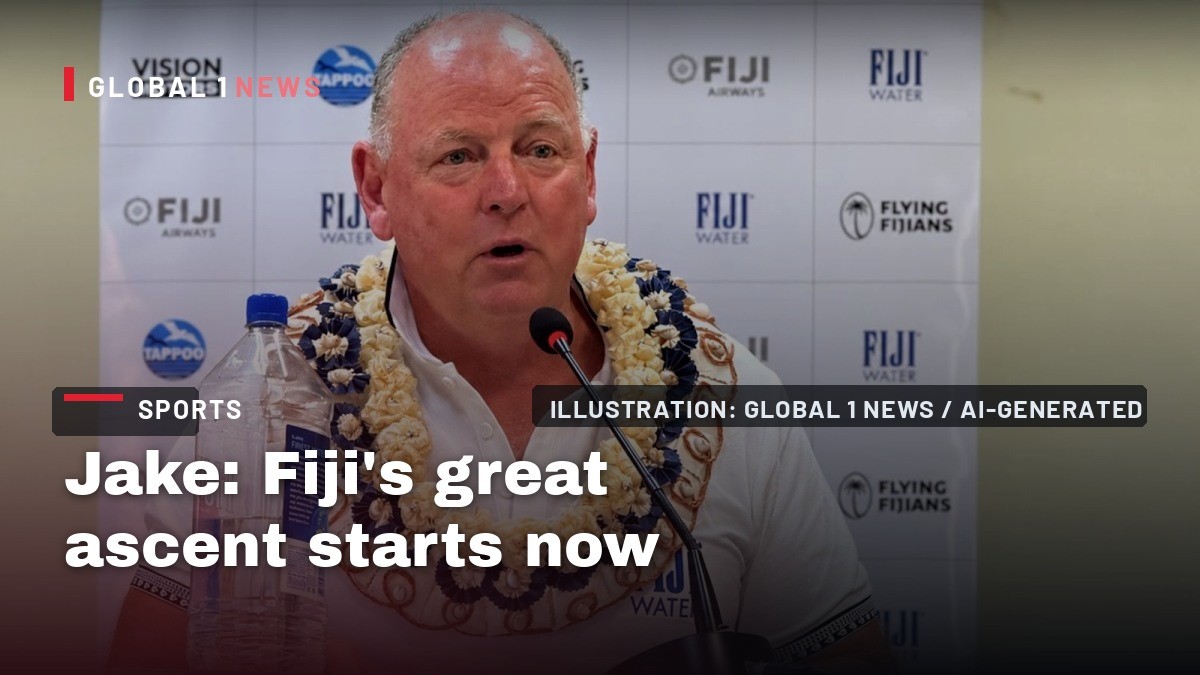
When the South African press first caught wind of Jake White’s appointment as Fiji’s new head coach, the reaction was a mixture of nostalgia and intrigue. The 2007 World Cup‑winning Springbok mastermind, now 62, stepped onto Suva’s rugby stage with a clear mission: to mould the most prepared Fijian squad ever for the 2027 Rugby World Cup in Australia. For South African fans, the story reads like a homecoming of one of our own, yet the stakes are distinctly Pacific, and the roadmap White has laid out is as ambitious as it is culturally resonant.
From Springbok Glory to Pacific Challenge
White’s résumé reads like a highlight reel of South African rugby – leading the Springboks to World Cup triumph in 2007, steering the Bulls as director of rugby and later taking charge of a national side that now sits tenth in the world rankings. Replacing interim coach Senirusi Seruvakula, he inherits a side that has stumbled, losing four of five Tests this year. The new boss made it plain: “When you’re a Test coach, you want to win every time you play.” His first test under the new regime is a clash with Japan on 24 October, a match that will serve as an early barometer of his impact.
Beyond the immediate fixtures, White’s vision stretches to the November Nations Championship, where Fiji will meet France, Ireland and Italy. These heavyweight encounters are not merely about points on the board; they are the crucible in which White intends to forge depth, fitness and a winning mentality that will carry the team to the World Cup. “Next year is about building depth and, obviously, the last block is to peak before the World Cup,” he said, underscoring a long‑term approach that mirrors the strategic planning we see in SARU’s own pathways.
Embedding in Fijian Rugby Culture
White’s commitment goes beyond the boardroom. He has pledged to spend time with the Fijian Drua Super Rugby franchise and to travel to villages, immersing himself in the grassroots pulse of the sport. “Watch some club rugby, see if we can identify some young talent,” he explained, signalling a hands‑on approach to talent identification that South African coaches will recognise as essential for sustainable success.
His outreach extends to the under‑18 and under‑20 ranks, where he hopes to collaborate with local coaches to construct a clear pathway for emerging players. By ensuring that “the young Fijian boys are looked after,” White is not only safeguarding the future of the national side but also echoing the transformation and development priorities that dominate South African rugby discourse.
The Solesolevaki Philosophy
Central to White’s coaching ethos is the Fijian concept of solesolevaki – a term he translates as “working together.” He describes it as “individuals committing to one another, putting the team first, and working towards a shared purpose.” This philosophy, which stresses collective strength over individual brilliance, resonates deeply with South African rugby’s own emphasis on the “team first” mentality that has powered the Springboks to historic victories.
White elaborates that solesolevaki is about “many hands creating one collective strength,” a principle that could bridge cultural gaps and foster unity within a squad that draws talent from diverse islands and diaspora communities. For South African fans, the idea of a team bound by shared responsibility and mutual support is familiar, recalling the camaraderie that saw the Springboks lift the Webb Ellis Cup in 1995 and 2007.
Strategic Management of Eligibility and Fitness
One of the immediate challenges White faces is the complex task of confirming player eligibility, availability and injury status. “We need to find out who’s eligible, who’s available, who’s injury‑free,” he noted, highlighting the logistical intricacies that accompany modern international rugby. This mirrors the administrative hurdles SARU routinely navigates when aligning provincial contracts, club commitments and national duty.
White’s focus on conditioning is equally explicit. By the time the squad departs for Australia, he aims for a “very fit, healthy, conditioned, very skilful team.” The emphasis on physical preparation reflects the South African tradition of rigorous fitness regimes, a hallmark of the Springboks’ success under coaches like Rassie Erasmus and Jacques Nienaber.
Comparisons Between Fiji and South Africa
White drew a striking parallel between his adopted home and his native South Africa, observing that “they live, sleep, eat rugby.” He recounted a local remark that “rugby is more serious than religion” in Fiji, a sentiment that underscores the sport’s cultural weight in both nations. For South African supporters, this comparison reinforces the notion that rugby is more than a game; it is a unifying force that can bridge ethnic, linguistic and socio‑economic divides.
The coach’s acknowledgement of Fiji’s passion offers a reminder of why South African rugby continues to invest heavily in community programmes and school tournaments. The shared intensity of rugby fervour in both countries may also pave the way for deeper bilateral exchanges, such as coaching clinics, player loans and joint development initiatives that could benefit both the Pacific and South African rugby ecosystems.
Looking Ahead: The 2027 World Cup Build‑Up
White’s calendar is clear: use the remaining 2026 Tests to fine‑tune the squad, embed solesolevaki as the team’s cultural backbone, and ensure the players arrive in Australia at peak performance. The upcoming Japan test, followed by the Nations Championship fixtures, will serve as critical data points for assessing depth, resilience and tactical adaptability.
For South African observers, the journey of Fiji under White offers a case study in how a seasoned coach can blend high‑performance expertise with local cultural values to elevate a nation’s rugby standing. As the Springboks prepare for their own World Cup campaign, the lessons from Suva may well inform how South Africa continues to balance elite performance with grassroots empowerment.
Implications for South African Rugby
The appointment of a former Springbok coach to a Pacific nation’s helm is a testament to South Africa’s exportable rugby intellect. It reinforces the idea that South African coaching philosophies, when adapted to local contexts, can have a transformative impact. White’s emphasis on pathways, community engagement and collective responsibility aligns with SARU’s current strategic pillars, suggesting potential avenues for collaboration and knowledge exchange.
Moreover, the success of Fiji under White could inspire South African unions to revisit their own talent identification processes, especially in under‑represented regions. If the solesolevaki model proves effective in harnessing diverse strengths into a cohesive unit, it may become a blueprint for South African teams seeking to deepen transformation and unity through sport.
This article was produced with AI-assisted research and editorial support. Reporting is based on the source material cited below. Sources: SARugbyMag; sarugbymag.co.za; Global1.News (13 October 2026).
By Dante Williams, Staff Writer
What's Your Reaction?
 Like
0
Like
0
 Dislike
0
Dislike
0
 Love
0
Love
0
 Funny
0
Funny
0
 Wow
0
Wow
0
 Sad
0
Sad
0
 Angry
0
Angry
0

Breaking News and Investigations Correspondent at Global1.News. Based in London, covering global breaking news, security, and investigative stories. Known for digging deeper and connecting the dots across continents.









Comments (0)