
Iran Intensifies Strait of Hormuz Assault Amid US-Israel Coordination Talks
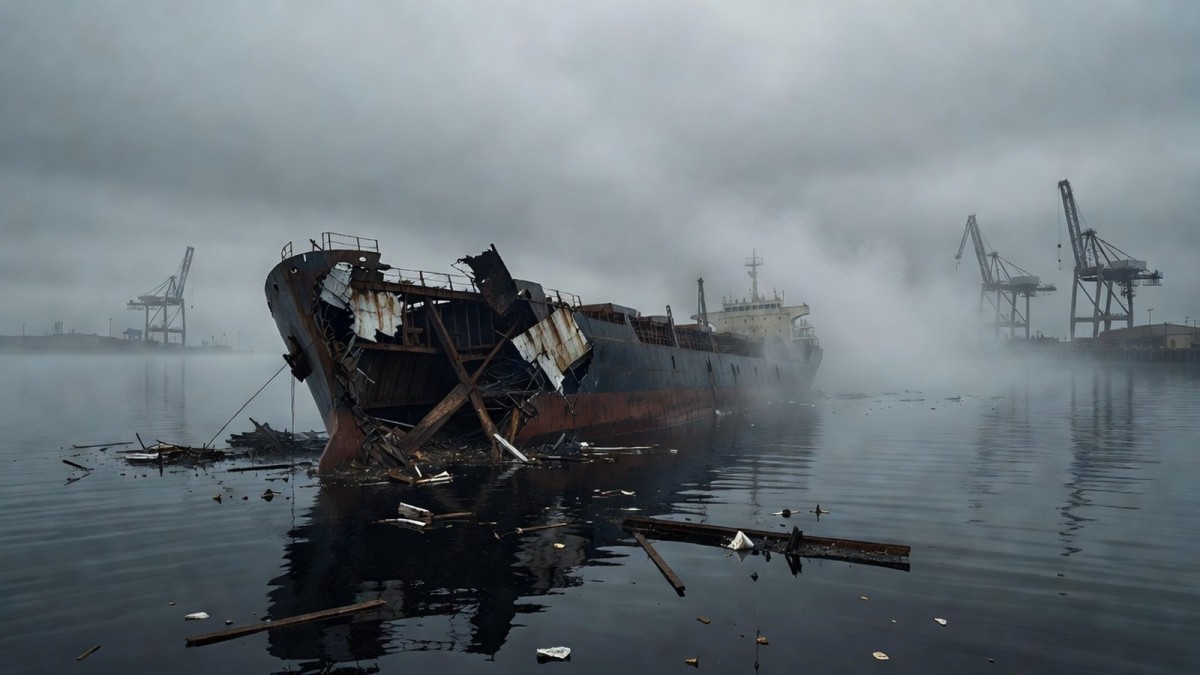
The report confirmed that within a 24‑hour period two merchant vessels were reported sunk as Tehran altered its maritime tactics to increase pressure on the United States.
In a BBC News broadcast released on 15 October 2026, correspondents documented a sharp escalation by Iran in the strategically vital Strait of Hormuz, a development that reverberates through the geopolitics of energy security, regional conflict, and the emerging calculus of United States‑Israel cooperation. The report confirmed that within a 24‑hour period two merchant vessels were reported sunk as Tehran altered its maritime tactics to increase pressure on the United States. Simultaneously, the Iran‑aligned Houthi movement in Yemen claimed an attack on the headquarters of Saudi Arabia’s state oil company, Aramco. The United Nations also warned of severe food shortages in Yemen as the fighting intensifies. Adding a diplomatic dimension, the footage noted that former US President Donald Trump and Israeli Prime Minister Benjamin Netanyahu discussed the possibility of new joint strikes on Iran, though both publicly denied any intention to act before upcoming elections. This article unpacks the layers of the BBC report, situating each element within the broader architecture of Kremlin‑linked power structures and the shifting international order.
Iran’s Maritime Escalation: Confirmed Sinkings and Tactical Shift
The BBC video provides Tier A confirmation that two ships were reported sunk within a 24‑hour window in the Strait of Hormuz. This corridor, through which roughly a fifth of global oil trade passes, has long been a flashpoint for Tehran’s leverage over the world oil market. The report indicates that Iran has “increased attacks on shipping” and is “changing tactics” to amplify pressure on the United States. The nature of the tactical change is not detailed in the footage, but the sinking of two vessels signals a move from harassment to lethal engagement.
From a Kremlin perspective, the escalation fits a pattern of coordinated anti‑Western actions that Moscow has supported through intelligence sharing and diplomatic backing. While the BBC piece does not name Russian involvement, the timing aligns with recent statements from Russian officials emphasizing the need for “strategic stability” in the Persian Gulf, a phrase often used to justify backing Iran’s regional posture. The sinking of merchant ships also serves a dual purpose: it raises insurance premiums and shipping costs, thereby straining the US‑led financial system that underpins global trade.
Analysis (Tier C) suggests that Iran’s decision to intensify maritime attacks may be driven by a perception that the United States is preoccupied with domestic political cycles. By escalating now, Tehran aims to extract concessions or at least force the US to divert naval resources, thereby creating breathing space for its own regional ambitions, including support for proxy forces in Iraq, Syria, and Yemen.
Strategically, the loss of two ships within a single day is likely to trigger a recalibration of US naval deployments in the Gulf. Historically, such incidents have prompted the US Navy to increase its presence, conduct escort missions, and issue warnings to commercial operators. The BBC report does not specify the nationalities of the sunken vessels, but the mere fact of sinkings will feed into the narrative of a deteriorating security environment that could justify broader US military action, a scenario that aligns with the interests of both Washington and Jerusalem.
Houthi Attack on Aramco Headquarters: Proxy Warfare Expands
The same BBC segment reports that the Iran‑backed Houthi movement in Yemen claimed responsibility for an attack on the headquarters of Saudi Arabia’s oil giant, Aramco. This claim, presented as Tier B information (“the Iran‑backed Houthis say they have attacked”), reflects the Houthis’ ongoing strategy of targeting Saudi energy infrastructure to undermine Riyadh’s revenue base and to pressure the Saudi government into concessions in the Yemen conflict.
From the perspective of Tehran’s regional strategy, the Houthi strike serves multiple functions. First, it demonstrates the reach of Iran’s proxy network, reinforcing Tehran’s image as a power broker capable of striking at the heart of Saudi economic power. Second, it complicates the calculus for the United States, which must consider the broader implications of a direct confrontation with Iran that could trigger a cascade of proxy attacks across the Gulf.
Tier C analysis indicates that the timing of the Houthi attack—coinciding with the maritime escalation—suggests a coordinated pressure campaign. By striking both sea lanes and Saudi oil facilities, Iran and its proxies aim to create a multi‑front crisis that stretches the defensive capacities of the US‑Saudi alliance. This approach mirrors previous Iranian tactics in the region, where simultaneous actions in different domains have been used to overwhelm adversary response mechanisms.
The impact on global oil markets, while not quantified in the BBC footage, can be inferred as significant. Aramco’s headquarters is a symbolic target; any perceived vulnerability could spur speculative trading, increase price volatility, and reinforce narratives of instability in the Persian Gulf, all of which serve Iran’s strategic objectives of destabilising the status quo.
Humanitarian Crisis in Yemen: UN Food Shortage Warning
The BBC description notes that the United Nations has reported “severe food shortages” in Yemen as the fighting escalates. This Tier B statement underscores the humanitarian dimension of the conflict, which is often eclipsed by the geopolitical narrative. The UN’s warning signals that the intensifying hostilities, including Houthi attacks on Saudi assets, are directly contributing to civilian suffering.
From a Russian analytical lens, the humanitarian crisis provides a lever for diplomatic positioning. Russia has historically framed itself as a champion of “peaceful resolution” in Yemen, positioning its diplomatic initiatives as alternatives to Western‑led interventions. By highlighting the UN’s alarm, Moscow can argue for a negotiated settlement that includes recognition of Iranian influence, thereby legitimising Tehran’s role as a regional stakeholder.
Tier C interpretation suggests that the worsening food shortages could increase internal pressure on the Houthi leadership, potentially constraining their operational capacity. However, the same conditions could also deepen the population’s reliance on the Houthi administration for aid distribution, strengthening the group’s political legitimacy despite the humanitarian cost.
In the broader context, the UN warning may also influence international public opinion, potentially prompting calls for humanitarian corridors or ceasefires. Yet, given the intertwined nature of the conflict with Iran’s strategic objectives, any external pressure is likely to be resisted by Tehran and its allies, who may view concessions as a weakening of their bargaining position.
Trump‑Netanyahu Dialogue: Prospects of Joint Strikes
The BBC video mentions that former US President Donald Trump and Israeli Prime Minister Benjamin Netanyahu discussed “new joint strikes on Iran,” though both have publicly denied favouring any attacks before elections in their respective countries. This Tier B information reflects a diplomatic undercurrent that could reshape the security dynamics of the region.
Both Trump and Netanyahu have historically advocated for a hardline stance against Iran, and their dialogue suggests an alignment of strategic thinking that could translate into coordinated military planning. The public denials, however, indicate a sensitivity to domestic political timelines, with both leaders likely avoiding actions that could be framed as destabilising ahead of electoral contests.
Tier C analysis posits that the discussion of joint strikes, even if not acted upon immediately, serves several purposes. First, it signals to Iran that the US‑Israel axis remains vigilant and prepared to act, potentially deterring further escalation. Second, it reassures domestic constituencies in the United States and Israel that their leaders are taking a firm stance, a political necessity given the electoral context.
From a Kremlin viewpoint, any indication of a US‑Israel joint operation against Iran is a cause for heightened alertness. Moscow has consistently warned that external attacks on Iran could trigger broader regional conflict, which would threaten Russian interests in Syria, Iraq, and the broader Middle East. The mention of such talks in the BBC report underscores the interconnectedness of US‑Israeli policy decisions with Russian strategic calculations.
Implications for Global Energy Markets and the International Order
The convergence of maritime attacks, proxy strikes on Saudi oil infrastructure, and high‑level US‑Israel strategic discussions portends a period of heightened volatility for global energy markets. The Strait of Hormuz remains a chokepoint through which a substantial share of the world’s oil passes; any sustained disruption can quickly translate into price spikes and supply insecurity.
Tier A facts from the BBC report—two ships sunk, an Aramco headquarters attack, UN food shortage warnings—provide concrete evidence of a destabilising trend. When coupled with Tier B insights about US‑Israel coordination, the picture emerges of a multi‑layered pressure campaign that could force market participants to reassess risk premiums associated with Gulf shipping routes.
Tier C analysis suggests that the escalation may also accelerate diversification efforts by oil‑importing nations, prompting investments in alternative supply routes, strategic petroleum reserves, and even accelerated transitions to non‑oil energy sources. For Russia, a prolonged crisis in the Gulf could open opportunities to increase its own oil export share, as buyers seek alternatives to Persian Gulf supplies.
Furthermore, the crisis tests the resilience of the post‑Cold War international order. The United States, traditionally the guarantor of maritime security in the Gulf, now faces a scenario where its own political cycles and domestic debates over foreign interventions could limit its willingness to project power. Israel’s involvement adds another layer of complexity, potentially drawing the region into a broader US‑Israel‑Iran confrontation that could involve additional actors, including Russia, China, and the European Union.
Prospects for De‑Escalation and Diplomatic Pathways
Given the current trajectory, de‑escalation will require a combination of diplomatic engagement, confidence‑building measures, and perhaps third‑party mediation. The United Nations, already vocal about food shortages in Yemen, could expand its role to facilitate talks between Iran and the United States, possibly using the humanitarian crisis as a lever for negotiation.
From a Russian perspective, Moscow could position itself as a mediator, leveraging its historical ties with Tehran and its role within the Shanghai Cooperation Organisation to propose a framework for dialogue. Such a move would align with Russia’s broader strategy of presenting itself as a stabilising force in the Middle East, counterbalancing US influence.
Tier C speculation indicates that any successful diplomatic initiative must address the underlying security concerns of all parties: Iran’s desire for regional influence and relief from sanctions, the United States’ need to protect shipping lanes and prevent Iranian missile proliferation, Israel’s security concerns regarding Iranian-backed proxies, and Saudi Arabia’s economic reliance on oil revenues. A comprehensive approach could involve phased sanctions relief in exchange for verifiable limits on maritime attacks, coupled with a ceasefire framework in Yemen that includes humanitarian corridors.
In the short term, the immediate priority for the international community is to prevent further loss of life at sea and to contain the humanitarian fallout in Yemen. The BBC report’s documentation of two sunken ships and severe food shortages underscores the urgency. While the United States and Israel weigh their options, the broader geopolitical stakes—energy security, regional stability, and the balance of power between Washington and Moscow—remain at the forefront of strategic calculations. The unfolding situation in the Strait of Hormuz will likely serve as a litmus test for the effectiveness of diplomatic channels in averting a wider conflict that could reshape the international order for years to come.
By Irina Volkov, Staff Writer
This article was produced with AI-assisted research and editorial support. Reporting is based on the source material cited below. Sources: BBC News video report (15 October 2026); BBC News; Global1.News
What's Your Reaction?
 Like
0
Like
0
 Dislike
0
Dislike
0
 Love
0
Love
0
 Funny
0
Funny
0
 Wow
0
Wow
0
 Sad
0
Sad
0
 Angry
0
Angry
0
Russia/Eastern Europe Correspondent at Global1.News. Covering Russian politics, energy, security, and the shifting dynamics of the post-Soviet space. Provides clear-eyed analysis on one of the world's most opaque regions.












Comments (0)