
US Inflation Hits 3.7% as Rate-Hike Bets Jump and AI Stocks Rout
US consumer prices rose 3.7 percent in September as gasoline and energy costs surged, pushing the Federal Reserve's next rate decision back into play and triggering a global selloff in artificial-intelligence and semiconductor stocks from Wall Street to Seoul.
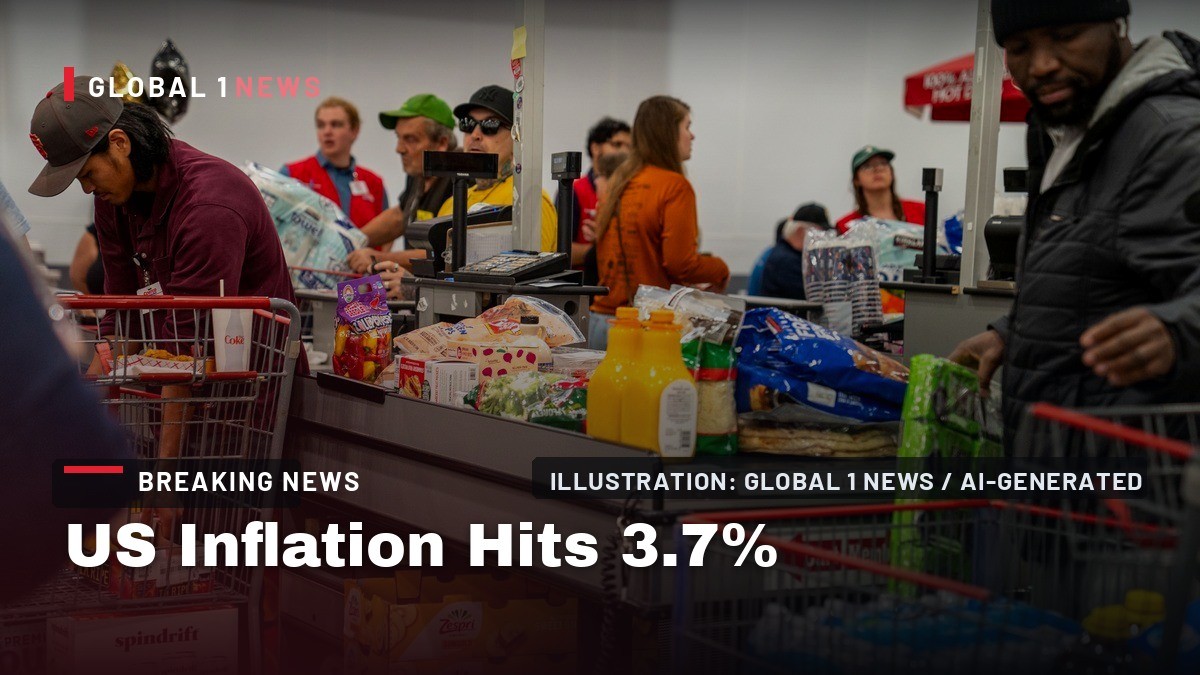
US inflation accelerated to 3.7 percent in September, a hotter reading that forced investors to reprice the path of Federal Reserve policy and knocked the global artificial-intelligence trade off its footing. The Bureau of Labor Statistics said the consumer price index rose 0.6 percent on the month. Rate-hike bets jumped within hours, and an increase - not a cut - is back on the table for the Fed's 28 October meeting.
US Inflation Hits 3.7% as Rate-Hike Bets Jump and AI Stocks Rout
Washington, United States — The report landed on Wednesday 14 October, ahead of the November 3 midterm elections, and it missed forecasts. Economists polled by Reuters had expected a 3.6 percent annual rate; the figure came in at 3.7 percent. The acceleration from August's 3.4 percent gave markets little room to look past it. What followed was a repricing across rates, equities and Asia's semiconductor complex that was still running when markets opened in Asia.
A Half-Point Jump in One Month
The Bureau of Labor Statistics said the all items index rose 3.7 percent over the 12 months ending September, up from 3.4 percent for the 12 months ending August. On a seasonally adjusted basis, the index climbed 0.6 percent in September after a 0.4 percent gain in August - the biggest monthly advance in five months. The CPI-U index level stood at 336.940, measured against a 1982-84 base of 100.
The acceleration was broad enough to unsettle a market that had spent weeks pricing a gentler path. The annual rate now sits well above the Fed's 2 percent target, and the direction of travel, not the level alone, is what moved money. Reuters reported that the report put an interest rate increase later this month back on the radar, a possibility that had faded before the print.
Gasoline Did Most of the Damage
The Bureau of Labor Statistics said the gasoline index rose 9.1 percent in September and accounted for more than half of the monthly all items increase. Before seasonal adjustment, gasoline prices increased 6.5 percent. The energy index rose 5.2 percent over the month after a 2.1 percent August gain, and it climbed 20.4 percent over 12 months. The gasoline index rose 34.2 percent over the same period.
Reuters reported that data from the US Energy Information Administration showed gasoline prices soared 7.1 percent in September. The two agencies measure the same month differently, and both figures stand; the gap is a difference in method, not a contradiction in the underlying move. The backdrop is a war that has not ended: Brent crude futures fell 1.31 percent to $104.67 a barrel by 0116 GMT on Thursday and US West Texas Intermediate fell 1.07 percent to $94.07 - a pullback from three-week highs, not a return to normal.

The Core Number Was the Real Warning
All items less food and energy rose 2.6 percent over the year, following a 2.4 percent increase for the 12 months ending August, according to the Bureau of Labor Statistics. On a monthly basis the core index climbed 0.3 percent, matching the August gain. Reuters said core prices came in higher than economists had expected; CBS News reported the core forecast was 2.5 percent against an actual 2.6 percent. The Associated Press noted that a monthly core pace of 0.3 percent, sustained for a year, would run well above the Fed's 2 percent target.
Shelter rose 0.4 percent after a 0.3 percent August rise. Food was unchanged, with food away from home up 0.2 percent and food at home down 0.1 percent; the food index rose 2.5 percent over the year. Electricity edged up 0.2 percent over the month, natural gas slipped 0.3 percent, and natural gas was up 5.0 percent over 12 months.
Wall Street's Third Straight Day of Losses
Reuters reported that stocks on Wall Street logged their third day of declines. The S&P 500 fell 1.1 percent, the Nasdaq Composite tumbled 1.9 percent in its worst session since late July, and a gauge of semiconductor stocks extended losses into a sixth day. The prospect of higher rates pummelled shares of Oracle, CoreWeave and other AI stocks sensitive to borrowing costs: CoreWeave dropped more than 15 percent, Dell fell roughly 11 percent and Oracle slid about 9 percent - the compute, server and cloud suppliers that sell capacity to the firms building AI models.
JPMorgan analysts wrote: "While the initial selloff was triggered by the hotter-than-expected CPI, tech was the main driver of today's selloff." The same note said: "AI was again the main challenge ... with financing risks and IPO timelines still at the centre of the story." Bloomberg, in a report carried by The Economic Times, wrote that the pressure brought the US market's longest stretch of tranquility since before the Covid-19 pandemic to an end.
Asia Takes the Hit Overnight
Reuters reported that MSCI's broadest index of Asia-Pacific shares outside Japan was down 1.2 percent, and that S&P 500 e-mini futures were down 0.3 percent. Bloomberg said MSCI's Asia Pacific equities gauge dropped 1.5 percent, heading for a fourth straight decline. Moneycontrol reported Hong Kong's Hang Seng Index dropped 1 percent, its tech gauge 2.2 percent and China's Shanghai Composite 1.5 percent.
Chris Weston, head of research at Pepperstone Group Ltd in Melbourne, said: "Asia faces another difficult session." He added that KOSPI and Nikkei futures pointed to renewed technology weakness, "with leveraged ETF flows and AI infrastructure credit risk firmly in focus." The distinction he draws - between the price of AI and the financing of it - is the one unsettling investors.
Korea's Chip Engines Go Into Reverse
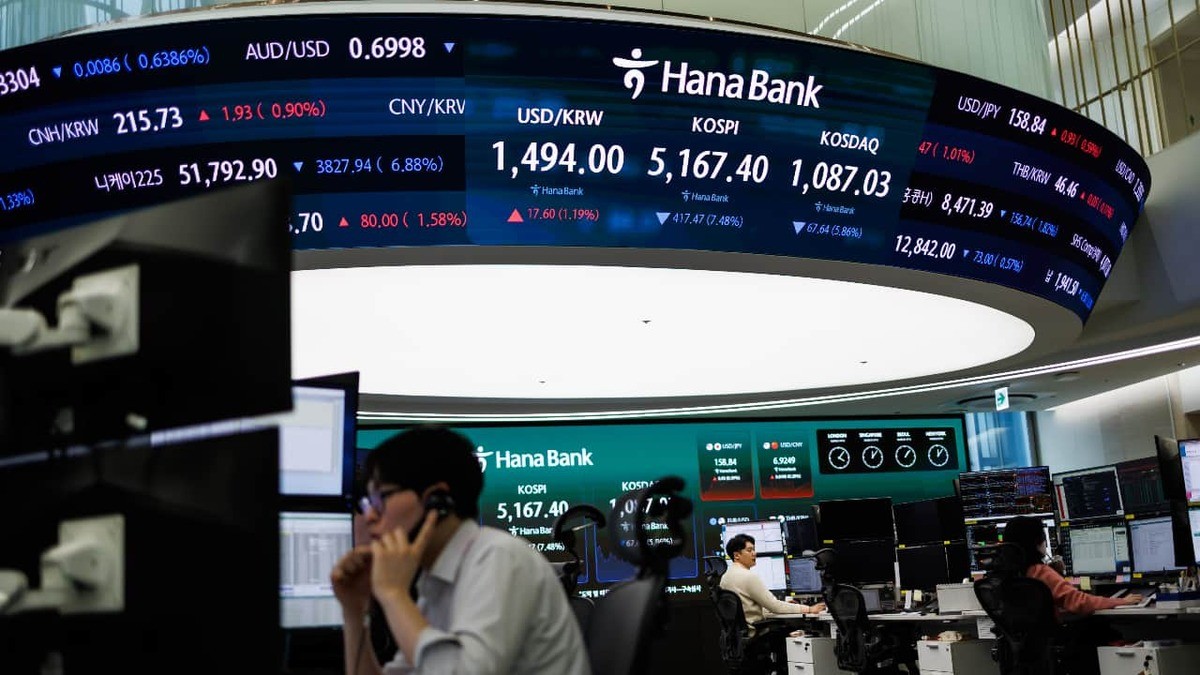
The readings on Korea's benchmark disagreed, and each was an intraday snapshot taken at a different moment. Reuters reported a 5.6 percent plunge in early Singapore trade; Moneycontrol reported the index crashed 7.7 percent, heading for its steepest decline since April; Bloomberg reported it slumped as much as 6.5 percent, to its lowest since late July. The reporting does not agree on a single settled figure, and none of these readings is a closing price.
On the Nikkei the range was wider still: Reuters reported a 1.3 percent fall, while Moneycontrol reported the Nikkei fell about 5 percent, with Osaka futures down 5.4 percent. The damage concentrated in chips. Moneycontrol reported Samsung Electronics and SK Hynix each plunging more than 9 percent, while Bloomberg put both heavyweights down at least 7 percent. Moneycontrol also reported SK Hynix has lost 57 percent of its market value from a peak four months ago, and the region was not starting from strength: the KOSPI had already dropped 5.5 percent on 13 October.
Why a Hot Inflation Print Hits AI Stocks Twice
The Associated Press reported that the rise was not all linked to oil and gas. Surging investment in data centers and artificial intelligence has also pushed up prices for computer chips and the consumer electronics that use them - inflation generated by the same boom whose shares were falling.
That is only half the mechanism. Higher Treasury yields, which climbed after the release, make the AI trade less attractive against safer assets, and the companies building the boom are the ones borrowing to fund it. The JPMorgan note pointed at that pressure point when it put "financing risks" at the centre of the story.
The Associated Press also reported that Middle East and Russia-Ukraine conflicts have sharply inflated the cost of diesel fuel used by long-haul trucks, that higher diesel prices raise shipping expenses, and that this in turn can push up prices for a range of goods.
What the Market Now Expects From the Fed
Reuters, citing the CME Group's FedWatch tool, said Fed funds futures were pricing an implied 31.6 percent probability of a 25-basis-point rate hike at the Fed's next two-day meeting on 28 October, compared with a 22.1 percent chance a day earlier. Other tallies of the same market put the odds higher: Bloomberg reported markets now price about 40 basis points of hikes by the end of January, with the odds of an October move also rising.
Skyler Weinand at Regan Capital said: "It's clear as ever that inflation is stubborn and moving in the wrong direction." He said he expected the Fed to pause on any rate changes in October but expected hikes to resume in December. Ronald Temple, chief market strategist for Lazard's Financial Advisory and Asset Management businesses, wrote: "With broadening inflation pressures becoming more evident in today's CPI report, the Fed is increasingly at risk of falling behind the curve in containing inflation." Away from equities, the move was a flight to safety: spot gold rose 1.3 percent to $4,158.63 an ounce and the dollar slipped from an 18-month peak.
The Last Inflation Report Before the Vote
Reuters reported the report was released ahead of the November 3 midterm elections and dealt another blow to President Donald Trump and his Republican Party. The Associated Press called it evidence that rising prices remain an economic challenge a few weeks before midterms that have focused heavily on affordability. Reuters reported the report followed surveys this month showing a further deterioration in consumer sentiment and a plunge in Trump's approval rating, driven by angst over the rising cost of living. A Reuters/Ipsos poll showed about 78 percent of Americans blamed Trump's policies, including tariffs on imports and the US-Israeli war with Iran, for rising prices, which Reuters said are outpacing wages.
There is a second, quieter number in the same release. NPR reported the Social Security Administration said benefits will increase next year to keep pace with the rising cost of living, based on prices in July, August and September. The same inflation that damages the government's standing raises the payment it makes.
What Comes Next
James Reilly, senior markets economist at Capital Economics, said the September core figure came in higher than expected on broad-based price pressures, potentially placing an October Fed rate hike back in the cards, and that the market appeared to be pricing a 50-50 chance of a 25-basis-point increase. He added: "For now, we still expect the Fed to wait until December to hike again." He noted producer price data could sharpen the picture on core personal consumption expenditures, the index the Fed tracks for its 2 percent target, which Reuters reported rose 3.0 percent in August.
The Associated Press reported that much of the current inflation comes from supply shocks, such as the Iran war's disruption to oil and gas supplies, and that higher interest rates cannot address those bottlenecks. The wider damage is not confined to share prices. CNBC reported Netflix said it will lay off roughly 6 percent of its employees, or about 1,000 workers.
By Jessica Ali, Staff Writer
This article was produced with AI-assisted research and editorial support. Sources: U.S. Bureau of Labor Statistics, Reuters, The Associated Press, Bloomberg (via The Economic Times), CBS News, NPR, CNBC, Moneycontrol and the CME Group.
What's Your Reaction?
 Like
0
Like
0
 Dislike
0
Dislike
0
 Love
0
Love
0
 Funny
0
Funny
0
 Wow
0
Wow
0
 Sad
0
Sad
0
 Angry
0
Angry
0

Editor-in-Chief at Global1.News. Atlanta-based journalist who cuts through the BS and tells it like it is. Lead anchor, host, and the voice you hear when the spin stops and the truth starts.














Comments (0)