
COA flags Sandiganbayan justices’ foreign trips
The Commission on Audit (COA) has once again turned its spotlight on a government institution that many Filipinos rely on to keep public officials honest.
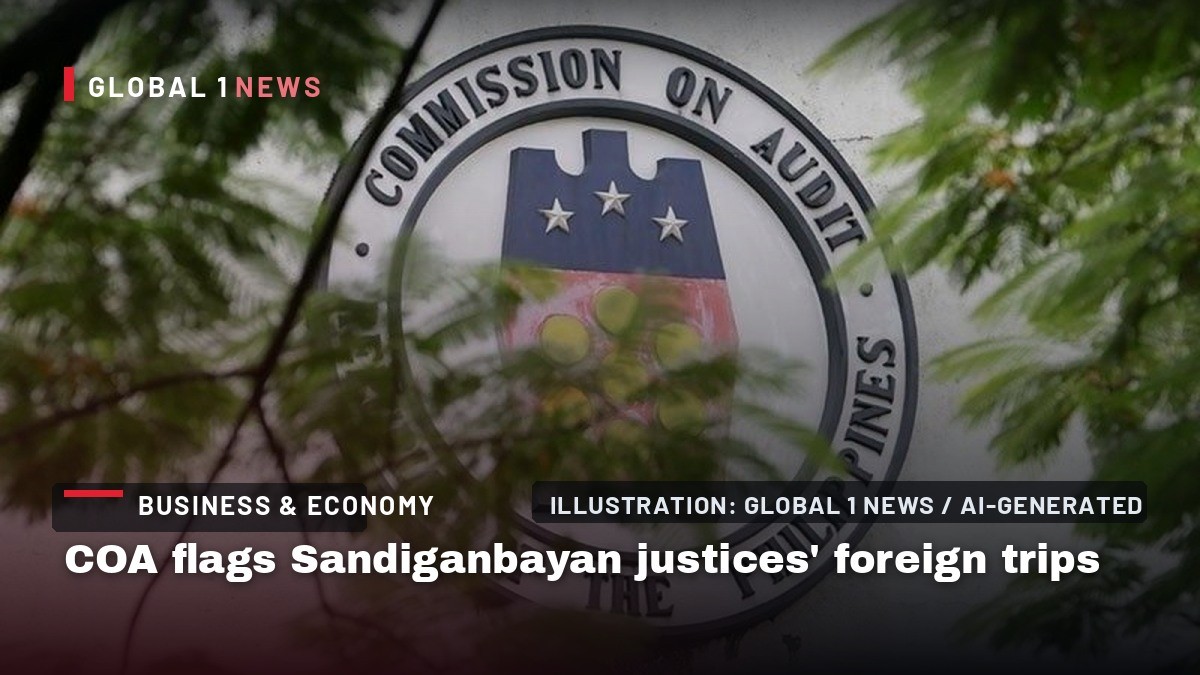
The Commission on Audit (COA) has once again turned its spotlight on a government institution that many Filipinos rely on to keep public officials honest. In its 2025 annual audit, the watchdog flagged the Sandiganbayan for a series of lapses in documenting foreign travel expenses and the use of upscale venues for official functions. The findings raise pressing questions about transparency, fiscal responsibility, and the everyday impact on the Filipino taxpayer.
Unexplained cash advances for overseas trips
The COA report disclosed that cash advances totalling ₱11,869,847.98 were granted to Sandiganbayan justices and staff for foreign trips in 2025, yet the supporting paperwork was incomplete. The audit noted the absence of essential documents such as invitation letters, plane‑fare quotations, and flight itineraries. Without these, the legitimacy of the expenditures remains in doubt.
Seven trips were identified, spanning destinations from the U.S. state of Missouri to Victoria, Australia; Budapest, Hungary; Dubai, United Arab Emirates; Doha, Qatar; and Singapore. Most of these journeys were framed as conferences or training sessions, but the lack of proper documentation hampers any assessment of whether they truly served the public interest.
The costliest journeys and policy gaps
Among the foreign trips, the journey to Hungary emerged as the most expensive, exceeding ₱2.5 million. The Dubai trip followed at over ₱1.88 million, and the Singapore itinerary cost more than ₱1.82 million. These figures stand out not only for their size but also because the COA could not verify whether they complied with the Sandiganbayan’s own travel policies.
Specifically, the audit highlighted a round‑trip ticket to Hungary worth ₱621,783 for three justices attending a “special course” on artificial intelligence in criminal law. The COA could not determine if this fare fell within the allowable rates prescribed for official foreign travel, underscoring a gap between policy and practice.
Business‑class versus economy‑class controversy
The Sandiganbayan’s internal rules permit only the presiding justice to travel in full business class, while other officials should fly economy unless the host or sponsor covers the cost. The COA’s findings raise concerns that this hierarchy may have been ignored, especially given the high ticket prices for trips that could have been booked in economy.
For many Filipinos, the distinction matters. While a few senior judges may argue that business class ensures better rest for demanding legal work, the broader public expects that government funds be used prudently, especially when the same amount could fund barangay health centers or support OFWs’ families back home.
Leasing luxury venues for official events
Beyond travel, the audit flagged the Sandiganbayan’s use of privately‑owned four‑star and five‑star hotels for a range of official activities. Twelve contracts were signed under negotiated procurement, amounting to ₱13,649,836.40. These venues hosted seminars, workshops, and even the court’s 2025 Christmas party.
The most substantial single expense was for an “executive briefing and capacity building” held at the heritage‑themed Las Casas Filipinas de Acuzar resort in Bagac, Bataan, costing ₱5,175,200. While the resort’s historic ambiance may offer a memorable backdrop, the COA questioned whether the cost was justified compared to available government‑owned facilities.
Questionable procurement practices
According to the COA, several disbursement vouchers lacked the documentation required to prove that the Sandiganbayan had considered more economical government venues before leasing private ones. The audit also noted missing written justifications that would demonstrate why a five‑star hotel was the most efficient choice.
Such gaps in procurement records undermine public trust. When officials bypass standard procedures, it fuels perceptions of favoritism and erodes confidence in institutions meant to uphold integrity, especially in a country where many still remember the “bayanihan” spirit of collective responsibility.
Impact on ordinary Filipinos
For the average Filipino, the numbers in the COA report translate into real concerns about how tax money is spent. The ₱11.8 million used for foreign trips and the ₱13.6 million funneled into luxury venues could have been redirected to pressing needs—such as improving rural schools, bolstering the Department of Health’s pandemic response, or expanding livelihood programs for sari‑sari store owners.
Moreover, the lack of transparency fuels cynicism. When citizens see high‑ranking judges traveling abroad without clear justification, it can diminish respect for the judiciary, an institution that should embody fairness and accountability. Restoring that trust requires not only stricter adherence to rules but also visible efforts to communicate how every peso serves the public good.
Calls for reform and accountability
The COA’s findings have already sparked discussion in Congress and among civil‑society groups. Lawmakers are urging the Sandiganbayan to tighten its internal controls, ensure that all travel requests are accompanied by complete documentation, and prioritize government‑owned facilities for events whenever feasible.
In the spirit of “pakikipagkapwa-tao,” the anti‑graft court faces a pivotal moment. By addressing the audit’s concerns head‑on—revising travel guidelines, enhancing procurement transparency, and openly reporting corrective actions—it can demonstrate a commitment to the public’s trust. For the Filipino people, such steps are more than bureaucratic fixes; they are essential to preserving the democratic values that bind our nation together.
This article was produced with AI-assisted research and editorial support. Reporting is based on the source material cited below. Sources: Philstar.com; Global1.News (15 October 2026).
By Bella Reyes, Staff Writer
What's Your Reaction?
 Like
0
Like
0
 Dislike
0
Dislike
0
 Love
0
Love
0
 Funny
0
Funny
0
 Wow
0
Wow
0
 Sad
0
Sad
0
 Angry
0
Angry
0

Philippines/Southeast Asia Correspondent at Global1.News. Manila-based journalist covering Philippine politics, environment, maritime security, and social issues. Passionate about marine conservation and the communities protecting the Philippines' natural heritage.













Comments (0)