
Forced Underground, Russia’s Feminists Find New Ways to Keep Working
Since the full‑scale invasion of Ukraine in 2022, the Kremlin’s drive to enforce “traditional values” has forced Russia’s feminist movement from the streets into the shadows.
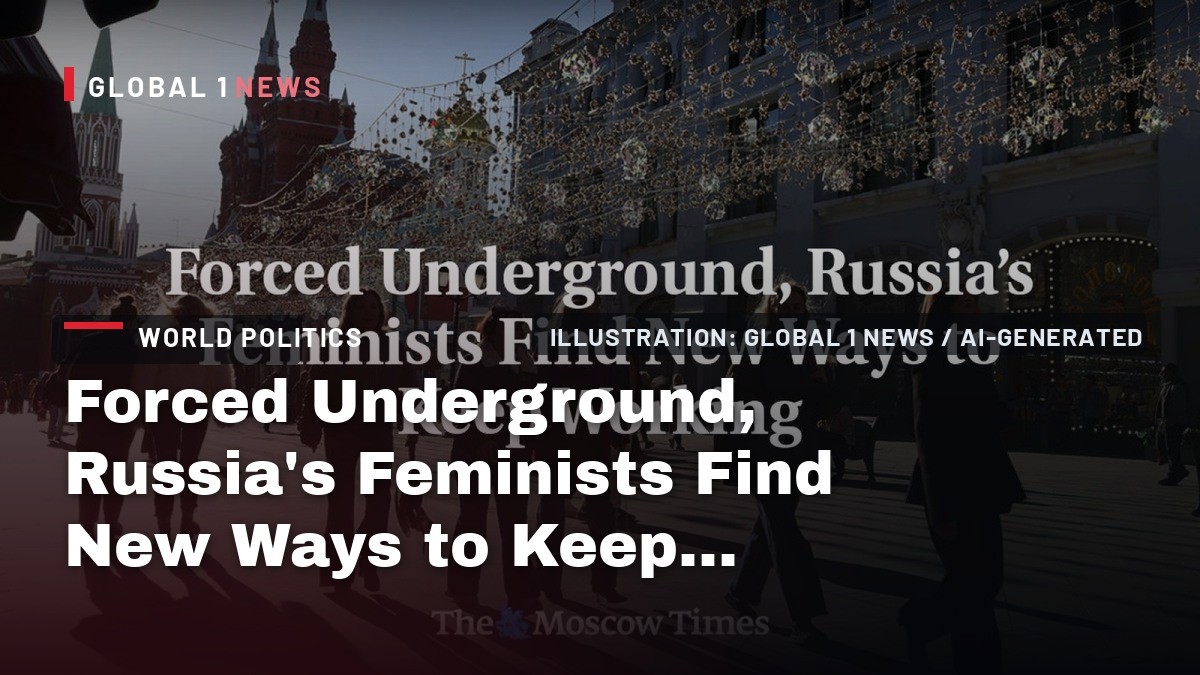
Since the full‑scale invasion of Ukraine in 2022, the Kremlin’s drive to enforce “traditional values” has forced Russia’s feminist movement from the streets into the shadows. What was once a visible network of rallies and public campaigns has been reshaped into a covert, hands‑on support system that operates largely out of sight. Yet, as activists such as Oksana from the Chelyabinsk region attest, the pressure has also sparked a new wave of solidarity and practical assistance that could reshape gender politics in the country.
The retreat from public protest to underground networks
In the early days of the war, feminist groups in the Urals and beyond organized open demonstrations and online campaigns. By 2023, however, the introduction of wartime censorship laws and a sweeping crackdown on dissent pushed many of these activities underground. Marta, an activist who asked to remain anonymous, explains that “less online activism and more offline activity” now defines the movement. The shift reflects both the heightened risk of digital surveillance and a growing demand for tangible aid among women facing economic hardship, medical scarcity and the trauma of war.
According to the Moscow Times, the feminist community has retreated from street protests to more discreet gatherings, such as reading clubs, while simultaneously expanding its role in providing direct assistance. This transformation is not merely tactical; it signals a broader reorientation of feminist activism from ideological proclamation to survival‑focused service delivery.
Practical assistance replaces public campaigning
Activists now prioritize “money, medication and logistics,” a triad that Marta describes as the core of their current work. They arrange transport for women seeking abortions in regions where the procedure has become increasingly restricted, deliver medication to remote areas, and provide cash support to those displaced by the conflict. In addition, they assist survivors of domestic and reproductive violence, as well as refugees, migrants and homeless women, extending their reach into the social functions traditionally managed by the state.
This hands‑on approach has been driven by a “much greater demand for practical support,” a sentiment echoed by Oksana, who notes that many women are “finding mutual solidarity and moving toward greater independence.” The shift underscores how feminist activists are filling gaps left by a deteriorating welfare system, thereby gaining legitimacy among the very communities they aim to protect.
Escalating legal constraints on reproductive rights
While Russia’s national abortion law remains among the world’s most liberal on paper, a cascade of regional decrees has eroded access in practice. Since 2023, at least 32 regions have enacted laws criminalising “coercion” into abortion, expanding the state’s control over reproductive choices. Moreover, private clinics in at least 19 regions have outright bans on the procedure, and only 40 % of private medical facilities in 25 other regions continue to offer abortions, according to statistics released by the Russian Orthodox Church.
These restrictions are part of a broader Kremlin strategy to align the legal framework with the Orthodox Church’s campaign for a nationwide abortion ban. The strategy has found allies among conservative business figures and lawmakers, most notably Natalia Moskvitina, head of the pro‑life organization Women for Life, who secured a State Duma seat for the Vologda region in September 2026.
Political backlash and the rise of conservative legislators
Moskvitina’s election, achieved in a vote “marred by widespread falsification,” marks a significant escalation in the legislative threat to women’s rights. Her presence in the Duma is seen by activists as a catalyst for a potential federal law mirroring the regional “coercion” statutes, which could criminalise the dissemination of information about reproductive choices. Marta warns that such a law would constitute “a very serious attack on what is left of women’s reproductive rights” and a “very strong blow to feminist activists.”
The campaign against Moskvitina, led by the Alliance of Women’s Initiatives of Russia, highlighted the deepening rift between feminist networks and the state‑aligned conservative bloc. The alliance’s call for United Russia to withdraw her candidacy underscores the political stakes of the struggle over reproductive autonomy.
Emerging alliances beyond traditional feminist circles
Facing intensified repression, feminist activists have broadened their outreach to include men and individuals who have not previously identified as feminists. Dasha Yakovleva, speaking on condition of anonymity, notes a “tactical decision to share feminist knowledge with men as well,” emphasizing that many potential allies exist among those who have yet to confront gender‑based oppression. This outreach extends to women who describe themselves as “I’m not a feminist, but…” indicating a strategic pivot toward inclusive coalition‑building.
These new alliances serve a dual purpose: they expand the support base for practical assistance and create a buffer against state‑sanctioned vilification. By framing feminist work as humanitarian aid rather than political agitation, activists aim to mitigate the risk of being labelled “foreign agents” or “extremists,” categories that have been weaponised against civil society since the war began.
Personal sacrifices and the psychological toll
Individual stories illustrate the profound personal costs of activism under an authoritarian regime. Arina, a Siberian activist, has chosen to abstain from sexual relationships to avoid the risk of an unplanned pregnancy in a country where “economic situation and people in power” make child‑rearing increasingly precarious. Her decision reflects a broader climate of fear, where personal reproductive choices are politicised and constrained by both legal and economic pressures.
Oksana’s observation that “there are fewer men in Russia: some were killed, some are physically or psychologically disabled” adds a demographic dimension to the crisis. She argues that the loss of a significant portion of the male population is fostering a shift in household dynamics, with women increasingly questioning the necessity of a male presence “just for the sake of it.” This sentiment, while rooted in personal experience, hints at a potential reconfiguration of gender roles that could reverberate through Russian society.
Future trajectories: from underground support to political influence
Activists remain hopeful that the underground network’s growing capacity for practical assistance will eventually translate into political leverage. Oksana believes that the “attitudes … extend beyond the family to a more global level” and anticipates a spill‑over into politics. Marta echoes this optimism, suggesting that the feminist community’s assumption of state‑like social functions could position it as a credible interlocutor in future policy debates.
However, the path forward is fraught with obstacles. The Kremlin’s alignment with conservative religious forces, exemplified by the Patriarchate’s anti‑abortion campaign, continues to tighten the legal noose around reproductive rights. The expansion of “coercion” laws across at least 32 regions, combined with the legislative influence of figures like Moskvitina, signals a concerted effort to curtail feminist activism. Yet the very survival strategies developed under repression—covert logistics, diversified alliances, and a focus on tangible aid—may become the foundation for a broader social movement capable of challenging the state’s patriarchal agenda.
This article was produced with AI-assisted research and editorial support. Reporting is based on the source material cited below. Sources: The Moscow Times; themoscowtimes.com; Global1.News (14 October 2026).
By Irina Volkov, Staff Writer
What's Your Reaction?
 Like
0
Like
0
 Dislike
0
Dislike
0
 Love
0
Love
0
 Funny
0
Funny
0
 Wow
0
Wow
0
 Sad
0
Sad
0
 Angry
0
Angry
0
Russia/Eastern Europe Correspondent at Global1.News. Covering Russian politics, energy, security, and the shifting dynamics of the post-Soviet space. Provides clear-eyed analysis on one of the world's most opaque regions.









Comments (0)