
Trump ramps up Cuba pressure with new sanctions and crackdown on US visitors
Washington Tightens the Screws: New Sanctions Target Cuban State Industry The Trump administration has dramatically escalated its pressure campaign against Havana, announcing a fresh wave of sanctions on Thursday that target nine state-owned Cuban enterprises and three senior officials.
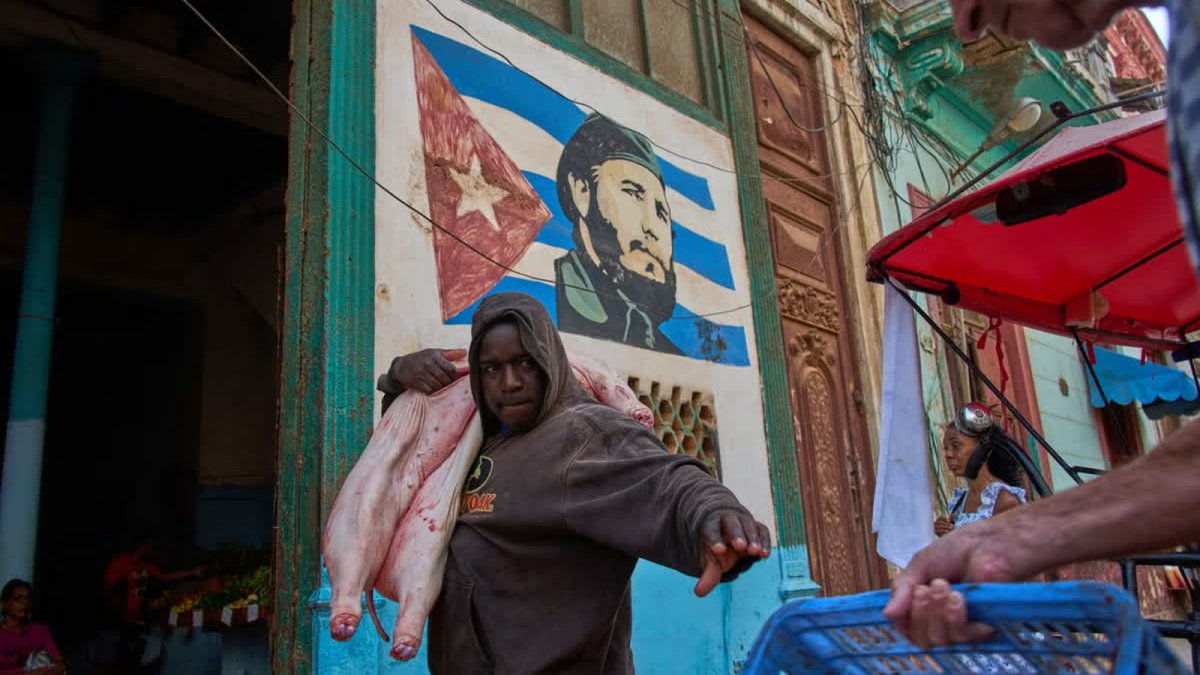
Washington Tightens the Screws: New Sanctions Target Cuban State Industry
The Trump administration has dramatically escalated its pressure campaign against Havana, announcing a fresh wave of sanctions on Thursday that target nine state-owned Cuban enterprises and three senior officials. The measures, unveiled jointly by the US Treasury and State Departments, strike at the heart of Cuba's mining, metal and construction sectors, and represent the most significant tightening of the embargo since the President's executive order in May.
The designations, which include Cuba's Ministry of Construction, are part of what Secretary of State Marco Rubio described as "a comprehensive push to end the Cuban regime's malign activities, both in Cuba and across our hemisphere." Reuters reported that the designations were made "for alleged malign activities directed at the United States," though the administration provided scant detail on the specific actions that triggered Thursday's action.
Among the individuals now facing US sanctions is Fernando Gonzalez Llort, the President of the Cuban Institute of Friendship with the Peoples (ICAP). Gonzalez Llort is a former member of the so-called Cuban Five, the group of intelligence operatives imprisoned in the United States for nearly two decades before their release in December 2014 as part of the historic rapprochement brokered by the Obama administration. His inclusion in the sanctions list is a pointed reminder that the diplomatic thaw of a decade ago is now a distant memory.
An Escalating Campaign Since June
Thursday's action is the latest step in a sanctions offensive that has been gathering pace all summer. The legal foundation is President Trump's Executive Order 14404, issued on 1 May 2026, which authorises penalties against those deemed responsible for "repression in Cuba" and threats to US national security. Since then, the administration has moved with notable speed.
On 11 June, the Treasury Department designated CUPET, Cuba's state-owned oil and gas company, under the same executive order — a move that struck at the island's already fragile energy infrastructure. Then, on 23 July, the State Department added more Cuban entities and individuals to the list, while the Office of Foreign Assets Control (OFAC) issued three new general licences, ostensibly to allow for humanitarian exceptions. But the overall trajectory is unmistakable: Washington is methodically dismantling the economic pillars of the Cuban state.
The targeting of the construction and mining sectors is particularly significant. These industries are not merely economic engines; they are symbols of the state's control over the island's resources. By designating the Ministry of Construction itself, the administration is signalling that no arm of the Cuban government is off-limits. The inclusion of ICAP's leadership, meanwhile, appears designed to disrupt Cuba's soft-power outreach, which has historically sought to build solidarity networks across the Global South and even within the United States.
Visitors Caught in the Crossfire
Beyond the corporate and individual designations, the administration is broadening its enforcement of laws that bar American citizens who visit Cuba from engaging in transactions with government-owned or government-affiliated businesses. This is not a new legal provision — it has been on the books for years — but the enforcement posture has shifted dramatically.
Last weekend, at Miami International Airport, several American citizens returning from Cuba were briefly detained and questioned by US officials. The travellers had been participating in events marking the centenary of Fidel Castro's birth, which fell on 13 August. The detentions, though short, sent a chill through the Cuban-American community and beyond. For many, it was a stark illustration that the administration is willing to use the full weight of the state to police the travel choices of its own citizens.
The message is clear: if you visit Cuba, you do so at your own risk. The administration's interpretation of what constitutes a "prohibited transaction" is broad, and the consequences for American travellers are becoming increasingly unpredictable. This is a deliberate strategy of deterrence, designed to dry up the flow of US visitors to the island, which had become a vital source of hard currency for the Cuban economy in recent years.
'A Silent Gaza': UN Experts Warn of Humanitarian Catastrophe
The humanitarian implications of the tightening noose are becoming impossible to ignore. United Nations independent human rights experts, appointed by the Human Rights Council, have condemned the new sanctions as a direct threat to the Cuban people. In a stark warning issued this week, they cautioned that without swift action from the international community and civil society, Cuba risks becoming a "silent Gaza."
The comparison is loaded, and it was first drawn last month by four members of the US Congress during a visit to the island. The phrase is intended to evoke a slow-motion humanitarian catastrophe — one that unfolds without the dramatic imagery of active conflict but is no less devastating for the civilian population. On the ground in Havana, residents describe prolonged blackouts, fuel shortages, disrupted transport and mounting economic hardship. The energy crisis, exacerbated by the June designation of CUPET, has brought daily life to the brink for many ordinary Cubans.
The UN experts' statement is a reminder that sanctions, however targeted they claim to be, have a cumulative effect that is borne disproportionately by the most vulnerable. The Cuban government, for its part, has long argued that the embargo is an act of economic warfare designed to strangle the revolution. The current administration's policies are doing little to dispel that narrative.
The UK and Europe: A Delicate Balancing Act
For Britain and the European Union, the escalating US campaign presents a familiar but increasingly acute dilemma. The US embargo on Cuba has been in place for more than six decades, and the UN General Assembly has condemned it every year by overwhelming margins for over thirty years. Successive British and European governments have voted in favour of those condemnations, maintaining a consistent position that the embargo is a violation of international law and a humanitarian wrong.
The EU has gone further, maintaining a Blocking Statute — Council Regulation (EC) No 2271/96 — designed to protect European companies from the extraterritorial application of US sanctions. The statute makes it illegal for EU firms to comply with US sanctions that the EU does not recognise, and it provides legal cover for companies that choose to do business with Cuba. However, the practical reality is more complex. The threat of being cut off from the US financial system is a powerful deterrent, and many European companies have quietly scaled back their Cuban operations rather than risk Washington's wrath.
British travellers continue to visit Cuba in significant numbers, and the UK maintains full diplomatic relations with Havana. But the Foreign Office is walking a tightrope. London values its relationship with Washington, particularly in the realm of security and intelligence, and is loath to pick a public fight over Cuba. Yet the humanitarian situation on the island, and the growing chorus of criticism from UN experts and human rights groups, is making it increasingly difficult for the UK to maintain a low profile.
What Comes Next?
The administration shows no signs of relenting. The sanctions campaign is being driven from the top, with Secretary Rubio — a Cuban-American who has long advocated for maximum pressure on Havana — playing a central role. The targeting of ICAP and the Ministry of Construction suggests that the next phase may focus on Cuba's international outreach and its domestic infrastructure, both of which are critical to the regime's survival.
For the Cuban government, the options are narrowing. The island's economy is in dire straits, and the loss of US tourist dollars, combined with the energy crisis, is pushing the country toward a breaking point. The government has sought to diversify its alliances, deepening ties with China, Russia and Venezuela, but none of these partners can fully replace the economic lifelines that have been severed.
The "silent Gaza" warning is a sobering one. It suggests that the international community is beginning to view Cuba through the lens of a humanitarian emergency, rather than a geopolitical chessboard. Whether that shift in perception translates into meaningful action — whether it prompts the EU to enforce its Blocking Statute more aggressively, or whether it pushes the UK to take a more public stance — remains to be seen. But the pressure is building, and the coming months will be critical.
For now, the people of Havana endure. The blackouts continue, the queues for fuel grow longer, and the uncertainty deepens. The sanctions are not yet a blockade in the traditional sense, but for the ordinary Cuban, the distinction is increasingly academic. The world watches, and waits, and wonders how much more the island can take.
This article was produced with AI-assisted research and editorial support. Sources: The Independent, Associated Press, Reuters, UN News.
By Erica Thornton, Staff Writer
What's Your Reaction?
 Like
0
Like
0
 Dislike
0
Dislike
0
 Love
0
Love
0
 Funny
0
Funny
0
 Wow
0
Wow
0
 Sad
0
Sad
0
 Angry
0
Angry
0

US Politics and Policy Correspondent at Global1.News. Based in Washington DC, covering American politics, policy, elections, and the courts. Knows how the system works and tells you what it actually means.









Comments (0)