
Dyson’s most overengineered gadget may have a waterproofing problem
Dyson’s latest foray into personal care— the $499 CameraJet toothbrush—has turned into a textbook case of over‑engineering meeting a basic waterproofing oversight.
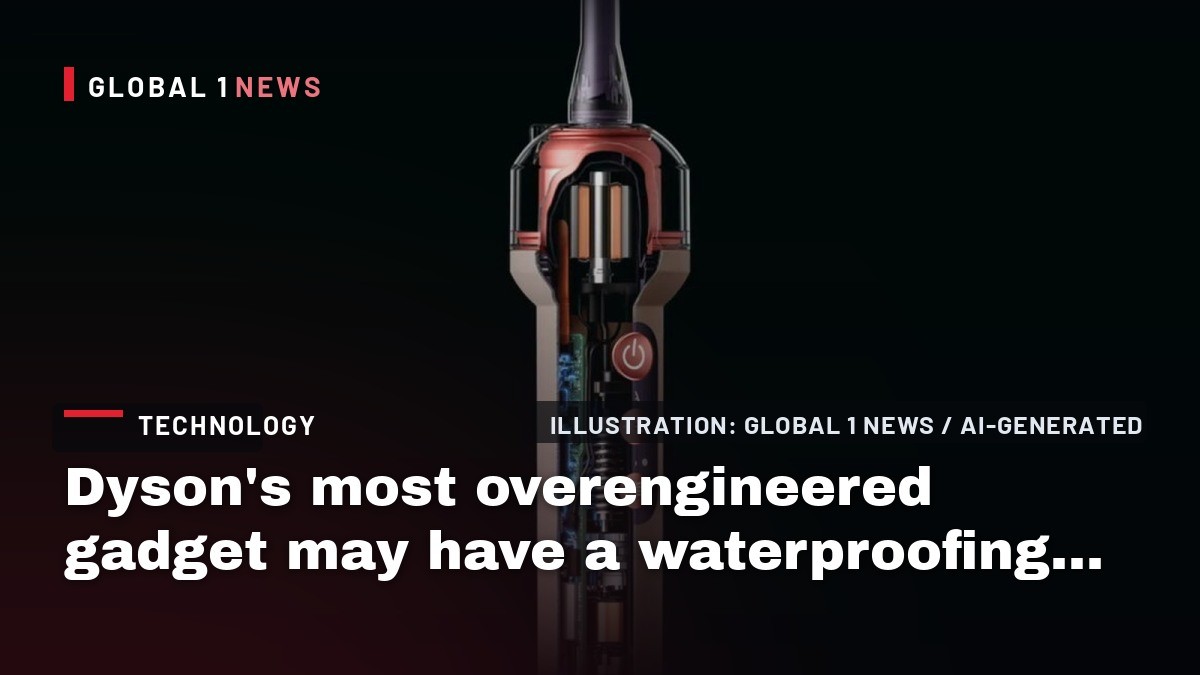
Dyson’s latest foray into personal care— the $499 CameraJet toothbrush—has turned into a textbook case of over‑engineering meeting a basic waterproofing oversight. Within a week of its U.S. launch on September 8, users were reporting water seeping into the battery compartment and devices dying in under a minute. By mid‑September the product vanished from shelves in the U.S., UK, Singapore and even France, yet Dyson insists the issue is limited to “a single component” and that demand remains “strong.” As a founder who has spent a decade wrestling with production‑grade hardware, I’m not surprised by the fallout, but I am alarmed by the way a brand with deep pockets and a track record of turning mundane appliances into premium toys can still stumble on something as fundamental as sealing a water‑filled gadget.
Why the CameraJet’s failure matters to independent hosting providers
At first glance a busted toothbrush may seem far removed from the concerns of a data‑center operator, but the underlying lesson is the same: you can’t afford to ship a product—or a service—without iron‑clad reliability. Dyson poured six years, 38 patents and “an awful lot of money” into this device, yet a single gasket failure can cripple an entire launch. For us running servers, a single faulty component—be it a power supply, a cooling fan, or a network card—can take a rack offline and erode customer trust. The CameraJet episode is a reminder that even the most well‑funded engineering teams can overlook the mundane details that keep a product alive in the field.
What’s more, Dyson’s handling of the situation—refusing to disclose the exact part, the size of the affected batch, or a formal recall—mirrors the opaque communication style of many hyperscalers when a breach or outage hits. When you’re a small hosting outfit, you can’t hide behind “scaling up production” while customers lose data. Transparency, rapid remediation, and a clear path to repair are non‑negotiable, whether you’re fixing a toothbrush or a server blade.
The over‑engineered promise that back‑fired
Dyson’s pitch was simple on paper: a toothbrush with a macro‑lens camera, a “Gap Optical Targeting system” trained on 470,000 dental images, and a 12.5 ml reservoir that can squirt rinse precisely where you need it, all in under 100 milliseconds. The company has a history of re‑imagining products—stick vacuums, premium hair dryers—so the hype was justified. But the execution fell apart because the design added complexity without a robust waterproofing strategy.
Experts from iFixit and Ripcord Designs quickly zeroed in on water ingress as the root cause. Kyle Wiens of iFixit warned that “making products at scale with the tolerances required to waterproof are hard,” suggesting a tolerance or adhesive‑curing issue. Adam Toner of Ripcord Designs pointed to a faulty gasket or O‑ring that could let water reach the battery compartment. Both diagnoses are plausible, yet Dyson’s refusal to name the offending part leaves the repair community guessing, and the brand’s own customers scrambling for work‑arounds.
What the “single component” excuse really hides
Dyson’s spokesperson, Liv Thomas, framed the problem as a “single component issue affecting a small number of early batches.” That line is classic corporate damage control: admit a defect, limit its scope, and promise a quick fix. In practice, however, the phrase masks the complexity of supply‑chain realities. A single component—whether a gasket, adhesive, or seal—can be sourced from a single vendor, and a defect can propagate across thousands of units before it’s caught.
For a hardware startup, this is a cautionary tale. Relying on a single supplier for a critical part without a robust incoming‑inspection regime can jeopardize an entire product line. Diversify suppliers, implement statistical process control, and design for testability. In the case of the CameraJet, a simple leak‑test at the end of the line could have caught the issue before the units hit retail shelves, saving Dyson brand equity and millions in warranty costs.
Consumer backlash and the repairability gap
Within days of the launch, Reddit threads were ablaze with the moniker “ScameraJet,” and users complained of devices failing after two weeks. One buyer lamented, “I can’t even return them… Disappointed that they scammed so good.” The sentiment is clear: customers feel betrayed when a premium‑priced gadget fails spectacularly. The backlash is amplified because Dyson has historically offered limited repair options.
Wiens called for Dyson to invest in repairability, noting that the company lags behind the industry in providing spare parts and service information. This is a broader industry trend: high‑margin consumer brands often lock down repair ecosystems to drive service revenue, but that strategy backfires when a product is fundamentally defective. Independent hosting providers can learn from this by offering transparent service level agreements (SLAs) and clear upgrade paths—if you can’t fix it, you at least need to tell your customers what’s happening.
Supply chain and scaling lessons for founders
The CameraJet saga also underscores the perils of scaling too fast. Dyson’s claim of “shortages of supply as we are in the process of scaling up production” rings hollow when the product is simultaneously being pulled from shelves worldwide. Scaling should be paced by validated production yields, not by marketing hype. A staged rollout—starting with a limited batch, gathering field data, iterating on the design—could have caught the waterproofing flaw before the global launch.
Founders should treat early production runs as beta tests, not as full‑blown commercial releases. Use those runs to stress‑test the toughest use cases—in this case, repeated exposure to water, temperature swings, and mechanical shocks. Capture failure rates, root‑cause analyse them, and feed the insights back into the manufacturing line before committing to mass production.
Risk management: what to do when a product goes sideways
When a defect surfaces, the speed and transparency of the response can make or break a brand. Dyson’s approach—denying a recall, vague statements about “isolating batches,” and no timeline for re‑stocking—has left a credibility gap. A better play would be to issue a voluntary recall, provide clear instructions for returns or repairs, and publish a root‑cause report once the investigation is complete.
For hosting providers, the analogue is a clear incident post‑mortem. Publish the timeline, the impact, the remediation steps, and the preventive measures you’re putting in place. Customers respect honesty, even when the news is bad. It also reduces speculation and rumor, which can be far more damaging than the outage itself.
Actionable takeaways for founders and hosting operators
1. **Prioritise core functionality over flashy features.** A toothbrush that can spray rinse and take photos is cool, but it must first survive water exposure without shorting out.
2. **Design for testability and repair.** Include accessible battery compartments, sealed gaskets, and clear service documentation. This reduces warranty costs and improves customer trust.
3. **Validate supply‑chain components early.** Run incoming‑inspection and stress‑testing on every critical part, especially those that form the product’s barrier against its operating environment.
4. **Roll out incrementally.** Use a limited launch to gather real‑world failure data before committing to a global release.
5. **Communicate transparently during crises.** Admit the problem, outline the fix, and stick to a timeline. Customers will forgive a hiccup if you own it.
6. **Invest in repair ecosystems.** Provide spare parts, repair manuals, and support channels. It’s a goodwill investment that pays off when things go wrong.
7. **Treat every defect as a learning loop.** Feed field failures back into design and manufacturing processes to prevent recurrence.
Dyson’s CameraJet may have been a high‑priced novelty, but its downfall is a stark reminder that even the biggest players can trip over the basics. For us building and running the infrastructure that powers the digital economy, the lesson is clear: never sacrifice reliability, repairability, or transparent communication on the altar of hype. If you can keep the water out of your servers—or your toothbrushes—you’ll keep your customers happy and your brand alive.
— Allan Ali, Founder
This article was produced with AI-assisted research and editorial support. Reporting is based on the source material cited below. Sources: Ars Technica; arstechnica.com; Global1.News (23 September 2026).
By Allan Ali, Global1.News
What's Your Reaction?
 Like
0
Like
0
 Dislike
0
Dislike
0
 Love
0
Love
0
 Funny
0
Funny
0
 Wow
0
Wow
0
 Sad
0
Sad
0
 Angry
0
Angry
0

Publisher of Global1.News. Automation architect, systems builder, and the guy making sure the truth gets published.















Comments (0)