
Taiwan's Record Defence Budget Tests Lai's 5 Percent of GDP Pledge
Taiwan's cabinet approved a record NT$1.12 trillion defence budget for 2027, an 18.2 percent rise, as Japan seeks a record 8.9 trillion yen. Analysts say AI-driven GDP growth makes Lai's 5 percent of GDP pledge harder to reach.
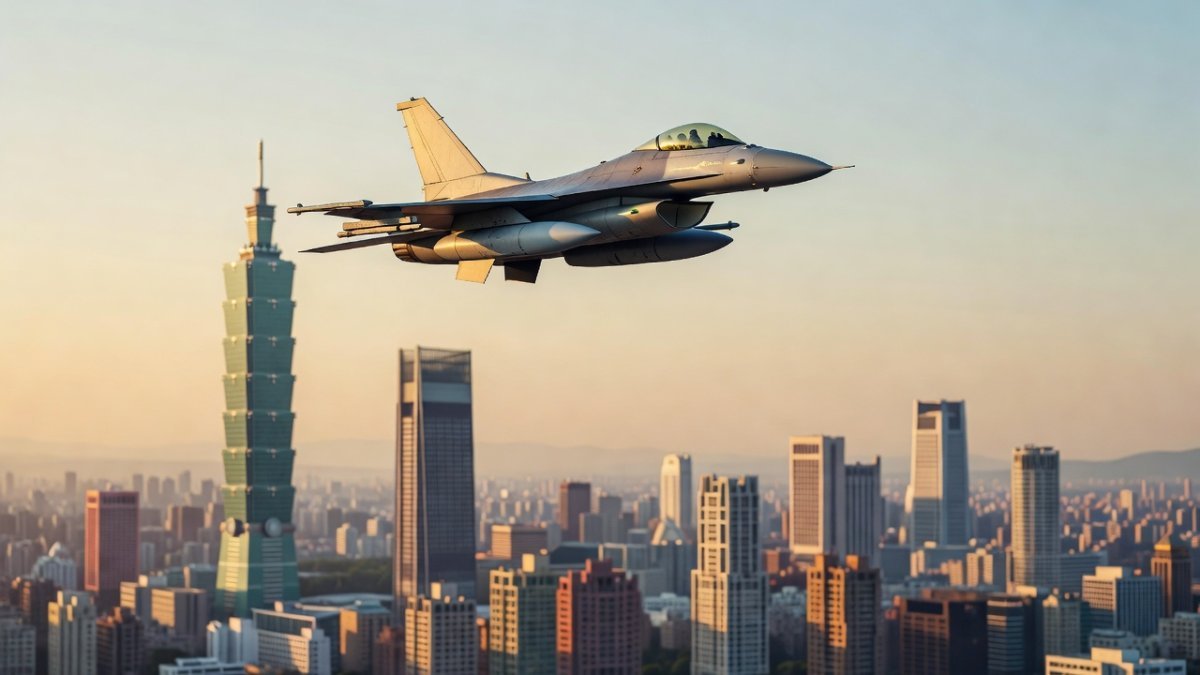
Taipei Crosses the One-Trillion-Dollar Defence Threshold
Taiwan's cabinet on Thursday approved a record NT$1.1225 trillion (US$35.1 billion) defence budget for 2027, the first proposal to cross the NT$1 trillion line and an 18.2 per cent increase over this year's NT$949.5 billion allocation. The spending plan, which still requires legislative approval, arrives with the People's Liberation Army intensifying pressure around the island and with Washington pressing Taipei to carry more of its own deterrence burden.
The increase is part of a broader regional moment. Japan's Defence Ministry is simultaneously seeking a record 8.9 trillion yen (about US$60 billion) for fiscal 2027, and senior American officials are publicly questioning how much of the Indo-Pacific security bill allies should shoulder. Taken together, the numbers suggest Asia's defence build-up has shifted from individual budget stories to a coordinated regional rearmament - and Taiwan's plan is the most consequential test of whether a fast-growing, AI-driven economy can sustain a 5 per cent of GDP spending pledge.
What the Record Budget Buys
Under the proposed spending, military investment rises by NT$97.5 billion to NT$259.1 billion, the largest share of the increase. Officials say much of the additional funding is needed to meet payment schedules for US arms purchases, as several major programmes enter periods of intensive payments and deliveries, including F-16V Block 70 fighters and Himars multiple-launch rocket systems. Operations and maintenance spending climbs NT$25.7 billion to NT$224.7 billion, largely to replenish ammunition, weapons components and other supplies for frontline forces, while personnel expenditure rises NT$7.3 billion to NT$208.1 billion, reflecting increased recruitment of volunteer service members and a planned 4 per cent pay rise for military personnel, civil servants and teachers.
The government said its broader priorities include building the "Taiwan Shield" or "T-Dome" missile defence architecture, expanding uncrewed combat capabilities, restructuring the armed forces and advancing locally developed naval programmes. The budget accounts for about 28.6 per cent of the government's proposed NT$3.93 trillion total expenditure next year, meaning nearly NT$29 of every NT$100 would go to defence and related security spending.
The AI Boom Problem Behind the 5 Percent Pledge
Despite the record figure, military analysts warn that rapid economic growth is making President Lai Ching-te's pledge to raise defence spending to 5 per cent of GDP by 2030 increasingly difficult to achieve. Chieh Chung, a researcher with the Taipei-based Association of Strategic Foresight, notes that Taiwan's GDP has surged from NT$28.6 trillion in August 2025, when Lai made the commitment, to NT$37.3 trillion this month - an increase of roughly 30 per cent, driven largely by the artificial intelligence boom.
As a result, even though defence spending rises 18.2 per cent, its share of GDP would fall from 3.32 per cent this year to about 3.01 per cent under the government's own calculation. Chieh warns that if GDP keeps expanding rapidly, Lai's 5 per cent target could become almost impossible to reach. If GDP grew by only another 30 per cent by August 2029, it would reach about NT$48.5 trillion, requiring defence spending of roughly NT$2.42 trillion to hit 5 per cent in 2030 - more than twice the proposed 2027 level. "To fulfil [Lai's] pledge, the government would have to find a way to roughly double both the overall budget and defence spending over the next three years," Chieh said, describing that as "almost impossible".
The record budget has also fuelled debate over whether rising defence expenditure could squeeze social welfare and other programmes. The Lai administration rejects such concerns, arguing that AI-driven growth has boosted government revenue enough to fund both. Max Lo, executive director of the Taipei-based Taiwan International Strategic Study Society, agrees the budget is unlikely to crowd out other spending next year. "Taiwan's economic growth in recent years, driven by advanced technology and AI industries, has expanded the budget pie," he said. But he cautioned that could change if growth stalls, adding that Washington was unlikely to object to the record budget given its long-standing pressure on Taipei to devote more resources to defence.
Japan's Parallel Record: 8.9 Trillion Yen and a Fast-Forwarded Target
The Taiwan proposal lands the same week Japan's Defence Ministry finalised a record 8.9 trillion yen budget request for fiscal 2027, up from 8,845.4 billion yen in the current fiscal year, according to Jiji Press and the Japan Times. The request includes funding to begin developing a submarine-launched hypersonic missile, extending the standoff-strike capability Tokyo is building around the Type 12 surface-to-ship missile programme, and further expanding the counterstrike posture adopted in the December 2022 security documents.
Prime Minister Sanae Takaichi has accelerated Japan's goal of reaching 2 per cent of GDP in defence spending, pulling the target forward to the current fiscal year from the original fiscal 2027 timeline, and has initiated a review of the National Security Strategy and related documents. Tokyo is spending roughly 2 per cent of GDP, and Taipei is pledging 2.5 times that share.
The parallel matters for the region's security arithmetic. Japan's 8.9 trillion yen request, Taiwan's NT$1.12 trillion proposal and South Korea's continuing increases mean the three main US allies in Northeast Asia are now simultaneously expanding their own capability bases while deepening purchases from Washington - exactly what the Pentagon has been asking for, but with new questions about how much of the bill each capital can actually carry.
Washington's Push and the Middle-Power Dilemma
The spending surge is unfolding against a sharp American debate over burden-sharing. In Manila on August 10, Elbridge Colby, the US undersecretary of defence for policy, pressed regional partners to increase defence spending and align more closely with American priorities, saying Washington sought "partners, not protectorates" and cautioning against "the delusion of fashionable but superficial ideas like middle-power alliances designed to exclude America". He has argued that access to the US defence industrial base is "a privilege, not a right".
Analysts read the remarks as both doctrine and negotiating tactic. Jagannath Panda, head of the Stockholm Centre for South Asian and Indo-Pacific Affairs, said Colby's dismissal of middle-power coordination implies "Washington prefers capable partners individually dependent on the United States rather than collectively autonomous", and that coercive dependence could over time push allies to hedge, diversify procurement and reopen economic channels with Beijing. Shi Yinhong, a professor of international affairs at Renmin University of China, described the approach as Trump's "flexible realist" strategy, while noting that none of Washington's advanced allies have significantly improved relations with Beijing despite months of pressure.
For Taiwan, the dilemma is visible inside the budget itself. Lo said tension could arise over how much of the additional funding goes to American weapons rather than Taiwan's indigenous defence industry. "The US government and arms manufacturers naturally hope Taiwan will invest the money in weapons they want to provide rather than use it to develop Taiwan's own weapons," he said. A critical test, he argued, is whether expanding US purchases crowd out local projects such as the Chiang Kung high-altitude missile system, a key component of Lai's proposed T-Dome shield. The broader middle-power coordination push - visible in the Mecca Joint Defence Agreement signed by Saudi Arabia, Turkey and Pakistan on August 7 - has given Beijing rhetorical ammunition, with analysts such as Sourabh Gupta of the Institute for China-Americas Studies calling middle-power activism an "unambiguous plus" for Beijing: the more distributed the global power structure, the more amenable it is to Chinese diplomatic management.
The Beijing Reaction and the Deterrence Math
Beijing, which views Taiwan as part of China to be reunited by force if necessary, condemned the spending trajectory as it has condemned every increase in Taiwanese defence outlays. Chinese state media have framed both the Taiwan budget and Japan's record request as evidence of an American-led arms race in the region, with commentary arguing that Washington is using allied budgets to subsidise its own strategic competition with China while avoiding direct costs.
Rana Mitter, professor and S.T. Lee Chair in US-Asia relations at the Harvard Kennedy School, argues that Beijing's own security pitch to the region remains limited. "Beijing has little tradition of providing security and has relatively limited experience of working with partner governments on these issues, though there are exceptions such as Pakistan," he said. For middle powers uncertain about US commitments, China's pitch could have appeal, Mitter said, "but not enough substance where it mattered most". Most analysts in the SCMP survey concluded that middle powers are still more likely to deepen alignment with Washington while hedging harder with Beijing.
The deterrence math for Taipei is unforgiving. The same GDP growth that makes the increase affordable is also pushing the 5 per cent target further out of reach. Whether the island can square that circle - sustaining an 18 per cent nominal increase while chasing a share that keeps receding - will be the defining question of Lai's defence policy over the next three years.
What to Watch For
Three things bear watching in the coming weeks. First, the legislature's handling of the budget: Taiwan's parliament passed this year's military spending proposals only last week, and the record 2027 request will face scrutiny from opposition parties and from lawmakers worried about social welfare trade-offs. Second, the final shape of Japan's fiscal 2027 budget when it is formalised later this year - the 8.9 trillion yen request could rise toward 10 trillion yen as programmes are priced, which would sharpen the regional debate about allied burden-sharing before the next US election cycle.
Third, the diplomatic calendar: with Xi Jinping due to visit Washington in the coming weeks, both budget stories are likely to surface in summit discussions about Taiwan Strait stability and allied defence expectations. For Japan's readers, the through-line is clear: Tokyo's own 2 per cent target is now being matched by Taipei's far more ambitious 5 per cent pledge, and the sustainability of that pledge will shape how much of the regional deterrence burden each ally can credibly claim to carry.
By Kenji Tanaka, Staff Writer
This article was produced with AI-assisted research and editorial support. Sources: South China Morning Post, Bloomberg, Focus Taiwan, Channel News Asia, Japan Times, Jiji Press.
What's Your Reaction?
 Like
0
Like
0
 Dislike
0
Dislike
0
 Love
0
Love
0
 Funny
0
Funny
0
 Wow
0
Wow
0
 Sad
0
Sad
0
 Angry
0
Angry
0

Japan Correspondent at Global1.News. Tokyo-based voice covering Japanese politics, technology, economy, and culture. Tracks the intersection of tradition and innovation in one of the world's most dynamic societies.











Comments (0)