
Wike backing Tinubu, not APC – Oshiomhole
In a televised interview on TVC, Edo North Senator Adams Oshiomhole sought to untangle the swirling rumours surrounding the political allegiance of Federal Capital Territory Minister Nyesom Wike.
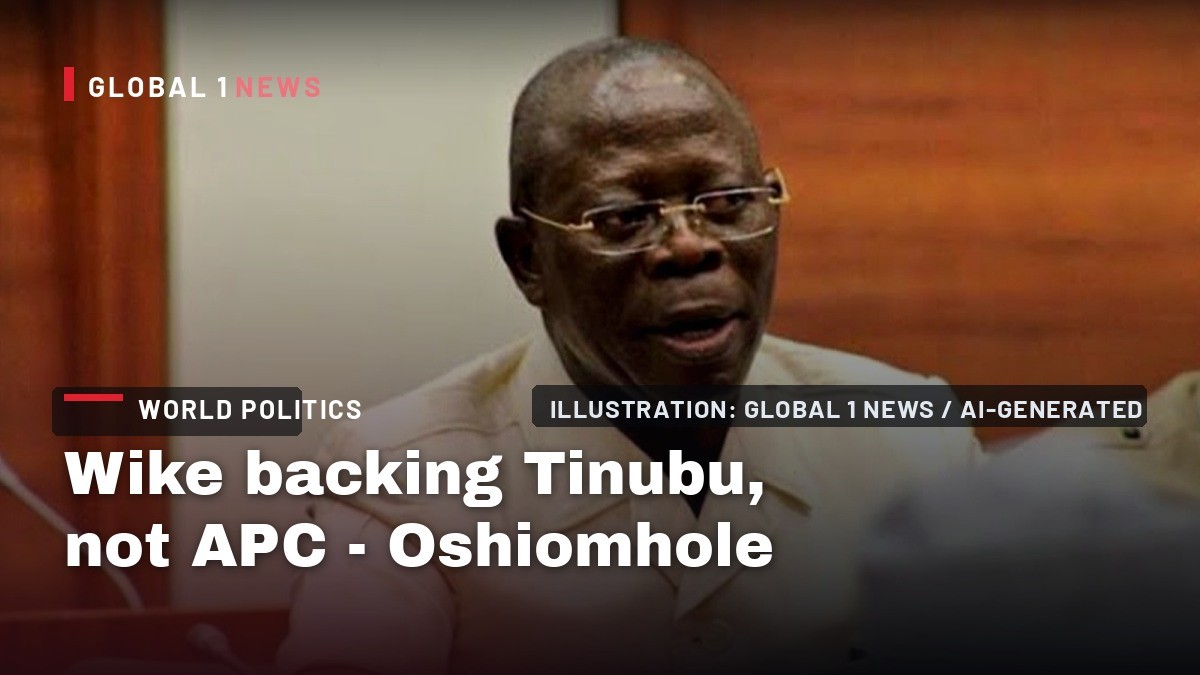
In a televised interview on TVC, Edo North Senator Adams Oshiomhole sought to untangle the swirling rumours surrounding the political allegiance of Federal Capital Territory Minister Nyesom Wike. While the governor of Rivers State has repeatedly been linked to the All Progressives Congress (APC) by virtue of his ministerial appointment, Oshiomhole stressed that Wike’s loyalty lies with President Bola Tinubu personally, not with the party machinery. The clarification comes amid a growing feud between Wike and several APC governors, who were recently described by the minister as “politically lazy.”
Wike’s public stance on the Tinubu agenda
According to Oshiomhole, the minister has made it clear on multiple occasions that his support is directed at the President rather than the party. “He has said so himself repeatedly that he is not an APC person; he is not a member of the APC, but he supports the President,” the former Edo governor said. This distinction, Oshiomhole argued, is crucial in an election year when intra‑party loyalty is under intense scrutiny.
Oshiomhole’s remarks suggest that Wike’s endorsement of Tinubu is rooted in a personal political calculus rather than party affiliation. By positioning himself as a presidential supporter, Wike can navigate the delicate balance between his executive responsibilities in the capital and the expectations of his political allies across the federation.
The “politically lazy” comment and its fallout
The tension between Wike and the APC governors was sparked when the minister labelled some of them as “politically lazy.” The phrase, delivered in a public setting, was taken by many as a direct challenge to the governors’ commitment to the party’s electoral agenda. While the exact identities of the governors were not disclosed, the comment ignited a broader debate about the vigor of APC’s grassroots mobilisation ahead of the upcoming elections.
Oshiomhole, however, downplayed any implication that the remark signalled a split in the party’s support for Tinubu. He argued that despite the sharp language, both Wike and the governors share a “unanimous” commitment to the President’s re‑election. This framing attempts to contain the controversy within a narrative of unified presidential backing, even as the underlying friction remains palpable.
Party membership versus presidential loyalty
In Nigerian politics, the line between party membership and personal loyalty to a leader can be porous. Oshiomhole’s clarification underscores this reality by highlighting that Wike is not formally an APC member. Yet, his repeated public affirmations of support for President Tinubu blur the conventional boundaries that typically separate party cadres from independent office‑holders.
The minister’s stance reflects a broader trend where political actors prioritize the incumbent’s agenda over strict party lines, especially when the incumbent enjoys a strong hold on national resources and patronage networks. By aligning with Tinubu, Wike secures a seat at the centre of power while maintaining a degree of autonomy from the party’s internal dynamics.
Implications for the APC’s internal cohesion
The episode reveals a fault line within the APC that could have ramifications for its electoral machinery. If senior figures such as Wike are willing to publicly critique fellow party members while still championing the President, it may embolden other dissenting voices within the coalition. Oshiomhole’s reassurance that “the two sides are working for the same goal” attempts to mask these emerging divisions.
Nevertheless, the underlying tension could affect campaign coordination, especially in regions where APC governors wield significant influence over local party structures. The “politically lazy” jab may be interpreted by some as a call for greater activism, while others could see it as a sign of fragmentation that the opposition could exploit.
Regional dynamics: Edo’s perspective
Representing Edo North, Oshiomhole brings a regional lens to the national debate. Edo State, historically a swing state, has seen its political elite oscillate between the APC and the People’s Democratic Party (PDP). By positioning himself as a mediator who can interpret Wike’s statements for his constituents, Oshiomhole reinforces his role as a key conduit between the federal executive and the South‑South electorate.
His emphasis on the minister’s personal support for Tinubu, rather than party affiliation, may also be intended to reassure Edo voters that the state’s interests will not be sidelined by intra‑party squabbles. In a climate where regional loyalties often intersect with national politics, such assurances can shape voter perceptions ahead of the presidential vote.
The broader narrative of presidential endorsement
Oshiomhole’s interview reflects a larger pattern in the 2026 electoral cycle: the centrality of the president’s personal brand. Across the country, many politicians have opted to foreground their support for Tinubu as a strategic move to tap into the incumbent’s patronage networks and policy legacy. By stating that Wike is “supporting President Tinubu and not the APC,” Oshiomhole aligns with this narrative, suggesting that presidential endorsement supersedes party allegiance in the current political calculus.
This trend also signals a potential shift in how political legitimacy is constructed in Nigeria. While parties remain essential organisational structures, the personal charisma and policy agenda of the sitting president increasingly serve as the primary rallying point for allies, especially in a fragmented party landscape.
Looking ahead: What the clarification means for the election
As the nation approaches the 2026 presidential election, Oshiomhole’s clarification may have practical implications for campaign logistics. If Wike continues to champion Tinubu without the baggage of party affiliation, he may be able to mobilise resources across party lines, forging alliances with governors and local leaders who share a similar presidential focus.
Conversely, the lingering “politically lazy” controversy could be weaponised by opposition forces seeking to portray the APC as divided. The ability of the party’s leadership to contain these narratives and present a united front will be a decisive factor in the coming months. Oshiomhole’s reassurance that “the two sides are working for the same goal” is a reminder that, despite public spats, the underlying objective remains the re‑election of President Tinubu.
This article was produced with AI-assisted research and editorial support. Reporting is based on the source material cited below. Sources: Daily Post Nigeria; dailypost.ng; Global1.News (30 September 2026).
By Sarah Okafor, Staff Writer
What's Your Reaction?
 Like
0
Like
0
 Dislike
0
Dislike
0
 Love
0
Love
0
 Funny
0
Funny
0
 Wow
0
Wow
0
 Sad
0
Sad
0
 Angry
0
Angry
0

Africa Correspondent at Global1.News. Based in Lagos, covering politics, business, technology, and culture across the continent. Focused on telling African stories beyond the headlines — the innovation, entrepreneurs, and communities shaping the region's future.










Comments (0)