
Sheinbaum touts record FDI, jobs, peso strength at mananera
The morning sun had barely touched the Zócalo when President Claudia Sheinbaum stepped before the cameras at the Palacio Nacional for Wednesday's mañanera. The mood was celebratory, and the numbers she brandished were impressive by any standard.
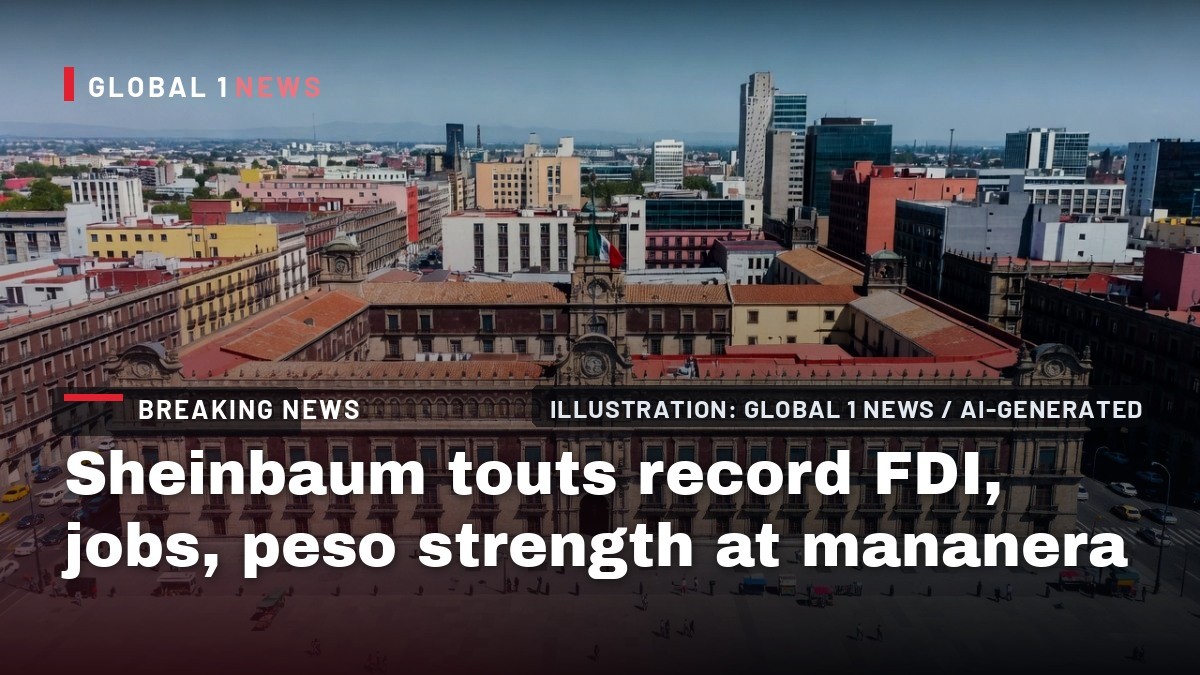
The morning sun had barely touched the Zócalo when President Claudia Sheinbaum stepped before the cameras at the Palacio Nacional for Wednesday's mañanera. The mood was celebratory, and the numbers she brandished were impressive by any standard. With the confidence of a leader presenting a report card to the nation, she detailed a first half of 2026 that saw foreign direct investment (FDI) hit an all-time high of US $34.96 billion, employment reach a record 60 million people, and the economy rebound with a 1.4% quarterly GDP growth.
For the millions of families in colonias across Mexico City, Guadalajara, and Monterrey, these figures translate into something more tangible than macroeconomic theory. They represent the possibility of a steady paycheck, a new line at the local maquiladora, or a contract for a small business supplying parts to a growing factory. The president framed these numbers not just as statistics, but as a vindication of her administration's economic strategy, pushing back against critics who had predicted doom following recent minimum wage increases.
The mañanera, a ritual that has become as much a part of Mexico's political fabric as the morning tortilla, served as the stage for a robust defense of the "Fourth Transformation" economic model. Sheinbaum took direct aim at her predecessors, arguing that the current prosperity is a direct result of policies that prioritize the working class, a stark contrast to what she described as decades of wage suppression. It was a message designed to resonate from the factory floors of the north to the ejidos of the south.
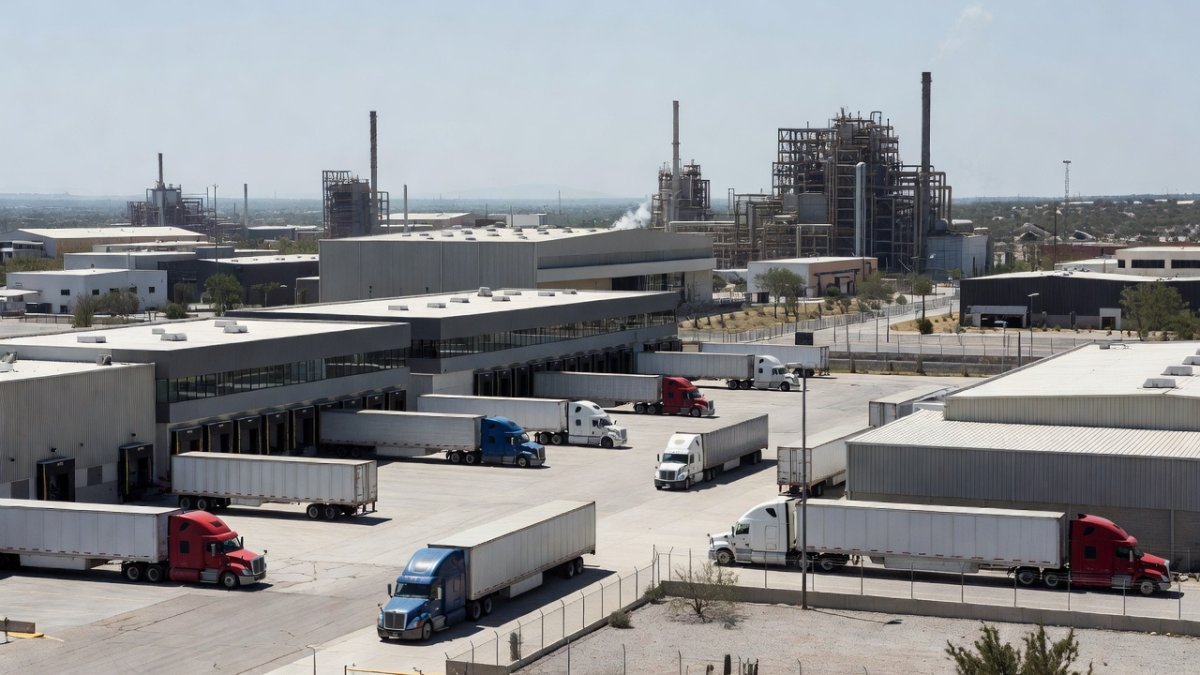
Record Foreign Investment Flows into Manufacturing and Services
The headline figure of US $34.968 billion in FDI for the first half of 2026 represents a 2.1% increase over the same period in 2025, marking the highest first-half total since official tracking began. More striking is the long-term trajectory: FDI has nearly doubled over five years, surging 89.7% since 2021. This places Mexico among the world's top ten destinations for foreign capital, outpacing economic heavyweights like France, India, Spain, and Italy in the race for global investment. The composition of this investment tells a compelling story about the health of the Mexican economy. Profit reinvestment by existing businesses drove the vast majority of the total, accounting for 88.5% or US $30.957 billion. This indicates that companies already operating in Mexico are confident enough to expand their operations, a powerful vote of confidence in the country's long-term stability. New investments brought in an additional US $2.726 billion, while intercompany transactions contributed US $1.285 billion. Sectorally, manufacturing continues to be the engine of this investment boom, attracting US $13.482 billion, a 9.3% increase year over year. This was led by computer and electronic components, machinery, and basic metals—all sectors deeply tied to the nearshoring trend. The financial services and insurance sector also saw significant inflows, with US $10.15 billion, up 10.9%. Perhaps most notably, the transport, mail, and storage sector nearly quadrupled to US $2.65 billion, signaling a major upgrade to the logistics infrastructure that underpins trade with the United States.
Geographic and Sectoral Winners in the Investment Boom
The benefits of this investment surge are not spread evenly across the republic, but they are reaching key industrial hubs. Mexico City captured the lion's share with US $16.862 billion, representing 48.2% of the total, a testament to its status as the financial and corporate heart of the nation. Following behind, Nuevo León attracted US $3.712 billion, solidifying its position as the industrial powerhouse of the north, while the State of Mexico drew US $2.114 billion. Baja California and Jalisco rounded out the top five, with US $1.743 billion and US $1.406 billion respectively. The United States remains the dominant source of foreign capital, contributing US $16.871 billion—nearly half of the total. This deep economic integration is a double-edged sword, offering immense opportunities but also creating a dependency on the health of the US economy. Spain followed with US $4.954 billion, with Canada, Australia, and Germany completing the top five, which together accounted for 77% of all investment. For workers in the tech parks of Guadalajara, often called the "Mexican Silicon Valley," and the auto plants of the Bajío region, this translates into job security and the potential for higher-skilled, better-paying positions. This geographic distribution highlights the ongoing economic divide between the wealthy northern and central regions and the poorer south. While the mañanera celebrated national records, community leaders in states like Oaxaca and Chiapas continue to advocate for policies that attract investment to their regions, hoping to stem the tide of migration to the north and to the United States. The challenge for the Sheinbaum administration is to ensure that this prosperity reaches every rincón of the country, not just the established industrial corridors.GDP Rebounds Strongly After a Weak First Quarter
The economic narrative was further bolstered by data from INEGI showing that Mexico's GDP grew 1.4% in the second quarter of 2026, on a seasonally adjusted quarter-on-quarter basis. This rebound is particularly significant as it comes after a 0.6% contraction in the first quarter, a dip that had worried analysts and opposition politicians. On an annual basis, the economy grew 2.1% compared to the second quarter of 2025, and nominal GDP reached 37.53 trillion pesos (about US $2.2 trillion), up 6.3% year over year. This quarterly performance is the strongest since the fourth quarter of 2020, when the economy was bouncing back from the initial shock of the COVID-19 pandemic. It positions Mexico as one of the OECD's top-growing economies in the second quarter, even as major partners like the United States, United Kingdom, Japan, and Germany showed signs of slowing down. For the small business owners in the tianguis and the merchants in the historic centers of pueblos mágicos, this growth can mean more foot traffic and higher sales. The rebound suggests that the economy has absorbed the shocks of the previous quarter and is now on a more solid footing. However, economists at FocusEconomics and other firms caution that this is just one quarter of data. The sustainability of this growth will depend on global conditions, particularly the trajectory of the US economy and the pace of interest rate cuts by Banxico. The president's framing of this as a structural success story is a political bet that the good times will continue.Banxico Holds Rates as Inflation Persists
Amidst the celebratory tone, the Bank of Mexico (Banxico) provided a note of caution. The central bank held its benchmark interest rate at 6.50%, signaling that while the economy is growing, the battle against inflation is not yet won. Banxico now expects inflation to reach its 3% target only by the fourth quarter of 2027, a later date than previously anticipated. Core inflation remains stubbornly above 3%, with costs in the services sector being a particular concern for policymakers. This decision has a direct impact on Mexican households. For families with mortgages or car loans, the cost of borrowing remains high. For those saving for a quinceañera or a down payment on a home, the high interest rates offer better returns on savings accounts but make the dream of homeownership more distant. The central bank's cautious stance reflects a delicate balancing act between supporting economic growth and ensuring that price pressures do not become entrenched. The persistence of services inflation is a complex issue, often linked to wage growth. As the government celebrates record employment and higher minimum wages, businesses pass on these increased labor costs to consumers. This creates a feedback loop that the central bank is trying to manage. The president's narrative that past governments suppressed wages to keep inflation artificially low is a direct challenge to the orthodox economic policies of the previous administrations, setting up a philosophical debate about the true cost of prosperity.Employment, the Peso, and a Political Reckoning
President Sheinbaum also highlighted record employment of 60 million people, a figure that underscores the health of the labor market. This is not just a number; it represents millions of families with work, many of them in the formal economy with access to IMSS healthcare, a pension for the future, and the dignity of a steady paycheck. The president described the peso as "strong, solid," a statement backed by its recent performance against the dollar, which has been buoyed by the strong FDI inflows and Mexico's relatively high interest rates. In a pointed rebuke to her critics, Sheinbaum confronted those who had predicted inflation and a devaluation of the peso following the minimum wage increases. She blamed past governments for suppressing wages, arguing that their policies favored capital over labor and left the working class behind. This is a core tenet of the Morena party's ideology, a continuation of the AMLO legacy, and it resonates deeply with the party's base. This political framing is crucial as Mexico looks toward the future. The president is staking her administration's credibility on the idea that you can have both social justice and economic growth. The data from the first half of 2026 provides her with powerful ammunition. However, the true test will be whether this growth is inclusive and sustainable. For the campesinos in the fields of Sinaloa and the teachers in the classrooms of Veracruz, the promise of prosperity must translate into better public services, safer streets, and a brighter future for their children. The mañanera was a celebration, but the work of ensuring that this prosperity is shared by all Mexicans is just beginning.Tags: Sheinbaum, mañanera, FDI, foreign direct investment, Mexico economy, GDP growth, peso, employment, Banxico, INEGI, nearshoring, manufacturing, Claudia Sheinbaum, Palacio Nacional
This article was produced with AI-assisted research and editorial support. Sources: Mexico News Daily, Banderas News, Rio Times, INEGI, Secretaría de Economía.
By Rosa Martinez, Staff Writer
What's Your Reaction?
 Like
0
Like
0
 Dislike
0
Dislike
0
 Love
0
Love
0
 Funny
0
Funny
0
 Wow
0
Wow
0
 Sad
0
Sad
0
 Angry
0
Angry
0

Rosa Martinez
Latin America/Andes Correspondent at Global1.News. Based in Bogota, covering politics, environment, energy, and social movements across the Andean region. Passionate about environmental journalism and communities protecting their land.















Comments (0)