
Henry: Super Rugby costing All Blacks
Graham Henry’s latest interview with Sport Nation has lit a fire under the All Blacks, and South African fans are feeling the heat. For South African rugby, the observation hits close to home.
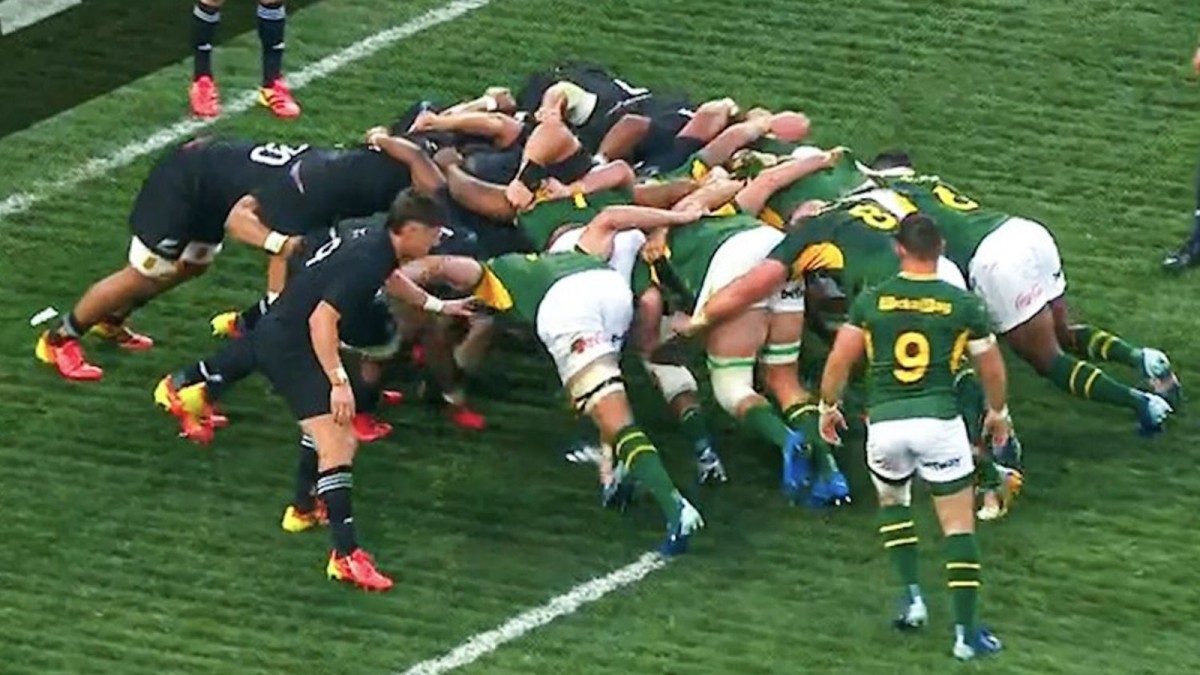
Graham Henry’s latest interview with Sport Nation has lit a fire under the All Blacks, and South African fans are feeling the heat. The former world‑champion coach warned that the decline of Super Rugby is leaving New Zealand’s national side exposed in the very areas the Springboks have been exploiting – the scrum and the aerial battle. As the All Blacks head into the Bledisloe Cup against the Wallabies, fresh from three straight defeats at the hands of the Boks, Henry’s words strike a chord not just for New Zealand but for the whole southern‑hemisphere rugby fraternity.
Super Rugby’s waning influence on player development
Henry argues that the crumbling stature of Super Rugby is more than a commercial story; it is a developmental crisis. “I think it reflects the level below, the Super Rugby level below, and whether that’s strong enough to produce top rugby players at Test match level,” he told Sport Nation. The implication is clear – the domestic competition that once churned out world‑class forwards and backs is no longer the crucible that prepares players for the physicality of test rugby.
For South African rugby, the observation hits close to home. After the exit of the South African franchises from Super Rugby in 2020, the country has built the United Rugby Championship (URC) into a platform that mirrors the intensity of the southern‑hemisphere elite. Henry’s critique underscores why the Boks have continued to dominate the set‑piece: the URC still pits them against the physical forwards of the Celtic nations and the high‑tempo South African sides, preserving the hard‑nosed skills that New Zealand now seem to lack.
The scrum – a battlefield where the Boks have the edge
In the three recent defeats to South Africa, the All Blacks’ scrum was repeatedly out‑muscled. Henry singled out this deficiency, noting that the Springboks “are very good at scrum and very good at driving lineouts.” The lack of regular competition against South African forwards, he says, means New Zealand players are “learning how to play that at Test match level rather than at Super Rugby level.” The nuance is vital – the All Blacks are not just missing a few set‑piece drills; they are missing the whole culture of forward‑forward confrontation that the Boks live and breathe.
South African fans will recognise the familiar narrative of a forward‑driven game plan that has powered the national side to World Cup glory in 2019 and 2023. The emphasis on a powerful scrum and relentless lineout drive is woven into the fabric of schoolboy rugby, club competitions and provincial championships across the country. Henry’s comments inadvertently praise the South African system that continues to produce forwards who can dominate the set‑piece on the world stage.
The aerial battle – a new arena of vulnerability
Beyond the scrum, Henry highlighted the All Blacks’ struggles under the high ball, a weakness the Springboks have exploited with their towering lineout units. “It is obviously a concern and the guys are working at it. It’s getting better, we would like it to be perfect,” Henry admitted. The admission that the high‑ball is “not perfect but they’re working at it” signals a deeper issue: New Zealand’s backs are not accustomed to the relentless aerial pressure that South African teams generate.
In South Africa, the high‑ball is a weapon as much as a defensive skill. From the high‑school fields of KwaZulu‑Natal to the professional arenas of the URC, players are drilled to contest and win aerial contests. The Springboks’ ability to “suck a lot of juice” out of the All Blacks, as Henry phrased it, is a direct result of that relentless focus on the aerial dimension. For SA supporters, the comment reaffirms why the Boks’ lineout specialists – the towering locks and agile jumpers – have become such a decisive factor in recent test series.
Coaching turnover and the limits of short‑term fixes
Henry was blunt about the coaching carousel in New Zealand. Neither Scott Robertson nor Dave Rennie, who have both taken the helm since the 2023 World Cup, have managed to “fix the problem.” The former All Blacks coach suggests the issue runs deeper than any single coach’s philosophy. “Obviously, we’ve got to improve the game we’re playing,” he said, implying that the structural foundations of New Zealand rugby need a revamp.
South African rugby has also faced its share of coaching upheavals, yet the continuity in forward‑focused structures has provided a buffer against such turbulence. The Springboks have maintained a clear identity around set‑piece dominance, even as head coaches have changed. Henry’s critique, therefore, serves as a cautionary tale for any nation that relies solely on coaching brilliance without a robust domestic pipeline to sustain the required skill sets.
The role of Super Rugby’s former South African participants
When Henry pointed to the “absence of South African sides in Super Rugby” as a key factor limiting New Zealand players’ exposure, he inadvertently highlighted a missed opportunity for cross‑hemisphere learning. The former inclusion of the Bulls, Stormers and Sharks in Super Rugby gave New Zealand a regular taste of South African physicality. Their removal has left a vacuum that the All Blacks now feel in the set‑piece and lineout departments.
For South Africa, the departure from Super Rugby forced a re‑imagining of the domestic calendar, leading to the URC and the strengthening of the Currie Cup. The result has been a more self‑sufficient system that still produces forwards capable of challenging the world’s best. Henry’s lament therefore underscores a strategic advantage that South African rugby has inadvertently secured by carving its own path.
Strategic responses: what the All Blacks are doing about the high ball
Henry disclosed that the All Blacks have “spent a lot of time on the high ball” and have a “strategy to try and do their best with it.” While he concedes the work is ongoing, the admission that the issue is “getting better” suggests a concerted effort to close the gap. The emphasis on dedicated high‑ball drills indicates that New Zealand is now treating the aerial contest as a core competency rather than a peripheral skill.
South African coaches can take note of this shift. The Boks have long integrated high‑ball training into their weekly routines, but the acknowledgment from a rugby heavyweight like Henry validates the importance of such focus. It also offers a glimpse into how the All Blacks might evolve – by embedding set‑piece and aerial drills into the fabric of their Super Rugby franchises, they could rebuild the missing exposure that Henry so sharply identified.
Implications for the upcoming Bledisloe Cup and beyond
As the All Blacks prepare for the two Bledisloe Cup tests against the Wallabies, the shadow of their recent defeats to South Africa looms large. Henry’s analysis suggests that unless New Zealand can quickly adapt to the physical demands of a South African‑style scrum and lineout, they risk repeating the same shortcomings against Australia, a side that has already begun to emulate the Boks’ forward dominance.
For South African fans, the narrative is a reminder of why the Springboks’ style remains relevant on the global stage. The emphasis on a powerful scrum, relentless lineout drive and mastery of the high ball continues to shape the outcomes of major test series. As the southern‑hemisphere rugby calendar unfolds, Henry’s warning serves both as a critique of New Zealand’s current trajectory and as a testament to the enduring strength of South African rugby philosophy.
This article was produced with AI-assisted research and editorial support. Reporting is based on the source material cited below. Sources: SARugbyMag; sarugbymag.co.za; Global1.News (06 October 2026).
By Dante Williams, Staff Writer
What's Your Reaction?
 Like
0
Like
0
 Dislike
0
Dislike
0
 Love
0
Love
0
 Funny
0
Funny
0
 Wow
0
Wow
0
 Sad
0
Sad
0
 Angry
0
Angry
0

Breaking News and Investigations Correspondent at Global1.News. Based in London, covering global breaking news, security, and investigative stories. Known for digging deeper and connecting the dots across continents.














Comments (0)