
Ukraine Talks Now Include a Multibillion-Dollar Lukoil Deal Tied to Trump Envoys
The New York Times reports that the U.S. talks with Russia on ending the war in Ukraine now include a multibillion-dollar deal for Lukoil's international oil assets, with leading bidders tied to Trump envoys Steve Witkoff and Jared Kushner. The deal needs approval from Washington and the Kremlin.
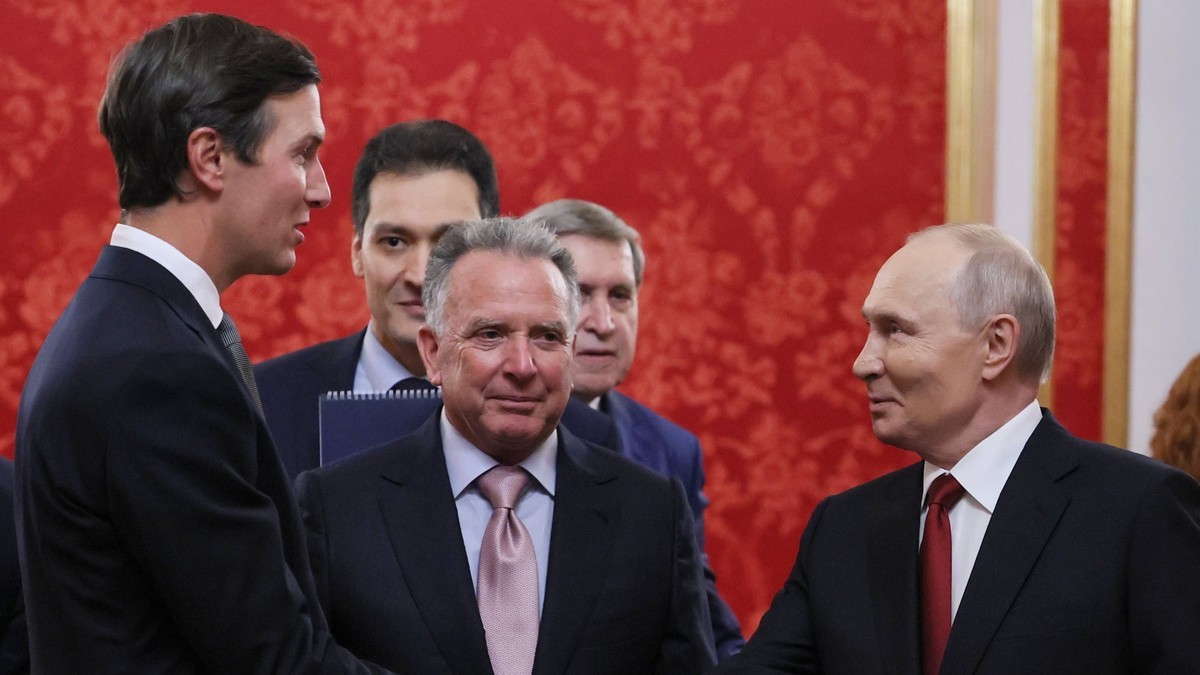
The Trump administration's push to end the war in Ukraine has picked up an unlikely passenger: a multibillion-dollar sale of Russian oil assets. The New York Times reported Saturday that the leading bidders for Lukoil's international holdings include an American donor to President Trump and two Middle Eastern groups with business ties to his own envoys. The deal, which is not final, would need the sign-off of both Washington and the Kremlin.
Ukraine Talks Now Include a Multibillion-Dollar Lukoil Deal Tied to Trump Envoys
Washington, D.C. — The U.S. talks with Russia on ending the war in Ukraine now include a multibillion-dollar oil deal that would benefit Middle Eastern business executives with ties to the two main American negotiators, according to a New York Times report published Saturday.
The Deal Nobody Announced
The New York Times reported on Saturday that the Trump administration's talks with Russia to end the war in Ukraine have expanded to include a multibillion-dollar oil deal. The transaction would cover a sprawling set of oil fields, refineries and gas stations around the world owned by Lukoil, one of Russia's biggest energy companies. It is contingent on approval from both the U.S. government and the Kremlin. The monthslong negotiations were described by eight people familiar with them, who spoke on condition of anonymity because of the sensitivity of the talks. The White House, the U.S. Treasury Department and Lukoil did not respond to requests for comment outside regular business hours, according to Reuters. No announcement has been made. No agreement has been signed.
What Lukoil Is Actually Selling
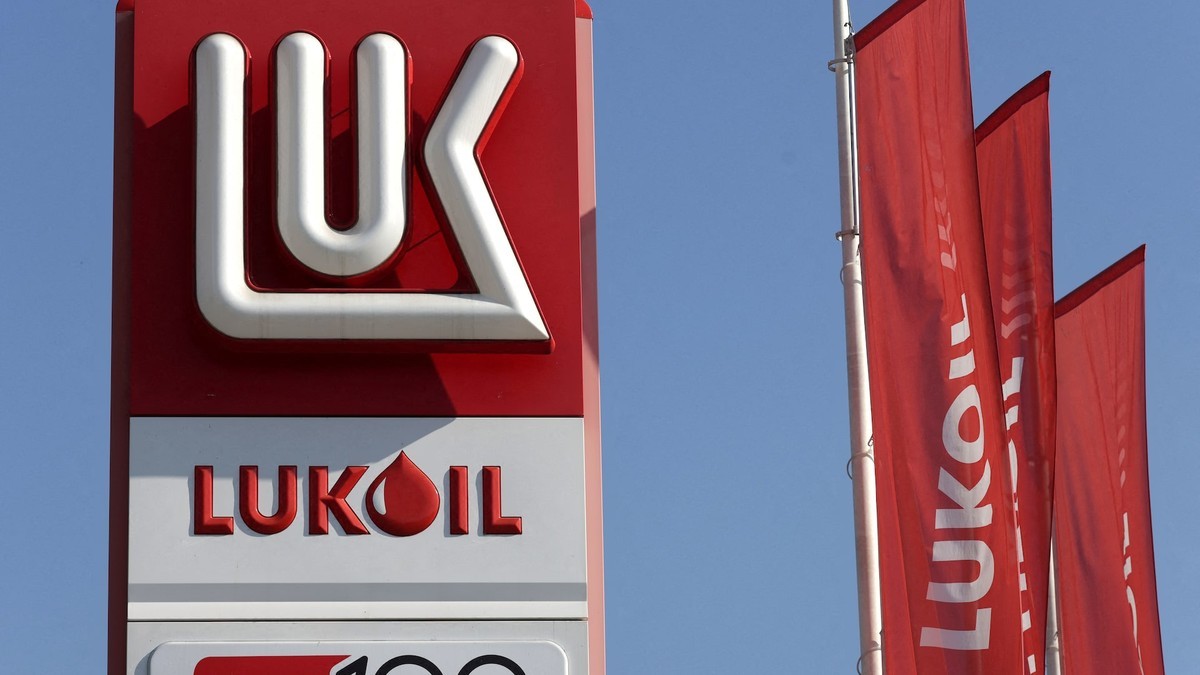
The assets on the table are Lukoil's international holdings. The New York Times described them as oil fields in Cameroon, refineries in Europe and gas stations in New Jersey. Lukoil valued its international assets at $20 billion earlier this year, according to the report. The price and structure of the proposed deal are not clear. The Vienna-based holding company, Lukoil International GmbH, controls refineries in Bulgaria and Romania, a stake in a Dutch refinery, and roughly 2,500 retail fuel stations across 19 countries, according to the Canadian World Report. In Romania, Lukoil owns the 48,600 barrel-per-day Petrotel refinery, the country's third-largest, and around 300 gas stations, Reuters reported in January. In Moscow, the decision on the deal is widely seen as Putin's to make, even though Lukoil is technically a private company.
Who Wants To Buy It
The leading group seeking the deal includes an American investor, Todd Boehly, who has donated $2 million to President Trump's political causes, according to the New York Times. Boehly, co-owner of the Los Angeles Dodgers, donated $1 million to MAGA Inc. in December 2025 and another $1 million through his investment firm to Trump's inauguration, the Times of India reported, citing the Times. The group also includes two Middle Eastern groups that have done business with Kushner or Witkoff's family, and an arm of the U.S. government itself. The proposed investor group includes Qatar-based businessmen Moutaz and Ramez Al-Khayyat and an Abu Dhabi investment fund controlled by Sheikh Tahnoon bin Zayed Al Nahyan. Yahoo reported the U.S. International Development Finance Corporation is among the leading investors.
Where the Deal Started
President Vladimir Putin brought up the deal when he met Witkoff and Kushner at the Kremlin on Sept. 5, according to three people familiar with the meeting. Putin proposed it get done as a way of showing Russians that they can do business with the United States, according to one of the people. The Americans responded that they would work on it, the person said, seeing it as a way to build goodwill with the Kremlin while also lowering global energy prices. Kremlin transcripts confirm the meeting took place at the Senate Palace in Moscow. Presidential Aide Yury Ushakov said it was their eighth visit to Russia. The Kremlin's own published transcript records Putin telling the two envoys that Moscow finds it "comfortable to work with you" and that there is "a very high level of trust during this work." Witkoff replied that President Trump sent his best wishes. Putin also said that since midnight on September 5, Russian strikes on Kyiv had not been carried out, and noted that Ukraine had reduced its strikes on Russian territory by "an order of magnitude." Ushakov said it was confirmed that the presidents of both countries would maintain personal contact and that work through Witkoff and Kushner would continue.
Why Washington's Signature Is Worth Billions
U.S. approval for the sale would release the assets from American sanctions, instantly increasing their value, according to the New York Times. The United States imposed sanctions on Lukoil and several subsidiaries in October 2025, placing them on the Specially Designated Nationals and Blocked Persons list. On October 22, 2025, Treasury designated Lukoil and Rosneft, Russia's two largest oil producers, as SDNs under Executive Order 14024, according to the Canadian World Report. The Treasury Department's Office of Foreign Assets Control has extended a license allowing negotiations and the signing of conditional agreements with Lukoil over the sale of its foreign assets. Reporting differs on the exact date of the negotiating license: the Times, as carried by the Times of India, says the latest extension runs until October 29, while Novinite reported the negotiating license was extended until October 22, with separate authorizations covering Lukoil's gas stations outside Russia and its Bulgarian assets valid until October 29. Any actual transaction remains subject to separate OFAC approval.
The Conflict-of-Interest Question
There is no indication that Mr. Kushner or Mr. Witkoff themselves stand to profit, the New York Times reported. But the pending deal represents a striking intermingling of personal business ties with geopolitics, even for an administration that has regularly dismissed concerns about potential conflicts of interest, according to the report. The Al-Khayyat brothers have business ties with Kushner and his wife, Ivanka Trump, including a planned luxury resort project in Albania. Sheikh Tahnoon controls an investment fund that acquired a significant stake in World Liberty Financial, the Trump family-linked cryptocurrency company co-founded by Witkoff. Trump's sons are also involved in the company. Witkoff has since sold his stake, according to a person close to him. Sheikh Tahnoon also oversees Lunate, an Abu Dhabi investment fund that is among the major stakeholders in the private equity firm founded by Kushner after he left the White House. The distinction between the two Americans matters. Witkoff holds an official administration post: the White House identifies him as Trump's special envoy, and he was sworn in as senior adviser and special envoy in May 2025, with the administration saying he acts under Trump's instructions. Kushner does not hold a comparable formal post. He is the president's son-in-law and the founder of the private equity firm Affinity Partners.
How the Deal Got Here
Lukoil initially agreed to sell the assets to international commodities trader Gunvor after accepting the company's acquisition offer and reaching agreement on the main terms. The U.S. Treasury declined to approve the transaction, and the deal collapsed. In late January 2026, Lukoil reached an agreement with U.S. investment firm Carlyle to sell Lukoil International GmbH. That transaction is still awaiting OFAC approval. U.S. private equity firm Carlyle reached a tentative agreement in January to acquire a large portion of the assets, but U.S. approval for that bid stalled. The Boehly-led group subsequently emerged as the leading bidder. One secondary account puts Carlyle's bid at about $22 billion. The Treasury Department has had to repeatedly extend sanctions-related arrangements while the sale remains unresolved. Under an amended Treasury FAQ, any eventual sale would still have to sever Lukoil International's ties to Lukoil entirely, hold any funds owed to Lukoil in a U.S.-jurisdiction account until sanctions are lifted, avoid handing Lukoil a windfall through an asset or share swap, and give OFAC review rights over any later sale of the assets. OFAC says it may revoke the negotiating license at any time.
The War It Is Supposed To End
Witkoff and Kushner have traveled repeatedly to Russia for meetings with Mr. Putin and have argued that the potential to rebuild economic ties with the West could convince the Russian president to compromise in Ukraine, according to the New York Times. The administration has recently signaled it is open to deals with Russia even before the war ends, as a way of showing it is serious about resetting the United States' relationship with Moscow. The conflict, which has now stretched over four years, has intensified in recent months with Russian air attacks on Ukrainian infrastructure. Ukraine's military has responded with long-range missile attacks on Russian oil storage and refining facilities. The war has killed hundreds of thousands, according to the Times. U.S. envoys held "encouraging" talks in Kyiv on Sunday in their first official visit to Ukraine as part of a renewed push to end more than 4 1/2 years of Russia's full-scale invasion, the Associated Press reported.
What Witkoff and Kushner Say
A senior administration official confirmed that Mr. Witkoff and Mr. Kushner played a direct role in helping negotiate the financial terms of the investment by the federal government in the deal to ensure that it included "a substantial upfront payment and profits interest for the United States." A Witkoff spokeswoman said he "takes no salary and travels the world on his own plane, at his own expense, working on behalf of President Trump to negotiate peace and bring hostages home to their families." She added that Mr. Witkoff "has no conflict of interest and no financial stake in this matter." Kushner said President Trump sees it as important "not just to figure out how do we end the current war," but how to create conditions "for durable peace." Witkoff said: "We've had very meaningful discussion, substantive, important, and we're very encouraged."
What Comes Next
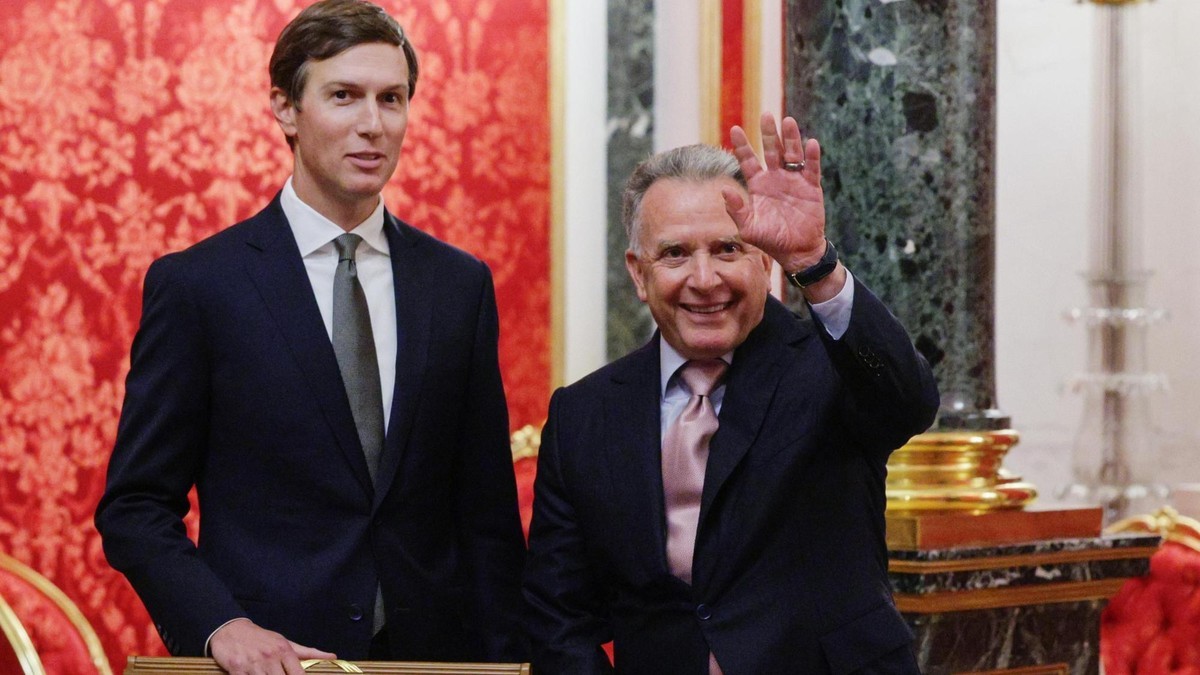
The deal needs approval from both Washington and the Kremlin. It is not final. Watch three things. First, whether OFAC extends the negotiating license again. The authorizations currently run into late October, and reporting differs on the exact date of the negotiating license. Second, whether the Carlyle bid, still awaiting approval, is formally displaced by the Boehly-led group. Third, whether the White House, Treasury or Lukoil respond on the record. None did over the weekend. The upshot, as the Times put it, is that the giant transaction, involving assets as varied as oil fields in Cameroon, refineries in Europe and gas stations in New Jersey, comes down to Mr. Putin and Mr. Trump. Global1.news will continue to follow the licensing deadlines and any confirmation from Washington or Moscow.
By Jessica Ali, Staff Writer
This article was produced with AI-assisted research and editorial support. Sources: The New York Times, Reuters, The Associated Press, The Hill, Yahoo News, the Times of India, the Kremlin, Novinite and the Canadian World Report.
What's Your Reaction?
 Like
0
Like
0
 Dislike
0
Dislike
0
 Love
0
Love
0
 Funny
0
Funny
0
 Wow
0
Wow
0
 Sad
0
Sad
0
 Angry
0
Angry
0

Editor-in-Chief at Global1.News. Atlanta-based journalist who cuts through the BS and tells it like it is. Lead anchor, host, and the voice you hear when the spin stops and the truth starts.










Comments (0)