
Trump Says Iran's Supreme Leader Is Alive but Seriously Wounded
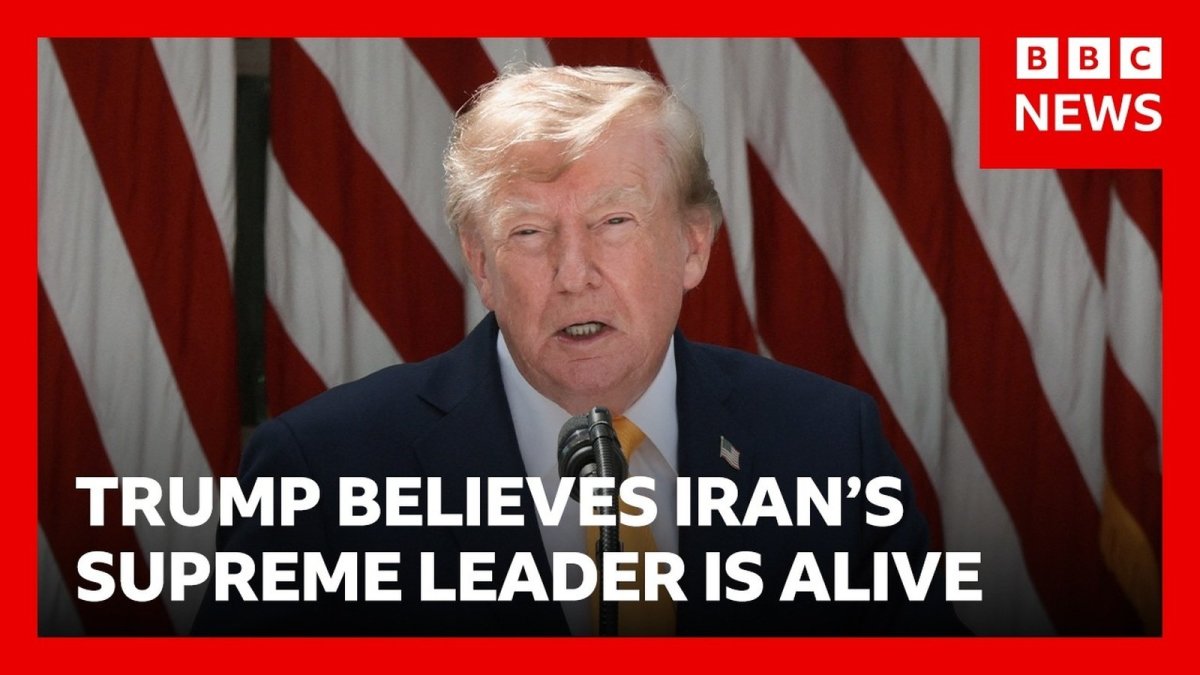
In a recent BBC News report, President Donald Trump said he believes Iran's Supreme Leader Mojtaba Khamenei is still alive — but seriously wounded from the February airstrike that killed his father — dismissing six months of speculation that Tehran's leader is secretly dead.
In a recent BBC News report, President Donald Trump said he believes Iran's Supreme Leader Mojtaba Khamenei is still alive — but seriously wounded from the February airstrike that killed his father — dismissing six months of speculation that Tehran's leader is secretly dead.
Trump Says Iran's Supreme Leader Is Alive — but Seriously Wounded
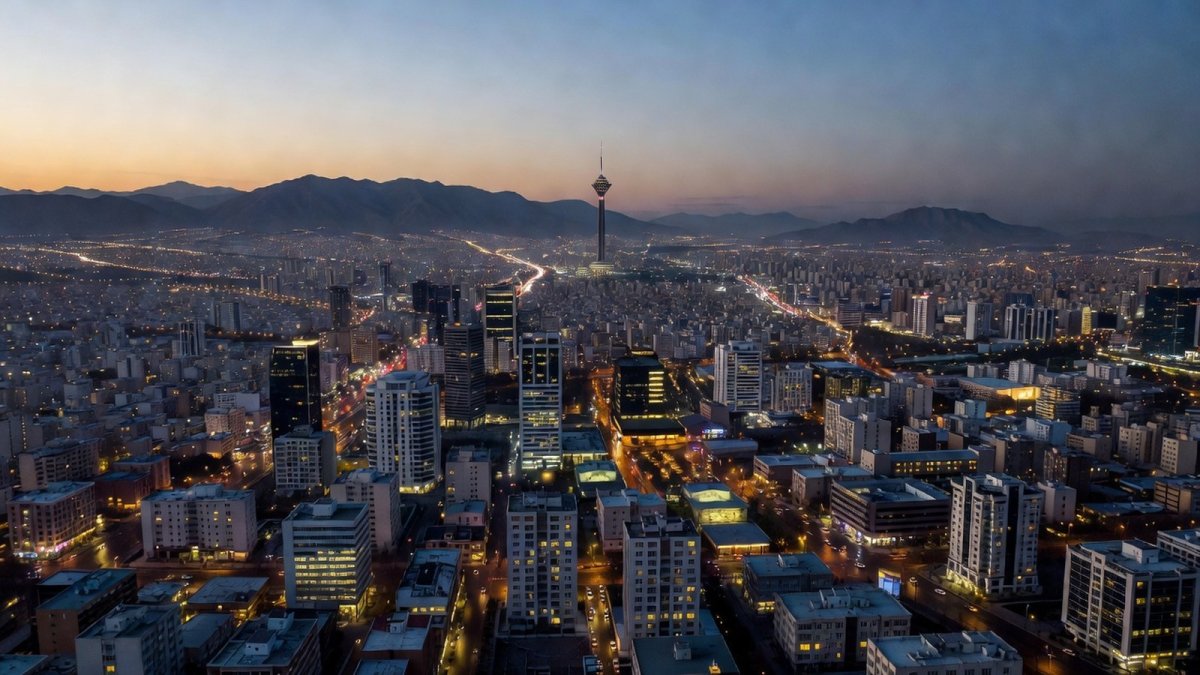
Washington, United States – 27 August 2026 — President Donald Trump said on Wednesday that he believes Iran's Supreme Leader Mojtaba Khamenei survived the February strike that killed his father, describing severe injuries that have kept the cleric out of public view for six months. His remarks, in an interview with the commentator Glenn Beck, cut through weeks of mounting speculation inside and outside Iran about whether the man formally leading the Islamic Republic is even alive.
What Trump Said — and What He Did Not Say
Speaking to Glenn Beck, Trump said of Khamenei: "He was very seriously wounded. The left side of his body, the arm, the leg, the whole thing." The president acknowledged that the Iranian government could be deceiving the world, adding that if the Supreme Leader is in fact dead, the authorities in Tehran are "putting on a pretty good show" by claiming to consult with him regularly. The comments mark the first time a US president has publicly assessed the health of the man who inherited power after the killing of his father, Ayatollah Ali Khamenei, in the opening wave of US and Israeli strikes on 28 February.
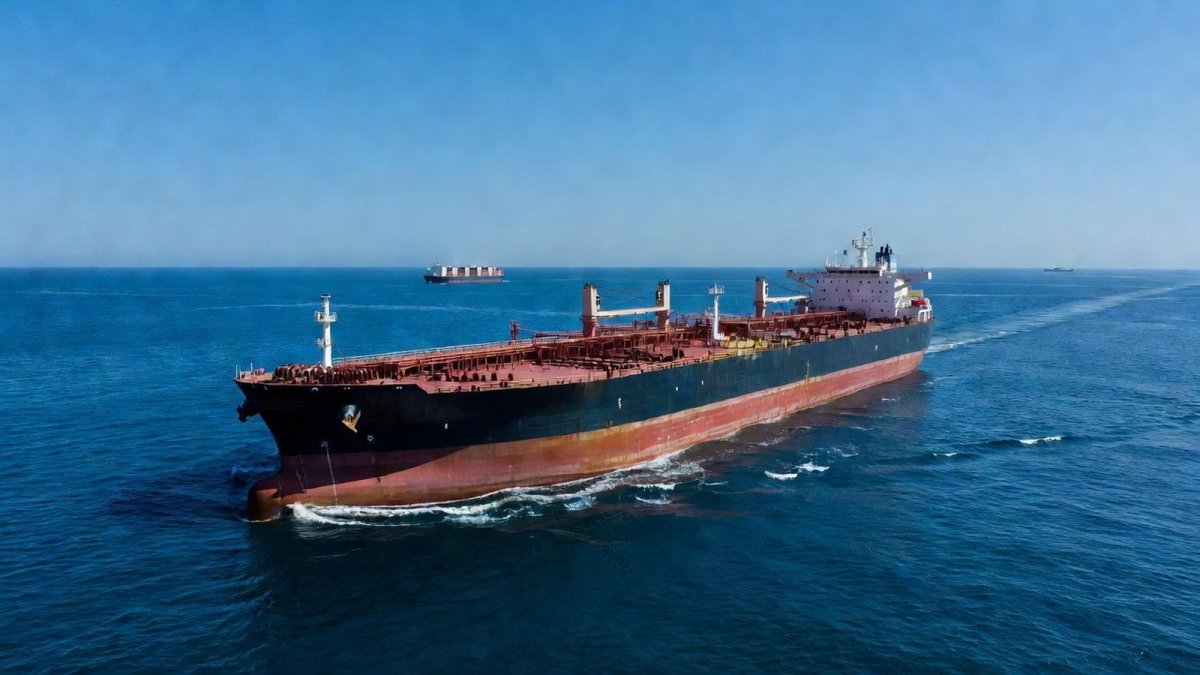
Trump has repeatedly predicted the war will end "fairly soon," and on Wednesday he repeated that forecast, telling Beck the conflict could conclude sooner than many expect. He pointed to the reopening of the Strait of Hormuz as evidence of progress, claiming that ten million barrels of oil transited the strategic waterway on Tuesday and that twenty-two vessels passed through safely overnight. The president offered no medical evidence for his assessment of Khamenei's condition, nor did he explain how the United States obtained such information about the Supreme Leader's health. His remarks appeared designed to shape expectations about the war's trajectory rather than to present a formal intelligence assessment.
In a separate interview with Al Jazeera, Trump struck a more ambiguous tone about the path to peace. He told the network that economic warfare and military strikes on Iran are "both effective" and that he has "no time schedule, none" for resuming talks with Tehran. The president also invoked a recent military success as a template for Iran, saying: "We had the victory in Venezuela, and we're going to have a big victory here very soon." That reference to the January 3 US operation in Venezuela suggests the administration sees a decisive military outcome as achievable, even as it pursues economic pressure through sanctions.
Six Months of Silence in Tehran
Mojtaba Khamenei has not made a single public appearance since his father's killing on 28 February. Appointed supreme leader in early March — despite protests from the Trump administration — he was long considered more hawkish and more repressive than his father. For six months, official decision-making has been conducted through written messages attributed to him, while responsibility appears dispersed across a network of establishment figures. His absence from the state funeral for his father in July, which drew millions of mourners across Iran, deepened questions about the succession.
Iranian officials have cited security concerns for the continued absence, arguing that the new Supreme Leader must be protected from further assassination attempts. That explanation has done little to quell speculation, particularly given the constitutional centrality of the office. Under Iran's system, the Supreme Leader holds the most constitutional power and serves as the final arbiter among factions within the Islamic Republic. He commands the armed forces, appoints the heads of the judiciary and state media, and has the ultimate say on matters of war and peace. A leader who cannot appear in public, or who may not exist at all, creates a vacuum at the very top of the state.
Analysts suggest the situation is unsustainable regardless of the truth. If Khamenei is alive but incapacitated, the regime must eventually produce him or explain his condition. If he is dead, the fiction of his continued leadership cannot be maintained indefinitely. The Atlantic has noted that his public absence creates problems for the regime whether he is dead or alive, because the institution of the Supreme Leader depends on visible authority. The longer the silence continues, the more the clerical establishment's legitimacy erodes, both at home and abroad.
Hormuz, Sanctions, and the War's Next Phase
The leadership question hangs over a war entering its seventh month. On Monday, the Trump administration launched Operation Economic Outcast, a sweeping sanctions campaign aimed at isolating Iran from the global financial system. Treasury Secretary Scott Bessent described the goal as the "economic asphyxiation" of the Iranian government. The operation represents the most aggressive economic pressure campaign yet, targeting Iran's remaining financial lifelines and seeking to cut the country off from international banking networks. Washington clearly hopes that economic pain will accomplish what military strikes have not.
Tehran, for its part, continues to dispute Washington's claims about the Strait of Hormuz. The Islamic Revolutionary Guard Corps has said the strategic waterway will not reopen until the United States accepts Iranian conditions and returns to the framework agreement reached in June. That agreement, a 14-point memorandum signed in Islamabad in mid-June with Pakistani and Qatari mediation, provided for ending hostilities, reopening the strait, lifting the US naval blockade, and beginning a 60-day negotiation process. Tehran has accused Washington of failing to implement key provisions of the memorandum, and the IRGC has denied that all mines have been removed from the waterway.
Iran's position is unambiguous: no one except Iran knows where the mines are located, and the strait will remain closed until the United States demonstrates good faith. The administration's claim that all mines were removed or detonated in international waters has been met with flat denial from Tehran. This standoff has kept global oil markets on edge, with shipping companies reluctant to risk transiting the strait even if Washington declares it safe. The reopening of Hormuz is not merely a military question but a commercial one, and insurers and shipping firms are watching the diplomatic signals as closely as the naval deployments.
Domestic Pressures in Washington
The war has grown increasingly unpopular with the American public, polls show, as stalled waterways push up prices at home. Trump's confident predictions of imminent victory contrast with the sobering economic picture and with Tehran's insistence that the strait remains closed. Rising prices, tied in part to the stalled waterway, have begun to weigh on consumers, and the effects of disrupted supply chains extend far beyond energy. Recent surveys indicate the war has grown increasingly unpopular with the American public as the conflict enters its seventh month without a clear end in sight.
The political stakes for the administration are considerable. Trump has staked his credibility on bringing the war to a swift conclusion, and each week of continued hostilities erodes that promise. The president's repeated forecasts of imminent victory have become something of a running joke among his critics, though his supporters note that previous conflicts have also dragged on longer than initial predictions. The economic picture is the more immediate concern: rising prices at the pump and in the grocery store are tangible reminders of the war's cost, and they are the kind of issue that shapes voter sentiment far more than strategic assessments from Washington.
The administration's response has been to double down on both military pressure and economic sanctions, arguing that a decisive outcome will ultimately justify the costs. Operation Economic Outcast is designed to demonstrate that the United States has the patience and the tools to outlast the Iranian regime. But patience is a political commodity in short supply, and the administration is acutely aware that public support for the war could erode further if the conflict continues into the autumn. The coming weeks will test whether Trump's strategy of maximum pressure can produce the victory he has promised, or whether the war becomes a political liability that no amount of confident rhetoric can contain.
Analysis — A Leadership Vacuum at the Heart of Tehran
If Khamenei is alive but badly wounded, his condition raises profound questions about who is actually running Iran. If he is dead, the regime has maintained an elaborate fiction for months. Either way, the absence of a visible, authoritative figure at the top of the Islamic Republic changes how the war, the sanctions campaign, and any eventual diplomatic settlement will unfold. The Supreme Leader is not a ceremonial position; he is the ultimate decision-maker on matters of national security, and his incapacitation would leave a void that no single figure in the current establishment appears able to fill.
Analysts suggest this could mean that decision-making in Tehran has already shifted to a collective leadership, with the IRGC and the clerical establishment making key choices in the Supreme Leader's name. The likely consequence is a more fragmented and less predictable Iranian policy, as different factions compete to shape the country's response to the war and the sanctions. This could make negotiations more difficult, as Washington would be dealing with a leadership that cannot speak with one voice. It could also make the regime more dangerous, as hardliners within the IRGC might seize the opportunity to escalate the conflict without the constraints that a visible Supreme Leader would impose.
The energy market dimension adds another layer of uncertainty. The Strait of Hormuz carries a significant portion of the world's oil, and its continued closure has already pushed prices higher. A succession crisis in Tehran could prolong the closure, as the new leadership would need time to consolidate power before making major concessions. The strategic implications for Washington are equally significant: a weakened and divided Iran might be more willing to negotiate, or it might be more intractable, depending on which faction emerges dominant. The war's endgame, in other words, may be determined less by events on the battlefield than by the internal dynamics of a regime whose leader has not been seen in public for six months.
By Irina Volkov, Staff Writer
This article was produced with AI-assisted research and editorial support. Reporting is based on sources cited in the article.
What's Your Reaction?
 Like
0
Like
0
 Dislike
0
Dislike
0
 Love
0
Love
0
 Funny
0
Funny
0
 Wow
0
Wow
0
 Sad
0
Sad
0
 Angry
0
Angry
0
Russia/Eastern Europe Correspondent at Global1.News. Covering Russian politics, energy, security, and the shifting dynamics of the post-Soviet space. Provides clear-eyed analysis on one of the world's most opaque regions.









Comments (0)