
Rupee slips 4 paise to 96.39 against U.S. dollar in early trade
The Indian rupee slipped marginally in early trade on Tuesday, October 6, 2026, as external pressures from rising crude prices and sustained foreign institutional outflows outweighed the modest buoyancy offered by a weaker dollar index and a rally in domestic equities.
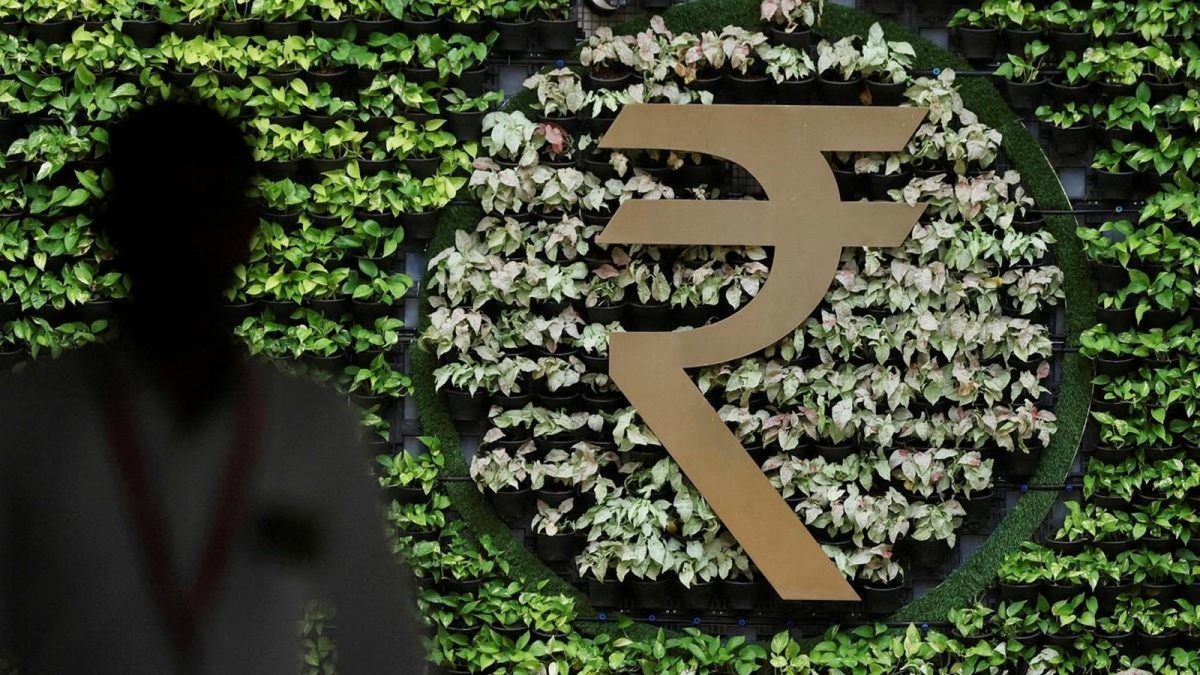
The Indian rupee slipped marginally in early trade on Tuesday, October 6, 2026, as external pressures from rising crude prices and sustained foreign institutional outflows outweighed the modest buoyancy offered by a weaker dollar index and a rally in domestic equities. While the move was modest in absolute terms, the episode underscores the delicate balancing act faced by the Reserve Bank of India (RBI) as it navigates a volatile global environment and a domestic policy framework that is still in the early stages of a rate‑cut cycle.
Market dynamics that nudged the rupee lower
At the interbank foreign‑exchange market, the rupee opened at 96.29 per U.S. dollar but quickly fell to 96.39, a decline of four paise from its previous close. The slide was linked to a rise in Brent crude futures, which were trading at $100.6 a barrel, and to continued net selling by foreign institutional investors (FIIs). The combined effect of higher oil‑linked import costs and a demand for dollars from foreign portfolio investors created a modest but palpable downward pressure on the currency.
Despite the rupee’s dip, the dollar index—a basket‑based gauge of the greenback’s strength—was marginally lower at 102.12, down 0.04 per cent. This slight easing in the dollar’s broader valuation helped to cushion the rupee from a deeper fall, as noted by market participants who observed that the domestic equity rally also provided a supportive backdrop for the currency.
RBI’s defensive posture amid external shocks
According to Anil Kumar Bhansali, Head of Treasury at Finrex Treasury Advisors, the RBI has been actively defending the rupee around the 96.33 level. He highlighted that the demand for dollars from foreign portfolio investors (FPIs) and oil‑importing firms has remained robust, even as crude prices hovered just above the $100 mark and the dollar index slipped. This indicates that the RBI’s interventions are primarily aimed at preventing a sharp depreciation rather than targeting a specific exchange‑rate corridor.
The central bank’s policy stance is further complicated by the ongoing Monetary Policy Committee (MPC) meeting that began on Monday, October 5. Market expectations point to a 25‑basis‑point rate hike, aligning India with other major central banks that have adopted a hawkish tone in response to geopolitical tensions in West Asia. Such a move would be the first rate increase since February 2023, when the RBI lifted the repo rate to 6.50 per cent before embarking on a gradual easing trajectory that saw the rate fall to the current 5.25 per cent.
Implications of the rate‑hike prospect for inflation and growth
A potential 25‑basis‑point hike would signal a shift from the accommodative stance that has underpinned India’s growth engine over the past two years. The RBI’s decision will hinge on its inflation outlook, especially given the risk of imported price pressures from higher oil costs. While the current Brent price of $100.6 per barrel is not dramatically higher than recent levels, any sustained upward trend could feed through to consumer price indices, particularly for transport and energy‑intensive sectors.
From a growth perspective, a tighter monetary stance could modestly dampen credit expansion, especially for sectors that are sensitive to financing costs such as real estate and small‑manufacturing. However, the RBI’s prior commitment to a rate‑cut cycle suggests that any hike is likely to be temporary, aimed at anchoring inflation expectations while the central bank monitors external volatility.
Foreign Institutional Investor (FII) activity and its market impact
Data from the exchange show that FIIs offloaded equities worth ₹4,699.14 crore on a net basis on Monday, October 5. This outflow reflects a broader trend of foreign capital rotation away from emerging‑market equities amid heightened uncertainty in global risk assets. The sell‑off contributed to a modest weakening of the rupee, as investors typically convert local currency holdings into dollars to fund repatriation of proceeds.
Nevertheless, the domestic equity market displayed resilience, with the Sensex advancing 120.22 points to 72,535.41 and the Nifty gaining 47.15 points to 22,603.10 in early trade. This positive equity momentum suggests that domestic investors remain confident in the underlying growth narrative, even as foreign capital flows become more erratic.
Domestic equity market buoyancy as a counterweight
The rise in the Sensex and Nifty indices provided a counterbalancing force for the rupee. A stronger equity market can attract domestic retail inflows, which in turn support the rupee by reducing the net demand for foreign exchange. Moreover, a buoyant equity market often signals investor optimism about corporate earnings and macroeconomic stability, factors that can indirectly bolster currency sentiment.
Analysts note that the equity rally was partly driven by sectoral gains in information technology and pharmaceuticals—industries that are less directly exposed to oil price fluctuations. This sectoral composition helped to insulate the market from the immediate impact of higher crude prices, reinforcing the view that India’s economic diversification is gradually mitigating external shock transmission.
Policy considerations for the coming months
Looking ahead, the RBI faces a triad of policy challenges: containing inflationary pressures from oil imports, managing capital flow volatility, and sustaining growth momentum. The central bank’s upcoming decision on the repo rate will be a key indicator of how it prioritises these objectives. A modest rate hike would reaffirm a commitment to price stability, while signalling that the RBI remains vigilant to external risk factors such as geopolitical tensions in West Asia.
In parallel, the RBI may continue to intervene in the foreign‑exchange market to smooth out short‑term volatility, as it has done by defending the rupee around the 96.33 level. Such interventions, while effective in the near term, must be calibrated to avoid depleting foreign‑exchange reserves, especially if external pressures persist.
Strategic outlook for investors and policymakers
For investors, the current environment calls for a balanced approach. Exposure to sectors that are less oil‑price sensitive—such as technology, pharmaceuticals, and consumer staples—can provide a hedge against currency depreciation and inflationary spikes. Meanwhile, monitoring RBI policy cues, especially the outcome of the MPC meeting, will be essential for timing equity and debt market positions.
Policymakers, on the other hand, need to coordinate monetary actions with fiscal measures that can alleviate the impact of higher oil costs on vulnerable households. Targeted subsidies or tax relief for fuel‑dependent sectors could temper inflationary pressures without compromising the broader fiscal consolidation agenda.
In sum, the rupee’s modest slip on October 6 reflects a confluence of external and domestic factors that are likely to shape India’s macroeconomic trajectory in the months ahead. While the currency remains within a relatively stable band, the underlying dynamics—rising crude prices, FII outflows, and a potential rate hike—underscore the importance of vigilant policy coordination and strategic investment positioning.
This article was produced with AI-assisted research and editorial support. Reporting is based on the source material cited below. Sources: The Hindu; thehindu.com; Global1.News (06 October 2026).
By Dr. Raj Patel, Staff Writer
What's Your Reaction?
 Like
0
Like
0
 Dislike
0
Dislike
0
 Love
0
Love
0
 Funny
0
Funny
0
 Wow
0
Wow
0
 Sad
0
Sad
0
 Angry
0
Angry
0

India/South Asia Correspondent at Global1.News. Analytical voice with a background in science and health journalism. Based in New Delhi, covering Indian politics, education, healthcare, technology, and policy. Breaks down complex data into clear, actionable reporting.















Comments (0)