
North Korea Fires Missile and Claims a Hypersonic Drill
North Korea fired a ballistic missile from the Wonsan area on Saturday, its 16th missile provocation of the year, and Pyongyang's state media said the drill used an intermediate-range strategic missile that struck a target 1,000 km away, far beyond the flight Seoul and Tokyo tracked.
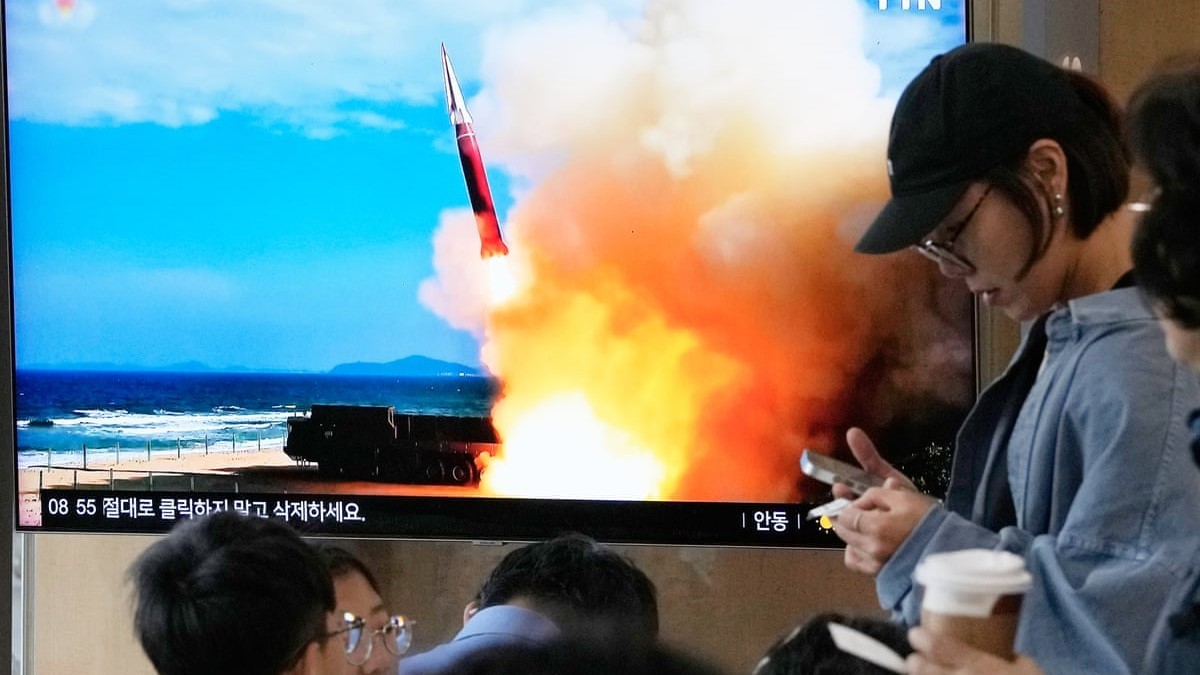
North Korea fired a ballistic missile from its eastern coast early Saturday, its sixteenth missile provocation of the year according to South Korea's military. Pyongyang's state media then called it an intermediate-range strategic missile drill overseen by Kim Jong Un, and Kim's sister mocked the distance figures Seoul and Tokyo had published.
North Korea Fires Missile and Claims a Hypersonic Drill
SEOUL, South Korea — The missile left the Wonsan area at about 06:30 local time on Saturday 3 October, bound for the waters between the Korean peninsula and Japan. Within hours, three governments had published three different distances, and Pyongyang had published a fourth.
The Launch
South Korea's Joint Chiefs of Staff said it detected a ballistic missile launched from the Wonsan area toward the East Sea, the body of water Japan calls the Sea of Japan. The JCS said the missile flew more than 700 kilometres, or 435 miles, and that Seoul and Washington were analysing its exact specifications.
Seoul, Washington and Tokyo, the JCS said, were maintaining a robust defence posture through close information sharing, with South Korea's military monitoring North Korean movements and holding the readiness to respond decisively to any provocations. The JCS counted the launch as the 16th missile provocation of the year. Reuters, using a different measure, says the North has carried out more than 10 missile tests in 2026.
The launch came 13 days after the North fired two short-range ballistic missiles from the same area on 20 September. Seoul's presidential National Security Office convened an emergency meeting, and the government urged Pyongyang to halt its launches, calling them a serious act that does nothing to help the current situation and a violation of UN Security Council sanctions, Deutsche Welle reported.
What Pyongyang Says It Fired
North Korea's state news agency KCNA said the country fired an intermediate-range missile in a test overseen by Kim Jong Un, and that it hit a target 1,000 kilometres, or 621 miles, away in the sea off the country's east coast. NK News, quoting KCNA, reported the missile was launched northeastward from an eastern region at dawn.
KCNA said the drill was meant to train troops operating what it called a hypersonic strategic weapon system, and to assess the reliability, efficiency and mobility of the country's war deterrent.
According to KCNA, Kim said Pyongyang must keep working to make its enemies recognise the reliability and fatality of its strategic offensive weapons, and that developing its nuclear war deterrent remained essential for national security. A Reuters caption on a KCNA handout photograph described Kim overseeing the firing, accompanied by his daughter, Kim Ju Ae.
Three Numbers, Three Capitals
The official figures do not agree, and no government has reconciled them. KCNA says the missile hit a target 1,000 kilometres away. The JCS says it flew more than 700 kilometres. Japan's Defence Ministry says about 680 kilometres.
The type is unresolved in the same way. KCNA calls the weapon an intermediate-range strategic missile and frames the drill as training for a hypersonic strategic weapon system. Seoul and Washington say the specifications are still being analysed.
A South Korean government source said there was a possibility the North fired an intermediate-range ballistic missile on a reduced-range trajectory, and that it appeared similar to one launched on 12 August. Authorities are weighing whether the weapon was a medium-range ballistic missile, which covers 1,000 to 3,000 kilometres, or an intermediate-range ballistic missile, which covers 3,000 to 5,500 kilometres.
The Mine Blast That Started This
The launch follows a 21 September explosion in the western sector of the Demilitarized Zone, during a reconnaissance mission inside the four-kilometre-wide buffer. Three South Korean soldiers were wounded, two of them seriously. Two separate blasts occurred during an operation to clear a path for a joint inspection by the South's military and the UN Command.
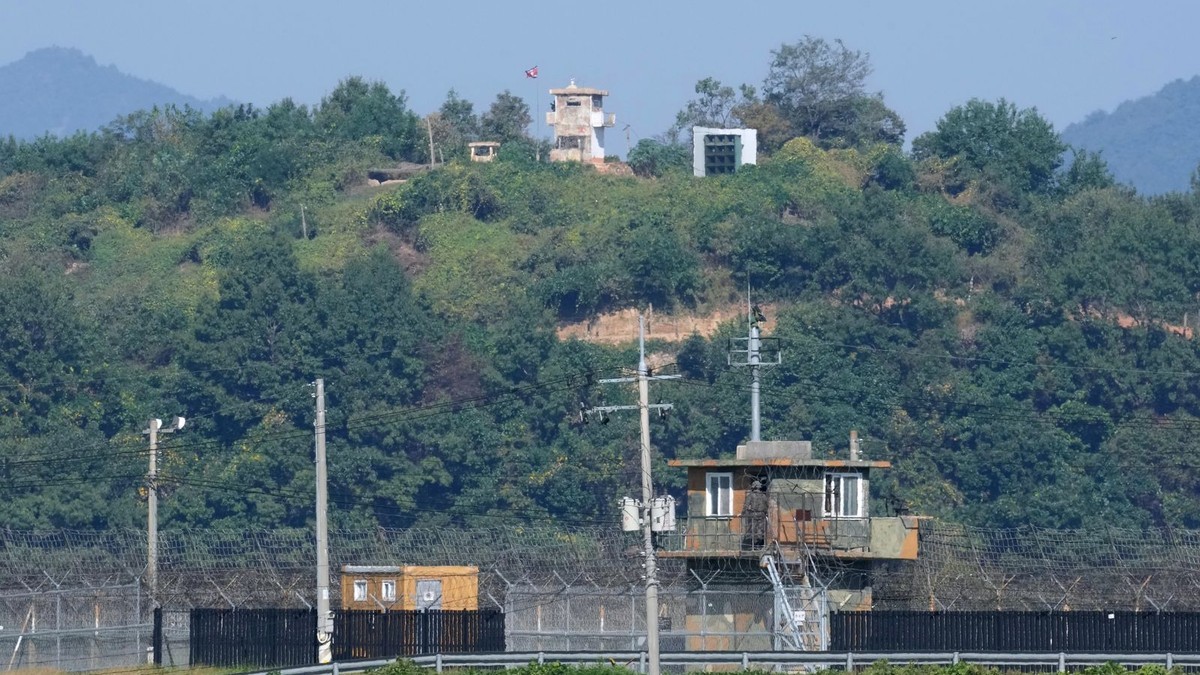
South Korea's military and the US-led UN Command found the explosion was caused by North Korean mines laid on the South Korean side of the Military Demarcation Line. Defence Minister Kang Shin-chul said the mines were believed to have been laid as part of Pyongyang's border fortification work. The JCS called the blast a blatant violation of the armistice agreement, and the UN Command, which oversees the 1953 truce, determined an armistice violation had occurred.
On 29 September the South's military found a fourth active North Korean anti-personnel mine on its side of the line. The JCS said the mines matched North Korean anti-personnel land mines that use plastic resin rather than traditional wooden casing. Unification Minister Chung Dong-young has said only about 180 of the 1,292 markers originally installed along the 248-kilometre line remain, leaving the two Koreas and the UN Command with different ideas of where it runs.
Kim Yo-jong's Rebuke
Kim Yo-jong, director of the Workers' Party of Korea's General Affairs Department, confirmed the launch in a statement titled "Strategic Weapons Launch Drill" carried by KCNA. She said an intermediate-range strategic missile was used, and that the head of state had directly observed the training of a firepower division unit with a special mission.
She called the South's figure of more than 700 kilometres and Japan's figure of about 680 kilometres "interesting numbers," claiming the enemies lost track of the target after the first apex point of its flight path. A special wave-like trajectory mode, she said, had exposed limitations in allied tracking. Earlier North Korean announcements, she added, had already established that the weapon can change course at low altitude and incorporates artificial intelligence: "There is virtually no way to evade this strike."
A day earlier she had dismissed Seoul's demands over the mine blast as "utterly pathetic," said the North would cut ties with the South forever and seal the border so tightly that "even wild animals" cannot cross, and ridiculed Lee's overture as "the climax of the farce that everyone should watch."
A President Who Still Wants Talks
President Lee Jae Myung took power in June 2025 and reversed the hawkish stance of his predecessor, Yoon Suk Yeol, offering nuclear-armed Pyongyang talks without preconditions. Last month he said Washington should seek a freeze of the North's nuclear programme rather than its immediate elimination, and offer sanctions relief in return.
On 1 October, at the 78th Armed Forces Day ceremony at the Gyeryongdae military headquarters, Lee said he hoped the North would join the path of restoring trust and resuming dialogue after a long interruption. He called the 21 September blast an "unfortunate accident." He said firm security means creating peace in which there is no need to fight, and that the knots in inter-Korean relations, though tangled, would be untied patiently, one by one.
Seong Ghi-hong, senior presidential secretary for public communications, said the phrase was used to console the soldiers who were seriously hurt and their families, and that there had been absolutely no change in Lee's position that measures would follow a thorough investigation.
One Government, Three Tones
Unification Minister Chung Dong-young proposed talks on Friday to clarify the Military Demarcation Line and prevent a repeat, saying that unless the issue is settled a similar accident could happen at any time. Asked whether Seoul should demand an apology, he said it was only natural, but stressed dialogue. "Stoking hatred and hostility is not politics," he said.
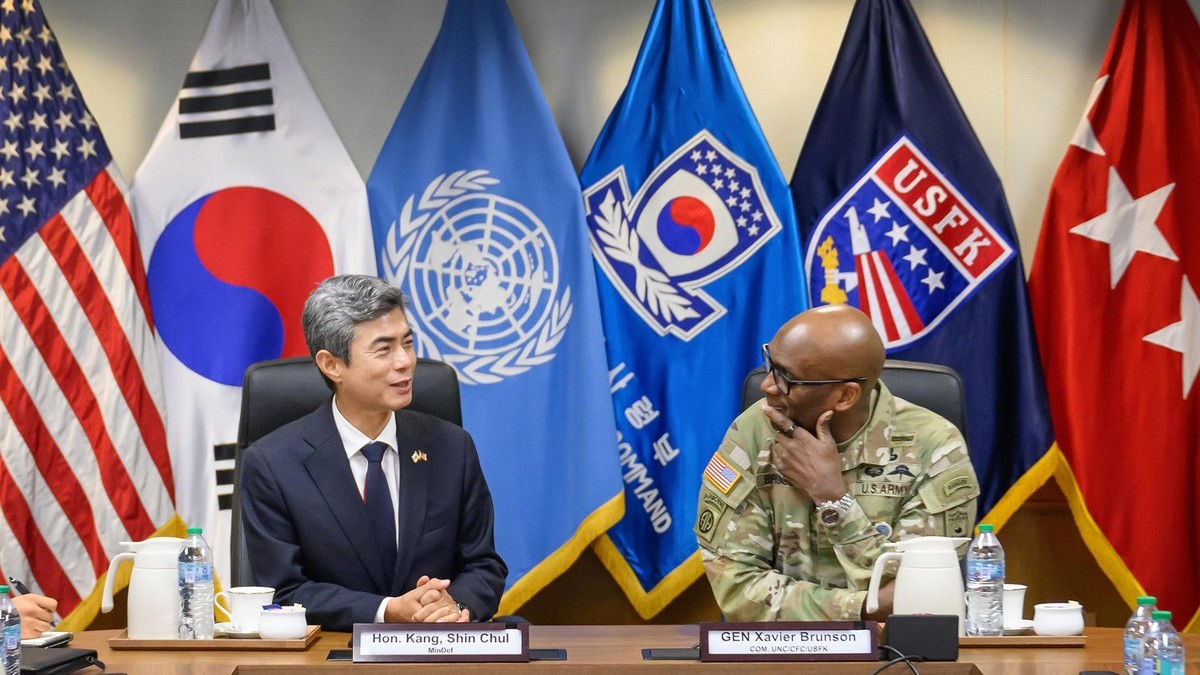
Defence Minister Kang Shin-chul has pledged appropriate and corresponding measures, saying the military had a range of options and would implement them in stages. He visited Camp Humphreys on Friday, his first visit since taking office, and discussed the incident with US Forces Korea commander Gen. Xavier Brunson, who also leads the UN Command.
The opposition People Power Party accused Lee of failing to criticise Pyongyang when warranted, even as he takes a hard line on Ukraine for publicly disclosing the transfer of North Korean prisoners of war. "South Korean soldiers have been injured, and far from receiving an apology, we have been mocked by North Korea," the party said.
Tokyo's Response
Japan's Defence Ministry said at approximately 6:36 a.m. Japan time at least one ballistic missile was launched from North Korea and is estimated to have fallen into the sea outside Japan's exclusive economic zone. It put the maximum altitude at about 90 kilometres. No damage to aircraft or ships was confirmed, and Japan's coast guard warned ships to take precautions.
Prime Minister Sanae Takaichi ordered the collection and analysis of information, prompt updates and confirmation of the safety of aircraft and vessels, and an emergency response team was convened at the Crisis Management Center at the Prime Minister's Office.
Japan's government protested and condemned the launch as a violation of UN Security Council resolutions. Jiji Press reported that Tokyo lodged a strong protest, calling it a serious issue concerning the safety of Japanese citizens.
The Wider Calculus
Kim Jong Un has largely abandoned diplomacy with Washington and Seoul since his nuclear talks with US President Donald Trump collapsed in 2019, and has made Moscow the focus of his foreign policy, sending thousands of troops and large quantities of weapons to support President Vladimir Putin's war in Ukraine.
Trump scaled back a major US-South Korea military exercise in August in an apparent effort to restart diplomacy. North Korea has rebuffed the outreach, saying Washington must first abandon its "hostile policy" and drop denuclearisation as a precondition for talks. Lee has cast Trump as a peacemaker and himself as a pacemaker who would create conditions for US-North Korea dialogue and widen it to include Seoul.
Trump's overtures have raised concern in Seoul that it could be sidelined, with the North backed by Russia as well as China. Separately, Trump pressed Seoul on Friday over a $54 billion gas project in Alaska, two days after announcing South Korean participation that Seoul says was never finalised.
What Comes Next
Analysts read the launch as an answer to Seoul's outreach rather than a new crisis. "Seoul called for easing tensions, but Pyongyang answered by escalating them," Yang Moo-jin, former president of the University of North Korean Studies in Seoul, told AFP.
Cheong Seong-chang, vice-president at the Sejong Institute in Seoul, said the test might be an attempt to draw a response to Kim Yo-jong's statement, and that the North may also have tested a new type of missile.
The launch fits a pattern. Recent North Korean displays have included a test at Wonsan on 20 September of what state media described as a hypersonic missile system, live-fire exercises and the commissioning of a new warship, the Associated Press reported. North Korea opened 2026 with a hypersonic test in January in which it also claimed targets about 1,000 kilometres away. On 12 August it fired from Wonsan again, and Japan measured that flight at about 690 kilometres.
By Jessica Ali, Staff Writer
This article was produced with AI-assisted research and editorial support. Sources: Reuters, Associated Press, Agence France-Presse, Yonhap News Agency, NK News, The Korea Times, The Guardian, Deutsche Welle, Jiji Press and Japan's Ministry of Defense.
What's Your Reaction?
 Like
0
Like
0
 Dislike
0
Dislike
0
 Love
0
Love
0
 Funny
0
Funny
0
 Wow
0
Wow
0
 Sad
0
Sad
0
 Angry
0
Angry
0

Editor-in-Chief at Global1.News. Atlanta-based journalist who cuts through the BS and tells it like it is. Lead anchor, host, and the voice you hear when the spin stops and the truth starts.














Comments (0)