
In Taiwan, a Disaster Exercise Prepares for Conflict, Too
In September 2026, Taiwan’s annual “921” disaster preparedness exercise—named for the September 21, 1999, Chi‑Chi earthquake—reached a new level of operational complexity, deliberately intertwining natural‑hazard response with contingency planning for armed conflict.
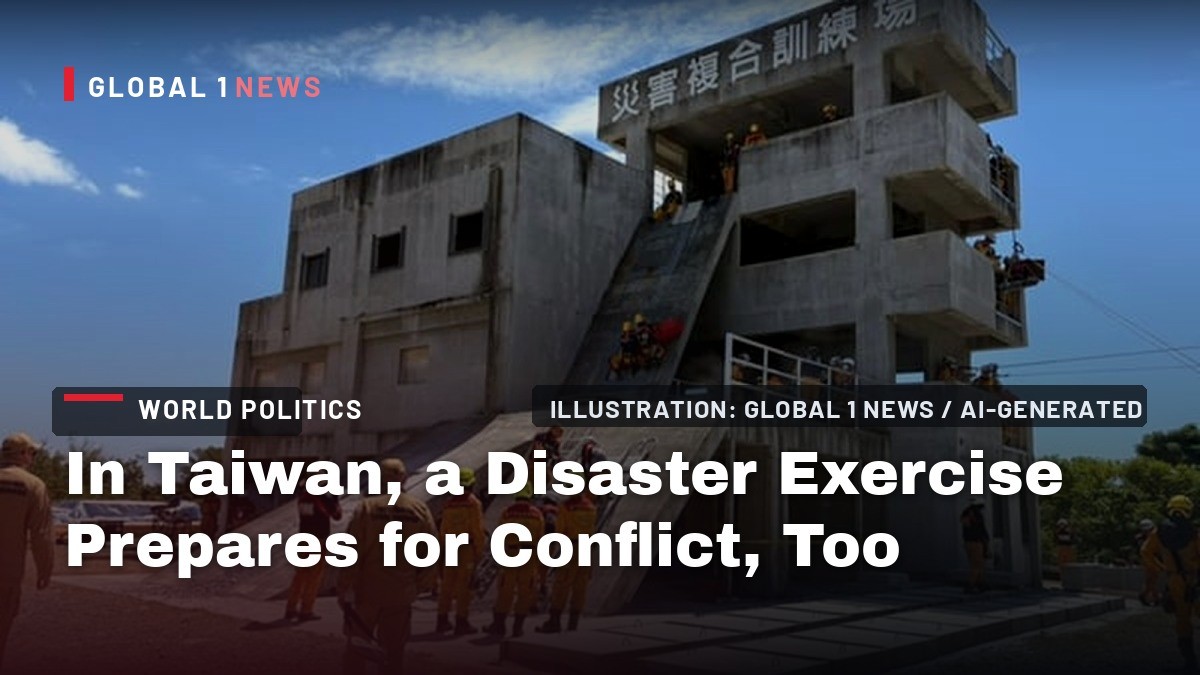
In September 2026, Taiwan’s annual “921” disaster preparedness exercise—named for the September 21, 1999, Chi‑Chi earthquake—reached a new level of operational complexity, deliberately intertwining natural‑hazard response with contingency planning for armed conflict. The drill, staged in Taitung, a coastal town four hours by train from Taipei, simulated a magnitude‑7.3 earthquake while embedding wartime injects, thereby testing the island’s capacity to manage cascading, multisystem failures under the simultaneous pressure of civilian, military and international actors. This evolution reflects a broader strategic shift in Taipei’s civil‑defence doctrine, one that scholars of Korean security studies recognize as analogous to South Korea’s own integration of disaster management and defence readiness in the wake of the 2020‑2022 pandemic‑era reforms.
From Commemoration to Comprehensive Crisis Simulation
Since its inception in 2018, the “921” exercise has commemorated the devastating 1999 quake, yet each iteration has expanded in scale and sophistication. The 2026 scenario projected damage to 43 bridges and nearly 1,800 buildings, generating 63 casualties—a baseline that allowed responders to stress‑test coordination across sectors. Unlike earlier, photo‑ready displays, this year’s drill emphasized unscripted, full‑scale operations modeled on U.S. disaster‑response curricula, integrating civil officials, military field medical units, private‑sector logistics and non‑governmental organisations into a unified command structure.
The inclusion of wartime injects—such as the simulated rescue of a downed foreign fighter pilot and its subsequent medevac to a multinational field hospital—signals a deliberate blurring of the line between humanitarian assistance and defence contingency. Observers note that this mirrors the Korean Peninsula’s own “dual‑use” approach, where the Ministry of National Defense and the Ministry of the Interior jointly develop HADR corridors to ensure resilience against both natural and security shocks.
International Participation and Knowledge Exchange
One of the most striking features of the 2026 exercise was the breadth of international involvement. Approximately 180 participants from abroad, including Turkish, German, Japanese, Philippine, Finnish and American teams, arrived with equipment and integrated into a simulated Unified Command Center. Japanese Disaster Medical Assistance Teams coordinated with six Taiwanese DMATs overseen by the Ministry of Health and Welfare, while American and Taiwanese medical units conducted joint field‑care simulations.
In addition, 100 international observers toured the exercise sites, gaining firsthand insight into how a civilian‑supported response could function under conflict conditions. Such exposure is valuable for nations like Finland, which are revising their civil‑defence frameworks in response to a volatile neighbour, and for Taiwan’s own regional allies who share exposure to seismic and typhoon risks. The diplomatic dimension of this exchange underscores the growing role of disaster drills as platforms for soft power and security cooperation—a dynamic also evident in Korea’s participation in ASEAN‑plus‑Three disaster‑risk reduction forums.
Testing the Humanitarian Assistance and Disaster Response Corridor
Taiwan’s Ministry of the Interior used the exercise to trial a humanitarian assistance and disaster response (HADR) corridor, embedding regional partners directly into its civil‑resilience planning. Participants practiced salvaging trapped vehicles from flood‑ridden riverbeds and delivering field medical treatment alongside Japanese, Philippine and Turkish teams. The corridor concept aligns with the broader East Asian emphasis on multilateral HADR mechanisms, as seen in the Korea‑Japan‑US trilateral disaster‑relief drills conducted under the auspices of the Korea Institute for International Economic Policy (KIEP).
The corridor testing also served a strategic purpose: by rehearsing joint operations with potential allies, Taiwan signals its willingness to act as a regional hub for disaster relief, thereby strengthening its diplomatic leverage amid persistent cross‑strait tensions. The exercise’s timing—following a series of Chinese drills along Yilan and Taitung coastlines—reinforces the perception that Taiwan’s HADR readiness is calibrated against both natural hazards and the prospect of aggressive actions by the People’s Republic of China.
Integration of Civil Society and the Private Sector
Beyond governmental and military actors, the 2026 drill incorporated private‑sector resources and NGOs, reflecting a whole‑of‑society approach. Fire departments and search‑and‑rescue units from seven Taiwanese cities and counties mobilised southward, while the national mobile alert system broadcast emergency notifications to every handset on the island. This comprehensive outreach demonstrates the maturation of Taiwan’s civil‑defence infrastructure, reminiscent of South Korea’s “All‑Hazard” emergency alert platform, which integrates ministries, telecom operators and local governments.
The private sector’s role extended to logistical support, with companies providing shelter kits, medical supplies and communications equipment. By embedding these actors within the command hierarchy, Taiwan tests the elasticity of its supply chains—a critical factor when considering the potential for supply‑chain disruptions in a conflict scenario, an issue that Korean policymakers have highlighted in recent KDI analyses of strategic resilience.
Operational Lessons from the Field
Field observations during the drill highlighted several operational insights. First, the 24/7 continuous operation, including an overnight phase, revealed the stamina demands on responders and the necessity of robust shift‑rotation protocols. Second, the simulated medevac of a foreign pilot illustrated the interoperability challenges of air‑to‑sea coordination, as a stretcher was lowered onto a Coast Guard vessel off the coast—a scenario that could mirror a real‑world rescue of a downed aircraft in contested waters.
Third, the exercise exposed the importance of real‑time communications. Mobile units powered a livestream of the rescue, underscoring the value of resilient, decentralized communication networks that can survive infrastructure damage. Such capabilities are central to Korea’s “smart city” disaster‑response pilots, which rely on mesh networks to maintain connectivity when conventional towers are compromised.
Geopolitical Context and Strategic Implications
The 2026 “921” drill must be understood within the broader geopolitical environment of the Taiwan Strait. China’s ongoing drills along Yilan and Taitung coastlines, noted in the source material, provide a backdrop of heightened military pressure. By rehearsing HADR corridors that incorporate regional partners, Taiwan not only bolsters its disaster resilience but also constructs a deterrent narrative: any aggression would have to contend with a coordinated, multinational response framework.
President Lai Ching‑te’s closing remarks, emphasizing Taiwan’s readiness to assist neighbours, reinforce this narrative. The articulation of a “regional assistance” posture resonates with Seoul’s “strategic depth” doctrine, which seeks to expand security cooperation beyond the peninsula through capacity‑building and humanitarian outreach. In both cases, disaster diplomacy serves as a conduit for broader security engagement.
Future Trajectories for Taiwan’s Disaster‑Defense Integration
Looking ahead, the trajectory of Taiwan’s disaster‑defence integration suggests several avenues for development. Continued scaling of the “921” exercise, with rotating host jurisdictions, will deepen local familiarity with unified command structures and ensure that peripheral regions like Taitung retain operational relevance. Moreover, expanding the roster of international participants—particularly from nations sharing similar seismic risk profiles such as Japan and the United States—will enhance the exchange of best practices and potentially foster joint procurement of interoperable equipment.
Finally, the incorporation of wartime injects is likely to become a permanent fixture, reflecting an acknowledgment that natural disasters and security crises are increasingly interlinked. As scholars of Korean security have observed, the blurring of civilian and military domains necessitates a doctrinal evolution that treats disaster response as a component of national defence. Taiwan’s 2026 exercise exemplifies this paradigm shift, positioning the island not only as a resilient society but also as a proactive actor in the regional security architecture.
This article was produced with AI-assisted research and editorial support. Reporting is based on the source material cited below. Sources: The Diplomat; thediplomat.com; Global1.News (27 September 2026).
By Prof. David Park, Staff Writer
What's Your Reaction?
 Like
0
Like
0
 Dislike
0
Dislike
0
 Love
0
Love
0
 Funny
0
Funny
0
 Wow
0
Wow
0
 Sad
0
Sad
0
 Angry
0
Angry
0

East Asia/Technology Correspondent at Global1.News. Seoul-based voice covering Korean politics, technology, business, and culture. Analyzes how technology and geopolitics intersect across East Asia.














Comments (0)