
Rubio Distances from Netanyahu's Plan to Seize 70% of Gaza
In the Middle East Eye video report titled "Rubio fails to comment on IDF seizing 70% of Gaza," analysts examine how Israeli Prime Minister Benjamin Netanyahu directed the Israel Defense Forces on May 28, 2026, to prepare operations that would place approximately 70 percent of the Gaza Strip under direct military control, a move that goes well beyond any prior ceasefire arrange
In the Middle East Eye video report titled "Rubio fails to comment on IDF seizing 70% of Gaza," analysts examine how Israeli Prime Minister Benjamin Netanyahu directed the Israel Defense Forces on May 28, 2026, to prepare operations that would place approximately 70 percent of the Gaza Strip under direct military control, a move that goes well beyond any prior ceasefire arrangements.
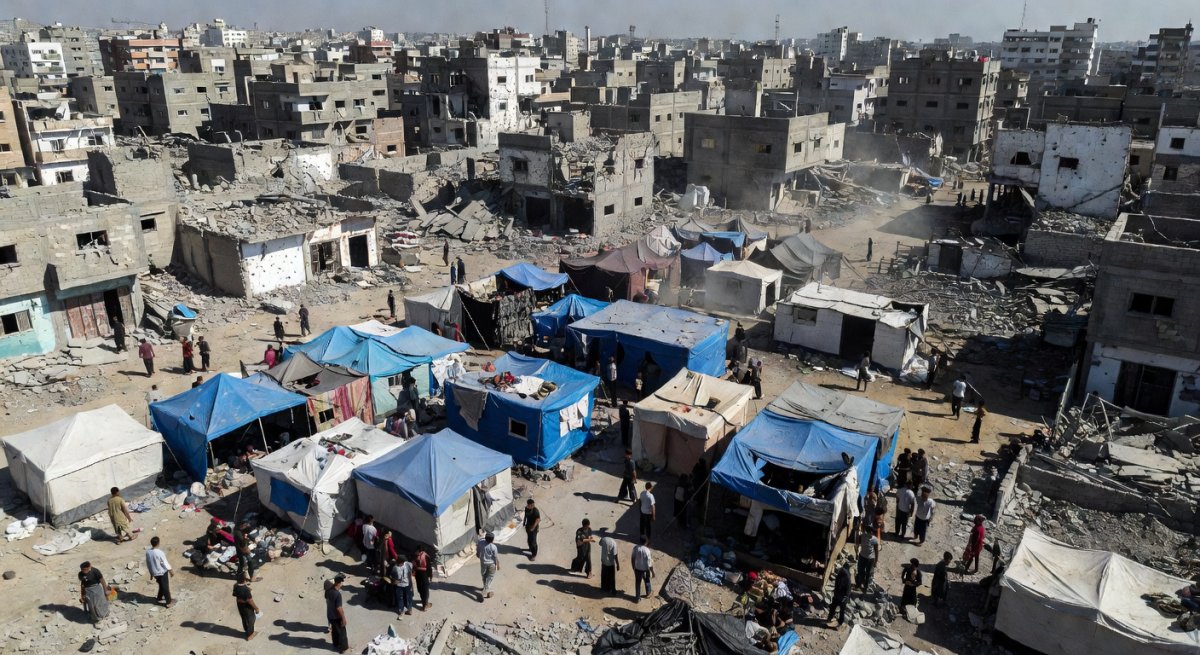
The Netanyahu order details and what 70% seizure means geographically for Gaza
Prime Minister Benjamin Netanyahu issued the directive to IDF Chief of Staff Lt. Gen. Herzi Halevi on May 28, 2026, instructing forces to secure and administer territory stretching from the northern border near Beit Hanoun through central areas including parts of Gaza City and extending southward toward Deir al-Balah. The order targets roughly 70 percent of Gaza’s 365 square kilometers, leaving only a narrow coastal strip in the south and limited enclaves near Rafah outside the planned seizure zone. This geographic scope would place the majority of agricultural land in the north and central governorates, along with key water infrastructure such as the Sheikh Radwan reservoir and multiple desalination plants, under Israeli military administration. Netanyahu’s stated rationale centered on creating expanded buffer zones to prevent future attacks, yet the scale described in military planning documents obtained by regional observers far exceeds the limited security perimeters discussed in earlier ceasefire talks.
Hamas reaction and implications for the ceasefire
On May 29, 2026, Hamas spokesperson Abu Obeida issued a statement condemning the order as a “blatant violation” of the existing ceasefire framework reached in late 2025. The group warned that implementation would nullify remaining hostage-release provisions and halt any further coordination on humanitarian corridors. Hamas officials in Doha reiterated that the movement would treat any advance into the designated 70 percent zone as a resumption of hostilities. The statement also referenced specific clauses in the ceasefire text that limited Israeli operations to areas already under dispute-resolution mechanisms, clauses that the May 28 directive appears to override. Palestinian factions in the West Bank, including Palestinian Islamic Jihad, echoed the condemnation, raising the prospect of coordinated actions across multiple fronts if the order proceeds.
Rubio Congressional testimony - what he said and did not say
Between June 2 and June 4, 2026, U.S. Secretary of State Marco Rubio appeared before the Senate Foreign Relations Committee and the House Foreign Affairs Committee. In prepared remarks and answers to questions, Rubio emphasized that any territorial changes in Gaza must align with broader regional stability goals but stopped short of endorsing or rejecting the specific 70 percent seizure plan. When pressed by Sen. Chris Van Hollen on whether the administration supported the IDF order, Rubio replied that the United States continued to review operational details while underscoring the need for de-escalation. He notably avoided direct commentary on the map circulated by Israeli defense officials that outlined the expanded control zones. Committee members from both parties noted the absence of any explicit distancing language regarding the plan’s compatibility with prior U.S. positions.
Contradiction with Trump plan for Gaza
The Israeli order stands in clear tension with the framework advanced by the Trump administration for post-conflict Gaza governance. That framework, outlined in early 2025 briefings, envisioned a limited international stabilization presence focused on reconstruction rather than permanent territorial reallocation. Rubio’s testimony avoided reconciling the 70 percent seizure with this vision, instead repeating general support for “long-term security arrangements.” Palestinian officials and regional diplomats have pointed out that the scale of the proposed Israeli control zone would preclude the establishment of any unified administrative body envisioned under the Trump plan, effectively fragmenting the Strip into zones of differing control. The discrepancy has prompted questions in Congress about whether the administration intends to adjust its Gaza policy or maintain the earlier reconstruction blueprint.
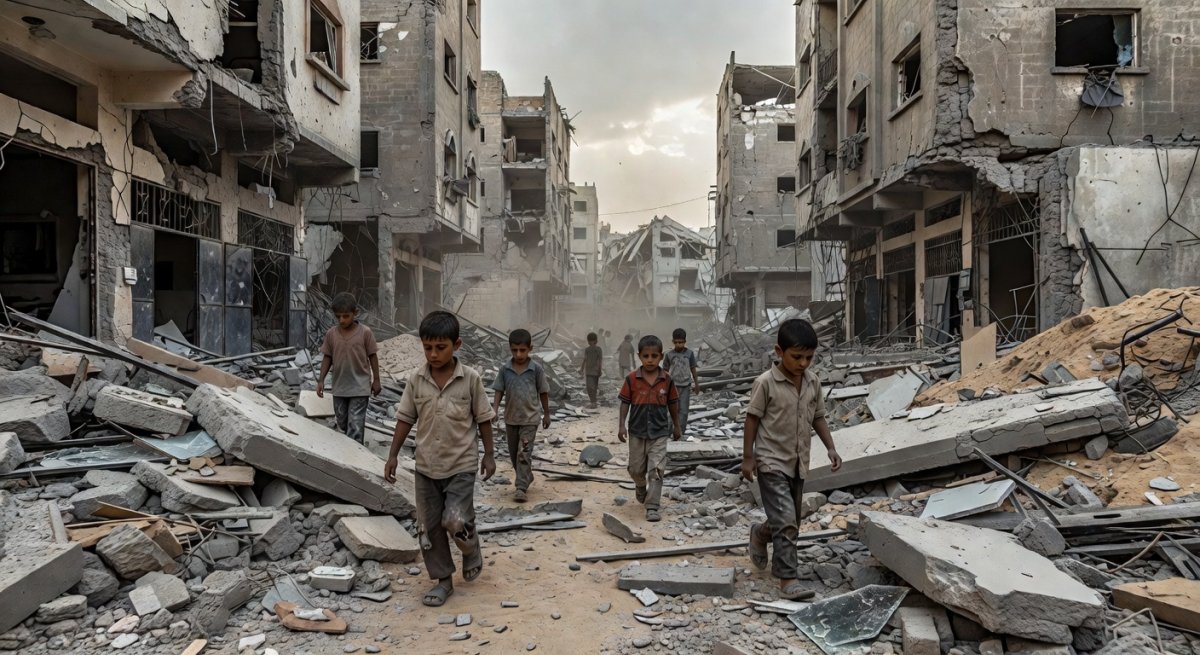
Human impact on 2.3 million Palestinians - displacement, hunger, medical crisis
Implementation of the order would directly affect the daily lives of Gaza’s 2.3 million residents, most of whom already live in conditions of severe humanitarian strain. An estimated 1.4 million people currently reside in the northern and central areas targeted for seizure; many would face renewed displacement orders requiring movement into the remaining southern corridor near Khan Younis and Rafah. Existing displacement camps in those southern areas, already housing over 800,000 people, lack sufficient water, sanitation, and shelter capacity. Medical facilities such as Al-Shifa Hospital and the European Gaza Hospital, both located within the proposed seizure zone, would fall under military oversight, complicating access for patients requiring ongoing treatment for chronic conditions and war-related injuries. Food distribution points managed by UN agencies would also require renegotiation of access, raising the risk of further deterioration in nutrition levels already classified as critical by humanitarian monitors.
International law and UN positions on territorial seizure
Legal experts at the United Nations have noted that the proposed seizure would conflict with longstanding prohibitions on the acquisition of territory by force under the UN Charter. On June 1, 2026, the UN Special Coordinator for the Middle East Peace Process, Tor Wennesland, issued a statement recalling that any changes to the status of Gaza must result from negotiated agreements rather than unilateral military action. The International Committee of the Red Cross has similarly reminded parties that occupation law imposes strict limits on administrative changes and requires the occupying power to ensure civilian welfare. While enforcement mechanisms remain limited, these positions establish a clear record that the May 28 order would place Israel in violation of multiple international legal standards governing territorial control.
Regional reactions - Egypt, Jordan, Qatar, Saudi Arabia
Egyptian officials in Cairo expressed concern that expanded Israeli control could trigger new waves of displacement toward the Sinai border, a scenario Egyptian security services have long sought to avoid. Jordan’s Foreign Ministry issued a statement on June 3 emphasizing that unilateral territorial changes undermine prospects for a comprehensive regional settlement. In Doha, Qatari mediators who facilitated earlier ceasefire talks described the order as a setback to ongoing diplomatic efforts. Saudi Arabia, through its foreign ministry spokesperson, reiterated that normalization discussions with Israel remain contingent on meaningful progress toward Palestinian statehood, a condition that large-scale seizure would further complicate. These coordinated regional responses indicate growing diplomatic isolation for the Israeli position.
What this means for Palestinians - shrinking territory, fading hope for statehood
For Palestinians living in Gaza, the May 28 order represents another contraction of already limited space in which to build a viable future. The seizure of 70 percent of the territory would leave a fragmented remainder insufficient for the agricultural base, housing stock, or infrastructure required to support the current population. Families who have endured repeated cycles of displacement since 2023 now confront the possibility that return to ancestral areas in the north and center will be permanently foreclosed. The policy also reinforces a pattern in which incremental territorial control replaces negotiated political horizons, leaving younger generations with diminishing prospects for an independent state alongside the West Bank and East Jerusalem. Palestinian civil society organizations have documented how such measures deepen economic isolation and psychological strain, turning daily survival into the primary focus rather than long-term national aspirations.
By Fatima Al-Rashid, Staff Writer
This article was produced with AI-assisted research and editorial support. Reporting is based on sources cited in the article.
What's Your Reaction?
 Like
0
Like
0
 Dislike
0
Dislike
0
 Love
0
Love
0
 Funny
0
Funny
0
 Wow
0
Wow
0
 Sad
0
Sad
0
 Angry
0
Angry
0

World Politics Analyst at Global1.News. Based in Beijing, covering US-China relations, global trade, and geopolitical strategy. Brings deep analytical perspective to the power dynamics shaping international affairs.











Comments (0)