
YouTube promises custom feeds and a lot more AI later this year
Google’s YouTube just rolled out the next wave of its Made on YouTube showcase, and the announcements signal a decisive pivot toward AI‑driven personalization while still sprinkling in a handful of long‑awaited user‑experience tweaks.
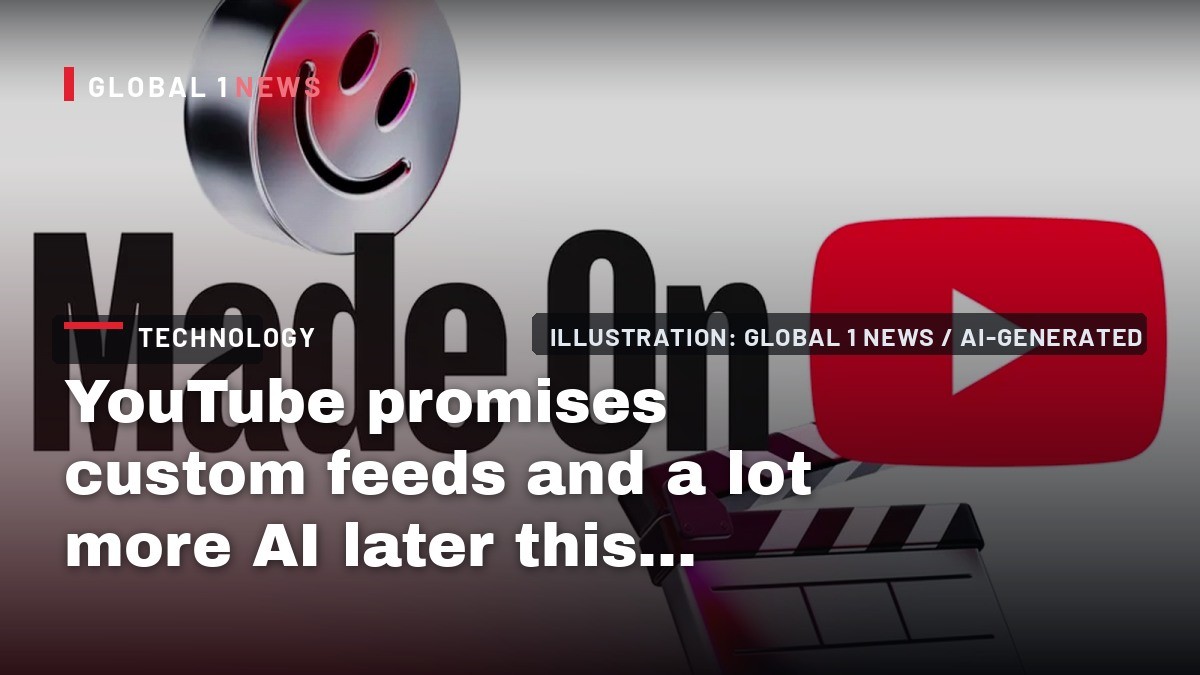
Google’s YouTube just rolled out the next wave of its Made on YouTube showcase, and the announcements signal a decisive pivot toward AI‑driven personalization while still sprinkling in a handful of long‑awaited user‑experience tweaks. From custom‑curated feeds to AI‑powered editing suites, the platform is laying out a roadmap that could reshape how we discover, interact with, and even produce video content. As we head into the final quarter of 2026, the stakes are high: YouTube’s dominance hinges on keeping its algorithmic feed fresh enough to stave off competition from TikTok‑style short‑form services while also giving creators the tools they need to stay profitable. Below, I break down the most consequential updates, what they mean for everyday viewers, and how creators can leverage the new AI arsenal.
Custom Feeds: Giving Users a Hand on the Home Page
The most visible change coming to YouTube’s home page is the introduction of “Custom Feeds.” Instead of the one‑size‑fits‑all algorithmic scroll, users will soon be able to add new tabs populated with content they specify. The workflow is simple: type a description, let YouTube’s AI generate a lineup, then fine‑tune the results by rating suggestions. Google says users will be able to save “multiple” feeds, though it stops short of naming a hard limit.
This rollout will begin in the United States and will be available across web, mobile, and TV interfaces. By letting viewers curate their own mini‑channels, YouTube hopes to address long‑standing complaints that the default feed feels too opaque and overly driven by watch‑time optimization. The move also mirrors a broader industry trend toward user‑controlled recommendation surfaces, a tactic that could improve satisfaction without sacrificing ad impressions.
New Interaction Tools: GIFs and Group Chats
Beyond discovery, YouTube is finally responding to a basic social request: the ability to post GIFs in comment sections. The updated comment box will let users search for popular animated thumbnails and drop them into both standard videos and Shorts. While this may seem trivial, it adds a richer expressive layer that has been standard on other platforms for years.
Direct messaging on YouTube is also getting a boost with group chat support. The feature will launch initially in the United States, United Kingdom, Singapore, Brazil, and select European markets. By expanding the messaging ecosystem, YouTube is positioning itself as a more holistic community hub, potentially increasing time spent on the platform and creating new avenues for creators to engage fans directly.
Ask YouTube Gets Smarter: Conversational AI for Viewers
The Ask YouTube tool, already familiar to many as a voice‑oriented search assistant, is set for a major upgrade. The AI will now take a conversational role in product review videos, allowing users to type or speak commands to retrieve deeper product details. In search contexts, Ask YouTube will be able to surface organized video recommendations and even generate product comparison tables.
These enhancements aim to make YouTube a more immediate answer engine, especially for shopping‑related queries. By surfacing structured data within the video ecosystem, Google hopes to keep users from drifting to dedicated e‑commerce sites, thereby preserving ad revenue and reinforcing the platform’s role as a one‑stop shop for information.
Ask Music and Podcast Lineup: AI in the Audio Space
Audio experiences on YouTube are also getting a facelift. Ask Music, the AI assistant inside the YouTube Music app, will move to a prime location at the top of the interface, replacing the former search bar. The assistant can now create or edit playlists, provide artist bios, and surface suggestions while users are building mixes.
In addition, YouTube plans to launch an AI‑generated “Your Podcast Lineup” feature. This weekly spoken preview will recommend podcasts through YouTube Music, but only for subscribers, with rollout slated for later this year. By bundling AI‑curated audio recommendations with its video core, YouTube is nudging users deeper into its ecosystem, blurring the line between video and audio consumption.
Creator AI Toolbox: Gemini‑Powered Editing and Ask Studio
For creators, the most substantial upgrades revolve around AI‑assisted production. YouTube’s new Gemini‑based conversational editing feature, embedded in the YouTube Create app, will let creators splice together multiple video versions using natural language prompts. After generating these variants, an expanded A/B testing framework will permit up to three versions to run concurrently, helping creators pinpoint the most engaging edit.
Complementing this is Ask Studio, a background analysis tool that offers recommendations on pacing, framing, and thumbnail design. It can even generate thumbnails automatically using AI. By surfacing data‑driven suggestions, Ask Studio aims to boost video performance without requiring creators to hire external consultants or invest in expensive analytics suites.
Live Collaboration and Competition: Shared Streams and Live Showdown
YouTube is also experimenting with live‑stream formats that encourage cross‑creator collaboration. Earlier this year, the platform introduced a feature allowing two creators to share a single livestream. Early next year, YouTube will extend this with “live matchmaking,” automatically pairing streamers who may not know each other.
The paired streams will feed into a new “Live Showdown” experience, where participants compete on a live leaderboard for the most chats, gifts, and Super Chats. While the competition incentivizes higher viewer spending, it also raises questions about the fairness of rewarding monetary output over content quality. Nonetheless, the feature could drive higher engagement metrics, a key KPI for advertisers and the platform alike.
Live Autodubbing: Breaking Language Barriers
Finally, YouTube is tackling the language barrier that has long limited global reach. The company reports that roughly 40 percent of live watch time comes from viewers outside a creator’s home country. To capitalize on this, YouTube will roll out live autodubbing early next year, enabling real‑time translation of livestreams into viewers’ preferred languages.
While technical details remain sparse, Google’s recent release of an improved Gemini translation model suggests that autodubbing will leverage this underlying technology. If executed well, real‑time translation could dramatically expand creators’ international audiences, turning regional channels into global ones without the need for manual subtitles or separate language streams.
This article was produced with AI-assisted research and editorial support. Reporting is based on the source material cited below. Sources: Ars Technica; arstechnica.com; Global1.News (24 September 2026).
By Jessica Ali, Staff Writer
What's Your Reaction?
 Like
0
Like
0
 Dislike
0
Dislike
0
 Love
0
Love
0
 Funny
0
Funny
0
 Wow
0
Wow
0
 Sad
0
Sad
0
 Angry
0
Angry
0

Editor-in-Chief at Global1.News. Atlanta-based journalist who cuts through the BS and tells it like it is. Lead anchor, host, and the voice you hear when the spin stops and the truth starts.












Comments (0)