
Iran’s Long War Calculus: Tehran Digs In as the Hormuz Standoff Enters a Dangerous New Phase
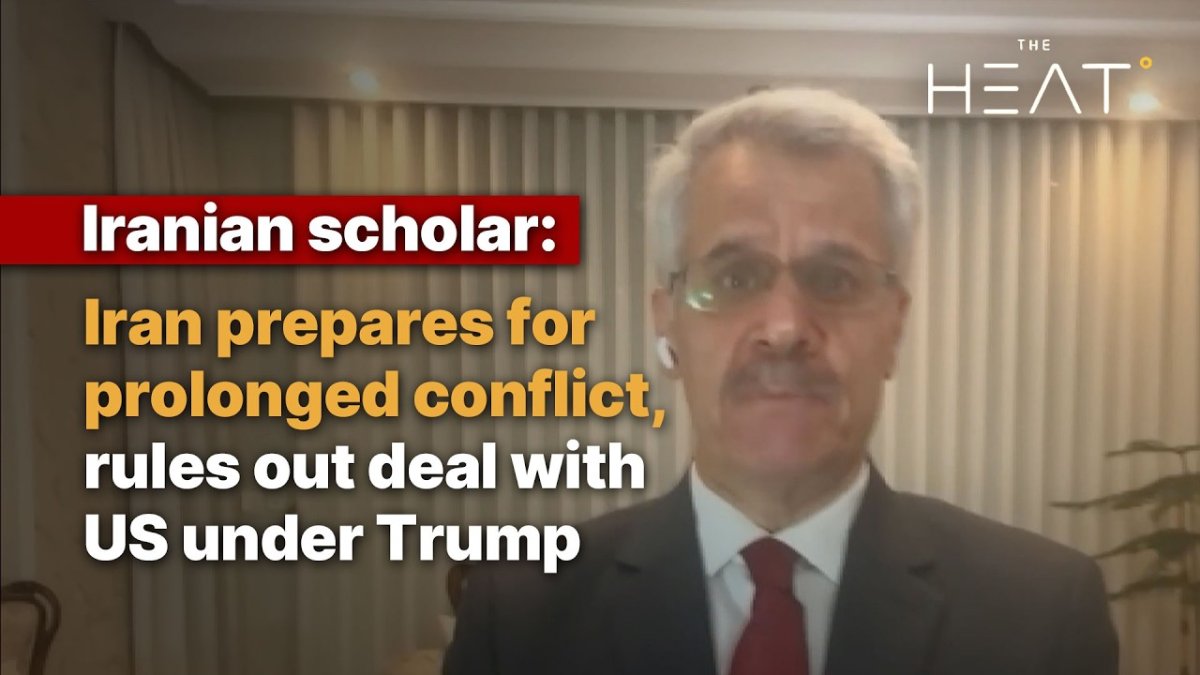
In a recent CGTN report, an Iranian scholar offered a stark assessment of the Islamic Republic’s strategic posture: Tehran is preparing for a prolonged conflict and sees no basis for a deal with the Trump administration. The interview, aired as the US-Iran memorandum of understanding (MoU) expired, captures a moment of profound escalation.
In a recent CGTN report, an Iranian scholar offered a stark assessment of the Islamic Republic’s strategic posture: Tehran is preparing for a prolonged conflict and sees no basis for a deal with the Trump administration. The interview, aired as the US-Iran memorandum of understanding (MoU) expired, captures a moment of profound escalation. With the Pakistan-brokered ceasefire now dead and Washington declaring the Strait of Hormuz “new US territory,” the confrontation has become a high-stakes test of economic endurance and geopolitical resolve. For observers in Beijing and across the Global South, the coming weeks will determine the fate of the Gulf and the viability of a post-American order in West Asia.
The MoU’s Collapse and the Rhetoric of No Return
The diplomatic interlude that began on June 17, 2026 — when Trump and Iranian President Masoud Pezeshkian signed a Pakistan-brokered memorandum of understanding remotely — has formally ended. The MoU, which created a temporary ceasefire and a partial lifting of the naval blockade in late June and early July, expired on Monday, August 17. Trump’s rejection of an extension was blunt: he called on Tehran to hold up the “white flag of surrender” and insisted he was in no rush to end the war. The following day, he escalated further on Truth Social, declaring the Strait of Hormuz “new US territory” and stating there were “no talks or conversations going on, or scheduled” with Iran.
The Trump administration’s position, echoed by Treasury Secretary Scott Bessent on August 13, is that Washington is preparing measures against Iran “never been seen in the history of economic isolation on a country.” OFAC reported in May that Washington had sanctioned more than 1,000 Iran-related persons, vessels, and aircraft since February 2025. The new wave, US media report, could target independent Chinese refineries — the so-called “teapots” — that process Iranian crude, and potentially designate larger Chinese banks that touch Iran-linked funds.
For Tehran, the calculus is equally clear: the scholar’s CGTN interview reflects a consensus within the hardline establishment that capitulation is not an option. The Wall Street Journal reported on August 17, citing Arab intelligence officials, that Iran’s leadership — dominated since March 2026 by IRGC Commander Major General Ahmad Vahidi — is preparing the armed forces to “widen the war” and “raise costs” for the United States and its allies. The New York Times reported on August 1 that senior IRGC Quds Force officers held calls with Hezbollah, Houthi, and Iraqi militia commanders during the ceasefire to coordinate efforts to expand the conflict.
The Hormuz Gambit: A Choke Point as a Weapon
The Strait of Hormuz, which carried roughly one-fifth of global oil and natural gas before the war, has become the central theatre of this confrontation. Iran’s parliament speaker and top negotiator, Mohammad Bagher Ghalibaf, says the strait will remain closed until Washington implements MoU commitments: lifting the blockade, releasing frozen assets, lifting oil sanctions, and ending threats and military operations on all fronts. The position is grounded in a strategic logic that the Institute for the Study of War (ISW-CTP) assesses as a preference for continued or even escalated fighting rather than serious concessions.
The UAE’s detection of two ballistic missiles launched from Iran on August 18 — the first such detection since a May 4 strike — underscores that the ceasefire is a distant memory. For Washington, the strait is a lever to strangle Iran’s economy; for Tehran, it is a shield and a sword. By threatening to close the waterway permanently, Iran aims to raise the global cost of the war until Washington reconsiders. Declaring Hormuz “US territory” is a provocative legal fiction that invites escalation without offering Washington a clear exit ramp.
Economists cited by Al Jazeera, including Mohammad Reza Farzanegan of Philipps-Universitat Marburg and Mahdi Ghodsi of the Vienna Institute for International Economic Studies, warn that a prolonged blockade into autumn and winter risks severe shortages for Iran’s roughly 90 million people. Fuel imports have stopped, petrol quotas have been reduced, and imports are being rerouted via land borders with Pakistan and Turkiye and via the Caspian Sea with Russia and Central Asia. The Pezeshkian administration has named stabilizing markets, protecting livelihoods and strengthening national resilience as priorities for the next two years — a tacit admission that the war economy is now the central challenge.
China’s Strategic Dilemma: Energy Security and Sanctions Exposure
For China, this conflict is not a distant spectacle but a direct challenge to energy security and foreign policy doctrine. Before the war, Hormuz was a critical artery for Chinese crude imports and Iran a major supplier. The blockade has forced Beijing to diversify, but rerouting oil via land borders and the Caspian Sea is a costly substitute. More concerning is the threat of secondary sanctions on Chinese refineries and banks: targeting “teapots” and potentially larger financial institutions would directly assault China’s commercial interests and its policy of non-interference.
Beijing’s response has been characteristically cautious. The Ministry of Foreign Affairs (MFA) has consistently called for de-escalation and a return to diplomacy, but it has not publicly challenged Washington’s sanctions regime. China benefits from a multipolar order in which Iran is not crushed, yet it cannot appear as a spoiler in a conflict that could destabilize global energy markets. The National Development and Reform Commission (NDRC) is likely weighing continued Iranian crude purchases against the risk of financial isolation. The 14th Five-Year Plan’s emphasis on energy diversification and strategic reserves is being tested in real time.
The CGTN interview reminds us that Tehran views China as a potential counterweight to US pressure, but that Iran’s hardliners are not counting on external rescue. For Tehran, a deal with an administration that has repeatedly reneged on commitments is seen as a trap. The Axios report from August 17 — that the US attempted a diplomatic backchannel with Vahidi in May and that he said he “fully” supported Iran’s negotiating delegation, preferring “to solve this crisis through negotiations” — complicates the picture: even hardliners are not opposed to talks, but only on terms that preserve Iran’s sovereignty and economic lifelines.
The Gulf States and the Global South: Caught in the Crossfire
The Gulf states are walking a tightrope: Abu Dhabi’s air defences detected the Iranian missiles, yet it has also advocated de-escalation. Oman, which has attempted to mediate Hormuz talks, now faces Trump’s threat of bombing — a stunning escalation that reveals Washington’s willingness to punish even nominal allies for engaging with Tehran. This is a gift to Beijing’s narrative that the United States is an unreliable partner. For the Global South, the conflict starkly illustrates the costs of dollar hegemony and US-led sanctions regimes. The BRICS bloc, which includes Iran, faces a credibility test: can it offer economic alternatives to a member under siege?
Russia has provided some support via the Caspian route, but Moscow is preoccupied with its own war in Ukraine, and China’s role is constrained by dependence on the global financial system. Iran is being pushed toward a war economy that resembles North Korea’s — isolated, resilient, and dangerous. The ISW-CTP assessment that Iran prefers escalation over concessions is a warning that the conflict could expand beyond the Gulf. The Quds Force’s coordination with regional militias suggests a strategy of asymmetric warfare designed to bleed US and Israeli resources across multiple fronts.
What Comes Next: The Autumn of Reckoning
The expiry of the MoU removed the last fig leaf of diplomacy; Trump’s declaration that there are “no talks or conversations going on, or scheduled” is a de facto admission that Washington has chosen maximum pressure with no clear endgame. For Iran, the strategy is to outlast Washington’s political will: Tehran believes time is on its side. US election-cycle politics, domestic opposition to endless wars, and the global fallout of a Hormuz closure are factors Iran hopes will force Washington to blink.
The risks are immense: a prolonged blockade into autumn and winter could trigger a humanitarian crisis, with severe shortages of fuel and food. The government’s emphasis on “national resilience” acknowledges that social cohesion will be tested. The Pezeshkian administration, which came to power on a platform of reform and engagement, is now presiding over a war economy; its legitimacy will depend on whether it can shield ordinary Iranians from the worst of the sanctions.
For China, the immediate priority is to protect commercial interests without being drawn in: the MFA’s calls for restraint are likely to continue while Beijing explores alternative payment mechanisms and barter arrangements to circumvent US sanctions. The longer the conflict lasts, the more it will accelerate the de-dollarization trends that Beijing and Moscow have championed. Hormuz, once a symbol of global energy interdependence, is now a crucible for a new geopolitical order. Whether that order is shaped by Washington’s coercive power or by the resilience of the Global South remains an open question. What is certain is that the war is far from over, and the costs are only beginning to mount.
By Prof. Marcus Chen, Staff Writer
This article was produced with AI-assisted research and editorial support. Reporting is based on sources cited in the article.
What's Your Reaction?
 Like
0
Like
0
 Dislike
0
Dislike
0
 Love
0
Love
0
 Funny
0
Funny
0
 Wow
0
Wow
0
 Sad
0
Sad
0
 Angry
0
Angry
0

World Politics Analyst at Global1.News. Based in Beijing, covering US-China relations, global trade, and geopolitical strategy. Brings deep analytical perspective to the power dynamics shaping international affairs.










Comments (0)