
Oman pledges to safeguard Strait of Hormuz navigation, urges Iran-US settlement
At the 81st United Nations General Assembly, Omani Foreign Minister Badr Albusaidi pledged his country’s continued protection of navigation through the Strait of Hormuz, while urging the United States and Iran to settle their escalating dispute through a durable political agreement.
At the 81st United Nations General Assembly, Omani Foreign Minister Badr Albusaidi pledged his country’s continued protection of navigation through the Strait of Hormuz, while urging the United States and Iran to settle their escalating dispute through a durable political agreement. His remarks came against a backdrop of heightened tension after a series of U.S.–Israeli strikes on Iran earlier this year, which have disrupted shipping, threatened regional security and shaken confidence in the international system. For a people whose livelihoods depend on the free flow of goods and energy, the stakes are starkly human.
Oman’s historic role as a neutral guardian
Oman has long positioned itself as a neutral actor capable of bridging divides in the Gulf. Albusaidi emphasized that Muscat’s commitment to safeguarding navigation aligns with international law, specifically the United Nations Convention on the Law of the Sea (UNCLOS). By invoking this legal framework, Oman signals that its actions are not merely diplomatic gestures but obligations grounded in globally recognised maritime norms.
In practice, Omani patrol vessels have been a visible presence in the strait, ensuring that merchant ships can transit safely despite the heightened risk of confrontation. The minister’s call for all parties to cooperate with Muscat reflects a desire to formalise this cooperation, inviting both Iran and the United States to work within a legal‑based mechanism rather than through unilateral force.
The human cost of disrupted shipping
The conflict that erupted earlier this year with U.S.–Israeli strikes on Iran has reverberated far beyond the battlefield. Albusaidi warned that the disruption of shipping through the Strait of Hormuz has affected energy security, prices and confidence in the international system. For ordinary families across the Middle East, rising energy costs translate into higher household bills, reduced access to electricity and, ultimately, a strain on daily life.
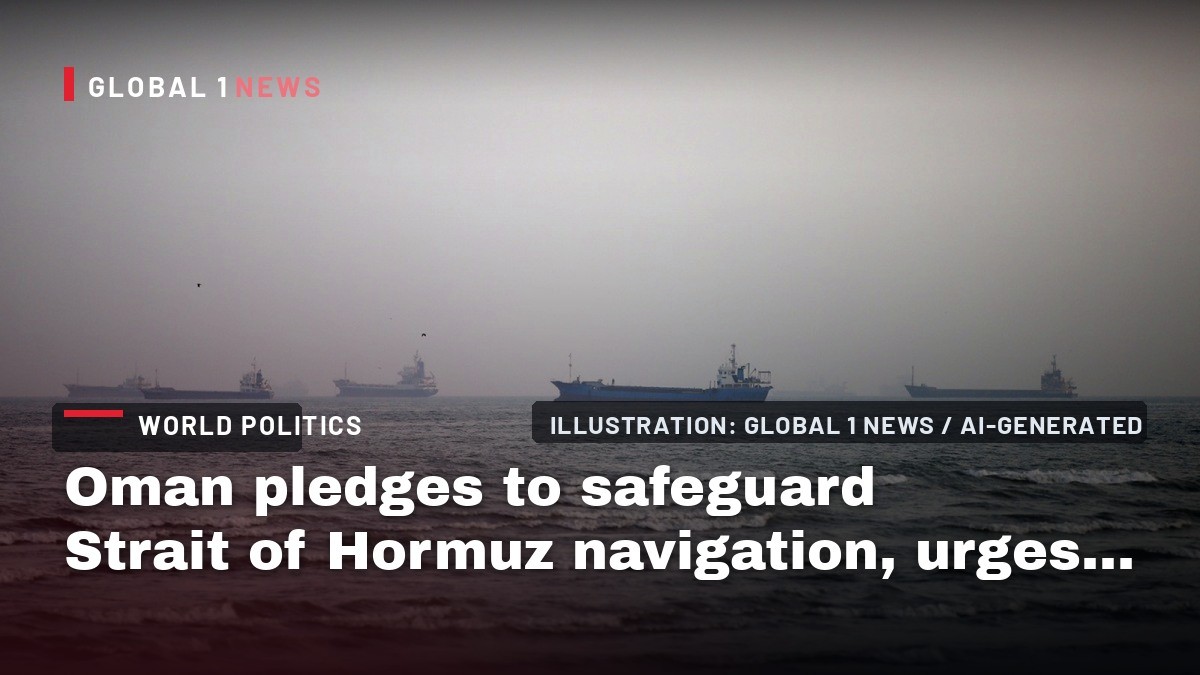
Merchants and seafarers have also felt the impact directly. Photographs from September 10, 2026 show numerous merchant vessels anchored in Bandar Abbas, Iran, waiting for clearance to move. These ships, many belonging to Iranian owners but also to other nations, sit idle while crews endure prolonged periods at sea, facing uncertainty about cargo delivery and wages. The human toll of such delays is often invisible in headline statistics, yet it compounds the economic hardships already felt by communities across the region.
International law as a shield for vulnerable peoples
By anchoring Oman's pledge in UNCLOS, Albusaidi underscores the importance of legal safeguards for those who rely on the strait. International law obliges coastal states to ensure the safety of navigation while respecting the rights of all users. When a chokepoint like Hormuz is threatened, the legal framework becomes a shield for both commercial interests and the human lives that depend on timely deliveries of food, medicine and fuel.
The minister’s appeal to “respect the interests of countries that depend on it” is a reminder that the strait serves a global community. Any disruption reverberates through supply chains that reach as far as Europe and Asia, affecting the price of gasoline at a pump in London or the cost of wheat in Nairobi. By invoking international law, Oman is calling for a collective responsibility that transcends bilateral rivalries.
Calls for a political settlement
Albusaidi’s speech went beyond maritime security to press for a broader political resolution. He urged both Tehran and Washington to pursue a lasting political settlement that could “provide a lasting way out of the crisis.” The emphasis on a political, rather than military, solution reflects a recognition that the underlying grievances—ranging from sanctions to regional power dynamics—cannot be resolved through force alone.
In urging a political understanding, Oman positions itself as a facilitator, inviting both sides to cooperate with Muscat. This approach mirrors Oman's historical role in mediating regional disputes, from the Iran‑Iraq war to recent talks on Yemen. By framing the settlement as a pathway to stability, Albusaidi links diplomatic progress directly to the safety of ordinary citizens who suffer when conflict interrupts trade routes.
Solidarity with neighboring states
Albusaidi also expressed solidarity with neighboring countries that have taken measures to protect their security, sovereignty and territorial integrity. This broader regional appeal highlights that the Hormuz crisis is not an isolated incident but part of a larger tapestry of insecurity that includes threats to borders, airspace and maritime routes.
The minister’s remarks serve as a reminder that any escalation in the strait could trigger a cascade of security measures across the Gulf, potentially leading to further restrictions on movement, heightened militarisation and a climate of fear for civilians living near contested frontiers. By affirming support for regional partners, Oman seeks to foster a united front that can collectively resist attempts to weaponise the strait.
The Yemeni dimension
In addition to the Hormuz issue, Albusaidi reiterated Oman's support for a political settlement in Yemen that preserves the country’s unity, stability and territorial integrity. The minister called on all parties to work toward an agreement that safeguards Yemen’s sovereignty and its relations with neighbouring states. This linkage underscores how interconnected the Gulf’s security challenges are: instability in Yemen can spill over into maritime security, as rebel groups and illicit actors exploit porous coastlines.
For Yemen’s war‑torn population, a stable Hormuz corridor could mean more reliable access to humanitarian aid delivered by sea. Conversely, continued conflict threatens to divert attention and resources away from the urgent needs of Yemeni civilians, who already endure food insecurity and displacement. By tying the two issues together, Oman highlights the broader humanitarian imperative that underpins any diplomatic effort.
Looking ahead: the path to lasting security
Albusaidi’s appeal to the United Nations, to Iran, to the United States and to regional neighbours reflects a multifaceted strategy aimed at preventing the Strait of Hormuz from becoming a flashpoint for wider war. His call for cooperation with Muscat suggests that Oman is prepared to act as a conduit for dialogue, offering its diplomatic channels and naval presence as a stabilising force.
For the people whose lives are intertwined with the flow of oil, gas and goods through this narrow waterway, the promise of Omani protection offers a measure of reassurance. Yet the ultimate guarantee of safety rests on the willingness of the United States and Iran to move beyond retaliation and engage in a genuine political settlement. Until that happens, the strait will remain a chokepoint where international law, humanitarian need and geopolitical rivalry intersect, and where the human cost of each delayed vessel continues to mount.
This article was produced with AI-assisted research and editorial support. Reporting is based on the source material cited below. Sources: Middle East Monitor; middleeastmonitor.com; Global1.News (27 September 2026).
By Fatima Al-Rashid, Staff Writer
What's Your Reaction?
 Like
0
Like
0
 Dislike
0
Dislike
0
 Love
0
Love
0
 Funny
0
Funny
0
 Wow
0
Wow
0
 Sad
0
Sad
0
 Angry
0
Angry
0

Gulf/MENA Correspondent at Global1.News. Based in Doha, covering Gulf politics, energy markets, diplomacy, and development across the Middle East and North Africa. Tracks the economic transformation of the Gulf states.














Comments (0)