
Mad cow disease discovered on UK farm, government announces
A single case of classical bovine spongiform encephalopathy — commonly known as mad cow disease — has been confirmed on a farm in Dumfries and Galloway, prompting immediate movement controls and a full epidemiological investigation by UK authorities.
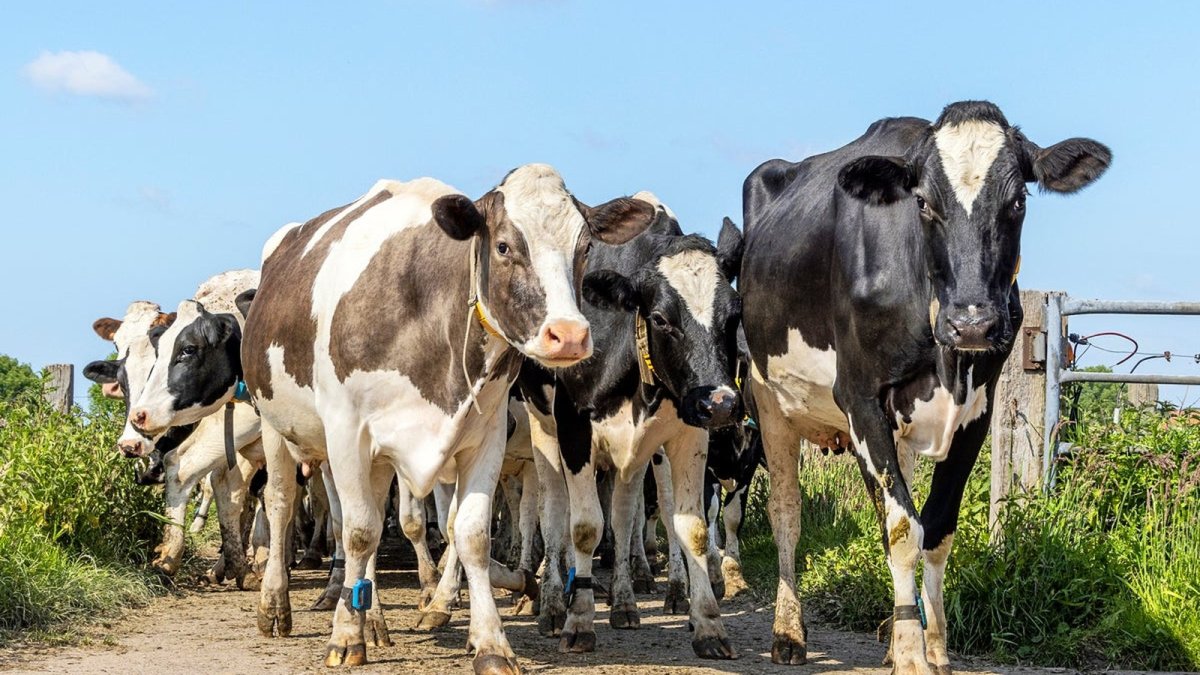
A single case of classical bovine spongiform encephalopathy — commonly known as mad cow disease — has been confirmed on a farm in Dumfries and Galloway, prompting immediate movement controls and a full epidemiological investigation by UK authorities.
Government confirms isolated case in southwest Scotland
The Scottish Government announced the discovery on Wednesday afternoon, stating that the affected animal was identified through routine surveillance and stringent control measures already in place across the nation's livestock sector. The case was detected in a cow over four years of age, which died on the farm and was subsequently tested as part of Scotland's mandatory BSE monitoring programme.
Officials were quick to stress that the animal did not enter the human food chain. Food Standards Scotland has confirmed there is no risk to human health as a result of the case, and precautionary movement controls have been imposed on the affected cow's offspring and its "cohort" — the term used for animals that were raised alongside it on the same property.
Minister praises swift action and farmer's diligence
Scotland's agriculture minister, Jim Fairlie, moved to reassure the public and the farming community alike, describing the response as "swift and decisive" in protecting the agriculture sector. In a statement released this afternoon, Fairlie said: "The fact we identified this isolated case so quickly is clear proof that our surveillance system for detecting this type of disease is working effectively."
He also singled out the animal's owner for particular praise, adding: "Their swift action allowed us to identify and isolate the case immediately, minimising its impact on the wider industry." The owners of the affected animals are now working with authorities on next steps, which will include the destruction of the cow's cohorts and offspring in line with legal requirements.
Classical BSE: a disease with a dark history
This is a classical BSE case, a form of the disease that is linked to contaminated feed and which wrought devastation on British agriculture during the 1980s and 1990s. At the peak of the crisis, more than 180,000 cattle were infected in the UK, and the eventual link to variant Creutzfeldt-Jakob disease (vCJD) in humans led to the deaths of 178 people in Britain. The discovery will inevitably evoke uncomfortable memories of that era, though officials are at pains to point out that the surveillance and control systems in place today are vastly more robust than those of three decades ago.
The Animal and Plant Health Agency (APHA) has launched an investigation into the source of the disease. While classical BSE is not directly transmitted from animal to animal, the agency is tracing the cow's history, including its feed sources and any movements between farms, to establish how the infection occurred.
Scotland's surveillance system under the spotlight
Scotland operates one of the most rigorous BSE monitoring programmes in the world. Under the current system, all animals over four years of age that die on farms are routinely tested for the disease. This approach is designed to catch cases that might otherwise go undetected, providing an early warning system for the industry.
The Dumfries and Galloway case is the first classical BSE finding in Scotland since 2018, when a case was confirmed on a farm in Aberdeenshire. That incident, too, was contained without any impact on the human food chain. The Scottish Government's chief veterinary officer has been briefed, and the National Farmers' Union Scotland has been notified of the development.
Atypical case in Essex last year offers context
This latest discovery follows a separate incident in May of last year, when a single case of atypical BSE was confirmed on a farm in Essex. That case was uncovered after the animal displayed symptoms, was humanely culled, and tested positive for the disease. Atypical BSE is a naturally occurring and non-contagious brain disease that arises spontaneously, but rarely, in cattle. It is distinct from classical BSE, which is linked to contaminated feed and is the form that caused the 1990s epidemic.
The distinction matters. Classical BSE is the variant that prompted the European Union-wide ban on British beef exports in 1996, a measure that remained in place for a decade and cost the UK economy an estimated £4 billion. Atypical cases, by contrast, are generally considered to pose a much lower risk and are not associated with the same feed-borne transmission pathways.
Trade implications and the farming community's response
While the Scottish Government has moved to reassure the public, the farming community will be watching closely for any impact on beef exports. The UK's post-Brexit trade agreements with the European Union and other markets include strict veterinary certification requirements, and any confirmed BSE case can trigger temporary restrictions on animal product exports.
However, officials note that the rapid identification and containment of this case should minimise disruption. The movement controls currently in place are limited to the affected farm and its traced contacts, rather than a wider regional or national ban. The APHA investigation is expected to conclude in the coming weeks, and the Scottish Government has indicated it will publish its findings.
For consumers, the message from Food Standards Scotland is unequivocal: there is no risk to human health. The animal did not enter the food chain, and the robust surveillance system that detected this case is precisely the mechanism designed to ensure such incidents are caught early and contained effectively.
A reminder of vigilance in a changed industry
The confirmation of this case serves as a stark reminder that, despite the passage of decades and the implementation of stringent controls, BSE has not been entirely eradicated. The disease remains a notifiable condition, and the surveillance regime that caught this case is a testament to the lessons learned from the darkest chapter in British agricultural history.
For the farmers of Dumfries and Galloway, a region renowned for its dairy and beef production, the coming weeks will bring uncertainty. But the swift and transparent response from the Scottish Government, combined with the cooperation of the animal's owner, suggests that the systems put in place after the 1990s crisis are functioning exactly as intended.
The investigation into the source of this case will now determine whether any wider action is required. For now, the priority is containment, traceability, and maintaining the confidence of both domestic consumers and international trading partners.
This article was produced with AI-assisted research and editorial support. Sources: The Independent, Scottish Government, Food Standards Scotland, GOV.UK.
By Erica Thornton, Staff Writer
What's Your Reaction?
 Like
0
Like
0
 Dislike
0
Dislike
0
 Love
0
Love
0
 Funny
0
Funny
0
 Wow
0
Wow
0
 Sad
0
Sad
0
 Angry
0
Angry
0

US Politics and Policy Correspondent at Global1.News. Based in Washington DC, covering American politics, policy, elections, and the courts. Knows how the system works and tells you what it actually means.














Comments (0)