
Two mass shootings in South Africa leave 27 dead
South Africa was rocked by two coordinated mass shootings within hours of each other, leaving twenty‑seven dead and dozens more wounded. Seventeen people were killed and fifteen more injured in the assault, which also saw two vehicles set ablaze before the assailants fled the scene.
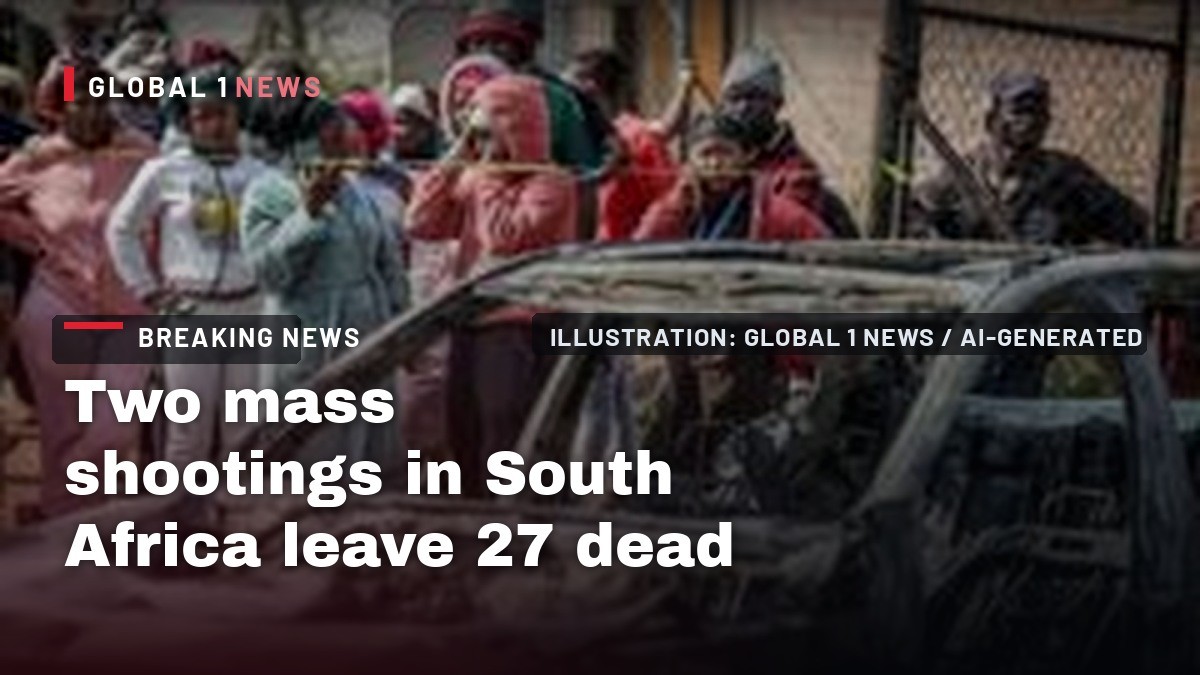
South Africa was rocked by two coordinated mass shootings within hours of each other, leaving twenty‑seven dead and dozens more wounded. The attacks, one in a bar near Johannesburg and the other outside an entertainment venue in a Cape Town township, have intensified public anxiety over a surge in gang‑linked gun violence that has already made the country one of the world’s most lethal in terms of homicide. While police have yet to name suspects or confirm motives, the incidents underscore a pattern of criminality that President Cyril Ramaphosa has repeatedly warned threatens the nation’s democracy, society and economic future.
The Johannesburg Bar Attack: A Night of Terror
On Saturday evening, eight gunmen stormed a bar on the outskirts of Johannesburg, opening fire on patrons outside before moving inside the premises. Seventeen people were killed and fifteen more injured in the assault, which also saw two vehicles set ablaze before the assailants fled the scene. Gauteng Police Commissioner Lt Gen Tommy Mthombeni noted that among those caught up in the carnage were individuals from Ethiopia and Lesotho, although the majority of victims were South African.
The police commissioner suggested that robbery may have driven the attack, as personal belongings were taken from the victims. However, he did not rule out the possibility of turf wars involving illegal mining groups, a sector that has increasingly become a flashpoint for violent confrontations. The incident adds to a string of recent attacks in the Gauteng province, where law‑enforcement agencies have struggled to contain a wave of armed robberies and gang clashes.
The Cape Town Township Shooting: Violence Spreads South
In the early hours of Sunday, a separate massacre unfolded just outside an entertainment venue in a township near Cape Town. Ten people lost their lives at the scene, with a further five dying later in hospital, bringing the death toll there to fifteen. Eleven others were injured. The attack, described by authorities as a mass shooting, occurred in a community already grappling with high levels of crime and limited policing resources.
Deputy provincial police commissioner Maj Gen Fred Kekana hinted that the Cape Town shooting might be retaliation for a prior incident a month earlier, which left one person dead and another wounded. He claimed that police possessed clear photographs and, in some cases, names of the suspects, though no arrests had been made by Sunday morning. The lack of immediate accountability fuels fear that such violence could become a recurring feature of the region’s criminal landscape.
Contextualising the Spike in Gun Violence
South Africa’s murder rate has long been among the highest globally, with an estimated sixty murders recorded each day across its population of sixty‑two million. The recent spate of mass shootings, however, signals a possible deepening of the crisis. Analysts link much of the violence to turf wars between gangs involved in drug trafficking and illegal mining—an industry that, while lucrative, operates outside the law and often resorts to firearms to protect its interests.
The country’s illegal weapons market further compounds the problem. Firearms are readily available on the streets, enabling criminal groups to execute coordinated attacks with alarming efficiency. The Johannesburg and Cape Town incidents illustrate how easily armed gangs can mobilise, overwhelm local security forces, and inflict mass casualties in public spaces.
Government Response: Military Deployment and Political Rhetoric
President Cyril Ramaphosa has repeatedly framed organised crime as “the most immediate threat to our democracy, our society and our economic development.” In February, he publicly condemned the rise of criminal networks, calling for decisive action. Earlier this year, the South African National Defence Force was deployed alongside police in areas with the highest murder rates, an unprecedented move that underscores the severity of the security challenge.
While the military presence aims to deter violent crime, its effectiveness remains contested. Critics argue that short‑term security deployments do not address the root causes of gang proliferation, such as poverty, unemployment, and the allure of illegal mining. Nonetheless, the government’s willingness to involve the armed forces reflects a growing sense of urgency as mass shootings become more frequent.
Community Impact and the Human Cost
The human toll of the recent attacks extends beyond the death toll. Families are left mourning loved ones, while survivors grapple with physical injuries and psychological trauma. In Johannesburg, the bar’s patrons were ordinary citizens enjoying an evening out, now forever marked by the memory of gunfire. In the Cape Town township, the entertainment venue—normally a place of communal gathering—has become a site of grief and fear.
Local leaders and civil society groups have called for stronger community policing and social interventions to stem the tide of violence. Yet, with limited resources and a backlog of unsolved crimes, trust in law enforcement remains fragile. The discovery of a tenth woman’s body in Ekurhuleni, east of Johannesburg, further compounds the sense of insecurity, as police have not ruled out a serial killer operating in the area.
Looking Ahead: Challenges and Prospects for Reform
Addressing South Africa’s gun violence will require a multi‑pronged strategy that balances immediate security measures with long‑term socio‑economic reforms. Strengthening intelligence gathering, improving forensic capabilities, and ensuring swift prosecution of gun crimes are essential steps to restore public confidence. At the same time, tackling the illegal mining economy—by offering legitimate employment alternatives and regulating mineral extraction—could reduce one of the key drivers of armed gang rivalry.
International partners have expressed concern and offered assistance, but any sustainable solution must be rooted in South African realities. The government’s commitment to curbing organised crime, as voiced by President Ramaphosa, will be tested in the months ahead as authorities confront the dual challenge of dismantling entrenched criminal networks while rebuilding the social fabric torn by relentless violence.
Conclusion: A Nation at a Crossroads
The twin mass shootings in Johannesburg and Cape Town are stark reminders that South Africa stands at a crossroads. The loss of twenty‑seven lives in a single weekend has shocked the nation and highlighted the urgent need for decisive action. While the police continue to investigate and seek arrests, the broader fight against gang‑related gun violence demands coordinated efforts across security, justice, and development sectors.
For South Africans, the path forward will be defined by how swiftly and effectively the state can protect its citizens, restore safety to public spaces, and address the underlying conditions that fuel criminal enterprises. The coming months will reveal whether the current crisis becomes a catalyst for lasting reform or a tragic prelude to further bloodshed.
This article was produced with AI-assisted research and editorial support. Reporting is based on the source material cited below. Sources: BBC News Africa; bbc.co.uk; Global1.News (27 September 2026).
By Amara Diop, Staff Writer
What's Your Reaction?
 Like
0
Like
0
 Dislike
0
Dislike
0
 Love
0
Love
0
 Funny
0
Funny
0
 Wow
0
Wow
0
 Sad
0
Sad
0
 Angry
0
Angry
0

West Africa/Sahel Correspondent at Global1.News. Dakar-based journalist covering politics, security, climate, and development across Francophone and Anglophone West Africa. Tells the stories of a region undergoing profound transformation.











Comments (0)