
Ekniti Maps 12-Year Fiscal Roadmap to Lift Thailand Into High-Income Ranks
Thailand's Deputy Prime Minister and Finance Minister Ekniti Nitithanprapas has laid out an ambitious blueprint to transform the kingdom into a high-income nation within 12 years, urging a return to the infrastructure-first strategy that propelled the country out of agrarian poverty in the 1980s.
Thailand's Deputy Prime Minister and Finance Minister Ekniti Nitithanprapas has laid out an ambitious blueprint to transform the kingdom into a high-income nation within 12 years, urging a return to the infrastructure-first strategy that propelled the country out of agrarian poverty in the 1980s. Speaking at the 80th Anniversary Bangkok Post Forum in the heart of Bangkok, Mr Ekniti warned that Thailand has been "coasting on past success" and must now confront the twin challenges of geopolitical rivalry and an accelerating energy transition. For Thai readers who have watched their country navigate decades of economic ups and downs, the message was clear: the next era demands coordinated action from the private sector, the government and the cabinet — or the middle-income trap will tighten its grip.
Deputy PM Maps Out 12-Year Plan to Lift Thailand Into High-Income Ranks
Bangkok, Thailand – 16 August 2026 — Deputy Prime Minister and Finance Minister Ekniti Nitithanprapas delivered a sweeping keynote address titled "Vision Thailand: Fiscal Strategy for the Future Economy" on Friday at the 80th Anniversary Bangkok Post Forum, held at the Bangkok Convention Centre on the 22nd floor of Centara Grand at CentralWorld. The event, streamed live on Facebook and TikTok, marked eight decades of Thai journalism and brought together leaders from government, business and academia under the theme "Vision Thailand — The Next Era Begins."
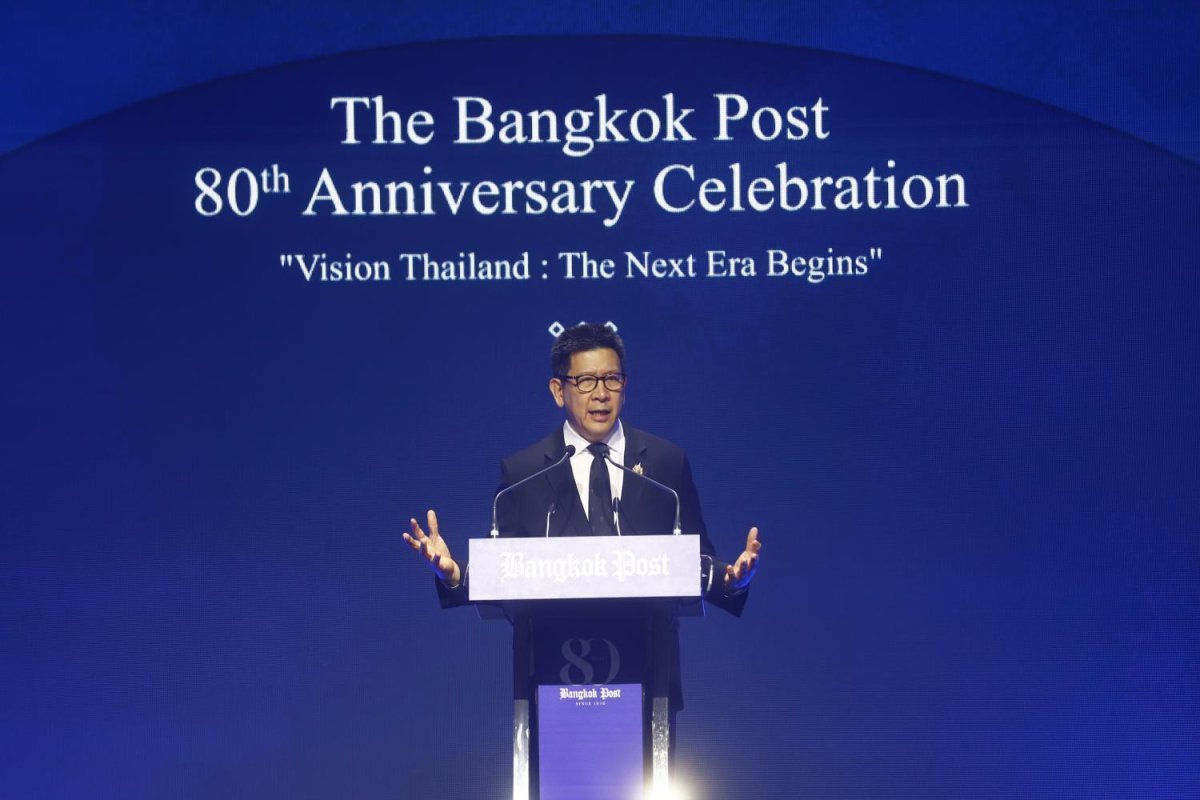
A Return to the 1980s Playbook
Mr Ekniti opened his address by drawing a direct parallel between the current geopolitical climate and the 1980s, a decade that reshaped Thailand's economic destiny. In that era, global powers pressured the Japanese yen to appreciate sharply, prompting Japanese manufacturers to relocate production bases offshore. Thailand capitalised on that shift by investing heavily in basic infrastructure — electricity generation, the Laem Chabang deep-sea port in Chonburi, petrochemical industries and an expanding highway network.
"Thanks to this basic infrastructure, Thailand was transformed from an agrarian society into an industrial one. Furthermore, it has given birth to the tourism sector, which generated additional revenue. Nevertheless, we have been coasting on past success," Mr Ekniti told the assembled audience.
The minister's historical reflection carried a pointed warning: Thailand remains trapped in the upper-middle-income bracket despite 80 years of progress from low-income status. Between the 1980s and 2000s, total investment accounted for roughly 40% of Thailand's GDP — 10% from the government and 30% from the private sector. That ratio, Mr Ekniti argued, must be revived and modernised for the challenges ahead.
Early Wins and the 530 Billion Baht Milestone
Mr Ekniti pointed to concrete results from recent policy changes, citing his economic measures and the Board of Investment's (BoI) Fast Pass programme, which streamlined regulations to unlock business potential. For the first time in a decade, private investment grew by more than 10% in the first quarter of this year, and actual investment in the first half of 2026 reached 530 billion baht — a figure the minister presented as evidence that the strategy is already gaining traction.
The "Skill Bridge" programme has trained 80,000 Thais in artificial intelligence and digital skills, positioning Thailand among the top five nations ready to ride the AI revolution, according to the World Bank. Mr Ekniti also highlighted that top global optical transfer companies — critical for high-speed AI data transmission — are now operating in Thailand, employing 30,000 people in Saraburi province and expanding into neighbouring Ayutthaya province.
These early successes, the minister argued, demonstrate that Thailand can still compete when policy and private enterprise align. But he cautioned that the window of opportunity is narrow, and the country cannot afford to repeat the complacency of recent decades.
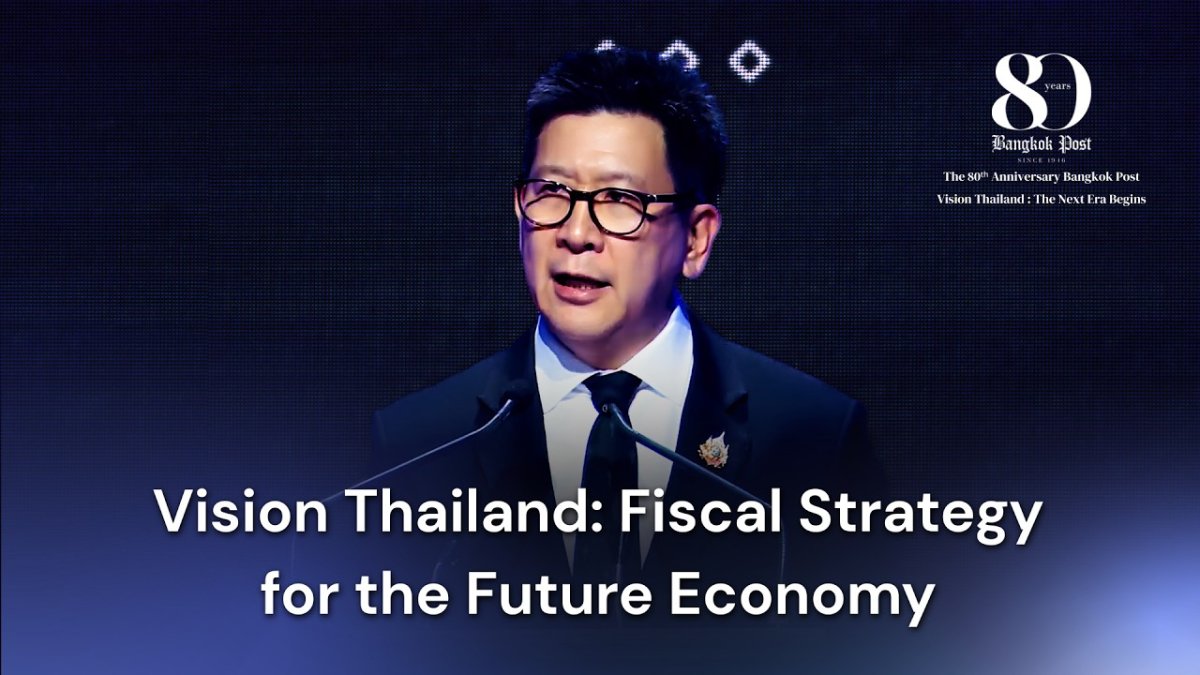
The Football Analogy: Who Plays Which Position
In a distinctly Thai framing, Mr Ekniti used a football-team analogy to explain the division of labour required for the next phase of growth. The private sector must lead as the front line in key "New S-Curve" sectors — smart agriculture, food processing, smart electronics, future mobility, and wellness and medical tourism. The government will play "midfield," facilitating the private sector and preparing for disruptions such as the energy crisis. The cabinet, meanwhile, must serve as the "back line," maintaining fiscal discipline and transparency.
"We don't know when the war in the Middle East will end, while energy plants in the region are increasingly destroyed. We urgently need an energy transition, otherwise the cycle of state remedies will repeat," Mr Ekniti warned, linking global instability directly to Thailand's domestic energy security.
The government is unlocking direct Power Purchase Agreements (PPA) and third-party access to the power grid, allowing the private sector to trade clean energy directly without relying on state funds. This move, the minister explained, is designed to accelerate the energy transition while keeping the burden off the national budget.
Fiscal Discipline as the Foundation
Thailand's fiscal position remains a cornerstone of the government's credibility, Mr Ekniti stressed. International reserves stand at US$300 billion (approximately 10.2 trillion baht), sufficient to cover 10 months of imports, while short-term foreign debt remains low. Reserves are more than double the amount of short-term debt — a buffer that gives Thailand room to manoeuvre in uncertain global markets.
The minister also revealed that Thailand is partnering with the World Bank on the Low Carbon City project, which will upgrade public facilities and establish a verified carbon credit market. This initiative aligns with the government's broader "10 Plus" framework under Prime Minister Anutin Charnvirakul, covering economic reform, OECD membership ambitions, digital transformation and the green transition.
In a moment of unusual candour, Mr Ekniti said: "This is the reason why I urge the government to broadcast when I explain the country's fiscal situation. I want the people to see our wounds and urge them to raise their ideas in solving the problem." The remark underscored his belief that transparency — even about vulnerabilities — is essential to building public trust and generating solutions from across society.
Trade and SME Inclusion: A Complementary Vision
The forum also featured Suphajee Suthumpan, Deputy Prime Minister and Minister of Commerce, who delivered a keynote titled "Vision Thailand: Driving Trade, Unlocking Sustainable Growth." Her address focused on closing the participation gap for small and medium-sized enterprises (SMEs), which form the backbone of Thailand's economy but often struggle to access the benefits of trade liberalisation and digital transformation.
Together, the two keynote addresses painted a picture of a government seeking to balance macroeconomic ambition with grassroots inclusion. For Thailand's SME sector — which employs the majority of the workforce in provinces from Chiang Mai to Ubon Ratchathani — the promise of easier access to clean energy, digital skills and trade opportunities could prove transformative.
Implications for Southeast Asia
Thailand's success or failure in this 12-year push will reverberate across the ASEAN region. As one of Southeast Asia's largest economies, Thailand serves as a bellwether for the region's ability to move beyond middle-income status. If Bangkok can execute its infrastructure and energy transition plans, it could set a template for neighbours like Vietnam, Indonesia and the Philippines, which face similar challenges in upgrading their industrial bases.
For Thai readers, the stakes are personal. The 530 billion baht in first-half investment translates into jobs, supply-chain opportunities and provincial development — from the optical transfer plants in Saraburi to the expanding industrial corridors around Ayutthaya. The Skill Bridge programme's 80,000 trained workers represent a new generation of Thai talent ready to compete in the AI-driven global economy.
Expert Perspectives and the Road Ahead
Economists and business leaders at the forum responded positively to the minister's clarity, though some noted that execution will be the true test. The 12-year timeline — reduced from the original 20-year target — signals urgency, but also raises questions about political continuity and the capacity of government agencies to deliver reforms at speed.
The energy transition component is particularly significant for Thailand's industrial provinces. With the Middle East conflict showing no signs of resolution, Thailand's reliance on imported energy remains a structural vulnerability. The move toward direct PPAs and third-party grid access could position Thailand as a regional leader in clean energy trading, attracting manufacturers who increasingly demand green power for their supply chains.
What to Watch For
Over the coming months, observers should track three key indicators: the pace of private investment growth beyond the first-half surge, the rollout of the Low Carbon City project with the World Bank, and the implementation of direct PPAs for clean energy trading. The government's ability to maintain fiscal discipline while funding infrastructure upgrades will also be closely watched by investors and rating agencies.
The 80th Bangkok Post Forum served as more than a birthday celebration for Thailand's oldest English-language newspaper. It provided a rare moment of strategic reflection — a chance for the nation's leaders to look back at eight decades of transformation and forward to the next era. Mr Ekniti's message was unambiguous: Thailand has the reserves, the talent and the infrastructure base to make the leap. What remains to be seen is whether the country can summon the collective will to finish the journey.
By Ann Srisawat, Staff Writer
This article was produced with AI-assisted research and editorial support. Reporting is based on sources cited in the article.
What's Your Reaction?
 Like
0
Like
0
 Dislike
0
Dislike
0
 Love
0
Love
0
 Funny
0
Funny
0
 Wow
0
Wow
0
 Sad
0
Sad
0
 Angry
0
Angry
0

Southeast Asia Correspondent at Global1.News. Based in Bangkok, covering Thai and Southeast Asian politics, economy, technology, and culture. Deep regional perspective on one of the world's most dynamic regions.













Comments (0)