
El Niño Forecast Threatens Amazon Rainy Season
The Brazilian meteorological agency has issued a forecast that has sent a chill through scientists, Indigenous communities, and farmers alike: an unusually powerful El Niño is expected to delay the Amazonian rainy season, raise temperatures, deplete rivers, and intensify fire risks across the biome.
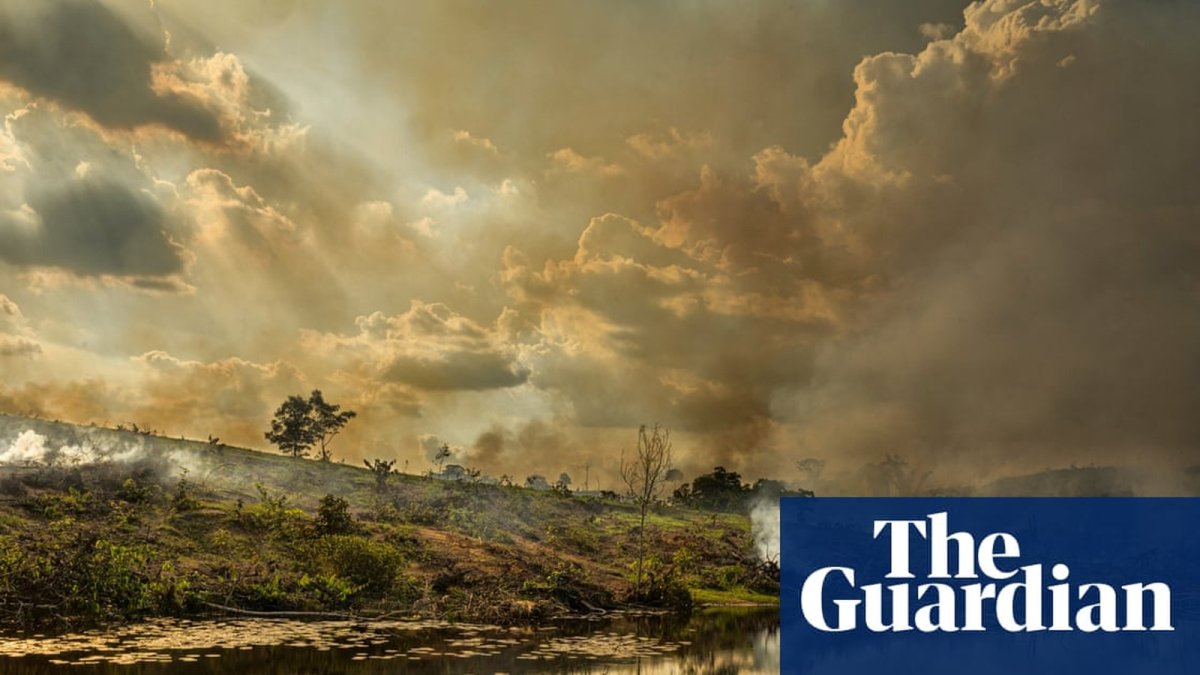
The Brazilian meteorological agency has issued a forecast that has sent a chill through scientists, Indigenous communities, and farmers alike: an unusually powerful El Niño is expected to delay the Amazonian rainy season, raise temperatures, deplete rivers, and intensify fire risks across the biome. This is not a distant, abstract climate model—it is a concrete warning for a region still reeling from the devastation of the last major El Niño in 2023-24, which left record-low river levels, unprecedented fire outbreaks, and mass die-offs of aquatic life. The forecast arrives as the Amazon struggles to recover, with a third of the forest already degraded by farming, mining, and human-caused climate disruption, making the trees and undergrowth more flammable than ever before. The combination of a natural but extremely powerful "Godzilla" El Niño on top of human-driven warming creates what experts describe as an emergency within an emergency.
Manaus, Brazil — The warning comes from Brazil's meteorological agency, which this week released a forecast projecting that the current El Niño will be among the strongest on record, potentially lasting well into the new year. The forecast predicts a delay of several weeks in the onset of the rainy season, which typically begins in October and November across the Amazon basin. For a region where rivers are the primary transportation routes, where communities depend on rainfall for drinking water and agriculture, and where the forest itself relies on moisture to survive, this delay is not a minor inconvenience—it is a matter of survival.
A Forest Built on Water Faces a Drier Future
A few decades ago, the idea of drought in the rainforest would have seemed outlandish. The Amazon is the world's largest river system by volume, and its principal tributaries—the Xingu, Negro, Tapajós, Madeira, Purus, Juruá, and Japurá—are among the planet's main sources of freshwater. The forest around them has always been famed for humidity, with giant trees that sucked up moisture and pumped it into the atmosphere, generating "flying rivers" that cooled and watered an entire continent. The trillions of trees and plants in the Amazon also draw down huge quantities of carbon dioxide, with benefits to the entire planet. Any weakening of this function adds to the risks of instability, food insecurity, and extreme weather.
But the forest's capacity to generate its own rain is being undermined. Deforestation has reduced the area of forest that can recycle moisture, and rising global temperatures are increasing evaporation rates, drying out the soil and vegetation. The result is a feedback loop: a drier forest is more susceptible to fire, and fires release carbon dioxide, which further warms the planet, which in turn dries the forest more. Scientists say the Amazon is approaching a tipping point, beyond which large parts of the biome could transition from rainforest to savanna, with catastrophic consequences for global climate stability.
The Ghost of El Niños Past
The last El Niño, in 2023-24, was itself a disaster. Rivers in the Amazon reached record-low levels, stranding boats and isolating communities. In October 2023, houses and boats were left stranded along a dried-up Negro River in Amazonas state, a scene that became emblematic of the crisis. The drought sparked unprecedented fire outbreaks, and mass deaths of dolphins and fish were reported as water temperatures rose and oxygen levels plummeted. Indigenous communities in the Xingu and Tapajós basins were left isolated, thirsty, and worried about hunger when rivers—their main transportation route—ran dry and vegetable gardens shrivelled up.
Now, with the forecast of an even stronger El Niño, the question is whether the forest and its inhabitants can withstand another blow. Prof Jos Barlow, an Amazon specialist at the Lancaster Environment Centre, said the prospect of a still stronger phenomenon was deeply worrying. "It is hard to imagine the outcome of even more severe droughts and heat," he said. The Amazon fire season has already started, but the peak is still a couple of months away, giving authorities and communities a narrow window to prepare.
Indigenous Communities on the Frontline
Indigenous communities are not waiting for government help. Across the Amazon, they are setting up their own firefighting units to cope with outbreaks in deeper parts of the forest, where state response times are measured in days, not hours. Dr Erika Berenguer, a forest expert at Oxford University and author of a book on how to deal with rainforest fires, said the situation is unprecedented. "It's crazy. The humid forest should not be burning," she said. Berenguer emphasized that a major part of the problem is multiple El Niños hitting in a relatively short space of time. "It's similar to if you are already sick and then you get an infection. That infection is going to have much greater impacts on your body because your immune system is already compromised fighting the sickness."
The government has warned that traditional lands will face increased fire risks and has stockpiled food in case of shortages. But for many Indigenous leaders, this is not enough. They point out that their communities have been protecting the forest for centuries, maintaining a stable climate through sustainable practices, yet they are the ones most exposed to the consequences of a warming planet driven by industrial activity elsewhere. During the previous El Niño, some forest communities were left without drinking water for weeks, and the psychological toll of watching their environment collapse is immense.
Farmers Brace for Turbulence
Farmers are also bracing for a turbulent year. "Fellow ranchers, GET READY FOR EL NIÑO," reads a post on a popular WhatsApp group for beef producers in the Amazonian state of Pará. "El Niño will impact Brazilian cattle farming by causing heat stress in animals, reducing pasture quality, and leading to 'water scarcity'. This drives up supplementation costs and can reduce weight gain and milk production." Other agricultural businesses post apocalyptic images of parched soil or flooded cities—the south of Brazil is forecast to get much more rain, creating a stark regional divide. "The 2026 Super El Niño has evolved from a mere weather phenomenon into a symbol for a new era of global instability," warns one post.
The industry magazine Agroforte reports that Brazil's soya bean harvests have fallen during previous strong El Niño years, but omits any mention of the human causes for the more hostile climate: deforestation—usually by farmers—and the burning of fossil fuels. This omission is telling. While farmers are quick to blame El Niño for their woes, few are willing to acknowledge their own role in degrading the very ecosystem that sustains them. The Amazon's soya and cattle industries are among the largest drivers of deforestation in the region, and the resulting loss of forest cover makes the landscape more vulnerable to drought and fire.
A Global Crisis with Local Consequences
The brutal conditions are likely to drag on—and possibly intensify—in 2027 because there is a lag of about three months between the peak of El Niño warming in the Pacific Ocean and temperature rises elsewhere in the world. Carlos Nobre, a professor at the University of São Paulo and one of Brazil's leading climate scientists, said: "The Amazon has to be very prepared from now through the beginning of 2027, at least up to March, because this El Niño is very likely to induce a severe drought." This extended timeline means that even if the rainy season eventually arrives, the damage may already be done.
The consequences extend far beyond Brazil. A severely weakened Amazon will further disrupt the climate and agricultural production at a time when farmers across many parts of the world are already saying that changes are too quick for them to adapt. Global food prices are at a three-year high as falling harvests combine with the fuel inflation caused by the US-Israeli attack on Iran. The UN is predicting that 49 million more people are likely to face acute hunger because of El Niño. The Amazon, which has long been a global carbon sink and a regulator of weather patterns, is now at risk of becoming a net emitter of carbon dioxide, accelerating the very warming that is driving these extreme events.
The Path Forward
Much more needs to be done to protect biomes such as the Amazon, on which the world depends. Investing more in firefighters is a necessary short-term step, but it only deals with the consequences rather than the local and global causes. Unless deforestation is halted and fossil fuels are phased out, the atmosphere will continue to warm and amplify extreme weather. Even this year's Godzilla El Niño will seem like a pussycat compared with what is coming.
The government is trying to address this with satellite monitoring, enforcement operations, and greater investment in firefighting capacity. This produced positive results last year, when the burned areas of the Amazon fell to their lowest level since records began in 1985. But one year is not long enough for the forest to recover, and it now faces a far greater threat. The three previous El Niños—1997-98, 2015-16, and 2023-24—proved disastrous for the Amazon, and scientists warn the current phenomenon could prove stronger still. The pattern is clear, and the warnings are getting louder. The question is whether the world is listening.
This article was produced with AI-assisted research and editorial support. Sources: The Guardian, Reuters, AP, BBC.
By Elena Vasquez, Staff Writer
What's Your Reaction?
 Like
0
Like
0
 Dislike
0
Dislike
0
 Love
0
Love
0
 Funny
0
Funny
0
 Wow
0
Wow
0
 Sad
0
Sad
0
 Angry
0
Angry
0

Latin America Correspondent at Global1.News. Based in Mexico City, covering politics, economics, energy, and culture across the region. Brings an on-the-ground perspective to stories spanning from the Rio Grande to Patagonia.












Comments (0)