
Doug Ford Rejects Negative Polling, Insists He is 'No Justin Trudeau'
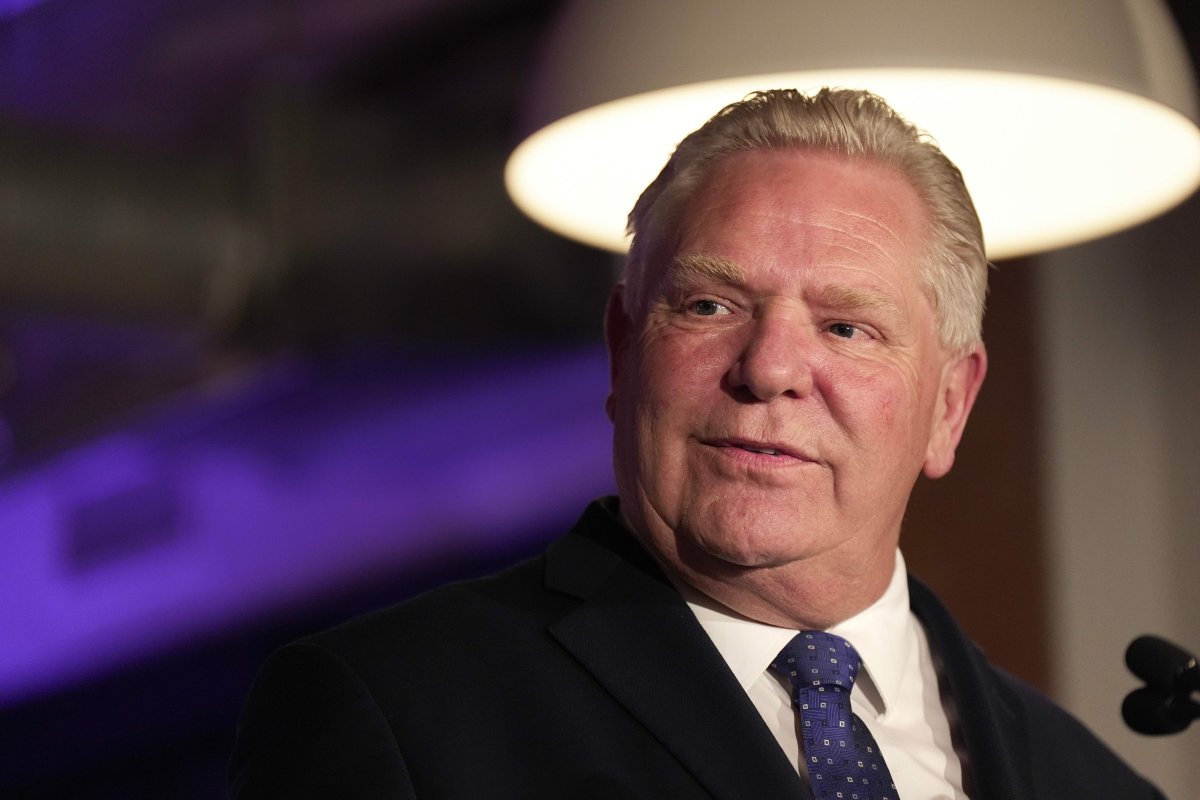
Doug Ford Rejects Negative Polling, Insists He is 'No Justin Trudeau' Ontario Premier Doug Ford stood at a housing-related announcement and directly confronted questions about recent negative polling and public protests. He dismissed suggestions that his time in office might be limited, choosing instead to highlight internal party metrics as evidence of his personal popularity.
Doug Ford Rejects Negative Polling, Insists He is 'No Justin Trudeau'
Ontario Premier Doug Ford stood at a housing-related announcement and directly confronted questions about recent negative polling and public protests. He dismissed suggestions that his time in office might be limited, choosing instead to highlight internal party metrics as evidence of his personal popularity. Ford has secured three successive majority governments, a record that sets him apart from many predecessors. When Global News pressed him on the typical shelf life of political leaders and whether Ontarians might be turning the page after nearly eight years in power, Ford rejected any parallel to those who came before. "With all due respect to the other premiers, I'm Doug Ford. I'm not Dalton McGuinty. I'm not Kathleen Wynne and I'm sure as heck not Justin Trudeau," he stated firmly. Ford will cross the eight-year mark on June 29 yet remains confident with three years left in his current mandate. He framed his situation as unique, refusing to accept that external pressures would shorten his tenure the way they have for others. Throughout the exchange, the premier leaned on his party's internal assessments rather than public surveys, insisting his position remains strong despite visible signs of discontent. This approach allowed him to pivot the conversation back to his record of electoral success and away from any narrative of decline.
External Polling Shows Challenges
An Angus Reid survey placed Ford's approval rating at 21 per cent, a figure that has prompted discussion about his remaining political runway. A separate Liaison Strategies survey showed Progressive Conservative party support at 35 per cent, placing the party second behind the Ontario Liberals. With three years remaining in the current mandate, these numbers have raised questions about how long the premier can sustain his position. Over the past quarter century, the combination of poor polling and extended time in office has often shaped the longevity of premiers and prime ministers alike. Ford has managed to secure three successive majority governments, yet the external surveys continue to circulate and fuel speculation. Public protests have added to the visible pressure, though the premier has chosen to focus on internal party metrics instead. The gap between these external readings and the government's own data has become a central point of contention in recent weeks. Observers note that such polling trends, when paired with nearly eight years in power, historically influence whether a leader faces growing internal or external challenges before the next election cycle.
Historical Precedents for Leader Longevity
Former Liberal Premier Dalton McGuinty resigned in 2013 after nine years and three months in office amid the gas plant scandal and declining popularity. Former Conservative Prime Minister Stephen Harper remained in office for nine years and nine months before losing to Justin Trudeau's Liberals in 2015. In 2025, after a sharp drop in public opinion polling and a caucus revolt, Trudeau stepped down following nine years and four months as prime minister. These examples illustrate how extended time in office combined with weakening support has repeatedly led to leadership changes. Ford, who will cross the eight-year mark on June 29, has explicitly distanced himself from such outcomes. He pointed to his three successive majority governments as evidence that his circumstances differ from those predecessors. The premier's rejection of comparisons to McGuinty, Wynne and Trudeau underscores his view that internal party strength provides a buffer not available to earlier leaders. By referencing these historical cases during the housing announcement, Ford sought to highlight why he believes his tenure will not follow the same pattern, even as external polling raises similar questions about longevity.
Ford's Internal Polling Tells a Different Story
Internal party polling conducted by Campaign Research shows the Progressive Conservatives at 41 per cent, the Liberals at 28 per cent and the NDP at 20 per cent. Ford contrasted this with external surveys, noting that Justin Trudeau was not sitting at 41 per cent when facing his own challenges. "If the election was held today, we wouldn't just form a majority we would form a massive majority, a super majority," he declared. The premier added, "I'm no Justin Trudeau, ok?" These figures represent the strategic foundation Ford uses to counter negative public polling. While an Angus Reid survey recorded his approval at 21 per cent and Liaison Strategies placed PC support at 35 per cent, the internal numbers allow him to project continued strength. Ford has secured three successive majority governments and maintains that the Campaign Research data better reflects the current mood among voters. By emphasising the projected super majority, he positions his leadership as secure despite three years remaining in the mandate and ongoing public protests. This reliance on internal metrics serves as his primary defence against narratives suggesting his shelf life may be limited.
Project Ontario and Contingency Planning
A grassroots group of conservatives called Project Ontario has engaged in some contingency planning in case Ford decides to step away, though the organisation insists it is not challenging his leadership. Matt Spoke of Project Ontario explained that conversations are occurring about the need to be prepared should the premier make a decision. He stressed that realistically any change is unlikely this year. "I think the premier is very confident in his role, I don't think he's going to be the first to buckle under pressure and he could hold off another election until 2030 if he wants to, so there's lots of time to see what happens," Spoke said. The group has called on the government to return to the first principles that secured victory in 2018. At the same time, Project Ontario cautions that headlines about Ford's personal popularity and potential leadership challenges will persist unless the premier adjusts course. "We're definitely seeing evidence that that pressure is going to start mounting," Spoke noted. He outlined the choices ahead: the premier must either change course, make room for someone else to change course, or face voters who remain unhappy when they next have an opportunity to vote. Ford's confidence and ability to extend the mandate until 2030 provide the group with additional time to monitor developments.
Implications for Ontario's Political Landscape
At Queen's Park, the tension between external polling and Ford's internal numbers shapes ongoing discussions about the Progressive Conservative government's direction. Federal-provincial relations continue to require attention, particularly around housing policy and transit projects in the GTA. Municipal relations remain important as local governments respond to provincial initiatives on development and infrastructure. Healthcare transfers also factor into broader negotiations that affect service delivery across the province. The party's electoral coalition spans urban, suburban and rural Ontario, and maintaining that balance depends on how the premier addresses mounting questions about his popularity. Project Ontario's emphasis on returning to 2018 principles reflects concerns that current polling trends could influence voter sentiment by the next election. With three years left in the mandate and the possibility of extending until 2030, Ford's approach to internal versus external data will likely influence how the party prepares for future contests. The premier's repeated assertion that he is no Justin Trudeau serves as a signal that he intends to chart a different path from recent federal and provincial leaders who faced similar pressures.
Tags: Doug Ford, Ontario Premier, Progressive Conservatives, polling, Justin Trudeau, Project Ontario, Matt Spoke, Queen's Park, Ontario politics, conservative politics, leadership, Canadian governance
By Alex Thompson, Staff Writer
This article was produced with AI-assisted research and editorial support. Reporting is based on sources cited in the article.
What's Your Reaction?
 Like
0
Like
0
 Dislike
0
Dislike
0
 Love
0
Love
0
 Funny
0
Funny
0
 Wow
0
Wow
0
 Sad
0
Sad
0
 Angry
0
Angry
0
Canada Correspondent at Global1.News. Based in Toronto, covering Canadian politics, energy, trade, and US-Canada relations. Provides the Canadian perspective on North American and global affairs.













Comments (0)