
Does Ukraine Have the Weapons to Keep Fighting Russia? Inside Kyiv's Drone Revolution and Patriot Shortage
Ukraine's Weapons Dilemma The BBC News Global News Podcast video titled "Does Ukraine have the weapons to keep fighting Russia?" poses a central question about Kyiv's long-term sustainability. Against the backdrop of the St. Petersburg International Economic Forum, Russian President Vladimir Putin delivered a defiant speech on Friday rejecting Ukrainian President Volodymyr Zele
Ukraine's Weapons Dilemma
The BBC News Global News Podcast video titled "Does Ukraine have the weapons to keep fighting Russia?" poses a central question about Kyiv's long-term sustainability. Against the backdrop of the St. Petersburg International Economic Forum, Russian President Vladimir Putin delivered a defiant speech on Friday rejecting Ukrainian President Volodymyr Zelensky's call for peace talks. Putin asserted that Russia is advancing "calmly and confidently" on the battlefield. NATO officials have expressed concern that such rhetoric signals Moscow's intent to prolong the conflict without concessions. Ukrainian representatives at the forum highlighted the urgent need for sustained Western support to counter this momentum.
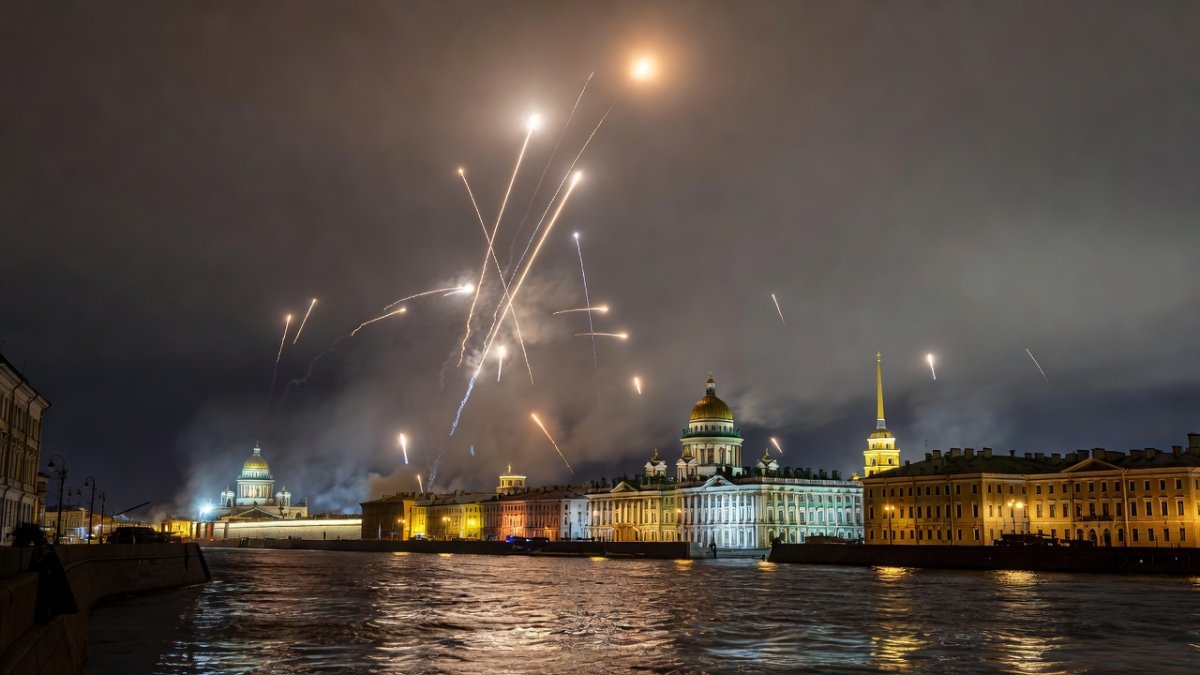
As Putin addressed delegates in St. Petersburg, Ukrainian drones struck targets in the same city, hitting the Kronstadt naval base and an oil terminal. This simultaneous action underscored Ukraine's expanding long-range strike capabilities despite ongoing shortages in other areas. EU diplomats noted that these strikes demonstrate Kyiv's ability to project power deep into Russian territory. Russian authorities condemned the attacks as provocations while NATO sources viewed them as evidence of Ukraine's adaptive military strategy. The incidents occurred amid heightened security measures at the forum.
Ukraine has developed a robust domestic drone industry capable of producing millions of units annually, yet it remains critically dependent on Western-supplied air defense systems, particularly Patriot missiles. These systems are now in short supply due to the demands of the US-Iran conflict. Ukrainian officials emphasize that without replenishment, their defensive posture weakens significantly. NATO partners have acknowledged the strain on global stockpiles while stressing the importance of coordinated aid. This imbalance creates a strategic vulnerability that Russian forces continue to exploit through sustained missile campaigns.
Without sufficient air defense coverage, Ukraine's battlefield positions face increased risk from Russian missile strikes targeting cities and critical infrastructure. EU analysts warn that such erosion could undermine morale and operational effectiveness across the front lines. Ukrainian commanders have repeatedly called for accelerated deliveries to maintain defensive integrity. NATO statements highlight the need for collective European efforts to address these gaps. The situation illustrates the broader challenge of balancing offensive innovations with defensive requirements in a protracted conflict.
The Patriot Missile Crunch
The United States-Iran conflict rapidly consumed between 800 and 1,000 Patriot interceptors in a matter of days, exceeding the total of approximately 600 PAC-3 interceptors Ukraine received over three years of full-scale war. This depletion has intensified pressure on remaining global supplies. Ukrainian defense officials have documented the shortfall in official reports to Western capitals. NATO representatives have confirmed the scale of the diversion and its impact on European security commitments. The resulting scarcity directly affects Kyiv's capacity to shield population centers from ballistic threats.
Ukraine requires around 60 PAC-3 interceptors each month to sustain current air defense operations. Russian production of 60 to 80 Iskander and Kinzhal ballistic missiles monthly continues to outpace available interceptors. US manufacturing output stands at only 60 to 65 Patriots per month worldwide. EU defense ministers have discussed joint procurement initiatives to mitigate these shortfalls. Ukrainian military assessments presented to NATO underscore the urgency of bridging this production gap before further erosion occurs.
Data from the Center for Strategic and International Studies indicates the United States delivered just 172 Patriot interceptors in fiscal year 2026 while expending over 1,000 during Iran-related operations. Recovery of depleted stockpiles is not projected until 2029. Ukrainian officials have shared these figures with NATO allies during recent consultations. European Union sources have expressed alarm at the timeline and its implications for continental defense. The disparity highlights systemic challenges in scaling production to meet simultaneous demands.
BBC correspondent Vitaly Shevchenko reported that Kyiv urgently requires additional weapons systems to maintain operational readiness. Ukrainian commanders have warned that air defense coverage continues to diminish under sustained Russian pressure. NATO statements have reiterated commitments to explore alternative supply routes. EU perspectives emphasize the need for diversified manufacturing partnerships. These assessments reflect the immediate operational constraints facing Ukrainian forces.
Ukraine's Drone Revolution
Ukraine's domestic drone industry has reached an annual production capacity of up to 20 million units. The 2026 target exceeds 7 million drones, a substantial increase from 800,000 units in 2023 and 2.2 million in 2024. Ukrainian Defense Minister Mykhailo Fedorov has overseen this expansion through targeted government programs. NATO observers have noted the rapid scaling as a model for allied industrial adaptation. EU funding mechanisms have supported several production facilities contributing to these totals.
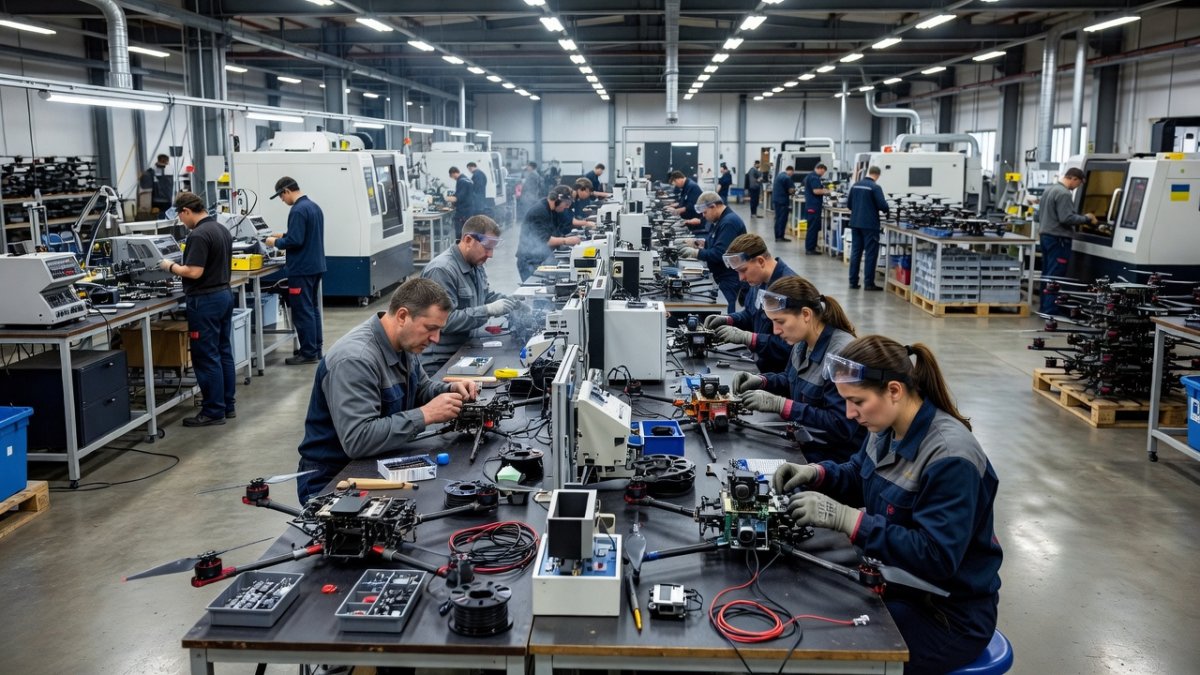
The cost asymmetry remains striking, with FPV drones priced in the hundreds of dollars capable of destroying Russian equipment valued in the millions. Long-range strike drones traveling 500 to 1,500 kilometers have targeted oil refineries, airfields, and ammunition depots. Ukrainian military spokespersons have detailed these operational successes in regular briefings. NATO assessments recognize the drones' role in offsetting conventional disadvantages. EU analysts highlight the economic efficiency driving continued investment in this sector.
During the St. Petersburg International Economic Forum, an unprecedented drone swarm struck St. Petersburg and the Leningrad region. Russian officials claimed 86 unmanned aerial vehicles were shot down, advising residents to remain indoors. Ukrainian sources confirmed the scale of the coordinated operation. NATO statements described the attacks as evidence of evolving Ukrainian capabilities. EU diplomats monitored the incident closely for its potential impact on regional stability.
Defense Minister Mykhailo Fedorov has prioritized Ukrainian-manufactured drones in national procurement strategies. Partnerships with Germany, Norway, Denmark, and the United Kingdom have reduced costs through competitive tender processes. NATO has facilitated several of these collaborative frameworks. EU representatives have endorsed the approach as a means of strengthening supply chain resilience. These initiatives reflect Ukraine's focus on self-reliance amid persistent external constraints.
Putin's SPIEF Performance
On Friday, Russian President Vladimir Putin rejected Ukrainian President Volodymyr Zelensky's proposal for direct face-to-face talks, stating there was "no point" until preliminary peace agreements were reached. He expressed appreciation for mediation efforts by US President Donald Trump. Kremlin sources framed the remarks as consistent with established positions. Ukrainian officials interpreted the statement as further evidence of Moscow's unwillingness to negotiate in good faith. NATO statements called for renewed diplomatic engagement despite the hardened rhetoric.
Putin described a backchannel involving an unnamed Russian businessman who visited Kyiv and reported signals of interest from Ukrainian representatives. He referenced a subsequent drone strike on a college in occupied Starobilsk that killed 21 people, mostly teenage girls. Ukrainian authorities have disputed aspects of the account while confirming the incident's occurrence. EU monitors have called for independent verification of such claims. NATO perspectives emphasize the need to avoid escalation through unverified narratives.
Putin claimed full Russian control of Luhansk and most of Donetsk regions. He accused the West of using Ukraine as a tool to contain Russia and warned of the "revival of Nazism." Ukrainian government responses have rejected these characterizations as propaganda. NATO statements have reaffirmed support for Ukraine's territorial integrity. EU foreign ministers have condemned the remarks as inflammatory and counterproductive to any peace process.
From Kyiv, President Zelensky accused Russia of choosing continued war over genuine peace efforts. His open letter referenced Ukrainian drones "visiting" the St. Petersburg forum and noted Putin's extended time in power. NATO allies have welcomed Zelensky's emphasis on diplomatic openness. EU statements have echoed calls for accountability and renewed negotiations. These exchanges illustrate the persistent divide between the two sides.
Zelensky's Bid for Patriot Production Licenses
President Volodymyr Zelensky has repeatedly requested that the United States grant licenses for Patriot missile production inside Ukraine. He maintains that domestic manufacturing would allow Ukraine to supply itself and contribute to European defense needs. Ukrainian defense ministry documents detail the formal proposals submitted through bilateral channels. NATO has discussed the concept during Ukraine Council meetings. EU representatives have expressed support for expanded production capacity on Ukrainian territory.
Zelensky stated directly: "We need to expand the production. I asked the previous US administration, and I am asking today's administration to provide Ukraine with licences to produce Patriot missiles." These remarks were delivered during official addresses to international partners. Ukrainian officials have circulated transcripts to NATO and EU counterparts. The statements underscore Kyiv's determination to achieve greater industrial autonomy. Western governments have acknowledged receipt of the requests.
The United States promised to consider such licenses in early 2026, yet no formal approval has followed. Germany has already transferred its available air defense stocks to Ukraine. Western production lines were never expanded despite repeated prior warnings from Ukrainian and NATO sources. EU defense planners have highlighted the resulting shortfall in joint assessments. Ukrainian representatives continue to press the issue in ongoing consultations.
As of early June, no production license has been confirmed. Zelensky has continued advocating for the measure at NATO-Ukraine Council sessions and through direct bilateral communications with Washington. NATO statements have noted ongoing technical reviews. EU perspectives stress the strategic value of localized manufacturing. These efforts reflect Kyiv's sustained diplomatic campaign on the matter.
Analysis and Implications
Ukraine has transformed its drone program into a functional long-range strike capability that reaches deep into Russian territory. However, the shortage of Patriot systems constitutes the primary defensive vulnerability. Russian missile attacks continue to degrade Ukrainian energy infrastructure and civilian facilities. NATO assessments have identified air defense replenishment as the most pressing requirement. EU analysts note that this imbalance shapes the overall trajectory of the conflict.
The US-Iran war has fundamentally altered global weapons supply dynamics, shifting the United States from a net exporter of Patriots to a major consumer. Europe and Ukraine now compete for limited remaining inventories. NATO logistics reports document the resulting allocation challenges. EU defense ministers have initiated discussions on alternative sourcing strategies. Ukrainian officials have emphasized the need for prioritized deliveries in all allied forums.
The conflict has evolved into a contest of industrial output where both sides seek to increase production of drones, missiles, and air defense systems. Diplomatic initiatives receive less emphasis than manufacturing capacity in current strategic calculations. NATO statements have highlighted the importance of sustained investment in allied defense industries. EU perspectives stress coordinated procurement as essential for long-term resilience. Ukrainian planning documents reflect this production-focused approach.
The ultimate outcome depends on whether Western political commitments can be converted into concrete technology licenses and capital investment before Ukraine's air defense network deteriorates under continuous Russian pressure. NATO and EU statements have reaffirmed support while acknowledging the scale of the challenge. Ukrainian leadership continues to advocate for accelerated assistance through established channels. These developments will determine Kyiv's ability to maintain both defensive and offensive operations in the months ahead.
By Irina Volkov, Staff WriterThis article was produced with AI-assisted research and editorial support. Reporting is based on sources cited in the article.
What's Your Reaction?
 Like
0
Like
0
 Dislike
0
Dislike
0
 Love
0
Love
0
 Funny
0
Funny
0
 Wow
0
Wow
0
 Sad
0
Sad
0
 Angry
0
Angry
0
Russia/Eastern Europe Correspondent at Global1.News. Covering Russian politics, energy, security, and the shifting dynamics of the post-Soviet space. Provides clear-eyed analysis on one of the world's most opaque regions.












Comments (0)