
China's YMTC Breaks Into Global Top 3 NAND Flash Suppliers
China's YMTC captured 14% of global NAND flash shipments in Q2 2026, edging out Japan's Kioxia for the first time — a milestone for Beijing's semiconductor push and the AI-driven storage race, though its revenue position still trails volume rivals.
A Volume Milestone With a Revenue Gap
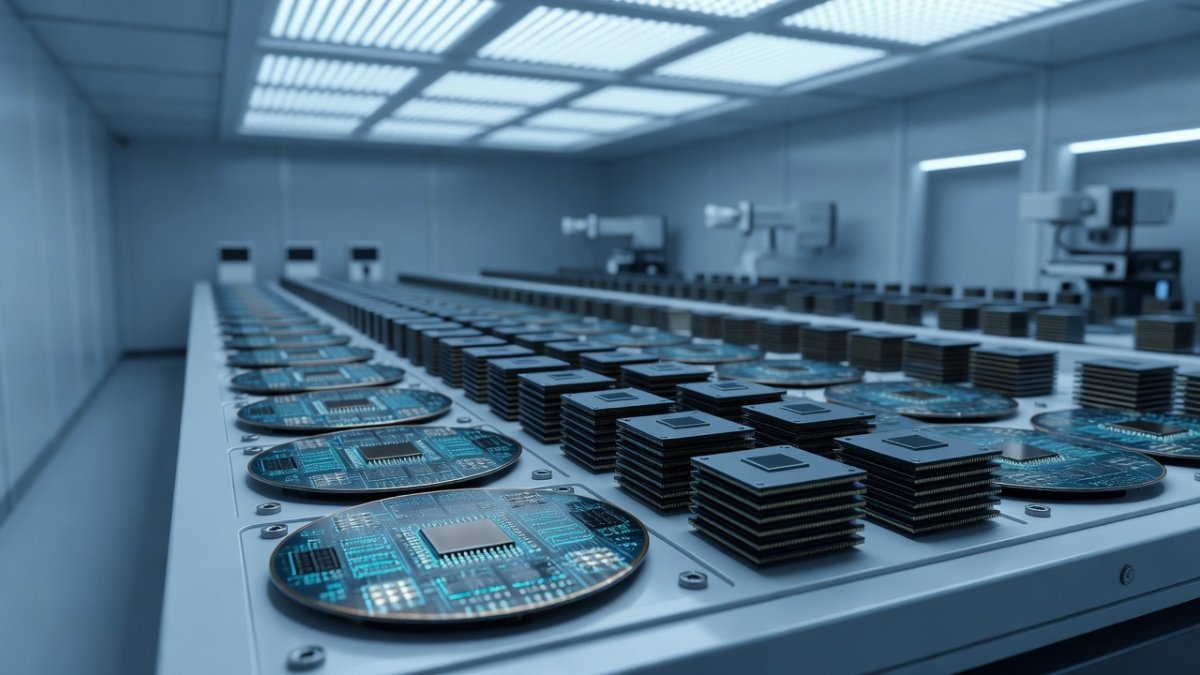
Yangtze Memory Technologies Corp (YMTC) has broken into the world's top three NAND flash memory suppliers by shipment volume for the first time, a milestone that signals how far China's semiconductor industry has travelled since the company was placed under US trade restrictions in 2022.
The Wuhan-based chipmaker captured 14 per cent of global NAND bit shipments in the second quarter of 2026, narrowly overtaking Japan's Kioxia, according to data from Counterpoint Research published on Wednesday. Bit shipments measure total storage capacity shipped rather than raw chip units, and the shift is being driven by an industry-wide pivot toward high-capacity enterprise drives for artificial intelligence workloads.
Samsung and SK Hynix Still Lead the Pack
Counterpoint's Q2 2026 Memory & Storage Tracker shows Samsung Electronics retaining the global lead with a 25 per cent market share, while SK Hynix — including its Solidigm subsidiary — held second place at 22 per cent. YMTC's third-place finish at 14 per cent edged Kioxia, with US-based Micron trailing the top group. The ranking, measured in shipped storage capacity, has shifted steadily over the past year as Chinese fabs ramped output of high-density 3D NAND.
YMTC's shipments climbed 22 per cent year on year and 5 per cent quarter on quarter, according to the research firm, driven by expanding supplies to domestic electronics manufacturers and increased production of its latest-generation 3D NAND architecture. The growth reflects both China's push for self-reliance in memory chips and a broader upcycle in storage demand tied to AI data centres. Counterpoint's tracker has shown YMTC's share rising steadily since it first entered the top five, and the second-quarter figure marks the first time it has overtaken Kioxia on a quarterly basis.
The Revenue Reality Behind the Volume Gain
Despite its surge in shipment volume, YMTC's market position lags in dollar terms. The company ranked fifth globally in NAND revenue for the quarter, placing it behind both Micron and Kioxia. The gap stems from YMTC's heavy exposure to lower-margin consumer products and a relatively small footprint in enterprise solid-state drives (eSSDs), which command higher pricing.
That product-mix imbalance is increasingly squeezing revenue as artificial intelligence reshapes global storage demand. eSSDs accounted for 48 per cent of total global NAND bit shipments in the second quarter, nearly doubling their 26 per cent share from a year earlier. Counterpoint attributed the surge to a broader shift in AI workloads from model training toward inference, which requires vast amounts of fast storage for frequently accessed data sets, and projected server eSSDs would account for more than half of all NAND bits shipped by the end of the year.
YMTC's Play for the High-Margin Enterprise Market
To capture that higher-margin market, YMTC plans to shift its product mix further toward eSSDs in the second half of the year to cement its third-place global standing, supported by expanding avenues for capital, Counterpoint said. The strategy is a direct bet that China's AI build-out will generate enough domestic demand for home-grown enterprise storage to offset its late start in the segment.
YMTC's capital position has also been expanding, as Counterpoint noted in describing the company's "expanding avenues for capital" behind its second-half product shift. Analysts have pointed to Beijing's willingness to back strategic memory projects and to YMTC's improving access to funding as reasons the company can keep funding new capacity even under US restrictions. A shift toward enterprise drives would also raise average selling prices, narrowing the revenue gap with Kioxia even if volume growth moderates.
The company continues to scale its manufacturing operations despite years of US trade restrictions designed to limit its access to advanced semiconductor manufacturing equipment. Morgan Stanley said in May that YMTC was increasing utilisation in its second fabrication plant in Wuhan while advancing construction and tool installation at a third facility. The bank estimated the company would add about 35,000 wafers per month of capacity this year, with substantially larger increases planned for 2027 and 2028.
Japan's Kioxia Displaced — and Tokyo Watching Closely
For Japan, the ranking change carries particular weight. Kioxia, the memory division spun out of Toshiba, had held the third spot for years and remains a pillar of Japan's semiconductor strategy, with major fabrication operations in Yokkaichi and Kitakami. Being edged out by a Chinese rival operating under US export controls is a competitive signal that Japanese officials and industry executives are unlikely to ignore.
The displacement also lands at a delicate moment for the Japanese memory sector. Kioxia has been working to improve profitability after a bruising downcycle, focusing on higher-capacity enterprise drives and AI-adjacent products of its own. Losing a volume-share benchmark to YMTC does not immediately erode its revenue position — Kioxia still out-earned the Chinese firm in the quarter — but it raises the stakes for the company's next-generation NAND ramp, where the two are now competing for the same data-centre customers in an increasingly crowded market.
Tokyo has been rebuilding its domestic chip capabilities through initiatives such as Rapidus and expanded subsidies for established players, but NAND has always been Kioxia's stronghold. The company has responded with aggressive technology road maps of its own, including ninth-generation NAND development, yet the volume shift recorded in Q2 underscores how quickly price-sensitive storage markets can realign when a state-backed challenger scales capacity.
Export Controls, Self-Reliance and the AI Storage Race
The milestone also tests the limits of US export policy. Washington has restricted sales of advanced lithography and etching tools to YMTC since late 2022, and successive rounds of controls have targeted the broader Chinese memory sector. YMTC's continued capacity expansion suggests the restrictions have slowed, but not halted, its progress — and that Beijing's push to localise China's AI infrastructure is creating a captive market for domestic eSSDs alongside high-bandwidth memory, as Bernstein Research noted in May.
The alignment between YMTC's product ambitions and China's national AI strategy gives the company a demand base that foreign competitors cannot easily replicate. Chinese cloud providers and data-centre operators are under pressure to favour domestic suppliers, and YMTC's eSSD push dovetails with that procurement shift. The question is whether the company can translate its volume into the revenue growth needed to fund next-generation technology, where the gap with Samsung, SK Hynix and Kioxia remains significant.
For consumers, the competitive pressure cuts the other way. The same AI-driven eSSD demand that is lifting YMTC's enterprise ambitions has also tightened NAND supply for everyday devices, and price increases in solid-state drives have been reported across major markets this year. A stronger YMTC in the enterprise tier gives Beijing a strategic foothold in AI infrastructure, but it does not automatically lower prices for the phones, laptops and gaming consoles that rely on NAND — a tension that will play out in retail pricing through the holiday season.
What to Watch For
Three signals will determine whether YMTC's third-place volume ranking becomes a durable shift or a one-quarter anomaly: the pace of its eSSD revenue growth in the second half of 2026, the timing of tool installations at its third Wuhan fab, and any further tightening or loosening of US export controls ahead of the November US elections.
For Asia-Pacific readers, the practical stakes are visible in storage prices and supply chains. AI-driven eSSD demand has already tightened NAND supply, and a YMTC that wins on volume while chasing margin will keep pressure on prices across consumer and enterprise segments. Japanese and South Korean chipmakers will be watching their Chinese rival's wafer starts closely — the next two quarters will show whether China's memory champion is here to stay at the top table.
By Kenji Tanaka, Staff Writer
This article was produced with AI-assisted research and editorial support. Sources: SCMP, Counterpoint Research, Tom's Hardware, Seoul Economic Daily, Morgan Stanley research.
What's Your Reaction?
 Like
0
Like
0
 Dislike
0
Dislike
0
 Love
0
Love
0
 Funny
0
Funny
0
 Wow
0
Wow
0
 Sad
0
Sad
0
 Angry
0
Angry
0

Japan Correspondent at Global1.News. Tokyo-based voice covering Japanese politics, technology, economy, and culture. Tracks the intersection of tradition and innovation in one of the world's most dynamic societies.














Comments (0)