
Aether Infrastructure buys old gearbox factory in Strasbourg, France, for AI data center
When Aether Infrastructure signed a preliminary deal to buy the Dumarey Powerglide site in Strasbourg, the headline‑grabbing part was the “AI data centre” tag.
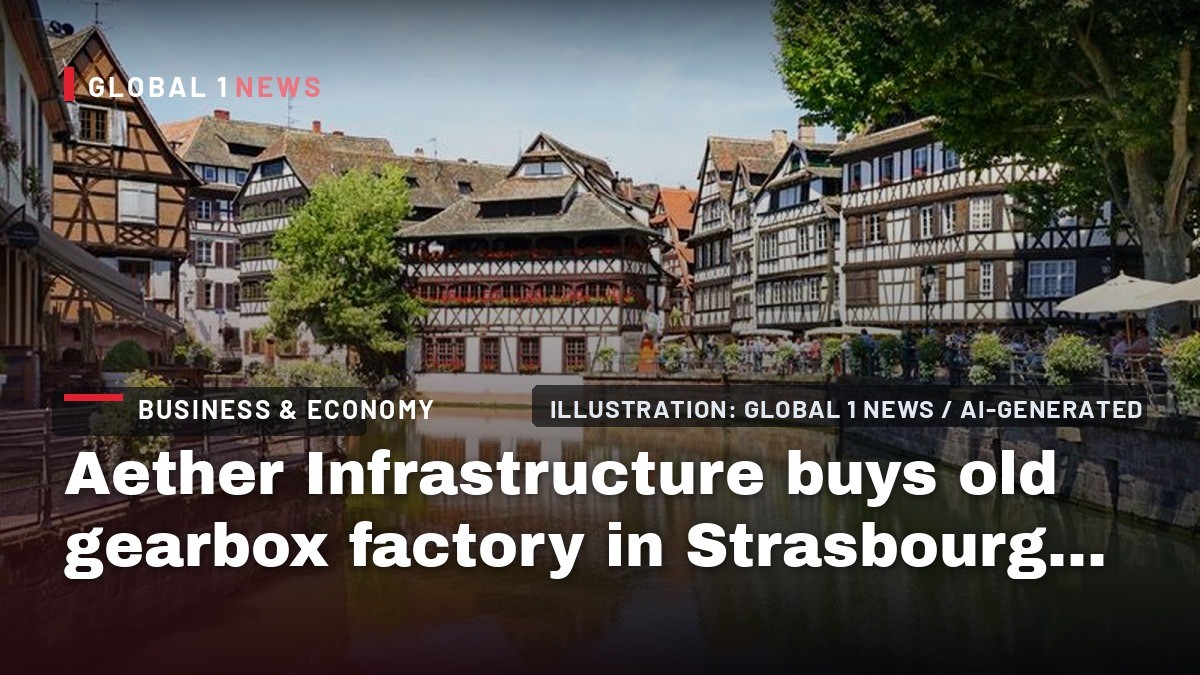
When Aether Infrastructure signed a preliminary deal to buy the Dumarey Powerglide site in Strasbourg, the headline‑grabbing part was the “AI data centre” tag. For the rest of us running real hosting stacks, the real story is the economics and the operational headaches that come with turning a former gearbox factory into a 25 MW AI hub, and the way the EU gigafactory programme is being leveraged to subsidise a venture that looks more like a hype‑driven construction project than a profitable hosting business.
Why the location matters – and why it doesn’t make the deal sweet
The Dumarey site sits on 90 hectares in the Port du Rhin district, a former gearbox factory slated for closure with 320 jobs lost. From a founder’s perspective, the size is attractive – you can spread out power, cooling, and even a biomass plant without fighting neighbours. But the real cost driver is the 25 MW of grid power already available. That’s a decent chunk of juice for an AI‑focused facility, yet it’s still a fraction of what hyperscalers pull from regional grids for similar footprints.
What the source material doesn’t spell out is the price tag on that power. In Europe, grid electricity for AI workloads can be double the rates that US hyperscalers negotiate, especially when you’re not a massive buyer. So while the site gives Aether a foothold, the economics of buying power at retail rates will eat into any margin unless they can offset it with the biomass plant or other renewable sources.
Partner ecosystem – a mixed bag of hardware and real‑estate hype
Aether has lined up SiPearl, 2CRSi, Nhood, and Dassault Systèmes as partners. SiPearl brings French‑made chips, which is good for digital sovereignty, but those chips still cost more per compute unit than the latest AMD or Nvidia offerings that hyperscalers snap up in bulk. 2CRSi is slated to run an on‑site industrial facility to design, assemble, and test prefabricated data‑centre modules. That sounds efficient on paper, but the devil is in the integration: you end up with a bespoke module line that may not be compatible with standard rack‑and‑blade designs you already have in production.
The inclusion of Nhood, a real‑estate firm, hints at a focus on the property side rather than the hosting side. For an independent provider, the risk is that the project becomes a real‑estate development financed by EU grants, with the hosting business treated as an after‑thought. That’s a recipe for under‑delivering on service levels when the primary revenue driver is the sale of modules to third parties, not the operation of a reliable AI cloud.
EU gigafactory funding – a double‑edged sword
Aether is banking on the €20 billion EU gigafactories programme, announced in February 2025, to fund its Strasbourg build‑out. The programme promises three to five super‑computing clusters, each with 100,000 AI chips. While that funding can cover cap‑ex, it also comes with strings attached – strict reporting, compliance with European digital‑sovereignty goals, and the need to meet ambitious opening dates.
From a risk‑management standpoint, tying your business plan to a political grant is dangerous. If the EU shifts priorities or tightens eligibility, you could be left with a half‑finished campus and a mountain of debt. Independent hosting providers that rely on steady cash flow from customers know this better than anyone: you need predictable revenue, not a one‑off grant that disappears once the construction is done.
Power strategy – grid, biomass, and the chase for green credentials
The 25 MW grid supply is the baseline, but Aether is also looking at a biomass power plant on‑site. The idea is to generate electricity and produce biochar, a carbon‑capture product for soil enhancement. That’s a nice narrative for ESG reporting, yet the reality is that biomass plants have long lead times, variable output, and require a steady feedstock supply chain.
For a hosting operation, reliability trumps green credentials. If the biomass plant under‑delivers, you’ll have to fall back on the grid, potentially at higher rates during peak demand. The risk is a “green‑first” approach that compromises uptime – a nightmare for any provider promising AI workloads with strict latency and availability SLAs.
Timeline pressure – 2027 opening and the race against hyperscalers
Aether targets a 2027 opening for FR‑SXB1 and hopes to close on a second campus, FR‑SXB2, by the end of the year. That gives them roughly a year to finish construction, install power, and get the prefabricated modules up and running. In my decade of running production servers, a one‑year build‑out for a 25 MW AI facility is overly optimistic, even with prefabricated modules.
Delays are the norm – permitting, grid upgrades, and the integration of custom modules all add months. Meanwhile, hyperscalers are already scaling AI capacity in existing data centres, adding capacity on the fly without the need for a brand‑new build. The market window for a new entrant with a single‑site focus is closing fast.
Business‑risk lens – what independent providers should watch
The biggest red flag is the reliance on a single, large‑scale AI project to drive revenue. Independent hosting firms thrive on diversified client bases, flexible capacity, and the ability to pivot services. Aether’s model – sell modules, run a biomass plant, and hope for EU grant cash – concentrates risk in a few buckets.
Moreover, the “industrial” approach to data‑centre modules may lock you into a hardware stack that can’t be easily repurposed if AI demand wanes or if a new, more efficient chip architecture emerges. That’s a classic case of “build it and they will come” that rarely works without a solid pipeline of paying customers.
Actionable takeaways for founders and hosting operators
First, scrutinise the power economics. Grid rates in Europe are higher than in the US, and any reliance on on‑site generation must be backed by a realistic output forecast. Second, treat partner announcements as a starting point, not a guarantee – you’ll still need to negotiate your own supply contracts and integration pathways.
Third, diversify revenue streams. If you’re eyeing AI workloads, consider offering edge services, managed hosting, or hybrid cloud solutions that can absorb excess capacity when AI demand dips. Fourth, keep an eye on grant timelines and be prepared with a fallback plan if EU funding stalls.
Finally, remember that the hype around “AI gigafactories” is a marketing spin. The real value lies in delivering reliable, cost‑effective compute to customers who will pay month‑over‑month, not in selling a fancy press release about biomass and biochar. Stay grounded, keep your servers humming, and don’t let the glitter of EU programmes blind you to the fundamentals of hosting economics.
— Allan Ali, Founder
This article was produced with AI-assisted research and editorial support. Reporting is based on the source material cited below. Sources: Data Center Dynamics; datacenterdynamics.com; Global1.News (14 October 2026).
By Allan Ali, Global1.News
What's Your Reaction?
 Like
0
Like
0
 Dislike
0
Dislike
0
 Love
0
Love
0
 Funny
0
Funny
0
 Wow
0
Wow
0
 Sad
0
Sad
0
 Angry
0
Angry
0

Publisher of Global1.News. Automation architect, systems builder, and the guy making sure the truth gets published.














Comments (0)