
Nord Stream Trial Opens in Hamburg With One Suspect in the Dock
The Hanseatic Higher Regional Court in Hamburg opened the first trial over the 2022 Nord Stream pipeline explosions on Wednesday, with a former Ukrainian officer identified only as Serhii K. in the dock. He denies involvement, Kyiv denies responsibility and no verdict has been reached.
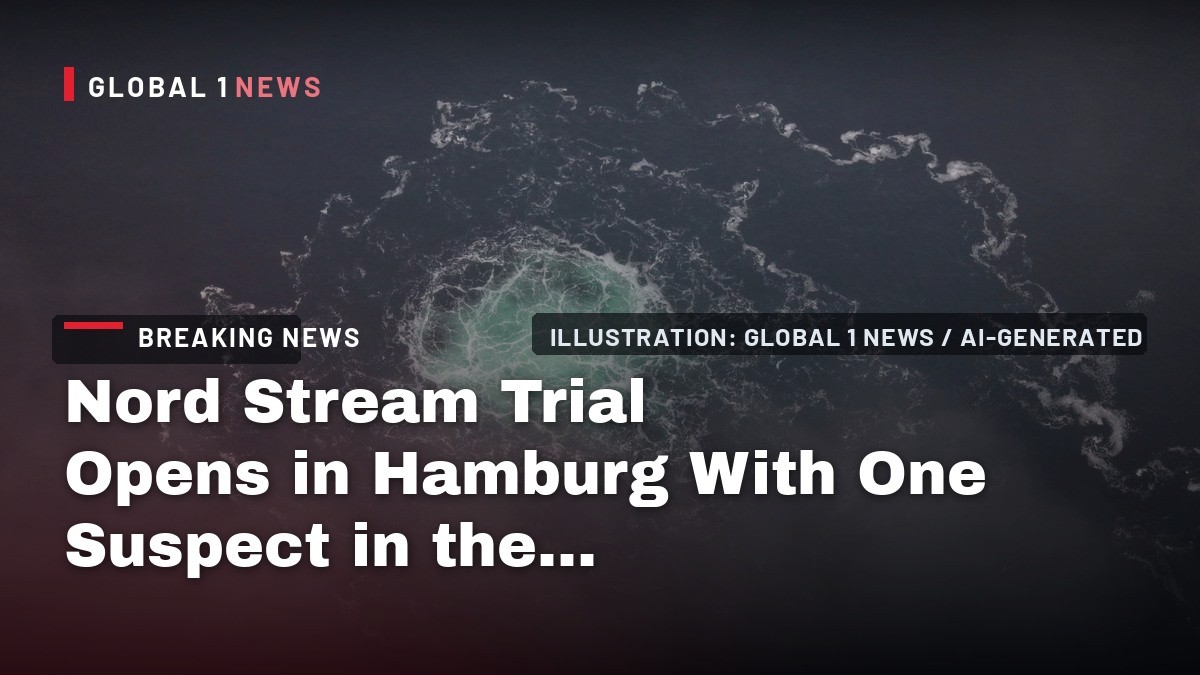
Four years after explosions tore open the Nord Stream gas pipelines on the floor of the Baltic Sea, a German court has begun hearing evidence in the case for the first time. One man is in the dock. He denies everything. No verdict has been reached.
Nord Stream Trial Opens in Hamburg With One Suspect in the Dock
Hamburg, Germany - The Hanseatic Higher Regional Court convened its State Security Senate on Wednesday for the first public presentation of evidence in the Nord Stream sabotage investigation, more than four years after the blasts. A single defendant sat before the judges. The court has admitted the indictment, the German news agency dpa reported, with 16 hearing dates scheduled through to mid-December and more planned in early 2027.
A Trial Four Years in the Making
The explosions of 26 September 2022 struck a pipeline system built to carry Russian natural gas to Germany under the Baltic Sea. Swedish seismologists detected several blasts, some 17 hours apart, and three of the four concrete-coated steel pipelines were ruptured. The system was 1,200 kilometers long and lay at depths of 80 to 110 meters. It was built by the Russian gas concern Gazprom to supply up to 110 billion cubic meters of gas to Germany, and before the attack roughly half of Germany's annual demand for natural gas for energy generation had flowed through Nord Stream 1. Moscow cut off supplies through that line in August 2022. Nord Stream 2 never entered service, because Germany suspended its certification process shortly before Russia's invasion of Ukraine.
What Prosecutors Say Happened Beneath the Baltic
Federal prosecutors filed the indictment on 30 June 2026 and announced it on 2 July. Their account begins at the end of February 2022, when, they say, Serhii K. and other military personnel developed a plan on behalf of state authorities in Ukraine to halt gas deliveries through the pipelines permanently and prevent Russia from using natural-gas trade revenue to finance its war effort. Prosecutors say a group of several professional divers, a skipper and an explosives expert was formed under his leadership. On 4 September 2022, they allege, Serhii K. entered Germany via Poland using a forged Ukrainian passport, and the group then boarded a seaworthy sailing yacht chartered from a German company in Rostock using forged identity papers supplied through intermediaries. They carried large quantities of military-grade high-performance explosives into international waters near the Danish island of Bornholm and, by 22 September 2022, attached several timed devices to the pipelines on the seabed. The devices detonated on 26 September, causing severe damage to both lines.
The Charges, and the Word That Caused Outrage
Serhii K. is charged as an accomplice with a war crime, namely an attack against civilian objects under Section 11 of the German Code of Crimes against International Law. He also faces charges of causing an explosive explosion, destruction of structures and disruption of public services under the German Criminal Code. The court has determined that he is "sufficiently suspected" of the war crime, according to the court summary carried by dpa. Prosecutors state that the group acted on behalf of state authorities in Ukraine - a classification that has caused outrage in Kyiv, which has always strictly denied involvement. The defendant's legal team will argue that he is not authorized to reveal details of any activities he carried out as a soldier, and will produce sworn statements from two of his military superiors. One of those superiors is the man widely named as the mastermind of the plot. In court, Serhii K. himself will not say a word. He has spent months in isolation in a high-security prison.
The Yacht, the Passports and the Trail of Evidence
The yacht at the center of the case is the Andromeda. Accounts of its charter and boarding differ. The Associated Press and Reuters report that the vessel was hired from a German company in Rostock, left that port on 6 September 2022 and returned on 23 September. The court summary carried by dpa says Serhii K. boarded at the port of Wiek on the island of Ruegen no later than 8 September, together with six co-conspirators - a ship's captain, an explosives expert and four deep-sea divers - and that an intermediary had chartered the vessel for several weeks. Der Spiegel and ZDF have reported that five men and one woman were aboard. Prosecutors allege at least four bombs of between 14 and 27 kilograms were detonated at a depth of 70 to 80 meters, while the BBC reports four devices weighing up to 27 kilograms each, planted about 80 meters below the surface and activated by timers. The first blast came at 02:03 on 26 September 2022, severing part of the pipelines, with two further explosions targeting both Nord Stream 2 and Nord Stream 1.
What the Defendant Says
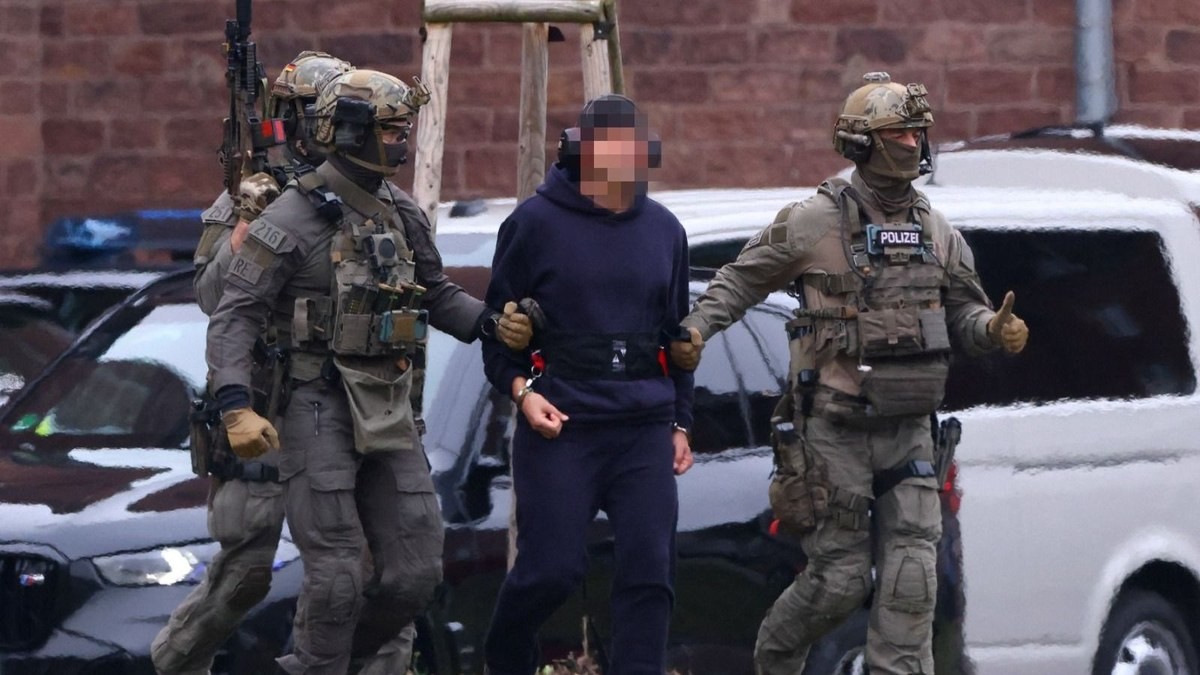
Serhii K. denies any involvement. He was arrested on 21 August 2025 in Italy's Province of Rimini on a European Arrest Warrant. Police raided a bungalow where he was staying with his family, and officers said he surrendered without resistance. The BBC reported the location as the glamping resort La Pescaccia near Italy's Adriatic coast, where local carabinieri received an automatic alert when he showed his passport at check-in. He was transferred to Germany in November 2025 and has been held in pre-trial detention since. In Italian extradition proceedings the Associated Press named him as Serhii Kuznietsov and RFE/RL as Serhiy Kuznetsov; the BBC reported that the files sent to Italy name him as Serhii Kulinich, the alleged forged-passport name. German privacy rules mean the court identifies him only as Serhii K. His Italian lawyer, Nicola Canestrini, said there was "no smoking gun" in the case and called it hard to believe that a German court should hold a war crimes trial against a Ukrainian serviceman. His German lawyer, Jes Meyer-Lohkamp, said prosecutors "have not provided any direct, conclusive evidence of our client's involvement" and that the court will have to determine whether Nord Stream was actually a legitimate military target.
Who Else Is Wanted
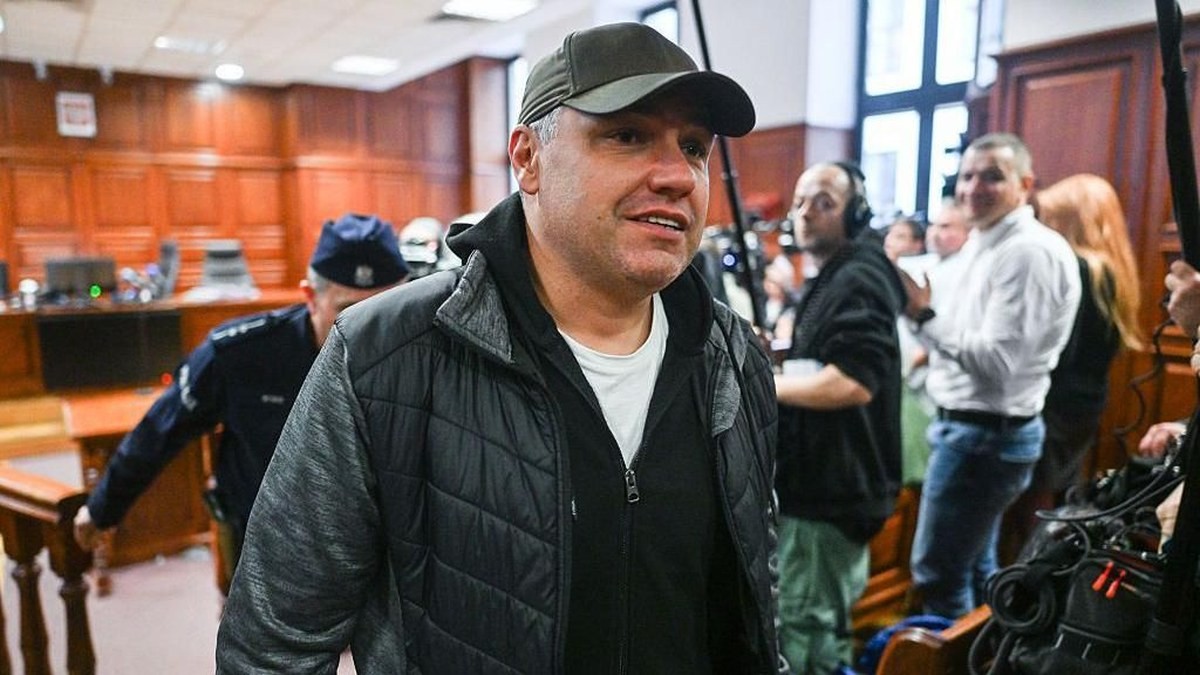
German prosecutors have identified seven Ukrainian suspects. Only one is in the dock. The second, identified by prosecutors as Vladimir Z., is a professional diver whose Polish lawyers name him as Volodymyr Zhuravlyov. He was arrested in the northern Croatian town of Pula in August 2026 on a European arrest warrant. He denies any role in the operation and has applied for asylum in Croatia to fight his extradition to Germany. He was in Croatia working as a consultant on a new thriller film about the Nord Stream blasts. He had been detained in Poland in 2025 on a German warrant, but a Polish judge refused to extradite him and ruled instead that a Ukrainian attack on Nord Stream, if that was what happened, would be a "just" act in a "bloody and genocidal war." He lives in Warsaw, where he runs an air-conditioning business. He is a keen deep-sea diver, but a civilian. Reuters reported on 24 September 2026 that a Croatian court ruled he can be extradited to Germany, according to Ukraine's Suspilne news portal. The extradition ruling and the asylum application are both live, and he has not been handed over.
Moscow's Expectations
Kremlin spokesperson Dmitry Peskov said on Monday that Moscow expects "objectivity" from the trial. "We expect ... that both the perpetrators and those who ordered it will be named," he said. "That would be very important. I think no one doubts who it really is." The Russian government said it expected a "just verdict" that would reveal the names of the perpetrators and of those who ordered the operation. Russian officials have claimed that US and British intelligence agencies were involved in staging the explosions, which Moscow declared "an act of international terrorism," and Russia has launched its own investigation. Moscow has also accused NATO of involvement. It has always denied any role in the blasts and calls the suggestion that it would blow up its own pipelines absurd. It likewise rejects charges that it has more recently targeted Western infrastructure with so-called hybrid sabotage and drone attacks.
Kyiv's Answer
Kyiv has always strictly denied any involvement. President Volodymyr Zelenskyy has denied allegations that his country was involved. In August 2026 he told reporters that Ukraine's prosecutors and Foreign Ministry were already cooperating with partners and that Kyiv was "absolutely open to joint steps on the investigation," stressing the importance of keeping Europe's trust. He has previously insisted that Ukraine "definitely didn't do that." Foreign ministry spokesman Heorhii Tykhyi told the BBC he found it "very unfortunate that this entire discussion has come to focus on who blew the pipelines up, rather than who built them." He argued that Nord Stream had "untied Russia's hands" to go to war, because Russia no longer needed to transit Ukraine for its gas to reach Europe. "Did we warn about this? We did," he said. "Did anyone listen to us? No, no-one did." The German prosecutor's office told the BBC that the justice system stands outside of any politics, and that sabotage is an offense against Germany's constitution.
Why Berlin Is Walking a Fine Line
After a slow start, Germany is now Ukraine's biggest supplier of military aid. The far-right Alternative for Germany has led opinion polls for more than a year, wants military aid to Ukraine ended and energy ties with Moscow restored, and has recently won a string of regional elections, piling pressure on Chancellor Friedrich Merz's government. Merz has doubled down. He was in Kyiv on 4 October 2026 with a new aid package that includes joint production of interceptors to shoot down Russian jet-powered drones. Joachim Weber, a security expert at the University of Bonn, said "all the evidence points very clearly" to Ukraine rather than Russia, and called the case highly explosive politically because Germany is one of Kyiv's closest allies. Even so, he said he did not see Berlin "going through some kind of list of punishments against Ukraine right now." Stefan Meister of the German Council on Foreign Relations told RFE/RL that the crucial question is how much came from the top of the Ukrainian political system. "The key political question is the role of Zelenskyy and the presidential administration," he said, adding that there is still no proof they were really involved.
What Happens Next
The court has scheduled two hearings every week until at least February 2027, with no end date set. The defendant will not speak. His lawyers will present sworn statements from two military superiors, one of whom German media identify as the operation's organiser. A source close to the case told the BBC that anyone who admits involvement in the mission is "immediately a target for Russia," and that whoever did it can never confirm it. Another source said he was "eaten alive by anxiety" over the investigation and baffled that Germany, a close ally of Ukraine, was pursuing a prosecution at all. Mikhaylo Honchar, head of the Kyiv-based Strategy XXI Global Studies Center, told RFE/RL that many in Ukraine would say that if their people did it, "they are heroes." The case raises questions about what constitutes a legitimate military target, who can hit what, and where, outside an open war zone. No verdict has been reached. The allegations are being tested in court for the first time.
By Jessica Ali, Staff Writer
This article was produced with AI-assisted research and editorial support. Sources: Associated Press, Reuters, BBC News, Radio Free Europe/Radio Liberty, the German Federal Prosecutor General and the German news agency dpa.
What's Your Reaction?
 Like
0
Like
0
 Dislike
0
Dislike
0
 Love
0
Love
0
 Funny
0
Funny
0
 Wow
0
Wow
0
 Sad
0
Sad
0
 Angry
0
Angry
0

Editor-in-Chief at Global1.News. Atlanta-based journalist who cuts through the BS and tells it like it is. Lead anchor, host, and the voice you hear when the spin stops and the truth starts.












Comments (0)