
Saudi Arabia overturns death sentence for man over Facebook comment, Sri Lanka says
Saudi Arabia’s Supreme Court has overturned the death sentence imposed on Sri Lankan migrant worker Anojan Sivarasa for a Facebook comment deemed blasphemous, a decision announced by Colombo’s Deputy Foreign Minister Arun Hemachandra on Wednesday.
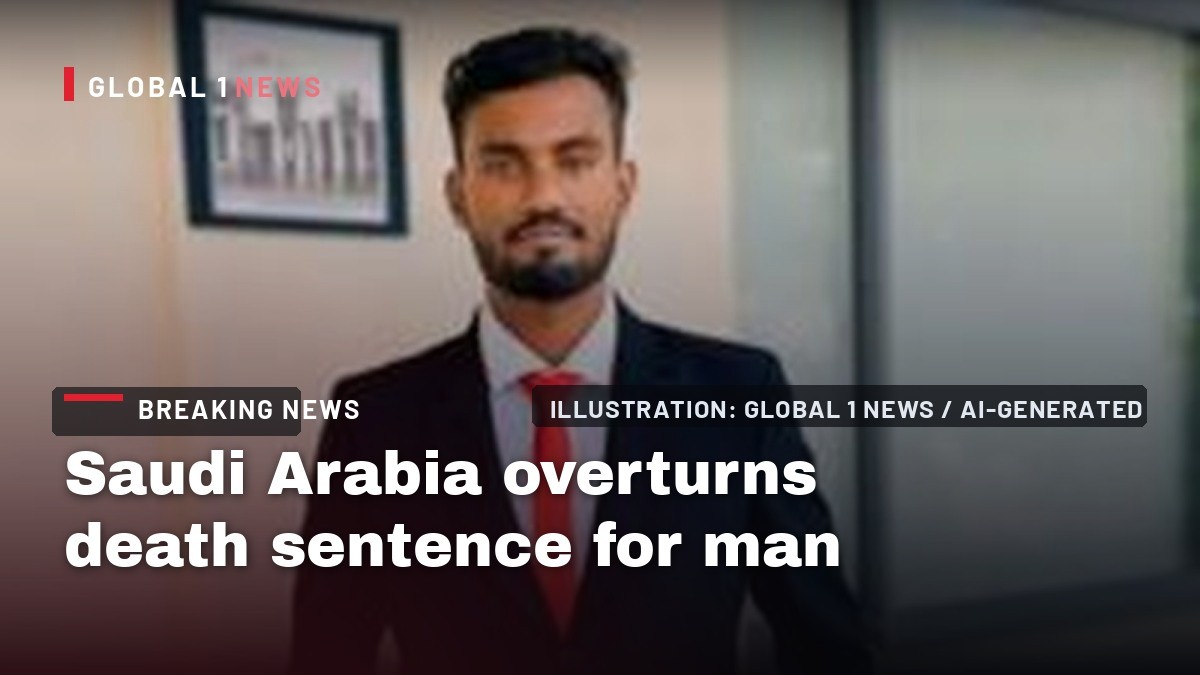
Saudi Arabia’s Supreme Court has overturned the death sentence imposed on Sri Lankan migrant worker Anojan Sivarasa for a Facebook comment deemed blasphemous, a decision announced by Colombo’s Deputy Foreign Minister Arun Hemachandra on Wednesday. The reversal follows a month‑long diplomatic push by Sri Lanka and international human‑rights advocates, and it underscores the precarious legal landscape confronting migrant workers in the Kingdom, where speech‑related offenses can trigger severe penalties.
Background of the case
The controversy began in late June when a video of a young Muslim man kicking a dog during a Hindu pilgrimage spread across social media, igniting a heated inter‑religious debate online. Amid the exchange, a user posted a derogatory remark about a Hindu deity, prompting Sivarasa, then a 27‑year‑old Sri Lankan laborer, to reply in Tamil with an insult directed at the Prophet Muhammad.
Although Sivarasa quickly deleted the offending comment and issued an apology video, a screenshot was later forwarded to his employer and Saudi authorities. The Saudi legal system responded by arresting him in July, and an appellate court convicted him of blasphemy in September, sentencing him to death. The case quickly attracted attention in Sri Lanka, where it was described as sending “shockwaves” through the nation and prompting urgent diplomatic outreach.
Legal proceedings and sentencing
Following his arrest, Sivarasa faced a series of judicial actions. The Al‑Ahsa Criminal Court initially imposed a five‑year prison term and a fine of three million Saudi riyals, a sum reported as equivalent to roughly $0.8 million or £0.6 million. The appellate court’s death sentence, handed down in September, marked a dramatic escalation from the original penalties.
Human‑rights observers, including Joey Shea of Human Rights Watch, condemned the use of “abusive laws” to impose “extraordinary sentences for speech‑related offenses,” emphasizing the vulnerability of migrant workers who often lack robust legal protections in Saudi Arabia.
Diplomatic intervention by Sri Lanka
Colombo’s response was swift and coordinated. Deputy Foreign Minister Arun Hemachandra publicly thanked both Saudi authorities and legal teams from both nations for their efforts after the Supreme Court’s decision to set aside the death sentence. He posted his remarks on Facebook, highlighting the collaborative nature of the negotiations.
Faizer Mustafa, a Sri Lankan lawmaker involved in the case, confirmed to BBC Sinhala that the Supreme Court had indeed overturned the death penalty. Mustafa noted that the Sri Lankan delegation was reviewing the latest ruling, indicating ongoing dialogue to clarify the remaining aspects of Sivarasa’s legal situation, including the status of his detention.
Current status of the detainee
Despite the reversal of the death sentence, Sivarasa’s immediate future remains uncertain. Hemachandra did not specify whether further legal proceedings would follow or how long the migrant worker would remain in custody. The family of Sivarasa reported that they have had no direct contact with him since 28 September, underscoring the opacity surrounding his detention.
The lack of clear information about his whereabouts or the conditions of his confinement reflects broader concerns about transparency in Saudi criminal cases, especially those involving foreign nationals. The Sri Lankan government’s continued monitoring of the situation suggests that diplomatic channels will remain active until a definitive resolution is reached.
International reaction and human‑rights context
The case has drawn criticism from global rights groups, who have called on Saudi Arabia to abandon punitive measures for online speech. Joey Shea of Human Rights Watch highlighted the broader pattern of “abusive laws” used against migrant workers, a demographic that constitutes a significant portion of Saudi Arabia’s labor force.
Human‑rights advocates argue that the severity of the original sentence—death for a single online comment—exemplifies the Kingdom’s stringent approach to blasphemy and the limited safeguards for non‑citizen residents. The international spotlight on Sivarasa’s case may pressure Saudi authorities to reconsider the application of such laws in future incidents.
Implications for Saudi‑Sri Lankan labor relations
Sri Lanka is a major source of migrant labor for Saudi Arabia, with thousands of workers employed in construction, domestic service, and other sectors. Cases like Sivarasa’s can strain bilateral ties, especially when legal outcomes appear disproportionate to the alleged offenses.
The diplomatic effort that led to the overturning of the death sentence demonstrates Colombo’s willingness to engage directly with Riyadh to protect its citizens abroad. However, the lingering uncertainties about Sivarasa’s detention highlight the need for clearer protocols and stronger consular support mechanisms to safeguard migrant workers from severe legal repercussions.
Broader regional and cultural considerations
The incident unfolded against a backdrop of heightened religious sensitivities in the region. The initial video of a Muslim individual kicking a dog during a Hindu pilgrimage sparked inter‑faith tensions, reflecting the delicate balance between religious communities in South Asia and the Middle East.
Social media’s role in amplifying such disputes underscores the challenges governments face in regulating online speech while respecting freedom of expression. Saudi Arabia’s strict blasphemy laws, applied in this case, reveal the Kingdom’s prioritization of religious protection over digital discourse, a stance that often clashes with the more permissive online cultures of countries like Sri Lanka.
This article was produced with AI-assisted research and editorial support. Reporting is based on the source material cited below. Sources: BBC News Asia; bbc.co.uk; Global1.News (14 October 2026).
By Kenji Tanaka, Staff Writer
What's Your Reaction?
 Like
0
Like
0
 Dislike
0
Dislike
0
 Love
0
Love
0
 Funny
0
Funny
0
 Wow
0
Wow
0
 Sad
0
Sad
0
 Angry
0
Angry
0

Japan Correspondent at Global1.News. Tokyo-based voice covering Japanese politics, technology, economy, and culture. Tracks the intersection of tradition and innovation in one of the world's most dynamic societies.













Comments (0)