
UK Growth Slows to 0.4% as Iran Conflict Casts a Long Shadow Over the Economy
The British economy expanded by 0.4 per cent in the second quarter of the year, according to figures released this morning by the Office for National Statistics, marking a discernible slowdown from the 0.6 per cent growth recorded in the first three months of 2026.
UK Growth Slows to 0.4% as Iran Conflict Casts a Long Shadow Over the Economy
The British economy expanded by 0.4 per cent in the second quarter of the year, according to figures released this morning by the Office for National Statistics, marking a discernible slowdown from the 0.6 per cent growth recorded in the first three months of 2026. The data, which covers April to June, reveals the first tangible economic impact of the escalating war in Iran, a conflict that has driven energy prices sharply higher since February and weighed heavily on consumer confidence across the United Kingdom.
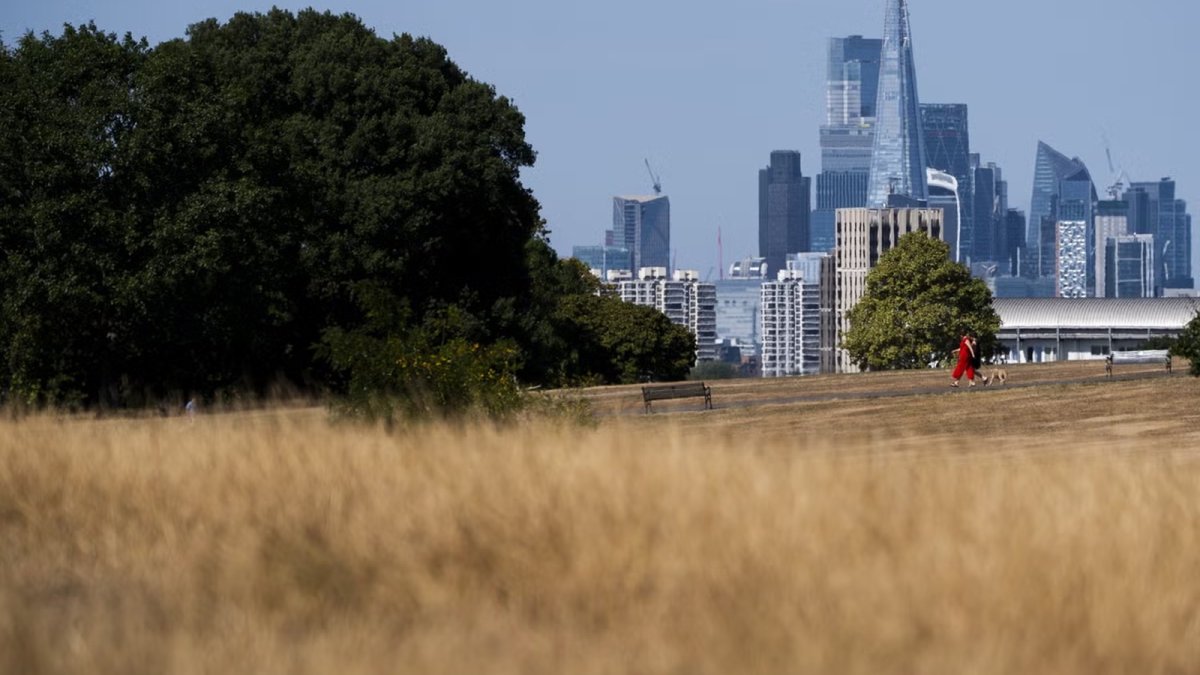
While the headline figure remains positive—and indeed places Britain at the top of the G7 growth tables for the first half of the year—the underlying picture is one of fragility. The ONS reported that the service sector provided the main engine of growth, buoyed by an extended spell of exceptionally hot weather and the start of the Fifa World Cup tournament. However, economists are already cautioning that the third quarter could tell a far more sobering story, as the twin shocks of geopolitical instability and rising household costs begin to bite with greater force.
Liz McKeown, ONS director of economic statistics, struck a cautiously optimistic tone in her assessment of the figures. "Growth slowed in the second quarter of the year, following a strong start to 2026, but remained relatively robust," she said. "Services also drove growth in June, with some businesses reporting that good weather and sporting events may have had a positive impact that month." The monthly data for June showed growth of 0.3 per cent month-on-month, comfortably beating expectations for a flat performance and providing some reassurance that the economy retains a degree of underlying momentum.
The Iran War: An Economic Shockwave Felt in Every Household
The conflict in the Middle East has emerged as the defining economic challenge of the summer, disrupting supply chains, inflating energy bills and creating a climate of profound uncertainty for businesses and consumers alike. The war, initiated by the Trump administration's military action against Iran, has sent shockwaves through global financial markets and pushed European energy prices to levels not seen since the peak of the Ukraine crisis. For British households already grappling with the lingering effects of the cost of living crisis, the timing could scarcely be worse.
Energy prices have been climbing steadily since February, when the first strikes were launched, and the ONS data suggests this is now feeding through into consumer behaviour. Several analysts have pointed to evidence of stockpiling in the June figures, with households and businesses making forward purchases in anticipation of further price rises. This presents a particular concern for the third quarter outlook: if consumers have brought forward spending, the subsequent months could see a pronounced deceleration as those purchases are not repeated.
The service sector's resilience, while welcome, masks significant divergence across the economy. Construction has returned to growth, according to the ONS, but manufacturing and export-oriented industries continue to struggle under the weight of elevated input costs and disrupted trade routes through the Persian Gulf. The British Chambers of Commerce has warned that the "cocktail of cost pressures" facing firms is now at crisis point, with domestic policy-driven costs for a typical small or medium-sized enterprise having risen by more than 70 per cent over the past decade.
Healey Pledges "Breathing Space" as No 10 North Opens Its Doors
Chancellor John Healey moved quickly to acknowledge the impact of the Iran conflict on British households, using the GDP release to strike a reassuring tone while signalling that the government is preparing further intervention. "I know people are worried about the impact of the conflict in the Middle East on their cost of living, which has been too high for too long and it has added pressure on British businesses," he said in a statement issued from Whitehall this morning.
"This is an active, hands-on government, putting British interests first—giving breathing space to those feeling the strain, making our country more resilient and bringing hope back. We've seen the fastest growth in the G7 this year, but we now need to double down and drive growth in every postcode." The Chancellor's language reflects the new administration's determination to present itself as a force for economic activism, a message that has been central to Prime Minister Andy Burnham's pitch since he entered Downing Street last month.
Burnham, who has made "growth in every postcode" the defining slogan of his early premiership, has sought to signal a decisive break from Westminster-centric governance. In late July, he opened a new headquarters for the centre of government in Manchester, dubbed No 10 North, where he is expected to work at least one day each week. The move, which has been welcomed by northern business leaders but viewed with scepticism by some Whitehall traditionalists, is intended to push power and decision-making out of the capital and rebalance the UK economy.
The Prime Minister's allies argue that the Manchester base is not merely symbolic but will enable better coordination with regional mayors and local enterprise partnerships. Critics, however, note that the Treasury remains firmly rooted in Whitehall and that the levers of fiscal power have not moved north. The coming months will test whether the rhetoric of devolution translates into tangible economic outcomes, particularly in the northern towns and cities that have lagged behind the south-east for decades.
Stride Attacks "Tax and Borrowing Spree" as Opposition Circles
The Conservative opposition was quick to seize on the slowdown, with shadow chancellor Sir Mel Stride delivering a blistering critique of the government's economic management. "Our economy is struggling because Labour have no plan for growth," Stride said. "Labour have mismanaged the economy with their tax and borrowing spree, leaving it weak and vulnerable to the effects of shocks like the Iran War. Yet Andy Burnham is gearing up to tax and borrow even more, doubling down on those failures. Labour need to realise that it's their poor decisions which have stifled growth and made the cost of living worse."
The shadow chancellor's remarks reflect a broader Conservative strategy of painting the new administration as fiscally irresponsible, a charge that the government rejects as unfounded. Treasury insiders point to the UK's relatively strong growth performance compared with other G7 nations and argue that targeted intervention is necessary to shield households from the worst effects of the energy price shock. The political battle lines are now clearly drawn ahead of the Autumn Budget, which is expected to be the defining fiscal event of the year.
Stride's attack also sought to exploit potential divisions between the Prime Minister and the Treasury, noting that Burnham's ambitious spending plans will require significant borrowing at a time when debt servicing costs remain elevated. The government's fiscal headroom is widely believed to be limited, and the Chancellor will face difficult choices when he stands at the despatch box to deliver his first Budget. Whether he opts for tax rises, spending cuts, or a combination of both will determine the political weather for the remainder of the parliament.
Business and Unions Demand Action Ahead of the Autumn Budget
Business leaders have responded to the GDP figures with a mixture of relief and apprehension, welcoming the resilience shown by the economy while warning that the government must not add to the burdens facing firms. Stuart Morrison, research manager at the British Chambers of Commerce, said: "Faced with global headwinds from the Iran conflict, the UK economy showed welcome resilience. The service sector performed particularly robustly, alongside a welcome return to growth in construction. But the headline figures shouldn't disguise the cocktail of cost pressures choking long-term business growth."
"This is not a new problem. Our analysis shows domestic policy-driven costs for a typical SME have risen by more than 70 per cent over the past decade. The Autumn Budget must be a game changer for stronger, sustainable growth. We need measures that boost trade, investment and productivity. In short, the Chancellor must back business, cut costs and deliver growth." The BCC's intervention reflects growing frustration among employers at the cumulative impact of successive policy decisions, from national insurance changes to employment regulation and energy levies.
The Trades Union Congress has taken a different tack, demanding fundamental reform of the Office for Budget Responsibility, which it argues has become a barrier to the long-term investment needed to transform the economy. Paul Nowak, general secretary of the TUC, issued a strongly worded statement: "If the prime minister really wants good growth in every postcode, he needs to put the turbo boosters on his reindustrialisation agenda and ensure the country is getting the investment it needs. That's why we need to see root and branch reform of the Office for Budget Responsibility. For too long the OBR has acted as a straitjacket on growth—preventing the long term investment necessary to deliver good jobs, boost living standards and fuel growth across the country."
"This has to change. A comprehensive fiscal commission should independently assess the OBR's models and make sure it can support growth up and down the country." The TUC's call for a fiscal commission represents a significant escalation in the debate over fiscal rules, and it remains to be seen whether the government will embrace such a move or resist what would be seen by some as an attack on the independence of the UK's fiscal watchdog.
Analysis: Households Face a Testing Autumn as Momentum Fades
For ordinary households, the GDP figures offer little immediate comfort. While the headline growth rate remains positive, the reality is that wages are still being eroded by inflation, energy bills are rising, and the cost of a weekly shop continues to climb. The warm weather and World Cup provided a temporary boost to spending, but these are one-off factors that will not sustain growth in the months ahead. The stockpiling effect identified by analysts suggests that some of June's strength was borrowed from the future, and the third quarter could see a marked slowdown.
The Autumn Budget, expected in late October or early November, will be the moment of truth for the Burnham government. The Chancellor has promised to "back business" and deliver growth, but he must do so within the constraints of the fiscal rules and against a backdrop of elevated borrowing costs. Richard Carter, head of research at Quilter, has warned that the government must not repeat the mistakes of the previous administration, which he argues stunted growth through a combination of tax rises and regulatory burdens. The task, he says, is to maintain the momentum generated in the first half of the year, not to snuff it out.
The geopolitical situation remains the great unknown. If the Iran conflict escalates further, energy prices could rise again, pushing inflation higher and forcing the Bank of England to keep interest rates elevated for longer. That would be a devastating combination for households with mortgages and businesses with debt. Conversely, a de-escalation could provide a significant boost to confidence and spending, allowing the economy to build on its first-half performance. The government's ability to navigate these uncertain waters will define its economic legacy, and the British people will be watching closely as the nights draw in and the heating bills arrive.
This article was produced with AI-assisted research and editorial support. Sources: The Independent (UK), Office for National Statistics.
By Erica Thornton, Staff Writer
What's Your Reaction?
 Like
0
Like
0
 Dislike
0
Dislike
0
 Love
0
Love
0
 Funny
0
Funny
0
 Wow
0
Wow
0
 Sad
0
Sad
0
 Angry
0
Angry
0

US Politics and Policy Correspondent at Global1.News. Based in Washington DC, covering American politics, policy, elections, and the courts. Knows how the system works and tells you what it actually means.














Comments (0)