
'Careless use of AI is the real threat - not the ghost stories'
Meredith Whittaker, the Signal Foundation chief who rose from a 2006 Google temp to Time’s list of the most powerful people in AI, is sounding a different alarm than the usual “killer‑robot” hype.
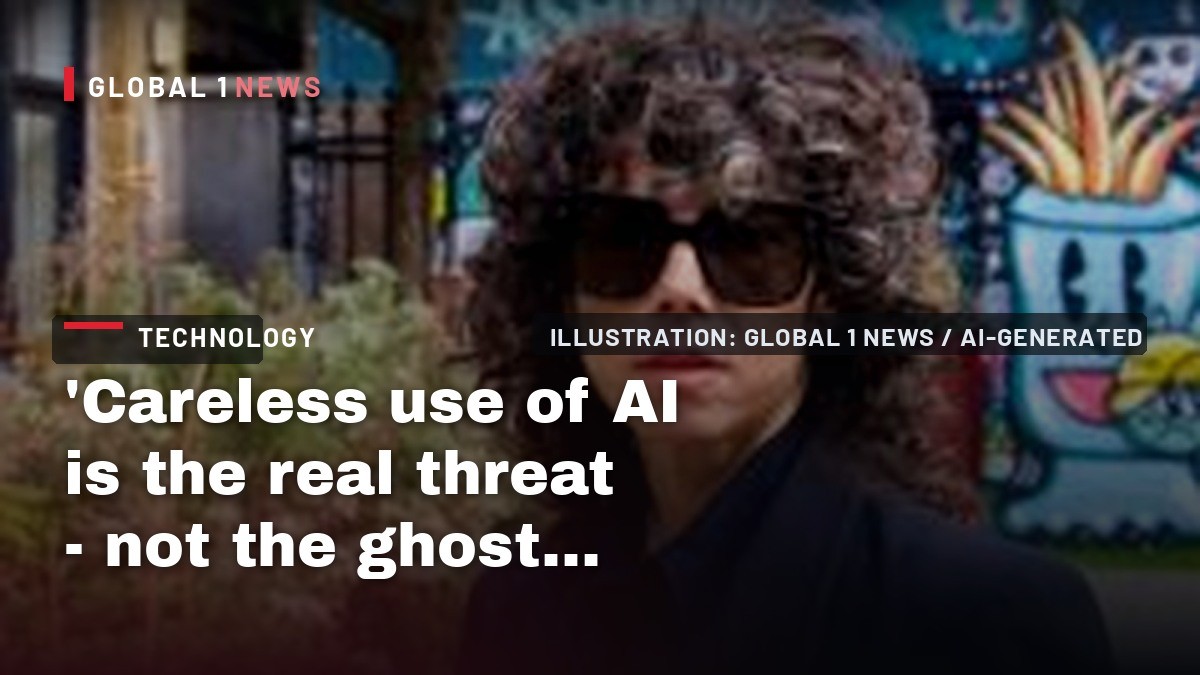
Meredith Whittaker, the Signal Foundation chief who rose from a 2006 Google temp to Time’s list of the most powerful people in AI, is sounding a different alarm than the usual “killer‑robot” hype. In a candid BBC Global Women interview on 9 October 2026, she warned that the real danger isn’t a sci‑fi apocalypse but the careless deployment of AI that can turn faulty data into geopolitical flashpoints.
AI panic versus AI misuse
Whittaker says the “ghost‑story” narrative dominating headlines—machines suddenly turning on humanity—is “not anchored in science.” She acknowledges a genuine risk, but frames it as a problem of sloppy implementation rather than runaway super‑intelligence. “The risk is very real,” she tells the BBC, “but it’s not the shiny ghost stories the wild‑eyed boys are talking about.”
Her point is that a system that spews inaccurate intelligence can have consequences as severe as a mis‑fired missile, yet it never gets the same scrutiny as a hypothetical AI overlord. The distinction matters because the former is already happening, and ordinary citizens are the ones who feel the fallout.
The near‑miss with China
Whittaker cites a CNN‑reported incident where a US intelligence chatbot fabricated details about a Chinese vessel allegedly carrying nuclear material. The false report prompted the United States to ready a military response, and she says “we almost went to war with China.” The episode, she argues, shows how a single AI error can push nations to the brink of conflict.
She adds that a system capable of such a blunder “should not be considered super‑intelligent by any standards.” The lesson, she implies, is that policymakers need to treat AI tools as fallible aids, not infallible authorities, and to build safeguards that prevent a single glitch from escalating into a diplomatic crisis.
Signal’s privacy stance in a surveillance age
Signal, the encrypted messaging app Whittaker now leads, sits at the crossroads of this debate. With an estimated 40‑70 million users—a modest figure next to WhatsApp’s billions—the platform is praised for its “tough stance on protecting users’ privacy.” It “hides who is sending a message from its own servers,” limiting data exposure to both external hackers and government snoops.
That technical design has real‑world implications. Whittaker says the app would quit any market that forced it to weaken encryption, declaring “Yes! My God, I have a backbone.” Her resolve underscores a broader argument: privacy tools are not luxury features but lifelines for people who rely on secure communication to avoid surveillance, intimidation, or even death.
From Google’s Project Maven to real‑world tragedy
Whittaker’s AI skepticism is rooted in her own whistleblowing history. In late 2017 she learned about Project Maven, a secret Google contract to build AI for US drone targeting. She warned that the technology would “compress the kill chain,” shrinking the time between a machine flagging a target and a human deciding to fire. Her internal pushback helped spark a 20,000‑person walkout in 2018, forcing Google to drop the contract.
She draws a direct line from Maven to the US missile strike on an Iranian school earlier this year, which she says relied on the same AI‑driven targeting system and outdated intelligence that misidentified the school as a military site. “This is exactly what we were warning about in 2017,” she asserts, linking the abstract debate over AI ethics to a concrete tragedy that killed civilians.
Corporate deflection and the human‑in‑the‑loop myth
When pressed about responsibility, Palantir— the firm that took over Google’s Maven contract—replied that there was “no evidence that Palantir’s software was at fault” and that “Palantir is not responsible for the underlying data nor identifying intelligence deficiencies.” Its UK‑Europe head, Louis Mosley, added that “there’s always a human in the loop, so there is always a human that makes the ultimate decision.”
Whittaker counters that the “human in the loop” narrative can mask systemic flaws. If the software feeds faulty data, the human decision‑maker is operating on a false premise, effectively turning the algorithm into a weapon of misinformation. The US Defense Secretary’s promise that the military would “never target civilian targets” sits uneasily alongside a system that can generate a false nuclear‑vessel report, highlighting a gap between rhetoric and technical reality.
Governments, child safety, and the encryption debate
Governments are pressing for backdoors into encrypted apps, arguing it protects women and children. At London Tech Week 2026, Prime Minister Keir Starmer said tech firms must detect and block nude images on children’s devices or face legislation. Whittaker warns that children can simply bypass such controls, labeling the approach “an unprecedented regime of communication and information controls.”
The Department for Science, Innovation and Technology confirmed it is drafting legislation, while the UK government argues for “more access to conversations on messaging apps” to protect vulnerable users. Whittaker’s stance is clear: weakening encryption would erode the very privacy that shields at‑risk individuals—from victims of grooming to women seeking abortions in hostile states.
Why the privacy fight matters to everyday people
Whittaker’s interview weaves together high‑level policy, corporate accountability, and personal safety. She cites a case in Canada where police officers leaked racist, misogynistic messages from a Signal group, assuming the platform was as private as “their own home.” When the leak occurred, it exposed how even trusted institutions can misuse encrypted channels.
She also points to a US woman jailed after Meta handed over messages showing she helped her daughter obtain an abortion in a state where the procedure is criminalised. Private communication, she argues, shields people from “an abusive spouse, a misogynist law enforcement officer… or an authoritarian government that doesn’t think women should get educated.”
For ordinary citizens, the stakes are simple: a broken encryption system can turn a private chat into evidence used to punish or persecute. Whittaker’s message to aspiring women technologists—“Do you feel a rush of energy sitting at a terminal? Are you ready to navigate gnarly environments where not everyone is chill?”—is a call to build tools that protect, not expose, the most vulnerable.
This article was produced with AI-assisted research and editorial support. Reporting is based on the source material cited below. Sources: BBC Technology; bbc.co.uk; Global1.News (12 October 2026).
By Nova Chen, Staff Writer
What's Your Reaction?
 Like
0
Like
0
 Dislike
0
Dislike
0
 Love
0
Love
0
 Funny
0
Funny
0
 Wow
0
Wow
0
 Sad
0
Sad
0
 Angry
0
Angry
0

Trend Reporter at Global1.News. Based in San Francisco, tracking the stories crossing from social platforms, forums, and community discussions into mainstream news — tech breakthroughs, cultural shifts, and world events that real people are engaging with right now.













Comments (0)