
The politics of gratitude: The corruption no one sees
When Andy Burnham, the mayor of Manchester, was pressed on his remarks about Manchester City’s place in the city’s story, the debate quickly moved beyond football.
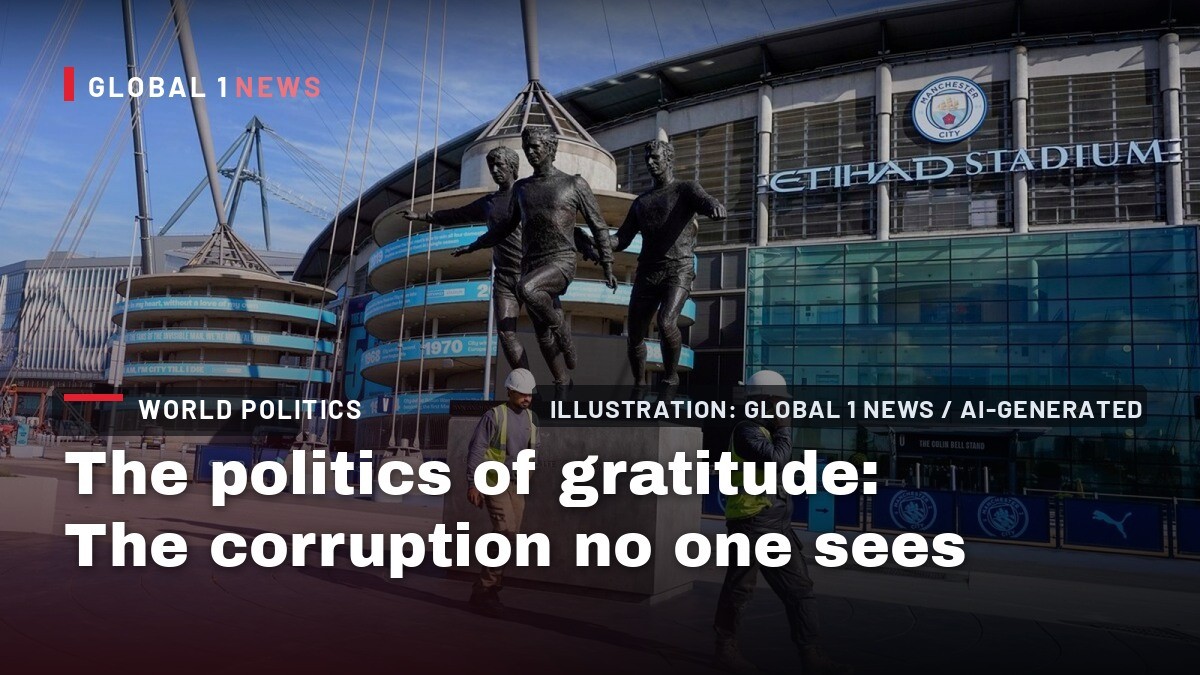
When Andy Burnham, the mayor of Manchester, was pressed on his remarks about Manchester City’s place in the city’s story, the debate quickly moved beyond football. The controversy revealed a deeper, often invisible form of political corruption rooted not in money but in gratitude – an emotional indebtedness to the very projects that have defined a politician’s career. This hidden bias, highlighted by the recent Manchester City episode, raises urgent questions about how leaders across the Middle East and beyond assess the public good when their personal legacies are intertwined with the successes they helped create.
The Manchester case: gratitude as a political blind‑spot
Burnham’s initial suggestion that Manchester City deserved “fair treatment” was not simply a defense of a football club or its wealthy owners. It was, as the source material explains, an instinctive defense of a project that has become part of his own political identity. Over the past two decades, Manchester’s transformation – from industrial decline to a vibrant cultural hub – has been celebrated worldwide. The Etihad Stadium and the surrounding development have become symbols of that renewal, and Burnham, as the city’s leading elected official, has been closely linked to the narrative of regeneration.
When criticism of the club’s financial practices or alleged preferential treatment arises, it feels to Burnham like an attack on the story of Manchester’s rebirth, and therefore on his own legacy. The article notes that “the moment that achievement comes under scrutiny, criticism of the project begins to feel like criticism of the self.” This emotional entanglement can erode impartial judgment, leading politicians to protect projects not because of bribery or coercion, but because of a deep‑seated loyalty to the achievements that gave their careers meaning.
From Manchester to the Middle East: similar patterns emerge
The phenomenon described in the source is not unique to Britain. Across the Middle East, leaders have championed massive infrastructure and urban renewal projects that have become intertwined with their personal narratives. In Qatar, the 2022 World Cup stadiums were promoted as a legacy of national pride; in the United Arab Emirates, the rapid rise of Dubai’s skyline is often cited as the hallmark of visionary leadership. When such projects face scrutiny – whether over labor rights, environmental impact, or financial transparency – officials may instinctively defend them, fearing that criticism threatens the very story of their success.
Understanding gratitude‑based corruption helps explain why some governments resist external criticism even when it is grounded in international law. The emotional bond to a flagship project can make leaders view external scrutiny as a personal affront, rather than a legitimate call for accountability. This dynamic complicates diplomatic efforts to address human‑rights concerns linked to large‑scale development.
Why gratitude corrupts more subtly than cash
Traditional definitions of corruption focus on illicit payments, kickbacks, or secret contracts. The source material, however, argues that “the most dangerous forms of political corruption… is not financial corruption but what might be called the corruption of gratitude.” When a politician feels indebted to a project, a business leader, or an idea, the bias is internal and therefore harder to detect. Unlike a bank transfer, emotional loyalty does not leave a paper trail, yet it can shape policy decisions, regulatory enforcement, and public statements.
This internal bias can manifest in several ways: preferential allocation of public funds to a flagship project, lenient regulatory oversight, or public statements that downplay legitimate concerns. Because the motive appears altruistic – protecting what is perceived as a public good – it often escapes the scrutiny applied to more overt financial scandals.
Historical parallels: Blair, Johnson and the grip of legacy
The article draws parallels with Tony Blair’s attachment to “New Labour” and Boris Johnson’s bond with Brexit. In both cases, the leaders’ identities became inseparable from the projects they championed. Blair’s reluctance to fully acknowledge the flaws of the Iraq War, and Johnson’s continued defense of Brexit long after leaving office, illustrate how success can create a “creed” that resists critical examination. The source notes that “the paradox is that failure often encourages self‑examination, while success produces the illusion of infallibility.”
These examples underscore a universal political truth: once a narrative becomes a cornerstone of a leader’s legacy, it gains a protective aura. The same pattern can be observed in the Middle East, where leaders who have overseen transformative projects – such as Iran’s nuclear program or Saudi Arabia’s Vision 2030 – may find it difficult to separate personal legacy from national policy, leading to defensive postures when faced with criticism.
The human cost of protecting a narrative
Beyond abstract political theory, the human impact of gratitude‑based corruption is profound. When leaders prioritize the preservation of a legacy over transparent governance, ordinary citizens may suffer from misallocated resources, reduced public services, or weakened rule of law. In Manchester, the focus on the Etihad development has drawn attention away from other pressing urban challenges, such as affordable housing and social inequality. The source material emphasizes that “the true responsibility of a statesman is not to adore achievements but to question them,” highlighting the moral imperative to place public interest above personal pride.
In the Middle East, similar trade‑offs are evident. Massive construction projects can divert funds from essential services like healthcare and education. When officials defend these projects out of gratitude, they may inadvertently perpetuate systemic injustices, deepening the very social grievances that fuel unrest. Recognizing the emotional dimension of this bias is a first step toward demanding accountability that truly serves the populace.
How to detect and address gratitude‑based bias
Because gratitude‑based corruption lacks the obvious financial footprints of traditional graft, detecting it requires careful analysis of rhetoric, decision‑making patterns, and the alignment of personal narratives with policy outcomes. Indicators include repeated public defense of a single project despite credible criticism, or the use of legacy language (“my city’s success”) in policy justification. The source material suggests that “the politician imprisoned by personal success is far more difficult to detect,” underscoring the need for vigilant civil society and independent media.
Addressing this bias does not mean vilifying successful leaders; rather, it calls for institutional safeguards that separate personal legacy from public decision‑making. Transparent budgeting, independent oversight bodies, and a culture that values self‑critique can help ensure that gratitude does not eclipse accountability. International partners can also play a role by framing assistance and dialogue in terms of universal standards, rather than personal relationships with individual leaders.
Looking ahead: lessons for the Middle East and beyond
The Manchester City episode, as described in the source, offers a cautionary tale for any leader whose identity is bound up with a flagship project. When gratitude becomes a shield against scrutiny, the very foundations of democratic accountability are threatened. For the Middle East, where rapid development often coexists with fragile institutions, the risk is especially acute.
Policymakers, journalists, and citizens must remain alert to the subtle ways emotional loyalty can shape governance. By foregrounding the human cost of decisions and insisting on the primacy of international‑law standards over personal legacy, societies can protect the public interest from the quiet encroachment of gratitude‑based corruption. In doing so, they honor the principle that true leadership is measured not by the monuments one builds, but by the willingness to critique them when they fall short of the common good.
This article was produced with AI-assisted research and editorial support. Reporting is based on the source material cited below. Sources: Middle East Monitor; middleeastmonitor.com; Global1.News (14 October 2026).
By Fatima Al-Rashid, Staff Writer
What's Your Reaction?
 Like
0
Like
0
 Dislike
0
Dislike
0
 Love
0
Love
0
 Funny
0
Funny
0
 Wow
0
Wow
0
 Sad
0
Sad
0
 Angry
0
Angry
0

Gulf/MENA Correspondent at Global1.News. Based in Doha, covering Gulf politics, energy markets, diplomacy, and development across the Middle East and North Africa. Tracks the economic transformation of the Gulf states.











Comments (0)