
TechCrunch Mobility: A roadblock clears for self-driving trucks
Self‑driving trucks finally got a legal break, and the ripple effect is already being felt across the logistics chain. That may sound like a tiny tweak, but for anyone running a fleet or a data centre that powers autonomous services, it’s a massive shift in risk calculus.
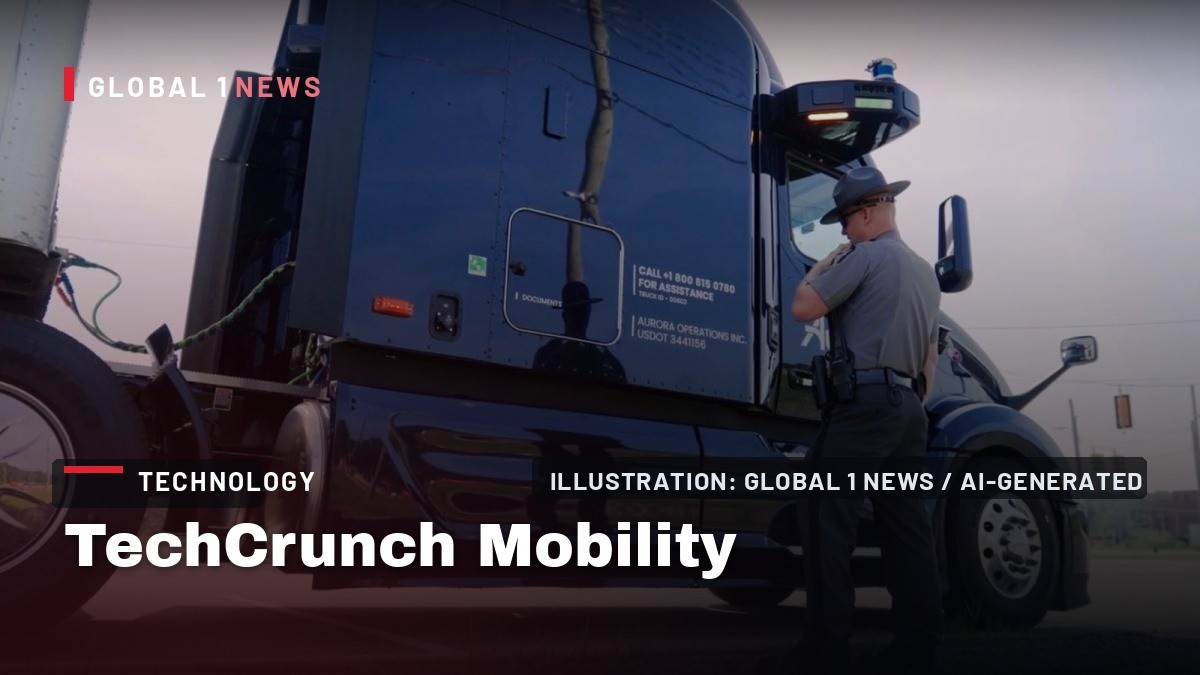
Self‑driving trucks finally got a legal break, and the ripple effect is already being felt across the logistics chain. Aurora Innovation and Kodiak AI just secured a five‑year exemption from the Federal Motor Carrier Safety Administration, allowing them to ditch the old‑school reflective triangles and slap a cab‑mounted warning beacon on the roof instead. That may sound like a tiny tweak, but for anyone running a fleet or a data centre that powers autonomous services, it’s a massive shift in risk calculus. No more scrambling for a driver to pop out of a cab, no more liability exposure for a missed triangle, and a cleaner, faster incident response that aligns with the digital‑first mindset we’ve been preaching for years.
Why the beacon matters for the bottom line
The old regulation forced a human driver to pull over, turn on hazard lights and physically place reflective triangles within ten minutes of a breakdown. In a conventional trucking operation that’s a routine drill; in an autonomous fleet it’s a show‑stopper. Aurora had to fight the exemption all the way to the District of Columbia Court of Appeals after a lower court denied its request. The eventual green light means companies can now rely on a simple electronic device to meet safety requirements, slashing the need for a human‑in‑the‑loop during emergencies.
From a cost perspective, the exemption eliminates the need to staff a driver on standby or retrofit every rig with a manual triangle‑deployment system. It also reduces insurance premiums tied to driver‑related incidents. For hosting providers that lease compute to autonomous fleets, the reduced operational risk translates into more predictable SLAs and lower overhead when provisioning edge nodes for real‑time vehicle telemetry.
Regulatory precedent and the path to industry‑wide adoption
Both Aurora and Kodiak AI are now waving the beacon as a “critical, 21st‑century solution” that “enhances roadside safety by immediately alerting other road users without ever needing to put a person in harm’s way.” If regulators see this as a viable safety measure, the door opens for other autonomous players to adopt the same tech without a separate waiver. That could standardise the beacon across the entire trucking sector, eroding the competitive moat that early adopters once enjoyed.
What this really does is shift the regulatory narrative from “human driver required for safety” to “automated safety systems acceptable.” Expect state DOTs to start drafting similar exemptions for other autonomous vehicle classes, from delivery vans to rail‑grade locomotives. The knock‑on effect for infrastructure providers is a surge in demand for low‑latency, high‑availability networks that can push beacon status updates and diagnostic data back to the cloud in milliseconds.
Funding frenzy: the cash that fuels the race
While Aurora and Kodiak are busy lobbying for beacons, the broader autonomous ecosystem is soaking up capital at a breakneck pace. Waymo just closed a $5 billion debt financing round led by heavyweights like PIMCO, Blackstone and Sixth Street, marking its first foray into debt after years of equity‑only funding. Parallel Systems raised $100 million in a Series C for its long‑range rail vehicle, and Flai secured $27 million for AI dealership software. Even niche players like Bloom are grabbing seed money—$3.6 million—to become the “Alibaba” of American manufacturing.
For independent hosting firms, this influx of capital means more customers with deep pockets looking to outsource compute, storage and networking for AI workloads. The key is to differentiate on cost‑efficiency and reliability, not just on the flash of a fancy brand. The market is saturated with VC‑backed hype; the real winners will be those who can deliver sub‑millisecond latency and rock‑solid uptime without the bloated price tags that hyperscalers love to charge.
Operational realities: lessons from recent layoffs
The funding boom is not without its growing pains. Redwood Materials, the battery‑recycling spin‑off from Tesla co‑founder JB Straubel, announced a restructuring that cut roughly 10 % of its workforce and saw a wave of senior execs exit. Surveillance camera maker Flock slashed 18 % of its staff amid backlash over its license‑plate readers. These moves underscore a harsh truth: even well‑funded tech firms can’t afford to ignore operational efficiency.
For hosting providers, the takeaway is clear. Over‑engineering or over‑staffing can quickly become a liability when market conditions shift. Keep the team lean, automate wherever possible, and focus on core competencies—network reliability, security, and compliance. When you can run a data centre on a lean staff model, you can price competitively against the hyperscalers and still maintain healthy margins.
Real‑world deployments: Kodiak’s 435‑mile route
Kodiak AI just launched a 435‑mile autonomous corridor between Dallas and Laredo, hauling refrigerated and dry freight for consumer packaged goods and food‑and‑beverage customers. This is not a pilot; it’s a commercial operation that relies on real‑time data streams, edge compute for sensor fusion, and robust connectivity across state lines. The route’s success hinges on the new beacon exemption—any breakdown can be signalled instantly without a driver, keeping the freight moving and the supply chain intact.
From a hosting perspective, routes like this demand a distributed architecture: edge nodes near the corridor to process sensor data, regional hubs for aggregation, and a central cloud for long‑term analytics. Providers that can stitch together this multi‑tiered network with low latency will become indispensable partners for autonomous freight operators.
Strategic implications for independent hosting providers
The convergence of regulatory relief, capital inflows, and commercial roll‑outs creates a sweet spot for hosting firms that can offer bespoke, high‑performance infrastructure. The big hyperscalers tout “best practices” that sound great on paper but crumble under the weight of real‑time autonomous workloads. Their pricing models often assume massive scale that most independent providers simply don’t have, leading to inflated costs for niche customers.
To win, focus on three pillars: (1) ultra‑low latency connectivity to the edge, (2) transparent, usage‑based pricing that reflects actual consumption, and (3) rigorous compliance with emerging safety standards like the beacon exemption. Build partnerships with fleet operators early, embed your monitoring tools into their telematics stacks, and you’ll lock in recurring revenue that’s insulated from the price wars raging in the hyperscale arena.
Actionable steps for founders and operators
First, audit your current compliance posture. If you’re still relying on legacy safety processes that assume a human driver, you’re already behind the curve. Map out how cab‑mounted beacons can be integrated into your existing telematics and ensure your network can push beacon alerts in real time.
Second, evaluate your cost structure against the new funding landscape. The influx of debt and equity into autonomous firms means they’ll be looking for cost‑effective compute partners. Offer tiered SLAs that let customers pay for exactly what they need—no more, no less.
Third, invest in edge infrastructure where the trucks operate. The Dallas‑Laredo corridor is a prime example of a high‑value lane that will need localized compute. Deploy micro‑data centres or colocation sites near major hubs to shave milliseconds off latency, and you’ll become the go‑to provider for autonomous logistics.
Finally, keep an eye on regulatory developments. The beacon exemption is just the first of what could be a cascade of rule changes that favour automated safety solutions. Stay ahead of the curve, and you’ll turn compliance into a competitive advantage rather than a cost centre.
In short, the road to autonomous freight is no longer blocked by a triangle‑and‑hazard‑light requirement. It’s opening up to a new era where beacons, edge compute, and lean, capital‑efficient operations define the winners. Independent hosting providers that can align with this shift will not only survive the hyperscaler onslaught—they’ll thrive.
— Allan Ali, Founder
This article was produced with AI-assisted research and editorial support. Reporting is based on the source material cited below. Sources: TechCrunch; techcrunch.com; Global1.News (11 October 2026).
By Allan Ali, Global1.News
What's Your Reaction?
 Like
0
Like
0
 Dislike
0
Dislike
0
 Love
0
Love
0
 Funny
0
Funny
0
 Wow
0
Wow
0
 Sad
0
Sad
0
 Angry
0
Angry
0

Publisher of Global1.News. Automation architect, systems builder, and the guy making sure the truth gets published.














Comments (0)