
Apple’s new smart home lineup includes a smart lock, thermostat, and video doorbells
Apple is finally stepping into the smart‑home arena with a full‑blown accessory lineup that it hopes will shake up the Amazon Ring and Google Nest duopoly.
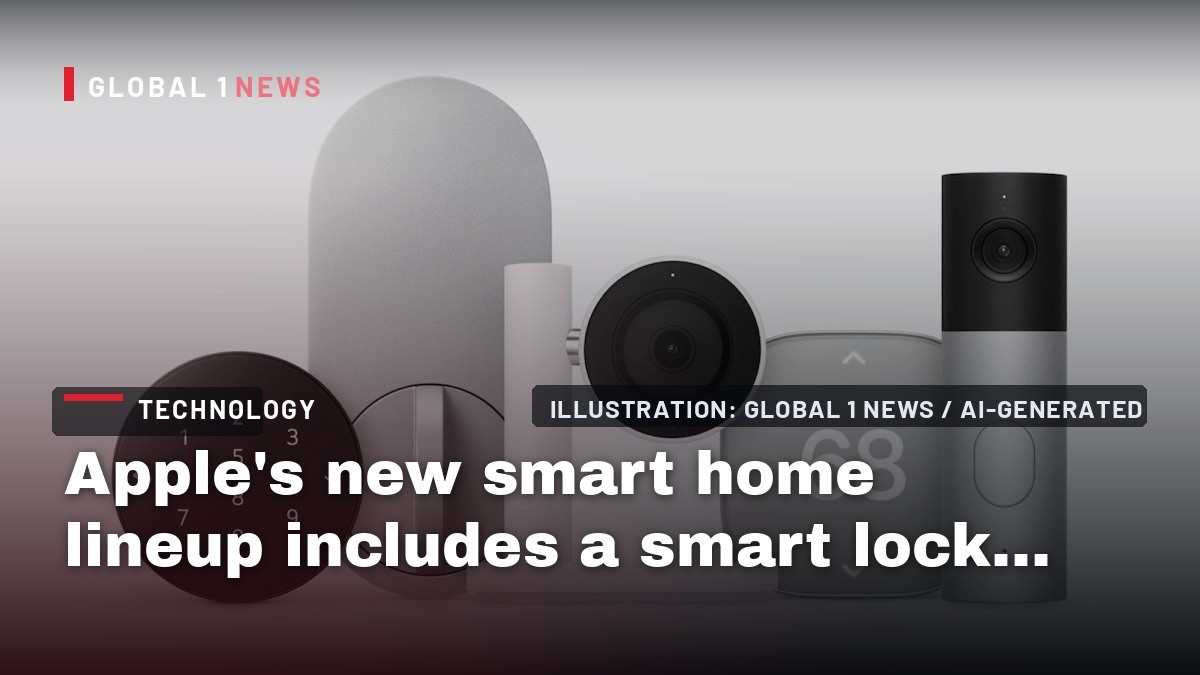
Apple is finally stepping into the smart‑home arena with a full‑blown accessory lineup that it hopes will shake up the Amazon Ring and Google Nest duopoly. The company unveiled the Apple Home Collection on Tuesday, a set of devices that includes a deadbolt lock, video doorbell, thermostat, temperature sensor, and a family of security cameras, all tied to a new hub called HomeView. From a founder’s perspective, the move is both a signal of opportunity and a warning sign for independent hosting providers and hardware makers who think they can ride the hype wave without a solid business model.
Why Apple’s entry matters to us
Apple’s brand power is a force multiplier. By bundling a lock, doorbell, thermostat, and cameras under the HomeView ecosystem, the company is creating a vertically integrated platform that can lock in customers for years. The devices will ship in December, giving Apple a full calendar year to push the ecosystem before most competitors roll out their next‑gen hardware. For anyone running a hosting or IoT service, this means a sudden surge of traffic to Apple’s cloud endpoints, and a potential shift in where data is processed – from third‑party clouds to Apple’s own infrastructure.
From a risk standpoint, the partnership Apple announced with LG Electronics and Schneider Electric is a strategic hedge. It offloads some of the manufacturing and component sourcing to established players, while Apple retains control over software and integration. That’s a playbook that independent providers can emulate: partner with hardware specialists to reduce capex, but keep the data pipeline in‑house to maintain margin and control.
The lock that thinks you’re a friend
The centerpiece of the collection is the smart deadbolt, priced at $349.95. Its standout feature is ultra‑wideband (UWB) support, a wireless tech that promises more precise proximity detection than Bluetooth. In theory, the lock can sense an authorized user’s approach and unlock automatically, cutting out the need to fumble for a phone or key. For a founder, that’s a double‑edged sword. On one hand, UWB opens a premium pricing tier that Apple can exploit; on the other, it raises the bar for security and privacy compliance, forcing any third‑party service that wants to integrate with the lock to meet Apple’s stringent standards.
From a production standpoint, the lock’s price point sits well above typical smart locks from other vendors, which often sit in the low‑hundreds. That premium suggests Apple is banking on brand loyalty rather than pure feature differentiation. Independent hosting firms should watch how Apple monetises the UWB data stream – whether it becomes a subscription service, a data‑licensing model, or stays bundled for free. Each scenario carries different risk and revenue implications for anyone looking to plug into the Apple ecosystem.
Video doorbell: a $250 entry point
The wired video doorbell comes in at $249.95 and promises the usual fare: live video, visitor notifications, and chimes that play through HomeView, HomePod, and HomePod mini. Alerts also hit iPhone and iPad. While the price is competitive with existing market offerings, Apple’s integration with its own audio ecosystem could be a game‑changer. The chime playing through HomePod devices means Apple can push audio‑based upsells or ads, a revenue stream that most rivals can’t tap.
For hosting providers, the doorbell’s video feed will likely be stored in Apple’s cloud, but the device will need to communicate with HomeView locally. That creates a hybrid edge‑cloud model where the local hub does the heavy lifting, while Apple’s servers handle storage and analytics. Independent providers could carve out a niche by offering edge‑processing services that sit between the doorbell and Apple’s cloud, especially for customers who demand on‑premise data residency for privacy reasons.
Thermostat, sensors, and the floodlight camera
The Home Collection also includes a thermostat and a temperature sensor that give room‑by‑room climate insights. While the article doesn’t disclose pricing for these, the presence of a dedicated sensor signals Apple’s intent to build a granular data set on home environments. That data is gold for machine‑learning models that can predict energy usage or detect anomalies. Independent AI service providers should consider how to ingest Apple‑generated telemetry without violating Apple’s ecosystem lock‑in.
Apple’s floodlight camera, priced at $399.95, merges exterior lighting with video monitoring. It joins a lineup that offers live viewing, motion detection, intelligent alerts, and video storage. The price places it squarely in the premium segment, but the bundled lighting feature could be a differentiator for customers who want a single device to replace both a lamp post and a security camera. For hosting firms, the floodlight’s video storage will add to Apple’s data lake, but the intelligent alerts may be processed on‑device or at the hub, reducing bandwidth demands. Understanding where Apple draws the line on edge processing will be crucial for anyone looking to interoperate with the platform.
Apple’s strategic partnership model
Apple’s decision to build the Home Collection in partnership with LG Electronics and Schneider Electric is noteworthy. LG brings display and consumer‑electronics manufacturing expertise, while Schneider contributes its industrial automation and electrical know‑how. By leveraging these partners, Apple sidesteps the massive capital outlay required to set up its own production lines for hardware components like locks and thermostats.
For independent hardware startups, this is a blueprint: partner with established manufacturers to get product to market faster, then focus on the software stack and data services. However, the trade‑off is that Apple retains control over the user experience and the data pipeline. Any third‑party service that wants to plug into HomeView will need to negotiate terms that preserve data sovereignty – a non‑trivial hurdle for smaller players.
Business‑risk lens for independent providers
The launch of Apple’s Home Collection introduces several risk vectors for independent hosting and IoT providers. First, the premium pricing and brand cachet could siphon high‑margin customers away from niche players who can’t match Apple’s ecosystem depth. Second, Apple’s tight integration across devices, hub, and cloud creates a walled garden that may limit third‑party access to critical data streams, forcing providers to either become certified partners or lose relevance.
Third, the reliance on UWB and other proprietary tech means that any security flaw could ripple across the entire ecosystem, exposing partners to liability. Independent providers must therefore assess their exposure: do they have the bandwidth to monitor Apple’s security advisories, and can they pivot quickly if a vulnerability forces a firmware recall?
Actionable advice for founders
First, double‑down on edge‑processing. Apple’s HomeView hub will handle a lot of local logic, but there will still be a need for custom analytics that Apple may not provide. Building a lightweight, container‑based edge service that can run on HomeView or a companion device gives you a foothold in the data pipeline.
Second, position your offering as a data‑privacy layer. Many enterprise customers balk at sending home video feeds to a big tech cloud. If you can provide encrypted, on‑premise storage that syncs with Apple’s cloud only when needed, you’ll tap a market segment that values control over convenience.
Third, keep an eye on Apple’s certification pathways. The partnership with LG and Schneider suggests Apple will open a partner program for accessories and services. Getting on that list early can give you access to technical documentation, marketing co‑ops, and possibly revenue sharing on data services.
Finally, stay nimble on pricing. Apple’s lock and floodlight camera sit at premium price points, but the doorbell is priced more competitively. Use that as a benchmark: if you can undercut Apple on a specific feature while maintaining quality, you can carve out a niche. Remember, the smart‑home market is still in its growth phase, and brand power can be challenged by reliability and local support.
Apple’s Home Collection is a bold move that will reshape the smart‑home landscape. For independent hosting providers and hardware founders, the key is to treat it not as a threat but as a catalyst to refine your edge capabilities, tighten your data‑privacy offering, and align with the emerging standards that Apple will set. The next few months will be a litmus test for who can adapt and who will be left watching from the sidelines.
— Allan Ali, Founder
This article was produced with AI-assisted research and editorial support. Reporting is based on the source material cited below. Sources: TechCrunch; techcrunch.com; Global1.News (13 October 2026).
By Allan Ali, Global1.News
What's Your Reaction?
 Like
0
Like
0
 Dislike
0
Dislike
0
 Love
0
Love
0
 Funny
0
Funny
0
 Wow
0
Wow
0
 Sad
0
Sad
0
 Angry
0
Angry
0

Publisher of Global1.News. Automation architect, systems builder, and the guy making sure the truth gets published.















Comments (0)